We partner with Rewilding Britain to help protect our natural spaces for future adventures.
All centres are vetted for safety and quality. Your adventure is in good hands with adventuro.
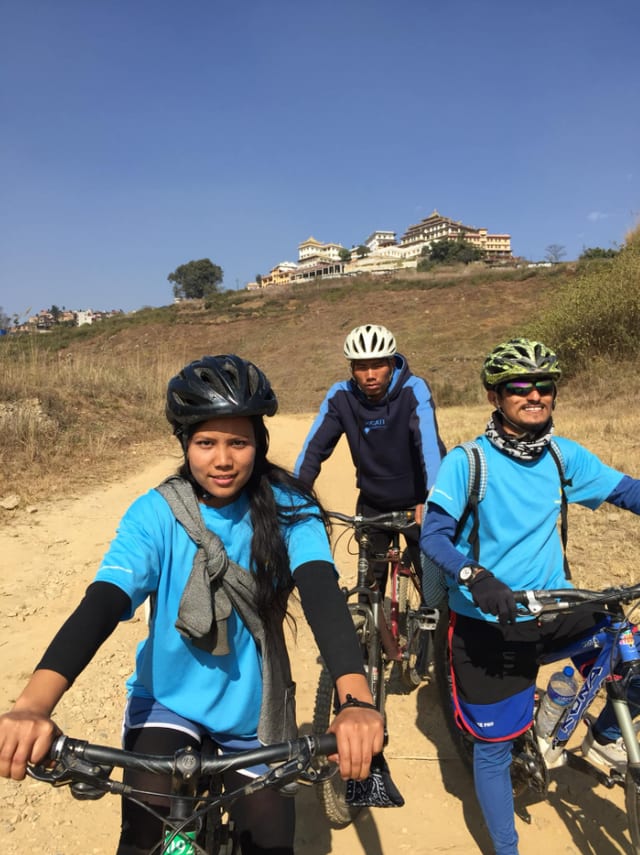
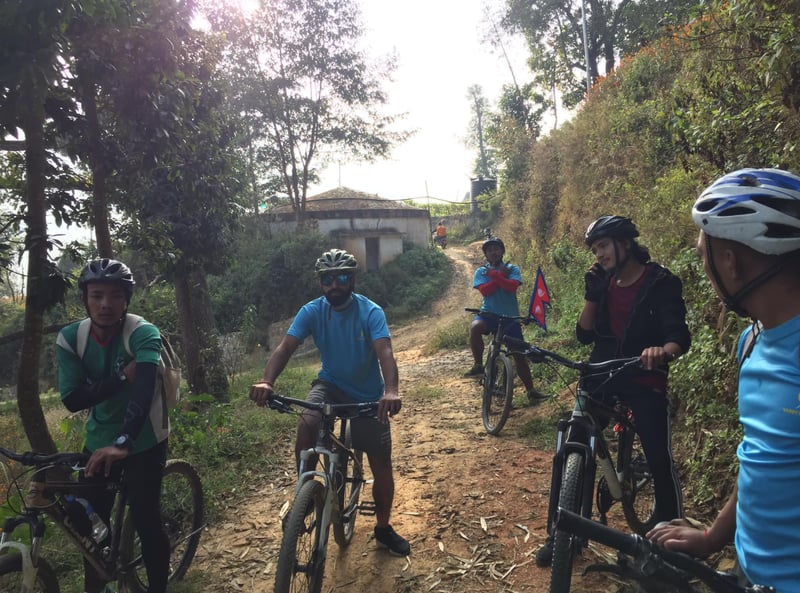
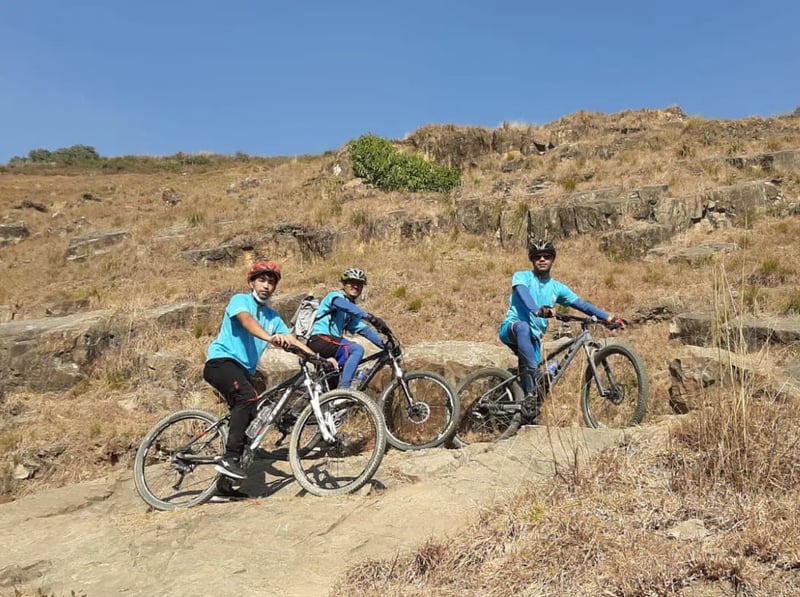
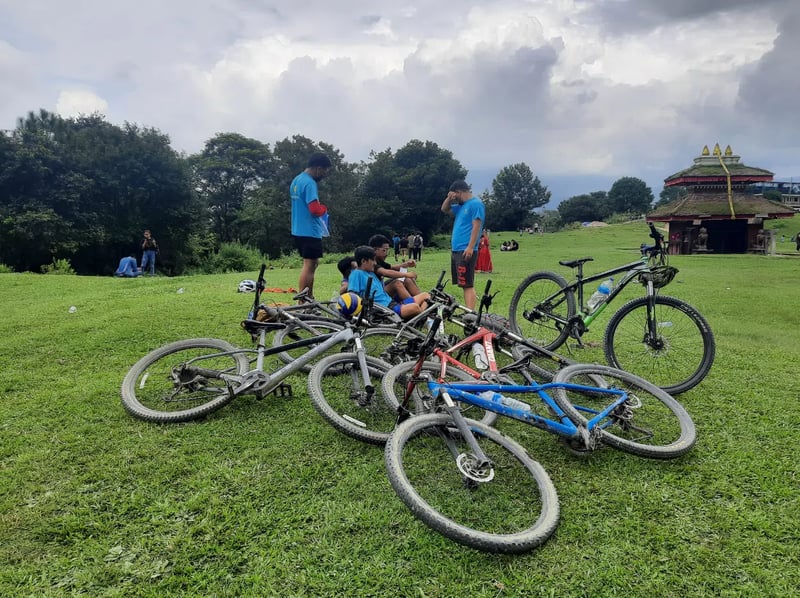
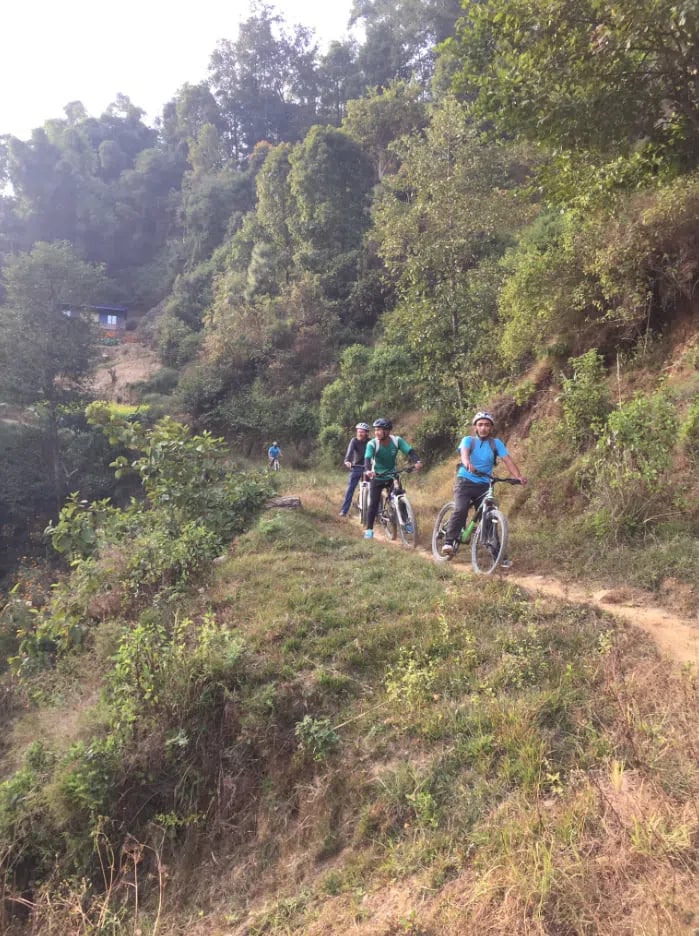
Combine the challenge of the Annapurna Circuit with the energy of mountain biking for a two-week adventure that’s as rewarding as it is exciting. You’ll pass through alpine valleys, remote villages, and high mountain passes, all while riding through some of the most scenic trails in Nepal.
Day 01: Arrival in Kathmandu (1400m)
On arrival, you’ll be met at the airport and transferred to your hotel. You’ll have the day to rest and prepare for the journey ahead.
Day 02: Warm-up Ride in Kathmandu (1400m)
Meet your guide and check over your bike before heading out on a warm-up ride around the Kathmandu Valley. The route explores a mix of urban roads and quiet trails, taking in the city’s landmarks and surrounding hills.
Day 03: Drive to Besisahar (900m)
The trip begins with a 6-hour jeep drive to Besisahar. The route passes traditional villages, river valleys and terraced hillsides. Once there, you’ll settle into a local teahouse for the evening.
Day 04: Besisahar to Tal (1700m, 37.4km ride)
Expect a full day on the bike as you climb steadily through varied landscapes. The route is demanding but scenic, finishing in the quiet mountain village of Tal.
Day 05: Tal to Chame (2670m, 22.6km ride)
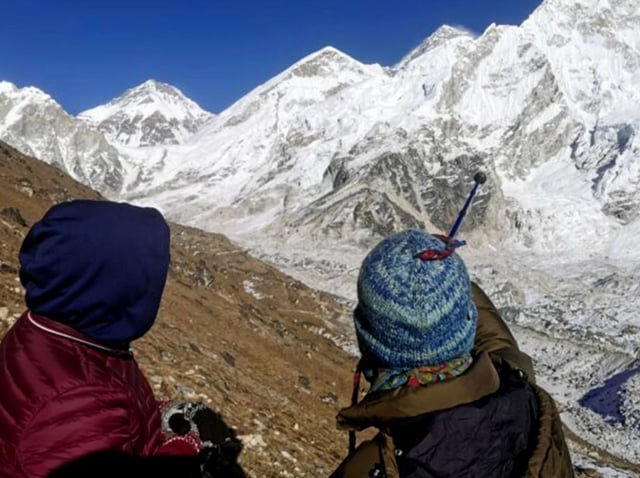
The ride continues with more climbs and dramatic views. You’ll cross suspension bridges and gain altitude steadily, arriving in Chame where snow-capped peaks become a constant backdrop.
Day 06: Chame to Manang (3540m, 29.7km ride)
Today’s section follows the Marsyangdi River, passing forests and rocky ridges. The higher elevation will be noticeable, so breaks are frequent as you cycle to the traditional mountain town of Manang.
Day 07: Acclimatisation Day in Manang (3540m)
This rest day helps your body adjust to the higher altitude. You’ll explore nearby viewpoints and enjoy short hikes while learning about life in the Himalayas.
Day 08: Manang to Thorang Phedi (4450m, 19km ride)
Back on the bike, the trail takes you through alpine landscapes with sparse vegetation and exposed views. Today is shorter in distance but tougher in altitude gain.
Day 09: Thorang Phedi – Thorang La Pass (5416m) – Muktinath (3700m, 22km)
An early start sees you carrying and pushing your bike to the top of Thorang La. At over 5400m, this is a challenging climb, but the reward is an unforgettable descent into Muktinath, blending effort with thrill.
Day 10: Muktinath to Tukuche (2590m, 32km ride)
Today’s ride features long downhill sections and open valleys. You’ll cover good distance as you enjoy a faster pace and increasingly warmer climate.
Day 11: Tukuche to Tatopani (1200m, 42km ride)
Continue your descent through rural villages and lush forest, finishing in Tatopani. A soak in the hot springs is well-earned and a highlight of the day.
Day 12: Tatopani to Beni (22km ride), drive to Pokhara
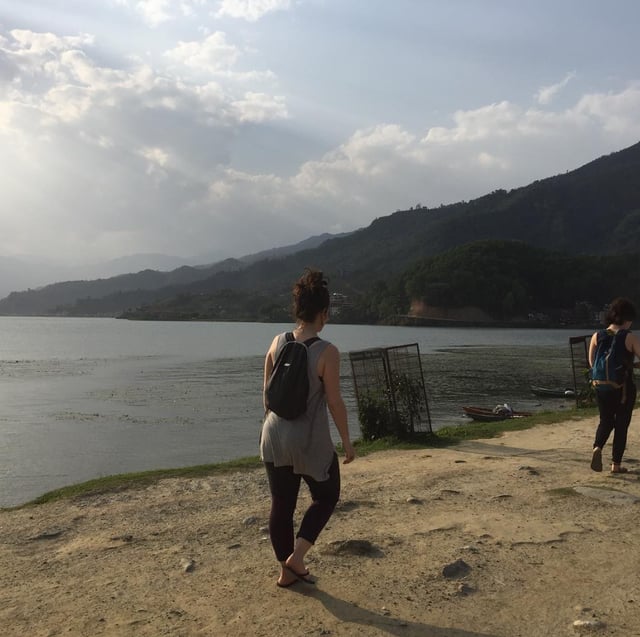
The final section of the ride leads to Beni before transferring by vehicle to Pokhara. The relaxed lakeside setting and views of the Annapurna range make it a great place to unwind.
Day 13: Pokhara to Kathmandu
Return to Kathmandu by tourist bus, passing through terraced hills and riverside towns. It’s a long but scenic journey and a good time to reflect on the experience.
Day 14: Departure Day
Your adventure ends today. You’ll be transferred to the airport for your flight home, taking with you memories of one of Nepal’s most exciting biking routes.
The adventure begins in Kathmandu, Nepal’s capital and the country’s cultural hub. Thamel, where the meeting point is located, is known for its busy streets, cafes, gear shops, and easy access to ancient temples and monuments.
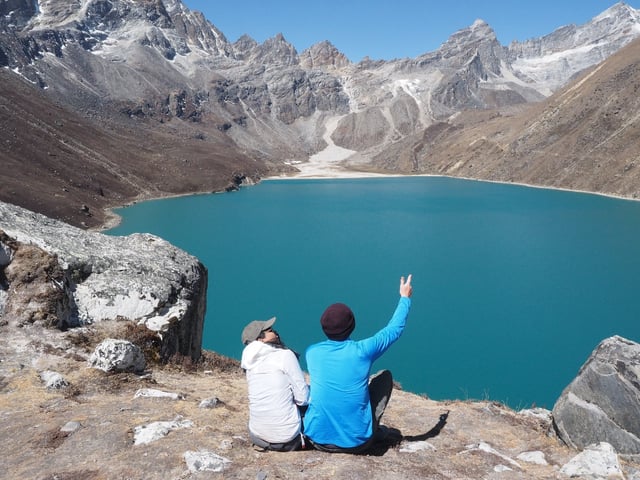
The route follows the Annapurna Circuit, one of the most recognised trekking trails in the world. From jungle-like lowlands to alpine passes, you’ll witness incredible variety in terrain, culture, and wildlife. Each village along the way offers a glimpse into Nepalese mountain life.
Your stay begins in Kathmandu with two nights in a local hotel that allows time for briefing, preparation, and rest before the ride. In Pokhara, you'll also stay in a comfortable hotel close to Phewa Lake, perfect for a stroll or relaxing evening after the ride.
On the route itself, you'll stay in traditional teahouses run by local families. These provide basic but warm hospitality, home-cooked meals, and a cosy place to rest after each day’s cycling. Shared facilities are common in remote areas, and the experience is a great way to support the local economy.
This trip is suitable for people with a moderate level of fitness and previous mountain biking experience. You’ll need to be comfortable riding on uneven trails and able to manage full-day rides over hilly terrain.
Altitude will be a factor, especially when crossing Thorang La Pass. While the itinerary includes time to acclimatise, it’s important that you're prepared for physical exertion in a low-oxygen environment.
The team are experienced in creating customised trekking and biking adventures across Nepal, with expert guides who know the Annapurna Circuit inside out. Each trip is designed to blend outdoor excitement with cultural discovery, and this biking adventure is no exception.
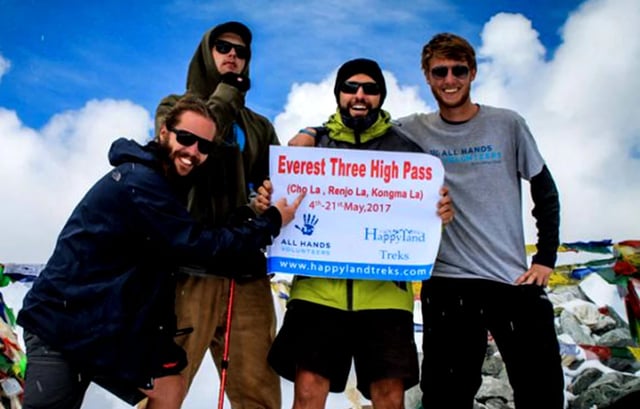
With more than 2,500 happy customers, they’ve built a reputation for reliability, local knowledge, and personal service. Their team includes guides from remote villages who bring lived experience and passion to each trip. A portion of revenue goes towards local projects, including education, water access, and supporting elderly communities.
This tour requires a moderate level of fitness as it involves daily rides of varying distances and elevations, including challenging climbs and long descents. Riders should be comfortable cycling on uneven, sometimes rough mountain trails and be prepared for full-day physical activity. Regular cardiovascular exercise and some prior mountain biking experience will help you enjoy the trip more fully.
Altitude can add to the physical challenge, especially on days crossing high passes like Thorang La. Therefore, it’s important to prepare your body for endurance and stamina. We also recommend consulting with a healthcare professional before the trip if you have any medical concerns related to fitness or altitude.
The itinerary includes specific acclimatisation days, such as the rest day in Manang, to help your body adjust to higher elevations gradually. This helps reduce the risk of altitude sickness by allowing time for oxygen levels in your blood to increase naturally. Guides will monitor the group closely for any symptoms and advise accordingly.
Despite precautions, altitude sickness can still occur. It’s essential to stay hydrated, avoid overexertion, and communicate any symptoms immediately. If necessary, adjustments will be made to the itinerary for safety, including descending to lower altitudes or resting longer.
The tour provides well-maintained mountain bikes suitable for rough and mixed terrain typical of the Annapurna Circuit. Bikes come equipped with essential features such as durable frames, multiple gears, and quality suspension systems to handle climbs and descents comfortably.
If you prefer to use your own bike, arrangements can be made, but it must be in good working order and appropriate for mountain trails. Please inform the organisers in advance to discuss logistics and any maintenance support available.
Accommodation on the route is primarily in teahouses, which are basic mountain lodges run by local families. Rooms are simple with shared bathroom facilities, warm meals, and a friendly atmosphere. This is a great opportunity to experience authentic local hospitality while supporting the community.
In Kathmandu and Pokhara, accommodation will be in comfortable hotels offering private rooms and more modern amenities. This mix allows for rest and recovery in comfort between days on the trail.
Breakfast is included during your hotel stays in Kathmandu, but lunch and dinner are not provided on those days to give you flexibility in choosing local eateries. On the mountain biking days, meals are generally provided as part of the teahouse stay and include traditional Nepali dishes designed to provide energy and warmth.
Special dietary requirements can be accommodated if notified in advance, but options may be limited in remote areas. It’s advisable to bring some snacks or energy bars for longer rides or in case of appetite fluctuations.
You will need standard mountain biking gear such as a helmet, gloves, padded shorts, and sturdy shoes. Layered clothing is essential due to varying temperatures from low valleys to high passes, including waterproof and windproof outer layers.
Other important items include sun protection (sunscreen, sunglasses), personal medications, a reusable water bottle, and a small daypack for essentials. The guides will provide a detailed packing list before the trip to help you prepare adequately.
This trip is best suited to people with some mountain biking experience and a reasonable fitness level. While the guides provide support and safety briefings, the terrain and altitude can be demanding, which may be challenging for beginners.
If you’re new to mountain biking but keen on joining, it’s recommended to practice riding on similar terrain beforehand or consider a less strenuous cycling tour to build confidence and stamina.
About the centre
Kathmandu
Operated by Happyland Treks, a partner of adventuro.
Central & Atlas Mountains, Morocco
From £1900
Arunachal Himalaya (Tawang & Siang Region), Nepal
From $2000
Bagmati Province, Nepal
From $2500
Himachal Pradesh (Shimla, Manali, Spiti), Nepal
From $1750
Arunachal Himalaya (Tawang & Siang Region), Nepal
From $1700
Bagmati Province, Nepal
From $3093