We partner with Rewilding Britain to help protect our natural spaces for future adventures.
All centres are vetted for safety and quality. Your adventure is in good hands with adventuro.
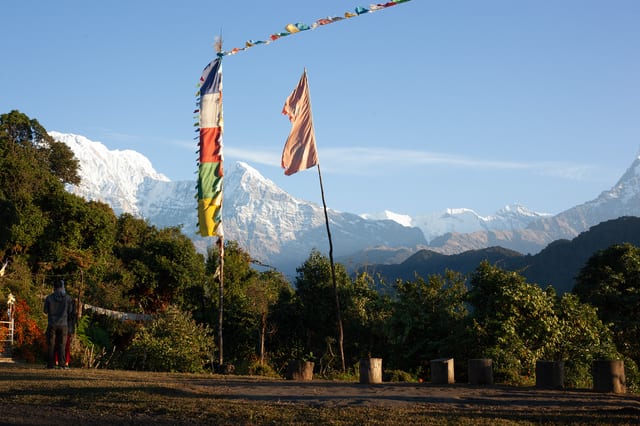
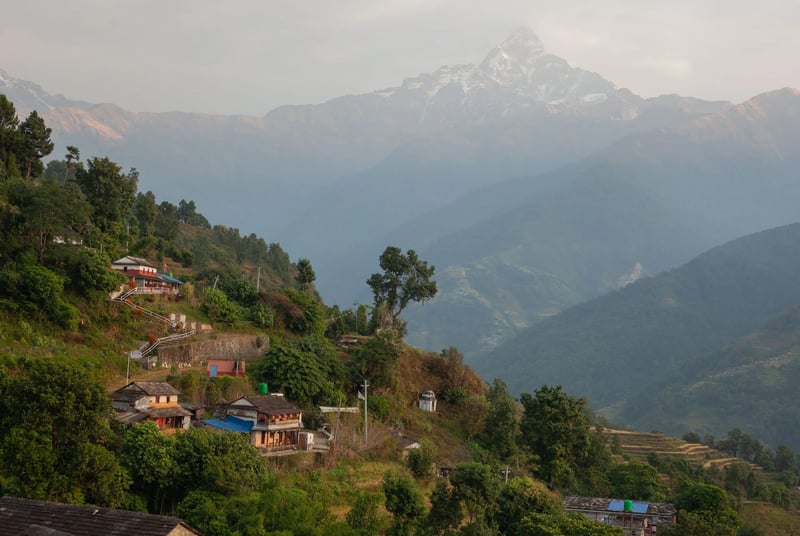
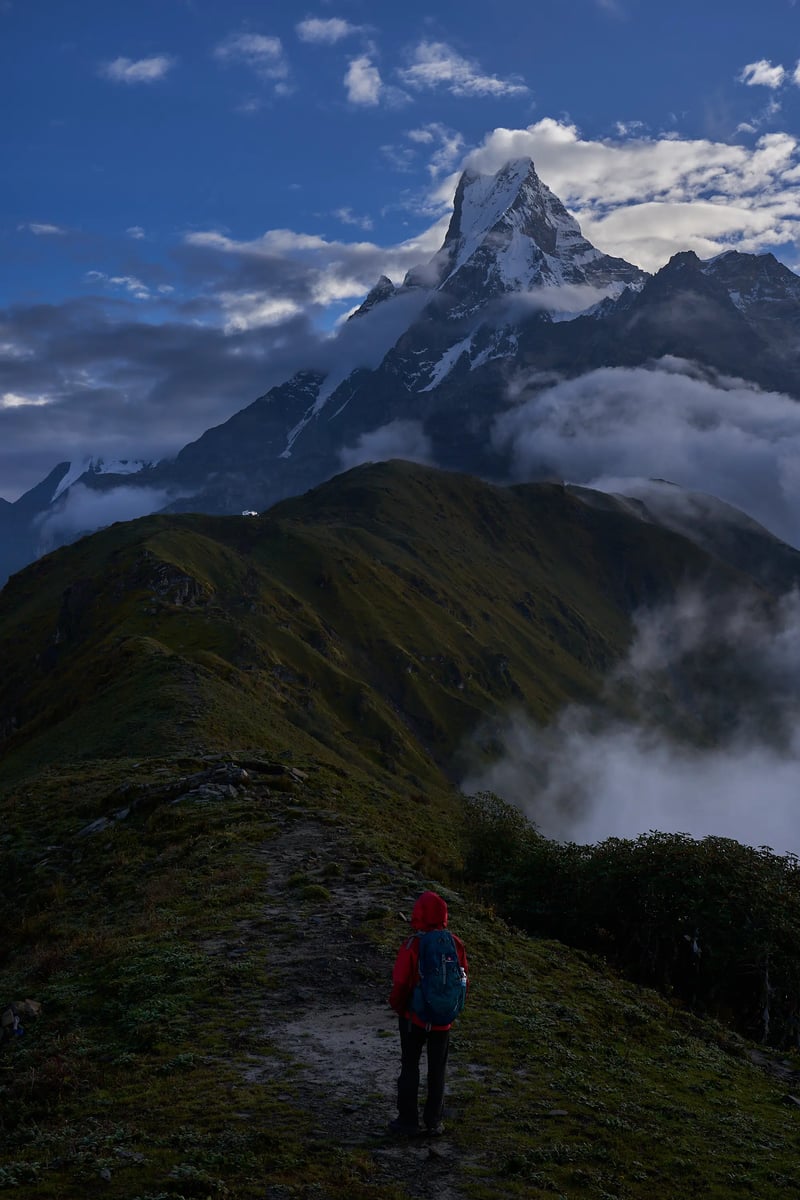
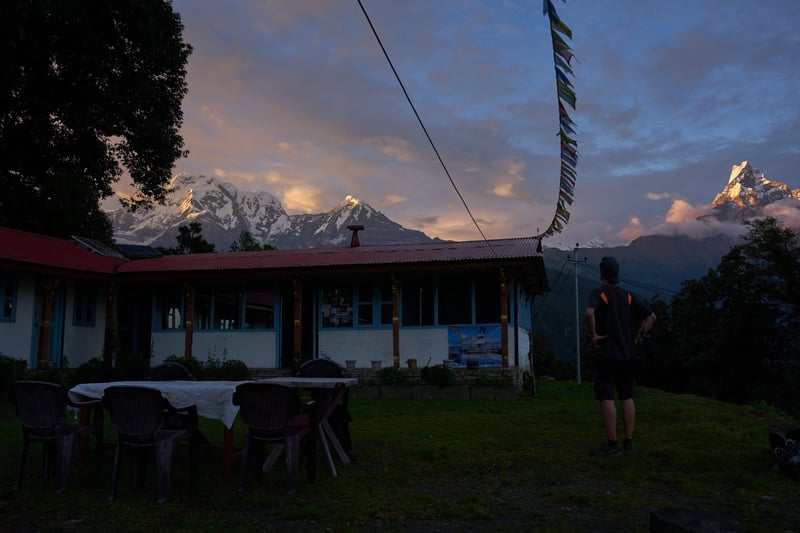
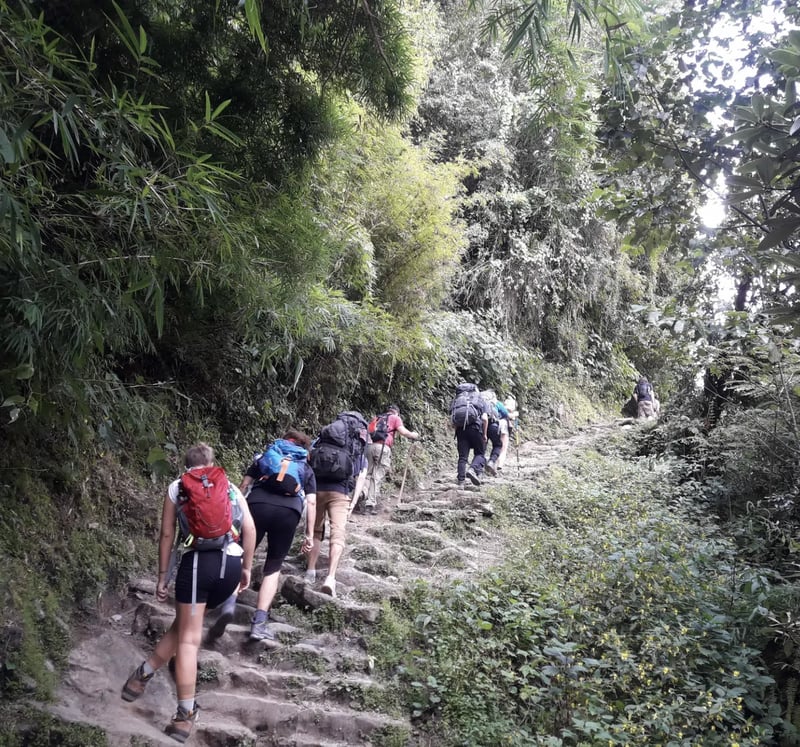
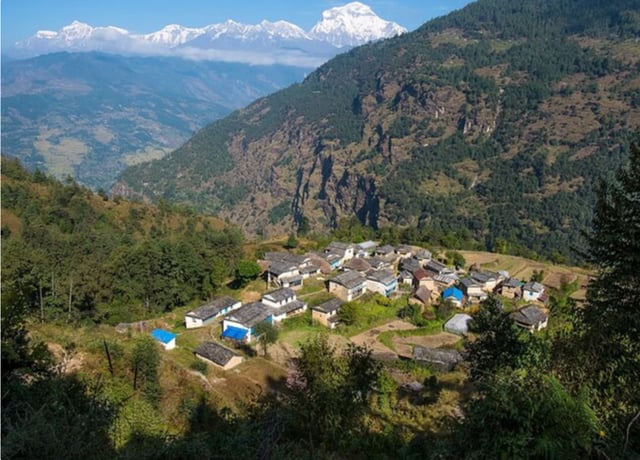
If you are looking for a short, marvelous, and quieter trekking trip, the Mardi Himal Trek blends a decent duration of and good landscapes with a quiet environment, making it a perfect choice for you. Opened in 2012, the trek may be short, but it surely provides some breathtaking adventures. You will see glacial valleys as well as a ridge east of Annapurna Sanctuary and the unparalleled beauty of the Annapurna region.
📅Detailed Itinerary
Day 1: Arrival in Kathmandu (1300 m / 4265 ft)
As you land at Tribhuvan International Airport, our representative will welcome you upon arrival and transfer you to the hotel. After check-in and a short break, we will take you to the vibrant Thamel area, where you can have lunch, exchange currency, and even shop for trekking gear. You will spend the night at the hotel.Any flight delays will result in shifting the planned activities to the next possible day.
Day 2: Kathmandu – Pokhara flight (900 m / 2952 ft) – Drive to Kade and Trek to Deurali (2,060 m / 6,758 ft) / 25 mins flight, 45 mins drive and 3.5 hrs walk
Start the day with breakfast at the hotel and drive to the airport for a scenic 25-minute flight to Pokhara, a beautiful city nestled beneath the Annapurna range. After reaching Pokhara, we will subsequently drive towards Kande. Kande is a small town renowned for the highway that passes alongside the jungle. Once you reach Kande, you are all set for the trek. You might meet other trekkers during your walk, as this trail is used by fewer trekkers. We pass through Australian Camp and Pothana. After checking in at the ACAP Annapurna Conservation Area Project check-post to register you – hike up to Deurali and spend the night at a local lodge.
Day 3: Deurali to Forest Camp (2,500 m / 8,200 ft) – 6 hrs walk
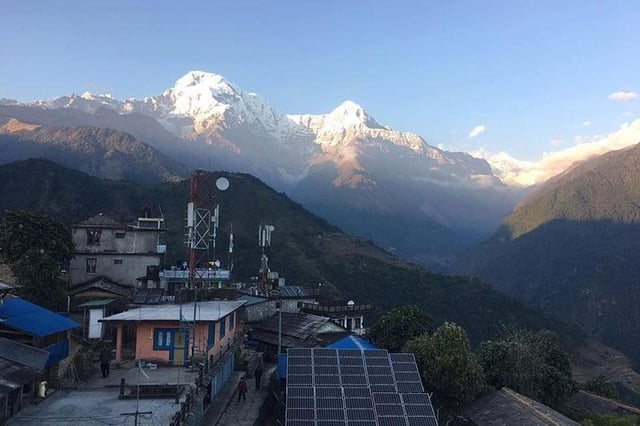
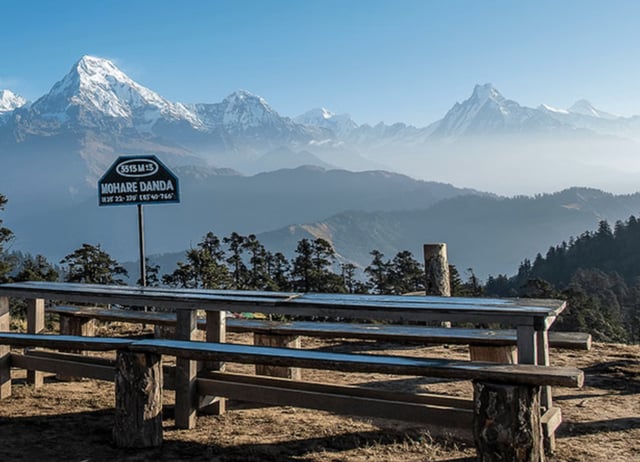
After breakfast, start your walk to forest Camp. The trail gradually ascends through beautiful forest landscapes, requiring you to stay well-hydrated throughout the journey. As you climb higher, the forest opens up to reveal spectacular panoramic views of Annapurna South (7,219 m), Himchuli (6,441 m), and the iconic Machapuchhre (6,993 m). In the distance, you might catch glimpses of higher settlements like Chhomrong and Ghandruk. Your day concludes at forest camp, where a breathtaking sunset awaits, promising an unforgettable evening in the mountains. Overnight at the lodge.
Day 4: Forest Camp to Low Camp (2,970 m / 9,744 ft) to High Camp (3,550 m / 11,647ft) 7 hrs walk:
You start the day after breakfast and
walk your way through a beautiful forest. Once you reach Low Camp, enjoy your
lunch. You should keep yourself hydrated throughout the journey. While walking,
you get to witness beautiful mountains on your way, including South Annapurna,
Himchuli, and Mt. Fishtail. On this day, you will be able to observe
settlements in higher hills and at the base of mountains like Chhomrong,
Ghandruk, and the base camp for Fishtail. Your journey ends for the day at High
Camp, where a beautiful sunset view will greet you. You spend your night at a
local lodge.
Day 5: High Camp to Mardi Himal Base Camp (4,500 m) – Badal Danda – 7 hrs round trip
An early morning start brings you to the highlight of the trek — Mardi Himal Base Camp. After enjoying a sunrise breakfast, you'll embark on a challenging but rewarding hike. The trail becomes steeper and rockier as you ascend, testing your trekking skills. A packed lunch will sustain you during this remote stretch with limited teahouse access. Upon reaching the viewpoint, you'll be rewarded with panoramic mountain views that include the majestic ranges of Annapurna, Mardi Himal, and the distinctive Fishtail peak. The trail passes through Badal Danda, offering unique landscape perspectives before returning to High Camp for the night.
Day 6: Badal Danda to Lwang Village (1,460 m / 4,790 ft) – 6 hrs walk
Descending from the higher altitudes, today's trek takes you through stunning rhododendron and pine forests. The trail offers a gradual descent, allowing you to enjoy the changing landscape and vegetation. The journey provides glimpses of local mountain life and diverse ecological zones. You'll arrive at Lwang Village, a picturesque Gurung settlement known for its traditional homestays and cultural experiences. In the evening, you will enjoy a cultural program by the local people. Overnight at homestay.
Day 7: Lwang Village to Pokhara (820 m / 2,690 ft) – 2 hrs drive
Start your morning with a short walk through the village's tea garden to experience how tea is grown and harvested, while capturing magnificent mountain views and experiencing local rural life. Then return to the homestay for a hearty breakfast. A scenic drive takes you back to Pokhara, offering spectacular views of agricultural landscapes, rivers, streams, and local countryside, allowing you to absorb the diverse Nepalese terrain. Upon reaching Pokhara, you'll check into your hotel.
Pokhara, a scenic city, is known for its breathtaking scenery dotted with lakes, temples, caves, and waterfalls. On a lucky day, you might even be able to spot the majestic ranges of Langtang, Ganesh Himal, Manaslu, and the Gorkha massif. After lunch, you can explore attractions like Devi's Fall, local caves, and visit the International Mountain Museum. The museum showcases Nepal’s mountaineering history, including the high mountains and alpine life, and contains historical artifacts of many climbers. You could explore the museum, get information on mountaineering through documentaries and resources available, and later go boating on beautiful Fewa Lake. Overnight at hotel in Pokhara.
Day 8: Drive from Pokhara – Kathmandu (1300 m / 4,265 ft) – 7 hrs drive
After breakfast, you drive to the Pokhara tourist bus park and drive back to Kathmandu approximately 206 km. You drive through beautiful bending mountain highways that stretch along the river and pass through beautiful landscapes. Once in Kathmandu, we will transfer you to your respective hotel, and you will be given free time to wander around. Overnight will be spent at the hotel.
Day 09: Departure Day
As per your flight schedule, you will be transferred to the international airport of Kathmandu three hours prior to the flight time, and your tour ends here.
This trek does not require previous trekking experience, but participants should be comfortable walking for several hours a day on uneven ground. Some sections are steep, and altitude gain is gradual but continuous.
You should be prepared for basic accommodation at higher elevations and changing weather conditions. Following guide advice on pacing, hydration, and acclimatisation is essential.
✔ Award-Winning Expertise
More than 2 decades of experience and a trusted trusted company with accolades for exceptional services.
✔ Local Culture & Eco Values
Experience authentic Nepal while supporting environmental sustainability and local traditions.
✔ Sustainable Development
Committed to fostering responsible tourism with a focus on long-term growth and originality.
✔ Premium Services
We offer the best in comfort, safety, and quality for every travel adventure.
✔ Best Price Guarantee
Enjoy top-notch experiences at the most competitive prices in the industry.
As you land at Tribhuvan International Airport, our representative will welcome you upon arrival and transfer you to the hotel. After check-in and a short break, we will take you to the vibrant Thamel area, where you can have lunch, exchange currency, and even shop for trekking gear. You will spend the night at the hotel.Any flight delays will result in shifting the planned activities to the next possible day.
You start the day after breakfast and walk your way through a beautiful forest. Once you reach Low Camp, enjoy your lunch. You should keep yourself hydrated throughout the journey. While walking, you get to witness beautiful mountains on your way, including South Annapurna, Himchuli, and Mt. Fishtail. On this day, you will be able to observe settlements in higher hills and at the base of mountains like Chhomrong, Ghandruk, and the base camp for Fishtail. Your journey ends for the day at High Camp, where a beautiful sunset view will greet you. You spend your night at a local lodge.
Start your morning with a short walk through the village's tea garden to experience how tea is grown and harvested, while capturing magnificent mountain views and experiencing local rural life. Then return to the homestay for a hearty breakfast. A scenic drive takes you back to Pokhara, offering spectacular views of agricultural landscapes, rivers, streams, and local countryside, allowing you to absorb the diverse Nepalese terrain. Upon reaching Pokhara, you'll check into your hotel.
Pokhara, a scenic city, is known for its breathtaking scenery dotted with lakes, temples, caves, and waterfalls. On a lucky day, you might even be able to spot the majestic ranges of Langtang, Ganesh Himal, Manaslu, and the Gorkha massif. After lunch, you can explore attractions like Devi's Fall, local caves, and visit the International Mountain Museum. The museum showcases Nepal’s mountaineering history, including the high mountains and alpine life, and contains historical artifacts of many climbers. You could explore the museum, get information on mountaineering through documentaries and resources available, and later go boating on beautiful Fewa Lake. Overnight at hotel in Pokhara.
· All Airport Pick-up and Drop with a friendly representative
· 3-star standard hotels with breakfast in Kathmandu
· 3-star standard hotels with breakfast in Pokhara
· Tea house (Lodge) accommodation during the trekking.
· All meals (Breakfast, Lunch and Dinner) during the trekking
· A professional English speaking Government Licensed trekking guide,
· Porters (Helper) to carry the bags
· A government-licensed assistant guide
· Air ticket (Kathmandu-Pokhara)
· Luxury Tourist Bus (Pokhara-Kathmandu)
· All food, drinks, Lodge, salary, Insurance, medical equipment, all transport for Trekking Staff.
· Private transfer (Pokhara -Kande)
· Private transfer (Lwang- Pokhara)
· Trekking Permit (TIMS).
· Annapurna Conservation Area Permit (ACAP).
· Light down Jacket, a sleeping bag, and a duffel bag.
· First Aid medicine box with an oximeter to check your oxygen levels
· Certificate after completion of the trip
· Seasonal fruits
· Farewell dinner
· All government taxes
General
Upper Body – Head / Ears / Eyes
Hands
Core Body
Lower Body – Legs / Feet
Medicines and First Aid
Our guide will carry a first aid kit, but you may bring your personal medical supplies if you wish. Recommended items include:
Miscellaneous
Optional Items
This route is easier than Annapurna Base Camp or the Annapurna Circuit due to shorter daily distances and quieter trails. However, it still reaches high altitude and includes steep sections.
A steady pace and good general fitness are important, even though no technical trekking skills are required.
The highest point is Mardi Himal Base Camp at around 4,500 metres. This is reached as a day hike without an overnight stay at that altitude.
Descending back to High Camp reduces altitude-related risk while still allowing time at the viewpoint.
Accommodation includes hotels in Kathmandu and Pokhara, teahouses and lodges during the trek, and a homestay in Lwang village.
Facilities become simpler at higher elevations, with shared bathrooms and limited electricity.
Yes, many first-time trekkers choose this route. The itinerary includes acclimatisation days and manageable walking hours.
Participants should still be prepared for long uphill sections and basic mountain facilities.
Spring and autumn offer the most stable weather and clear mountain views.
Winter and monsoon departures are possible but come with colder temperatures or reduced visibility.
This trail is significantly quieter than other Annapurna routes, particularly beyond Forest Camp.
It is well suited to trekkers seeking a less crowded experience.
Meals are taken at lodges and teahouses, offering simple Nepali dishes and basic international options.
Food choices become more limited at higher elevations but remain filling and suitable for trekking.
Yes, a TIMS card and Annapurna Conservation Area Permit are required and arranged for you.
You do not need to organise permits independently.
A down jacket, sleeping bag, fleece liner, and duffel bag are provided if required.
All personal clothing, footwear, and small items should be brought by participants.
Yes, personal travel insurance covering high-altitude trekking and helicopter evacuation is required.
Proof of insurance may be requested before departure.

About the centre
Thamel, Kathmandu, Nepal
Operated by Mountain Delights Treks & Expedition, a partner of adventuro.
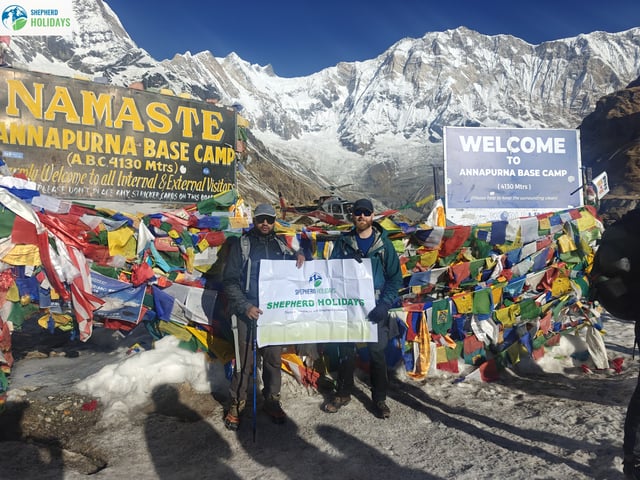
Himachal Pradesh (Shimla, Manali, Spiti), Nepal
From $813
Arunachal Himalaya (Tawang & Siang Region), Nepal
From $1450
Arunachal Himalaya (Tawang & Siang Region), Nepal
From $1700
Himachal Pradesh (Shimla, Manali, Spiti), Nepal
From $1750
Arunachal Himalaya (Tawang & Siang Region), Nepal
From $2000
Bagmati Province, Nepal
From $2500
Bagmati Province, Nepal
From $1358
Bagmati Province, Nepal
From $760