We partner with Rewilding Britain to help protect our natural spaces for future adventures.
All centres are vetted for safety and quality. Your adventure is in good hands with adventuro.
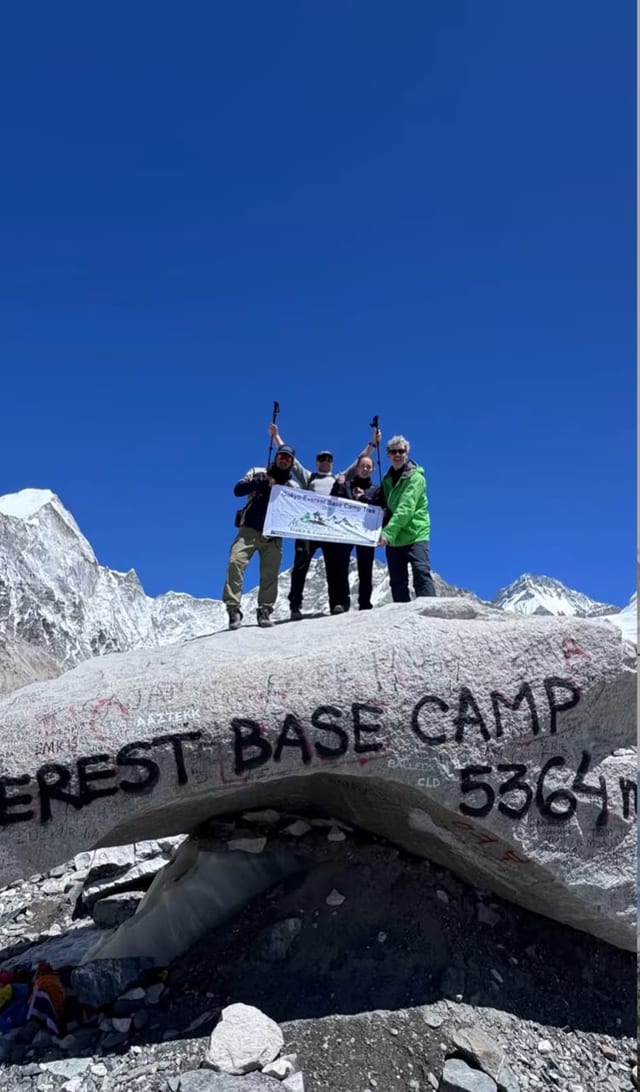
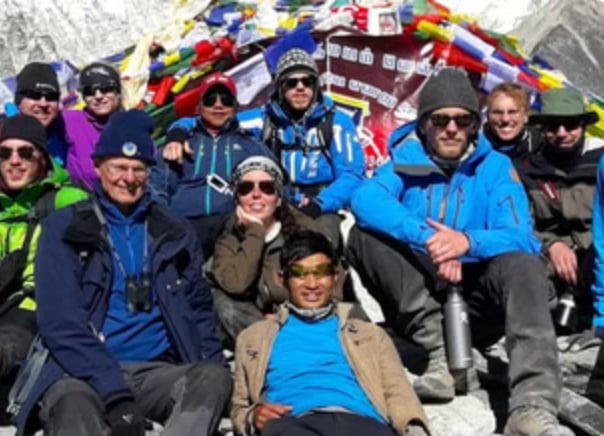
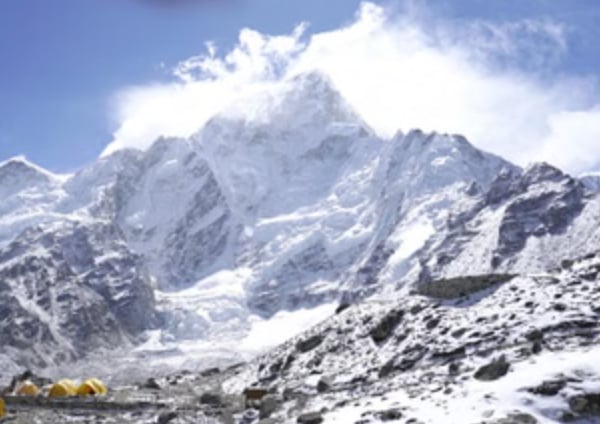
Everest Base Camp Trek offers once-in-a-lifetime experience to trekkers and proves to be an iconic trip to the Himalayas. Everest Base Camp Trek is exactly the route that has been used by scores of famous mountaineers during their expedition adventure to the highest point on earth. Although this is quite a crowded trekking route, thousands of trekking aspirants want to be on this route to be at the base of Mt. Everest and experience the joy of seeing the highest mountain peak in the world along with other numbers of gigantic peaks.
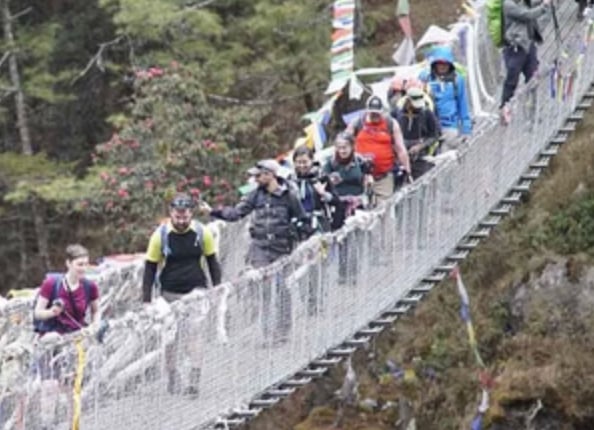
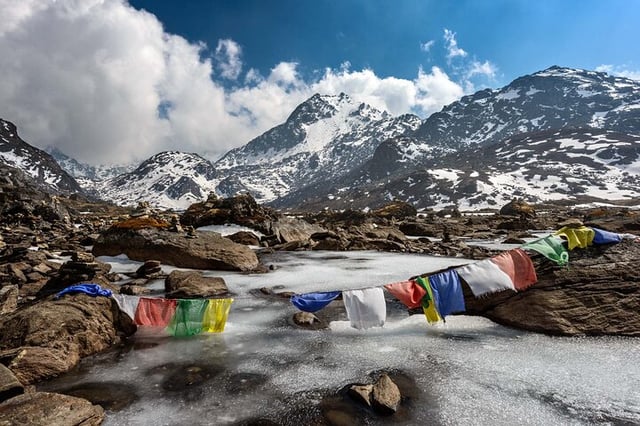
Several suspension bridges, prayer flags, mani walls, and monasteries, in addition to the magnificent mountains that come across the trail, add to your trek experience. A closer look at the Sherpa lifestyle living in a higher Himalayan region with their distinct culture is an attraction to the trip. The overall experience of this trekking tour to the Everest base camp is inexpressible in mere words. It’s a simply wonderful feeling that stays with you for a lifetime.
Day 01: Arrival in Kathmandu (1300 m/4265ft)
Arrival in Kathmandu. Meet with our friendly representative at the arrival terminal of only International airport. And, then you will be transferred to your hotel. You check-in at your Hotel and then after short rest you can go to explore market area of Thamel – where you can eat your supper, change money, buy some stuffs from supermarket, or buy trekking gears – if you need to do. Later we take you to our office for the trip briefing. Overnight at your hotel. Delay of any kind will postpone the events for next day according to feasibility.
Day 2: Kathmandu– Lukla (2,860 m/ 9,383 ft) 30 mins Fly. Walk to Phakding (2690 m/8825) ,3.5 hrs walk:
We drive you to the domestic airport early morning for a flight to Lukla. A flight of 30 minutes flying over Nepal’s mid-hills and mountains parallel to the Himalayan ranges will be an amazing adventurous experience on its own. Landing on an airstrip of a beautiful town Lukla – gateway to the Everest trek, you will stop for a short while to fix your luggage, meet with crew members, and have a cup of tea/coffee to start the day. After about 3.5 hours of trekking, you’ll reach the charming village of Phakding, nestled on the banks of the Dudh Koshi River, known for its crystal-clear, glacial-fed waters.
You’ll spend the night at a local teahouse in Phakding, relaxing and preparing for the adventure ahead.
Day 3: Trek Phakding – Namche (3,440 m/11,286 ft), 5 hrs walk:
The second day of your trek will be an exciting yet challenging walk and informative as well since you enter the Sagarmatha National Park. Today you will be able to see Mount Everest for the first time from your trek .The first part of the walk is beautiful along the Dudh Koshi river in the pine and deodar cedar forest with a couple of small settlements. As you approach just below the ridge of Namche, you cross the highest hanging bridge which is truly breathtaking.
For the last part, you walk steep two to three hours uphill in the pine forest to reach Namche Bazaar. It used to be a trading post for Tibetan and Nepali merchants who cross over the high Himalayan pass called Nang Pa La pass (5,806 m/ 19,050 ft). Earlier as an important trans-Himalayan trading hub, Namche still holds its prominence for its vibrant market place for locals and traders. Overnight at Namche Bazar.
Day 4: Acclimatization day to the Everest View Hotel (3,880 m/12565ft) – Namche 1.5 – 4 hrs walk:
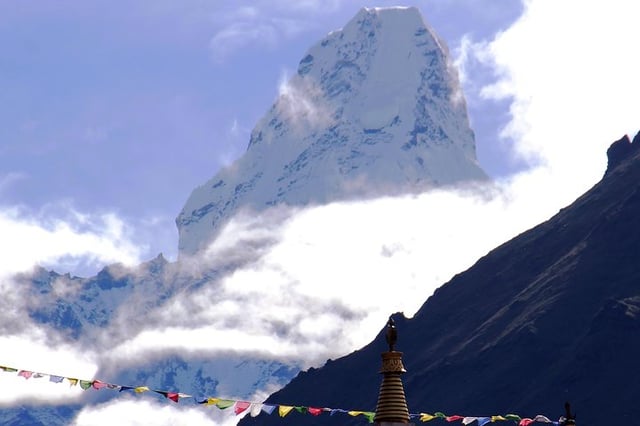
Today we take an early breakfast and then set out to acclimatize hiking. First, visit Namche Bazaar- to the top of Namche where the Sherpa Museum is located. You will then visit the Sagarmatha National Park headquarter from where you can enjoy breathtaking panoramas of the mountains. The peak you can view includes Mt. Everest (8,848 m /29,029 ft), Mt. Lhotse (8,516 m/ 27,940 ft), Mt. Ama Dablam (6,812 m/ 22,349 ft), Mt. Thamserku (6,608 m/ 21,680 ft), Kantenga (6,782 m/ 22,251 ft), Cho-Latse (6,440 m/ 21,128 ft), Tawache or Taboche (6,542 m/ 21,463 ft), Kongde Peak (6,187 m/ 20,298 ft) and others. If you are still energetic and want to go higher then we hike up the Syangboche Airport (Old Airport) and Everest View Hotel. After spending some time we will come back to your hotel in the afternoon and the Overnight at the local lodge.
Day 5: Trek Namche – Tengboche (3,860 m/12,664 ft) ,5 hrs walk:
Trek to Tengboche comprises ascending, descending, and gentle walk along relatively flat terrain. The first part of the walk is beautiful with a rewarding view of the beautiful Himalayas. During transit, you will walk down to the river in Phungi Tenga River, where the lunch is served, and ascend a very steep hill. After reaching Tengboche, and checking into a teahouse, you will have the chance to look around the area and visit the Tengboche monastery, which is the old Tibetan monastery located in the Khumbu region and is known to celebrate the fascinating festival of Mani Rimdu that falls in October- November (date is fixed according to the lunar calendar). Catch a glimpse of an awe-inspiring mountain view of the peaks including Mt. Everest, Mt. Lhotse, Mt. Ama Dabalam, Mt. Thmasreku, Gokyo Ri, Kongde Peak, Kantenga, Tawache, etc. Overnight at lodge.
Day 6: Trek to Dingboche (4,410 m/ 14,468 ft), 4.5 hours walk:
On this day we will first greet the Mighty Everest along with some other mountains. Then we will have breakfast and follow the trail into beautiful forest and trek down to the Imja Khola and continue passing through the village of Pangboche (3,900 m/12,795 ft). The hike is not that strenuous, and the view of the peaks make the day breathtaking. The sceneries along our path to Dingboche, known as the “summer valley”, is amazing. We spend our night at Dingboche.
Day 7: Acclimatization day (4700 m/5,083m) back to Dingboche ,4 hrs walk:
Today is a rest and acclimatization day in Dingboche, with two great hiking options to help you adjust to the altitude. After breakfast, you can take a gentle walk to Chukung Valley following the Imja River. Along the way, enjoy beautiful views of Lhotse Shar, Ama Dablam, and Island Peak. Have lunch at Chukung before walking back to Dingboche or you can also choose a steeper hike to Nangkartshang Peak (about 5,083 m). This climb is more challenging but offers amazing views of Makalu, Lhotse, Cho Oyu, and Ama Dablam. Then return to Dingboche. Overnight at a local lodge.
Day 8: Trek to Lobuche (4,910 m/ 16,108 ft), 4 hrs walk:
Trek starts to be a bit demanding from here. As you go to higher altitudes and deserted alpine glacial land, you will struggle to breathe more than in earlier days. On this day we pass above beautiful pastureland and the village of Pheriche where the Trekkers Aid Post that offers treatment and consultation to trekkers on altitude sickness can be seen along the river bed. We trek our way to Dhugla pass for lunch where memorials of those who lost their life in the Himalayas are situated and cross the yak pastures reaching Lobuche (4,910m). Overnight at the lodge in Lobuche.
Day 9: Trek to Everest Base Camp (5,364 m/ 17,598 ft) then back to Gorakshep (5,164 m/ 16,942 ft) , 6-8 hours walk:
After an early breakfast, your big day begins. One of the most special treks alongside Everest is through the famous Khumbu Glacier to Gorak Shep – the last stop before Everest Base Camp. On the way, you’ll be surrounded by magnificent peaks such as Pumori, Nuptse, Lingtren, Khumbutse, and Changtse, with the impressive Khumbu Glacier beside your trail.
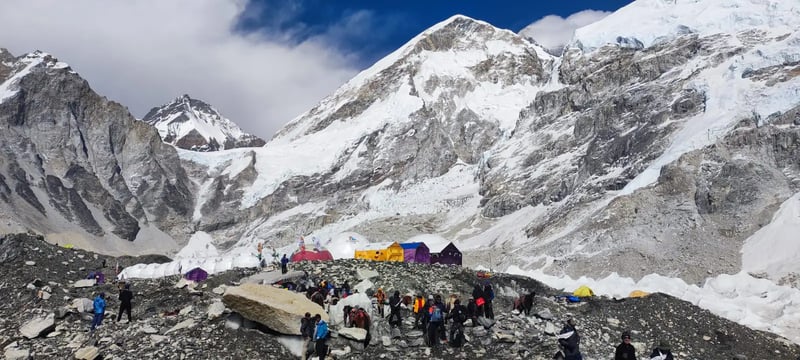
Capture the moment as you reach Everest Base Camp (5,364 m) — a dream for thousands. In spring (March–May), the area is filled with colorful expedition tents. Though the view of Everest from the Base Camp isn’t the best, standing at its foot is an unforgettable experience.After some time there, return to Gorakshep for the night. Tomorrow, you’ll hike to Kala Patthar, the best viewpoint for Mount Everest and surrounding Himalayan giants.
Day 10: Hike up to Kalapatthar (5,545 m/ 18,192 ft) - trek down to Pheriche (4,371 m/ 14,340 ft), walk 6 hours:
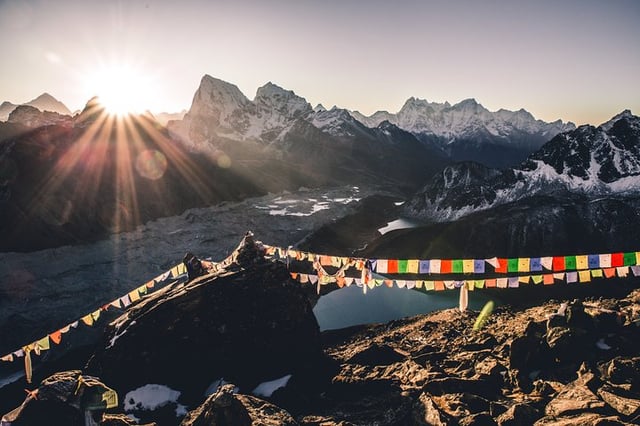
Wake up early, and start the thrilling day at pre-dawn by steep climb to Kalapatthar to catch the sunrise view over the Himalayan peaks. Kalapatthar offers 360 degree views of the mountains including the tallest south face of the Mt. Everest, Lhotse face, Nuptse, Ama Dablam, Taboche, Cholatse, Lobuche East, and Pumori. It is also the highest point of your trek . Indulge yourself with the view of the sunrise, mountain peaks, and Khumbu glaciers, and take photos. It is an indescribable moment when the world's highest mountain Everest luxuriates in its morning glory. Go down to your lodge for breakfast and head in the direction of Pheriche. Stay at the lodge in Pheriche.
Day 11: Trek from Pheriche (4,371 m / 14,340 ft) to Namche Bazaar (3,440 m / 11,286 ft) – 6–7 hours walk
Today’s trek is mostly downhill through beautiful alpine scenery. You pass Pangboche and Tengboche, cross suspension bridges over the Dudh Koshi River, and enjoy changing landscapes before reaching the lively market town of Namche Bazaar
Day 12: Trek from Namche– Lukla (2,840 m/ 9,317 ft) , 7 hrs walk:
On the last day of the trek, walk along the Dudh Koshi River, cross the suspension bridge, and through pine forests lead back to Lukla. Upon reaching Lukla, we thank our crew members and celebrate the completion of our trip. We spend our final night in the mountain air staying at a local lodge.
Day 13: Lukla/Ramechaap-– Kathmandu (1300 m/ 4265 ft), fly /30 mins:
After an early breakfast in Lukla, you'll head to the Tenzing- Hillary Airport for your scenic flight back to Ramechhap (or Kathmandu, depending on the season and flight schedule). The flight will bring changes in air and leave mountain fresh air back, but you get to rest your body after a long trek. If flight goes to Ramechhap you need to drive for 4-5 hrs.
You will get good food after weeks of limited options in the Himalayas. We transfer you to the hotel and leave you free for the day to explore the nearest market and relax on your own. Overnight at the hotel in Kathmandu
Day 14: Departure Day
As per your flight schedule, you will be transferred to the international airport. Your memorable Nepal adventure ends here.
You should be comfortable walking for multiple consecutive days, often 4–7 hours, and coping with basic mountain lodge living. The terrain is non-technical, but you’ll be on steep trails, stone steps, and uneven moraine where careful foot placement matters.
Altitude is the main challenge. Prior high-altitude trekking is strongly recommended, and you need to be prepared to walk slowly, hydrate consistently, and follow acclimatisation guidance. Travel insurance that includes emergency helicopter evacuation is essential, even for strong trekkers.
This itinerary is structured to manage altitude properly rather than racing to Base Camp. Two acclimatisation days and a return route that includes Phortse give a better balance of challenge, recovery, and cultural immersion than a straight up-and-down approach.
Logistics are handled end-to-end: flights, permits, accommodation, meals on trek, and a professional guiding team with porter support. That means you can focus on pacing, staying well at altitude, and getting the most from the Khumbu region rather than managing day-to-day admin.
✔ Award-Winning Expertise
More than 2 decades of experience and a trusted trusted company with accolades for exceptional services.
✔ Local Culture & Eco Values
Experience authentic Nepal while supporting environmental sustainability and local traditions.
✔ Sustainable Development
Committed to fostering responsible tourism with a focus on long-term growth and originality.
✔ Premium Services
We offer the best in comfort, safety, and quality for every travel adventure.
✔ Best Price Guarantee
Enjoy top-notch experiences at the most competitive prices in the industry.
Arrival in Kathmandu. Meet with our friendly representative at the arrival terminal of only International airport. And, then you will be transferred to your hotel. You check-in at your Hotel and then after short rest you can go to explore market area of Thamel – where you can eat your supper, change money, buy some stuffs from supermarket, or buy trekking gears – if you need to do. Later we take you to our office for the trip briefing. Overnight at your hotel. Delay of any kind will postpone the events for next day according to feasibility.
We drive you to the domestic airport early morning for a flight to Lukla. A flight of 30 minutes flying over Nepal’s mid-hills and mountains parallel to the Himalayan ranges will be an amazing adventurous experience on its own. Landing on an airstrip of a beautiful town Lukla – gateway to the Everest trek, you will stop for a short while to fix your luggage, meet with crew members, and have a cup of tea/coffee to start the day. After about 3.5 hours of trekking, you’ll reach the charming village of Phakding, nestled on the banks of the Dudh Koshi River, known for its crystal-clear, glacial-fed waters.You’ll spend the night at a local teahouse in Phakding, relaxing and preparing for the adventure ahead.
The second day of your trek will be an exciting yet challenging walk and informative as well since you enter the Sagarmatha National Park. Today you will be able to see Mount Everest for the first time from your trek .The first part of the walk is beautiful along the Dudh Koshi river in the pine and deodar cedar forest with a couple of small settlements. As you approach just below the ridge of Namche, you cross the highest hanging bridge which is truly breathtaking.For the last part, you walk steep two to three hours uphill in the pine forest to reach Namche Bazaar. It used to be a trading post for Tibetan and Nepali merchants who cross over the high Himalayan pass called Nang Pa La pass (5,806 m/ 19,050 ft). Earlier as an important trans-Himalayan trading hub, Namche still holds its prominence for its vibrant market place for locals and traders. Overnight at Namche Bazar.
Today we take an early breakfast and then set out to acclimatize hiking. First, visit Namche Bazaar- to the top of Namche where the Sherpa Museum is located. You will then visit the Sagarmatha National Park headquarter from where you can enjoy breathtaking panoramas of the mountains. The peak you can view includes Mt. Everest (8,848 m /29,029 ft), Mt. Lhotse (8,516 m/ 27,940 ft), Mt. Ama Dablam (6,812 m/ 22,349 ft), Mt. Thamserku (6,608 m/ 21,680 ft), Kantenga (6,782 m/ 22,251 ft), Cho-Latse (6,440 m/ 21,128 ft), Tawache or Taboche (6,542 m/ 21,463 ft), Kongde Peak (6,187 m/ 20,298 ft) and others. If you are still energetic and want to go higher then we hike up the Syangboche Airport (Old Airport) and Everest View Hotel. After spending some time we will come back to your hotel in the afternoon and the Overnight at the local lodge.
On this day we will first greet the Mighty Everest along with some other mountains. Then we will have breakfast and follow the trail into beautiful forest and trek down to the Imja Khola and continue passing through the village of Pangboche (3,900 m/12,795 ft). The hike is not that strenuous, and the view of the peaks make the day breathtaking. The sceneries along our path to Dingboche, known as the “summer valley”, is amazing. We spend our night at Dingboche.
Today is a rest and acclimatization day in Dingboche, with two great hiking options to help you adjust to the altitude. After breakfast, you can take a gentle walk to Chukung Valley following the Imja River. Along the way, enjoy beautiful views of Lhotse Shar, Ama Dablam, and Island Peak. Have lunch at Chukung before walking back to Dingboche or you can also choose a steeper hike to Nangkartshang Peak (about 5,083 m). This climb is more challenging but offers amazing views of Makalu, Lhotse, Cho Oyu, and Ama Dablam. Then return to Dingboche. Overnight at a local lodge.
Trek starts to be a bit demanding from here. As you go to higher altitudes and deserted alpine glacial land, you will struggle to breathe more than in earlier days. On this day we pass above beautiful pastureland and the village of Pheriche where the Trekkers Aid Post that offers treatment and consultation to trekkers on altitude sickness can be seen along the river bed. We trek our way to Dhugla pass for lunch where memorials of those who lost their life in the Himalayas are situated and cross the yak pastures reaching Lobuche (4,910m). Overnight at the lodge in Lobuche.
After an early breakfast, your big day begins. One of the most special treks alongside Everest is through the famous Khumbu Glacier to Gorak Shep – the last stop before Everest Base Camp. On the way, you’ll be surrounded by magnificent peaks such as Pumori, Nuptse, Lingtren, Khumbutse, and Changtse, with the impressive Khumbu Glacier beside your trail.
Capture the moment as you reach Everest Base Camp (5,364 m) — a dream for thousands. In spring (March–May), the area is filled with colorful expedition tents. Though the view of Everest from the Base Camp isn’t the best, standing at its foot is an unforgettable experience.After some time there, return to Gorakshep for the night. Tomorrow, you’ll hike to Kala Patthar, the best viewpoint for Mount Everest and surrounding Himalayan giants.
Today’s trek is mostly downhill through beautiful alpine scenery. You pass Pangboche and Tengboche, cross suspension bridges over the Dudh Koshi River, and enjoy changing landscapes before reaching the lively market town of Namche Bazaar.
On the last day of the trek, walk along the Dudh Koshi River, cross the suspension bridge, and through pine forests lead back to Lukla. Upon reaching Lukla, we thank our crew members and celebrate the completion of our trip. We spend our final night in the mountain air staying at a local lodge.
After an early breakfast in Lukla, you'll head to the Tenzing- Hillary Airport for your scenic flight back to Ramechhap (or Kathmandu, depending on the season and flight schedule). The flight will bring changes in air and leave mountain fresh air back, but you get to rest your body after a long trek. If flight goes to Ramechhap you need to drive for 4-5 hrs.You will get good food after weeks of limited options in the Himalayas. We transfer you to the hotel and leave you free for the day to explore the nearest market and relax on your own. Overnight at the hotel in Kathmandu.
As per your flight schedule, you will be transferred to the international airport. Your memorable Nepal adventure ends here.
It’s challenging mainly because of altitude and the length of the itinerary, not because the trail is technical. You’ll have long days on uneven paths, stone steps, and glacial moraine near Base Camp, which can be tiring even for fit people.
A steady pace matters more than speed. Most strong trekkers do well if they follow acclimatisation guidance, hydrate, and accept that days above 4,000 m will feel slower and more effortful.
Everest Base Camp is at 5,364 m, and Kala Patthar is higher at 5,545 m. The extra height at Kala Patthar is a big reason it’s included: it’s where many trekkers get their best panoramic views.
At these altitudes, oxygen availability is significantly reduced, and small issues (poor sleep, dehydration, minor illness) can become bigger problems. That’s why the itinerary includes acclimatisation hikes and a gradual ascent profile.
No ropes, crampons, or climbing skills are required for this route. You’re trekking on established trails and staying in lodges, not camping on the glacier.
That said, you should be confident walking on rocky, uneven ground and on steep descents. Trekking poles can help a lot, particularly on the way down.
You’ll stay in teahouses/lodges, which are basic mountain guesthouses. Rooms are typically twin-share with simple bedding, and heating is usually in the dining area rather than bedrooms.
Facilities become simpler higher up. Expect limited hot showers, shared toilets, and occasional water/charging costs at altitude, depending on the lodge.
Meals are provided during the trek, generally three meals a day with tea/coffee offered three times daily. Menus vary by altitude but commonly include dal bhat, noodles, rice dishes, soups, eggs, potatoes, and simple desserts.
As you go higher, the selection becomes narrower and portions can feel smaller, so bringing a few familiar snacks can help. Staying fuelled is important for warmth and recovery.
You spend two nights in Namche and do an acclimatisation hike to higher altitude, then return to sleep lower. The second acclimatisation day is based in Dingboche with a hike towards Chhukung.
This “climb high, sleep lower” approach helps your body adapt more safely. It doesn’t remove all risk, but it improves your chances of feeling stronger and reducing altitude illness.
Guides monitor symptoms and will adjust pacing or stop early if needed. Mild symptoms can often be managed with rest, hydration, and slower ascent, but worsening symptoms require immediate descent.
Because evacuation may be necessary in severe cases, insurance that includes emergency helicopter evacuation is essential. Even very fit people can be affected, so this is non-negotiable.
Porters carry the main duffel bag, while you carry a daypack with water, layers, snacks, and personal essentials. Keeping your daypack well organised makes the days easier.
Pack with the idea that conditions change quickly: sun exposure can be strong, but mornings and evenings are cold, and wind chill at higher altitude can be significant.
Your itinerary notes that the route is popular and can be busy. Conditions are generally most reliable in spring and autumn, which tend to have clearer skies and stable weather patterns compared to mid-winter or monsoon periods.
Even in good seasons, flights to and from Lukla can be delayed due to weather, so building flexibility into travel plans is sensible.
Pickup is arranged from the airport, your hotel, or the office location in Thamel. The first day includes hotel transfer and a briefing session, with sightseeing and final prep on Day 2.
If your arrival is late, the briefing or short Thamel walk may shift to the next day to keep the plan workable without rushing key safety steps.
About the centre
Thamel Marg, Kathmandu
Operated by Mountain Delights Treks & Expedition, a partner of adventuro.
Arunachal Himalaya (Tawang & Siang Region), Nepal
From $1700
Arunachal Himalaya (Tawang & Siang Region), Nepal
From $1450
Himachal Pradesh (Shimla, Manali, Spiti), Nepal
From $1750
Bagmati Province, Nepal
From $2500
Bagmati Province, Nepal
From $1358
Bagmati Province, Nepal
From $760