We partner with Rewilding Britain to help protect our natural spaces for future adventures.
All centres are vetted for safety and quality. Your adventure is in good hands with adventuro.
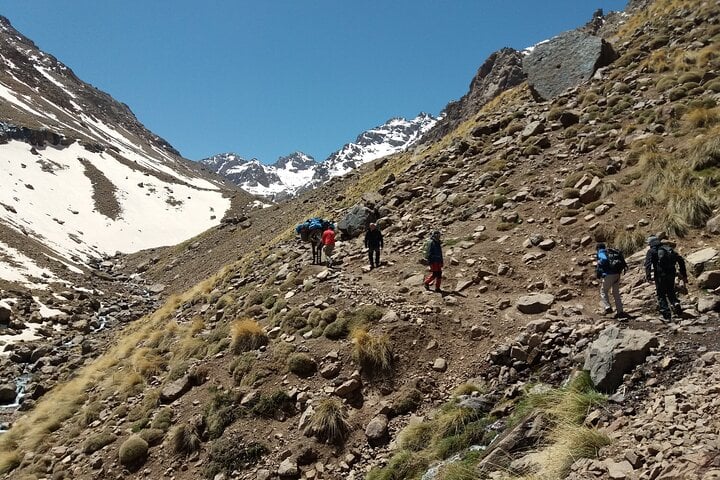
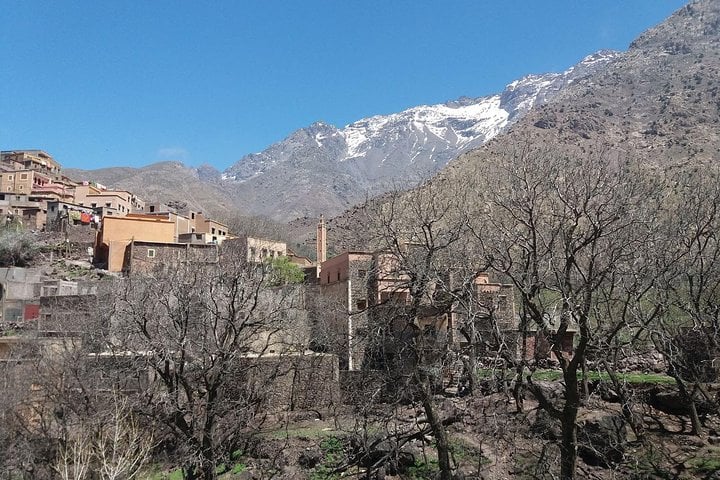
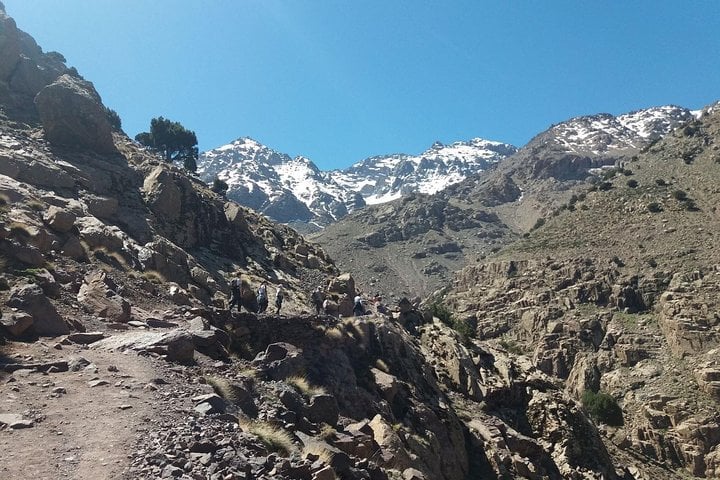
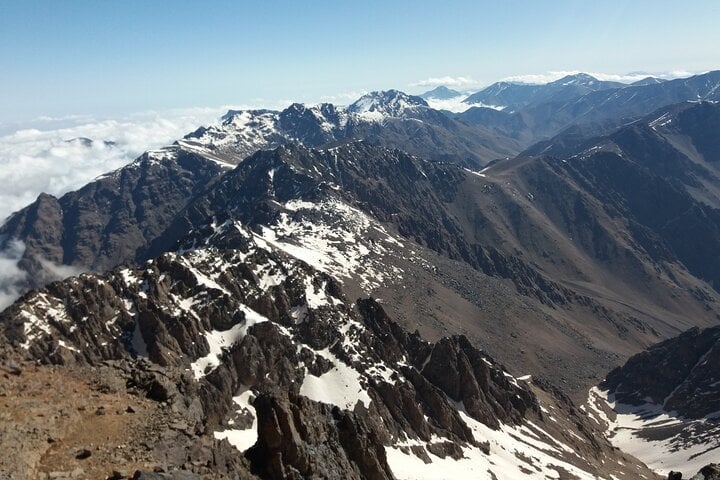
North Africa's highest peak sits a short drive south of Marrakech, and this weekend format gets you onto Toubkal with a proper night at altitude. You meet in the city, walk from Imlil through Berber villages to the refuge or camp, then make an early summit attempt before descending via Armed. Mule support, a mountain guide and the return transfer are part of the two days.
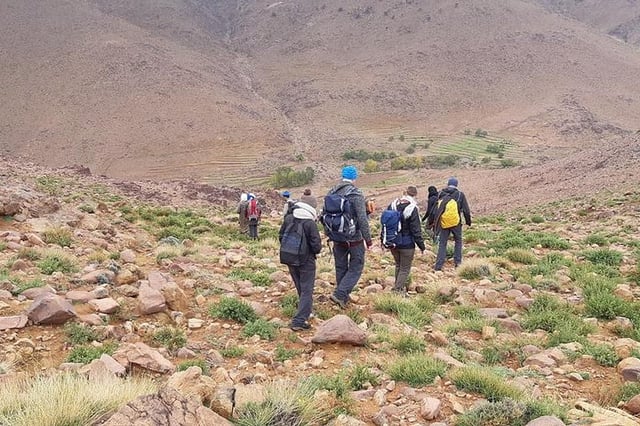
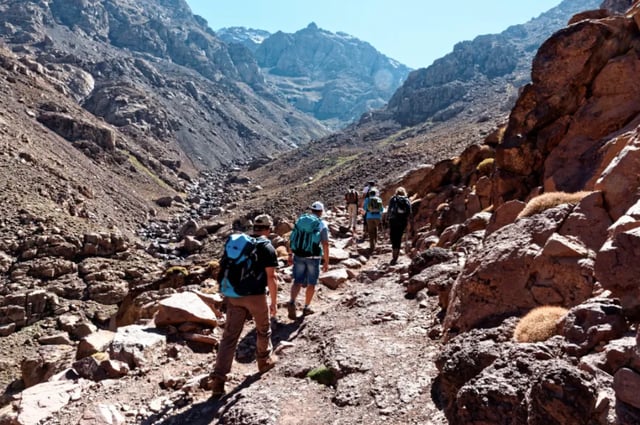
From a cafe on Djemaa al-Fnaa you leave Marrakech by road for Imlil, the village that opens the main approach to Toubkal. There you meet the mountain team, sort bags for the mule, and start walking through terraces and stone houses toward the shrine at Sidi Chamharouch. The path then climbs onto steeper, rockier ground and finishes at the Toubkal refuge or a camp nearby, where you eat and rest before a very early start.
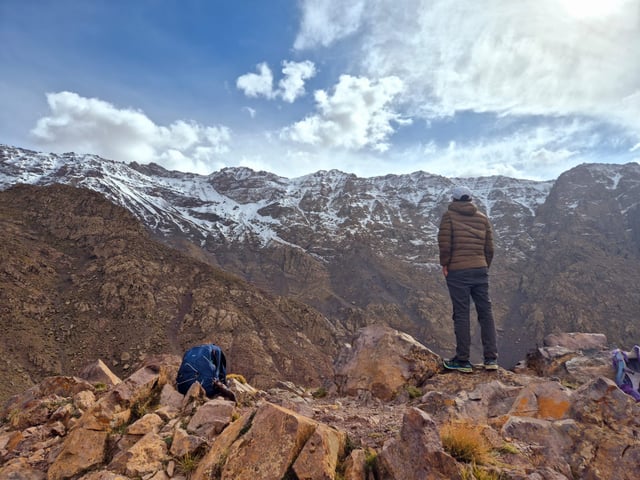
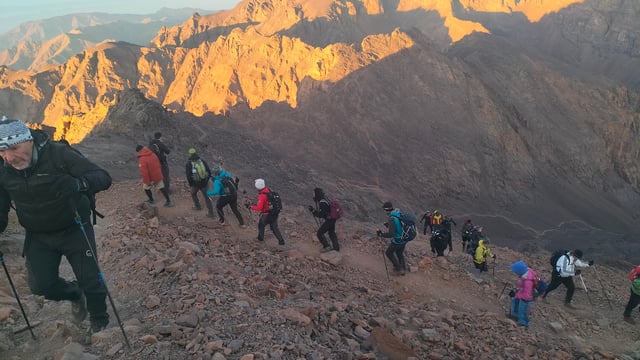
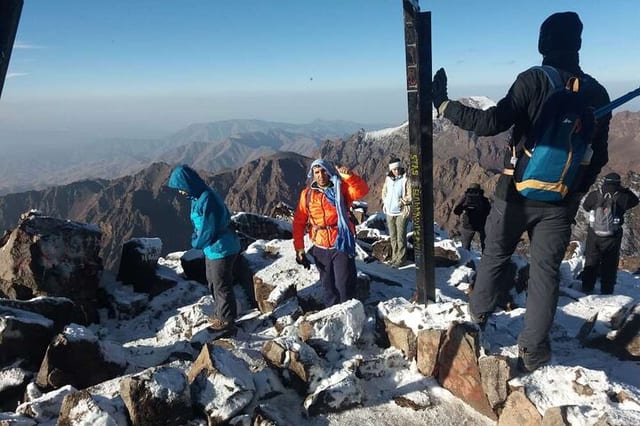
Summit morning begins in the dark so you can be high on the mountain as the light comes up. The route is a steep walk on loose rock and, in colder months, patches of snow, rather than a technical climb in ordinary dry conditions. After time on the top you descend to the overnight stop, continue down to Armed village, and take the transfer back to Marrakech, usually reaching your hotel or riad in the afternoon.
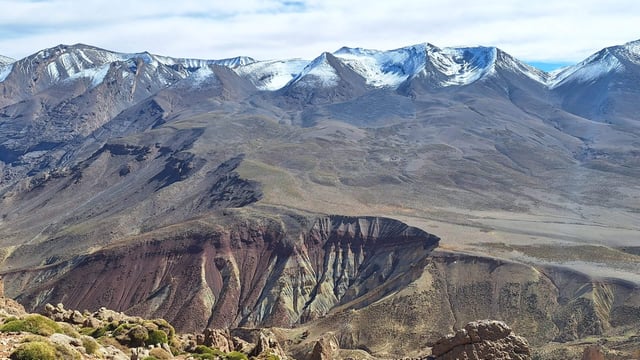
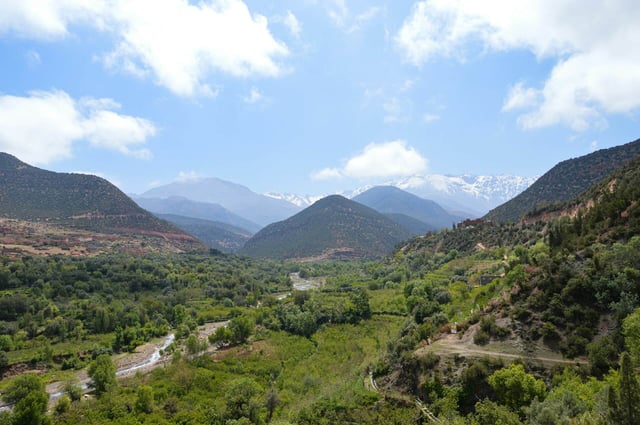
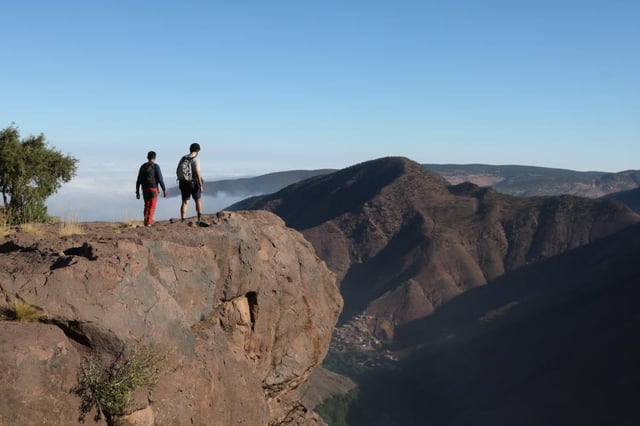
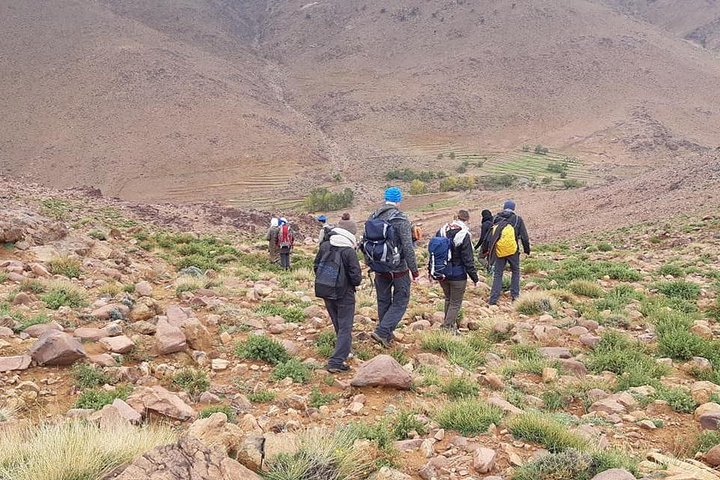
Imlil sits in the High Atlas south of Marrakech and is the usual gateway for Toubkal approaches. Walnut groves, terraced fields and Berber villages give way to steeper alpine ground as you climb past Sidi Chamharouch toward the refuge. The valley feels close to the city on the map, yet the trail quickly leaves road noise behind once you start gaining height.
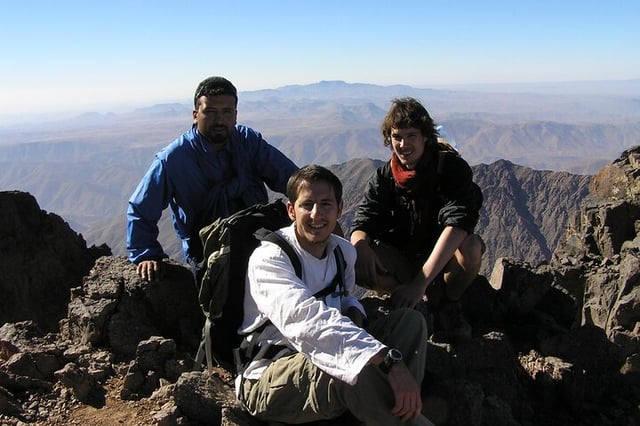
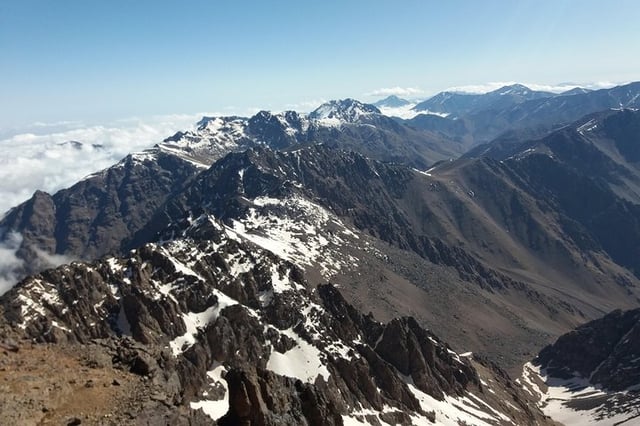
The summit ridge sits above 4,000 metres, with long views south across the range on a clear day. Armed village sits on the descent, a cluster of stone houses and paths that bring you back toward the road for the transfer. Being this close to Marrakech makes the trip a concentrated mountain weekend rather than a remote expedition, while still placing you on proper High Atlas ground overnight.
You should already be used to long days on steep trails and be ready for altitude around 4,000 metres. This is an improver mountain weekend, not a gentle valley stroll, and you walk with a daypack while mules take the main camp kit. Carry a passport or ID, as it is required for the trip.
Tell us about fitness, previous hiking and any medical notes before you travel. Groups run from 2 to 15 people, and the whole circuit depends on workable weather on the high ground. Closed, broken-in boots and a sleeping bag suited to a cold night are essential.
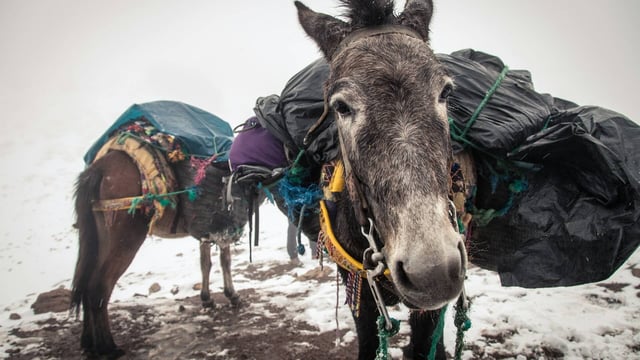
Local mountain guides who work these trails through the year set the pace around weather, group fitness and a safe turnaround time on the summit. You meet the team in Imlil after the drive from Djemaa al-Fnaa, so the walking day starts with a proper briefing rather than a rushed roadside handover. Mule support takes the main camping kit when you stay in camp, which keeps your own load closer to a daypack on the approach.
The two-day shape is built to feel complete: a city meeting point, a genuine high overnight, a proper summit attempt and a return to Marrakech the following afternoon. Logistics stay practical from the first meet-up at snack toubka to the drop near your hotel or riad, with enough time on the trail to walk steadily rather than race the clock.
Leave the meeting point at snack toubka and drive from Marrakech to Imlil, where you meet the guide and mule team, sort bags and start walking. The path leads through Berber villages and past the shrine at Sidi Chamharouch, then climbs onto steeper ground toward the Toubkal refuge or a camp nearby. You settle in for the night, eat and rest before the early summit start.
An early start takes you from the refuge toward the summit of Toubkal so you can be high on the mountain as the light comes up. After time on the top you descend to the overnight stop, continue down to Armed village, and meet the transfer back to Marrakech. The afternoon drop is at your hotel or riad, which closes the two-day circuit.
Meet at snack toubka on the eastern side of Djemaa al-Fnaa as you enter the square from Rue Riad Zitoun, Marrakech 40000. The cafe is on the edge of the plaza, so most guests walk from a nearby riad or take a petit taxi to the square and continue on foot for the last stretch.
From there we drive to Imlil to meet the mountain team. You need to reach the meeting point yourself. At the end of day two the transfer returns you to your hotel or riad in Marrakech, usually in the afternoon.
Night one is spent at the Toubkal refuge or a mountain camp above Imlil, depending on the season and space on the mountain. Facilities are simple and shared, with a communal dining space and an early night before the summit start.
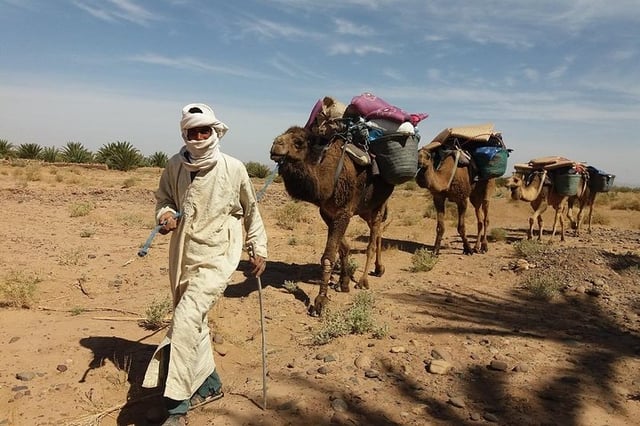
Bring a sleeping bag suited to the season, as nights at altitude can be cold even when the days feel mild. The mule team carries the main camping equipment when you stay in camp, including tents and mats, so you walk with a lighter bag on the approach.
Meet at snack toubka on the eastern side of Djemaa al-Fnaa as you enter the square from Rue Riad Zitoun. You make your own way to that cafe. From there we drive to Imlil, where the mountain team is waiting, and the walking day begins after a kit check and briefing.
At the end of day two the transfer returns you from the mountain to your hotel or riad in Marrakech, usually in the afternoon. The drive each way is part of the trek itinerary, not a hotel-door pickup on the first morning.
You should already be comfortable on long, steep, rocky trails and ready for two full mountain days with a large height gain. Summit morning starts early and includes a sustained climb toward 4,167 metres, followed by a long descent to Armed before the drive back to the city.
No technical climbing is required in ordinary dry conditions, but this is an improver trek rather than a first hillside walk. Share recent hiking experience and any medical notes before you travel so the guide can judge whether the pace will suit you.
Night one is at the Toubkal refuge or a mountain camp above Imlil, depending on the season and space. Expect shared mountain facilities, a communal dining space and a cold night at altitude rather than a private hotel room.
Bring your own sleeping bag. When the overnight is in camp, tents and mats travel with the mule team. Refuge nights use the hut's dorm-style rooms, so a bag that packs small is easier to handle on the trail.
Kitchen and dining equipment travel with the mule team when you camp, so the cook can prepare food on the mountain. Refuge nights use the hut's dining room. Tell us about allergies or a vegetarian diet ahead of time so the team can plan.
Soft drinks, snacks and anything you buy in Imlil or at the refuge are extra. Carry a little food of your own for the summit morning, when the start is early and you may want something familiar in your pack.
The mule team carries the main camping equipment, including tents, mats and kitchen kit when you stay in camp. That keeps the group load off your back on the climb toward the refuge.
You still walk with a daypack for water, spare layers, snacks, a torch, medication and your sleeping bag unless the team confirms another arrangement. Soft-sided bags are easier for the mules if you have extra clothing that needs to travel separately.
Sturdy walking boots, warm layers, a waterproof and windproof jacket, a sleeping bag suited to a cold night, a water bottle, sunglasses, sunscreen and a head torch are the core items. A small daypack keeps those things with you on the trail.
Personal hiking clothing and footwear are not supplied. In colder months the upper mountain can hold snow, so ask us before you travel if you need to hire extra winter kit in Imlil rather than arriving under-dressed for the summit start.
You need to be 18 or over for this Toubkal ascent. The two-day format is demanding, with a high overnight and a long summit day, so it is not offered as a family valley walk.
If you are travelling in a mixed group, check everyone's age and recent hiking before you confirm. Under-18s cannot join this product even if they have walked elsewhere in the Atlas.
High Atlas weather can change quickly, and the summit needs workable conditions. Guides watch the mountain and may delay the start, change the line or turn the group around if wind, ice or poor visibility makes the upper slopes unsafe.
If the peak cannot be attempted, the team will explain the plan for that day. Travel insurance that covers hiking at altitude is strongly recommended, because a weather hold on the mountain is not the same as a city tour postponement.
A passport or ID is required for the trip, so keep it with you rather than leaving it in a Marrakech safe. Travel insurance is not included and should cover hiking at around 4,200 metres and mountain rescue where possible.
Check the wording before you leave home. Policies that only mention walking on low trails sometimes exclude altitude or rocky mountain paths, which would leave a gap on this itinerary.
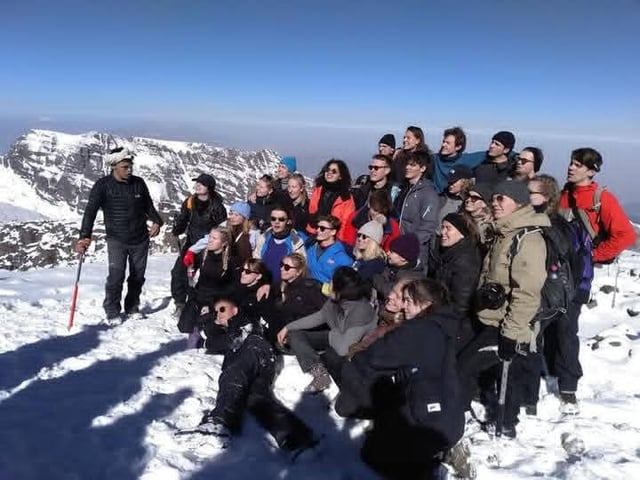
This trek runs with a minimum of 2 people and a maximum of 15. That range keeps the line manageable on narrow paths and at the refuge, while still allowing friends or a small group to travel together.
If you are a pair, you will still have a guide and the Imlil team around you. Larger private groups can be discussed, but the listed maximum for this product is 15.
About the centre
Marrakech
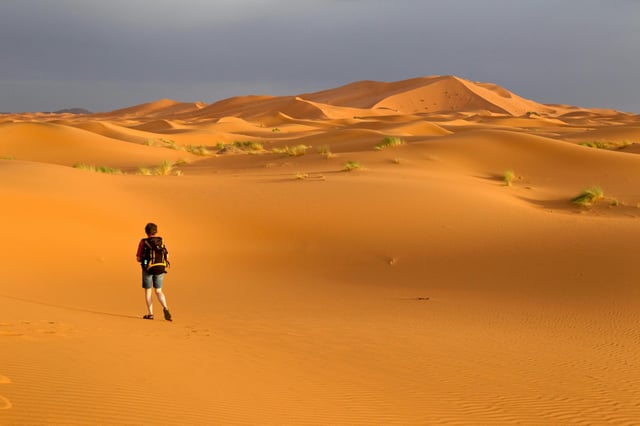
We organise guided treks, desert journeys and adventure days across Morocco, from the High Atlas peaks to the Sahara dunes. Small groups travel with experienced local guides who know the trails, camps and villages along each route.
Whether you are planning a two-day summit attempt, a week-long camel trek or a balloon flight at dawn, we handle transport, camping kit and day-to-day logistics so you can focus on the landscape and the walking. Pickup from your hotel or riad in Marrakech or Casablanca can be arranged when your trip starts in either city.
Operated by Easygo Tours, a partner of adventuro.