We partner with Rewilding Britain to help protect our natural spaces for future adventures.
All centres are vetted for safety and quality. Your adventure is in good hands with adventuro.
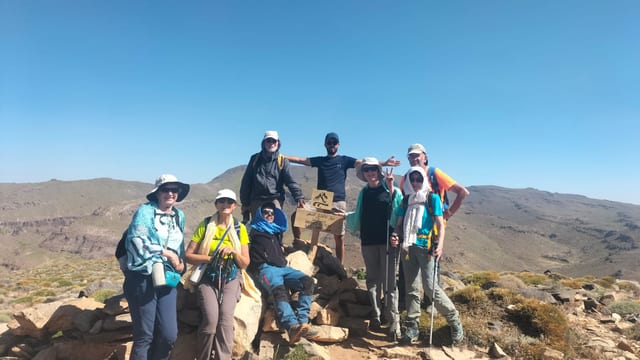
Quiet volcanic country sits between the High Atlas and the Anti Atlas, and this week walks it camp to camp. Pickup in Marrakech, a four-hour drive to Ait Tigga, then five to six hour stages toward a 3,304 m walk-up. Mules carry tents and your main bag, and you finish with a short descent to Laarbaa.
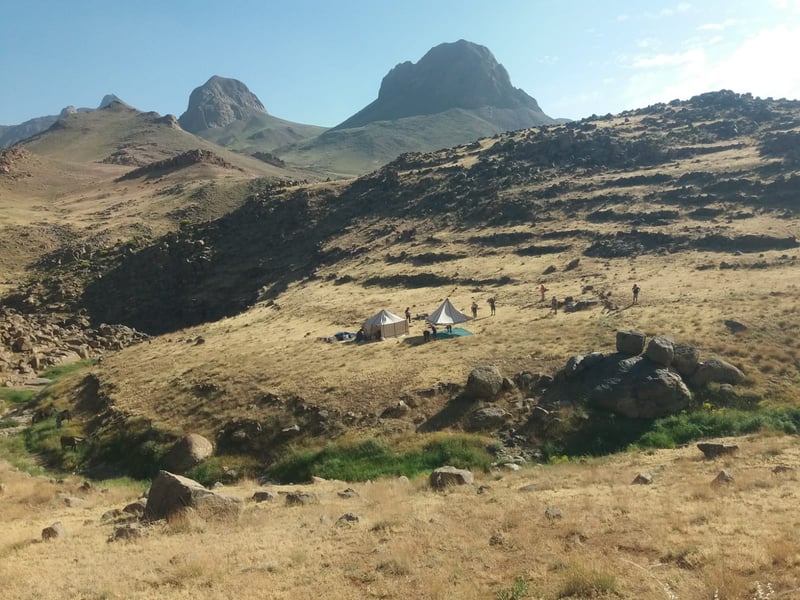
You'll be collected from your hotel or riad in Marrakech and driven about four hours south to Ait Tigga, where camp is waiting after a picnic lunch. From there the route climbs through cultivated valleys onto the high volcanic plateaus of Siroua, sleeping at shepherds' camps such as Azib Iriri, Azib Azazegzan, Iferd Magous, Tagragra and Azib Tizgui. Summit day reaches 3,304 metres on a path that is steep and loose near the top but needs no ropes or climbing skill.
After the summit you drop toward Tagragra and continue over Jebel Guiliz before the trail softens into the Ait Oubyal valley and the Tislite gorges. Walking days are typically five to six hours, with a 45-minute link walk on the last morning to Laarbaa and a five-hour drive back to Marrakech. Tents, mats, kitchen and dining kit travel with the mule team.
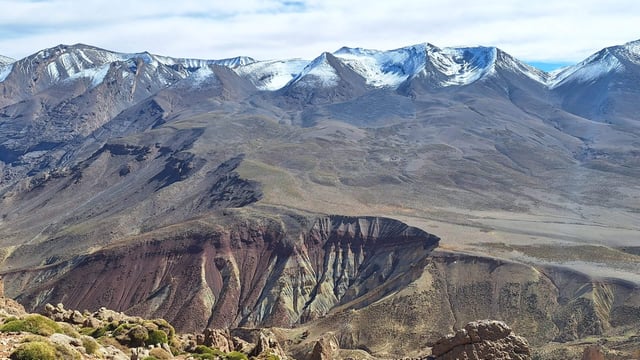
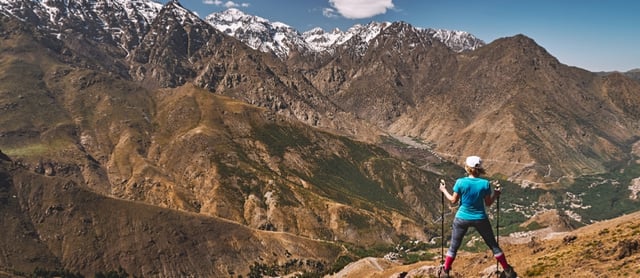
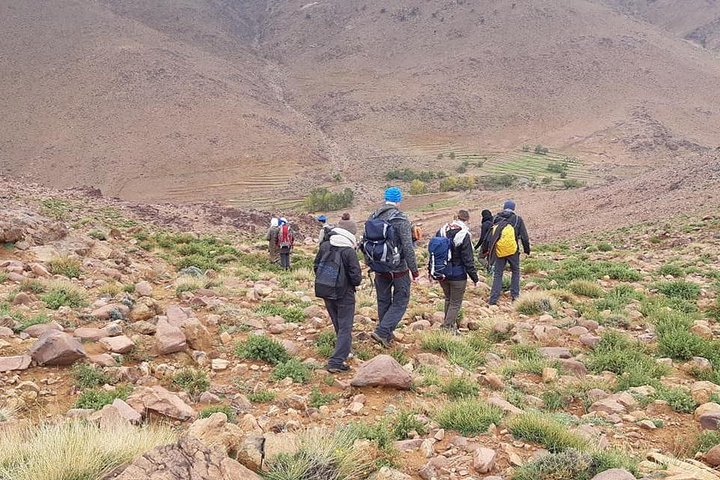
Jebel Siroua sits in southern Morocco between the High Atlas and the Anti Atlas, in the high country south-west of Ouarzazate. The massif is an old volcanic block of jagged peaks, wide plateaus, dry valleys and terraced farmland, with saffron fields in the lower villages and alpine pasture used by nomadic shepherds higher up. Trails here see far fewer walkers than the Toubkal approaches, so days often pass with only the wind and distant flocks for company.
The walking starts after a road transfer from Marrakech to Ait Tigga and finishes with a short descent to Laarbaa, where the tarmac begins again. In between you cross shepherds' camps around 2,200 to 2,800 metres, climb the 3,304-metre summit, and drop through the greener Ait Oubyal valley and Tislite gorges, where almond trees and irrigated gardens mark the return to settled villages.
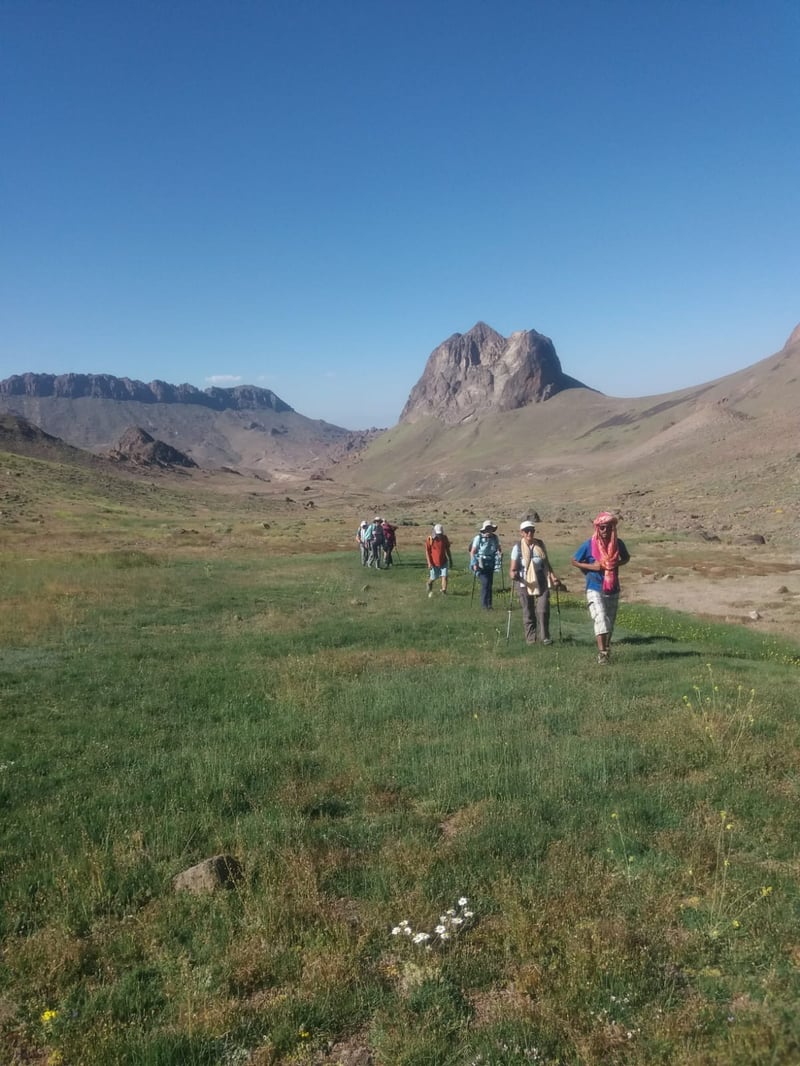
You should be used to walking five to six hours a day on uneven mountain paths, with a daypack, for several days in a row. Summit day is non-technical, yet the last section is steeper and looser, so steady legs and decent aerobic fitness matter more than climbing skill.
The minimum age is 16, and anyone under 18 travels with an adult. April to June and September to November are the usual windows. Bring a sleeping bag rated to at least 0°C, broken-in boots and a 20 to 30 litre daypack.
Local mountain guides know the quieter Siroua trails, the seasonal azibs and where water is reliable, so you spend the week on a remote volcanic massif rather than sharing the busier Toubkal corridors. Pickup from your Marrakech hotel or riad is built in, and the same team handles the drive to Ait Tigga and the return from Laarbaa, so you are not piecing together taxis at either end.
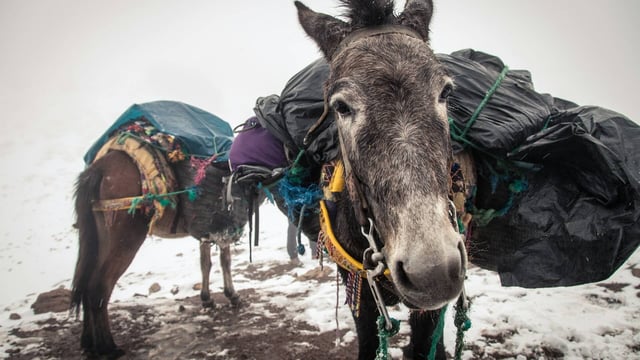
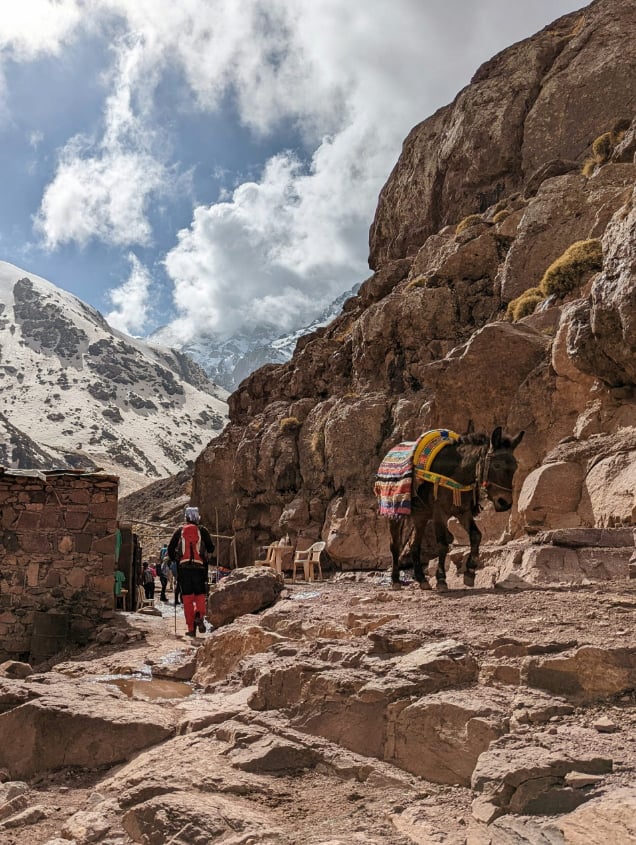
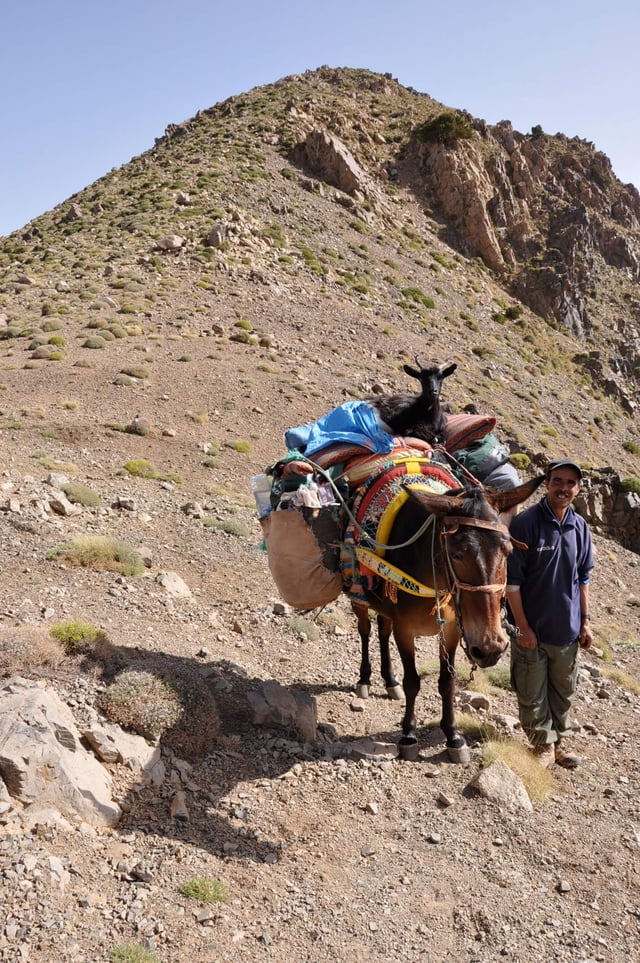
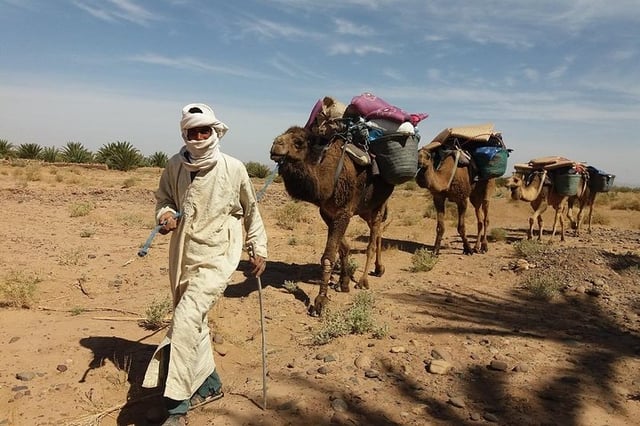
A mule team carries the tents, mats, kitchen kit and your main bag, which means you walk with a daypack while camp is set ahead. Meals are cooked in the field, and the itinerary keeps daily stages at a pace that leaves time to rest at each azib.
Pickup from your hotel or riad in Marrakech starts the week. You travel south by taxi or minibus for about four hours, stop for a picnic lunch, and reach Ait Tigga village in the afternoon. Camp is set near the village so you can stretch after the road and meet the mule team before the walking begins.
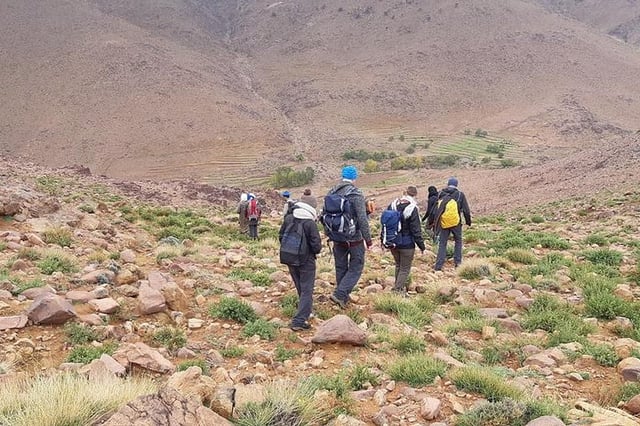
The trail climbs from cultivated valleys onto the high volcanic plateaus of Siroua. You pass terraced fields and follow dry riverbeds, then the vegetation thins as you reach alpine pasture used by nomadic shepherds. Azib Iriri is a bivouac stop after about six hours of walking, with wide views back over the lower valleys.
From Azib Iriri at about 2,300 metres the path heads deeper into the volcanic country toward Azib Azazegzan, a high shepherds' camp. You cross rocky valleys and sparse plateaus, with Jebel Siroua coming into view, and may pass herders moving flocks between pastures. Camp sits around 2,500 metres after about five hours of walking.
A high balcony path skirts Jebel Siroua without climbing it yet, crossing plateaus, arid valleys and dark volcanic rock on the way to Iferd Magous. The walking is moderate, with steady ups and downs rather than a single hard pull, and the pasture at about 2,800 metres is a quiet place to camp. Plan on about six hours on the trail.
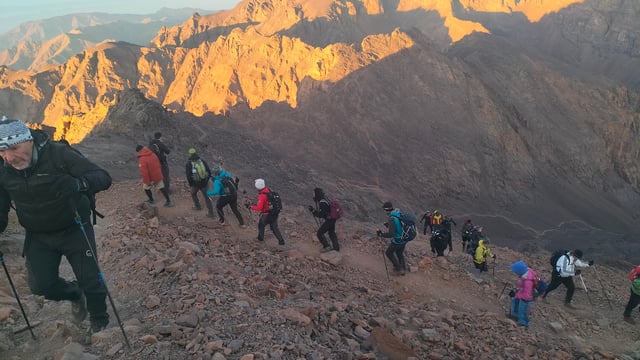
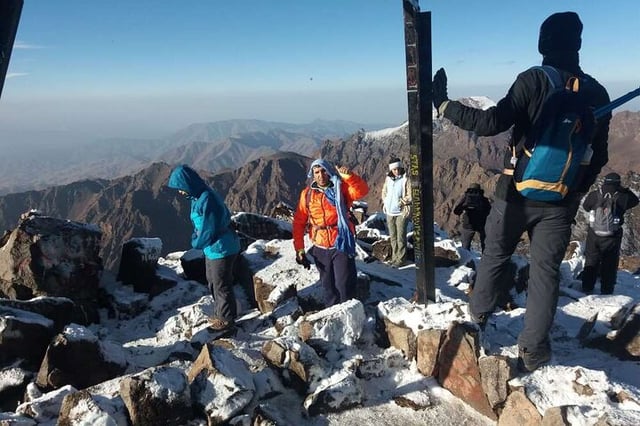
From Iferd Magous you climb through barren volcanic slopes to the 3,304-metre summit of Jebel Siroua. The ascent is a walk, though it steepens and loosens near the top, and clear days give views of the High Atlas to the north and the Anti-Atlas foothills to the south. A steeper south-east descent leads to Tagragra at about 2,400 metres, a grazing area with dry-stone shelters, after about six hours of walking.
The path climbs from Tagragra toward Jebel Guiliz, a quieter peak in the same massif, across mineral ground and wind-shaped rock. Around 2,900 metres the summit opens views over nearby valleys and the High Atlas. You then drop through high pasture to Azib Tizgui at 2,200 to 2,300 metres, a seasonal shepherds' camp that is often near a spring, after about five hours of walking.
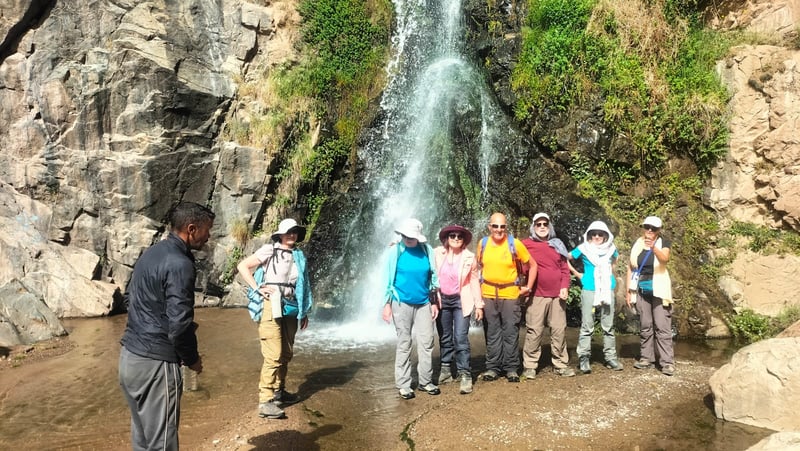
A gentler descent leads through alpine pasture toward Tizgui village, where barley fields, almond trees and terraces return. A short detour reaches the Tizgui waterfalls before you continue into the Ait Oubyal valley, with earthen villages and mule trails, and finish in the Tislite gorges. The night is a bivouac or a simple local house, after five to six hours of walking.
A short link walk of about 45 minutes drops from Tislite through orchards and small hamlets to Laarbaa, where the road meets the edge of the massif. You join the minibus there for the five-hour drive back to Marrakech, arriving in the city in the afternoon.
Collection is from your hotel or riad in Marrakech on the morning of day 1. Many medina riads sit on lanes too narrow for a minibus, so the driver may wait on a nearby accessible street and meet you there. Have your phone on so the team can reach you.
The drive south to Ait Tigga takes about four hours, with a picnic lunch on the way. On day 8 you walk about 45 minutes from Tislite to Laarbaa, then travel around five hours by road back to Marrakech. Tell us your hotel name so pickup and drop-off can be planned.
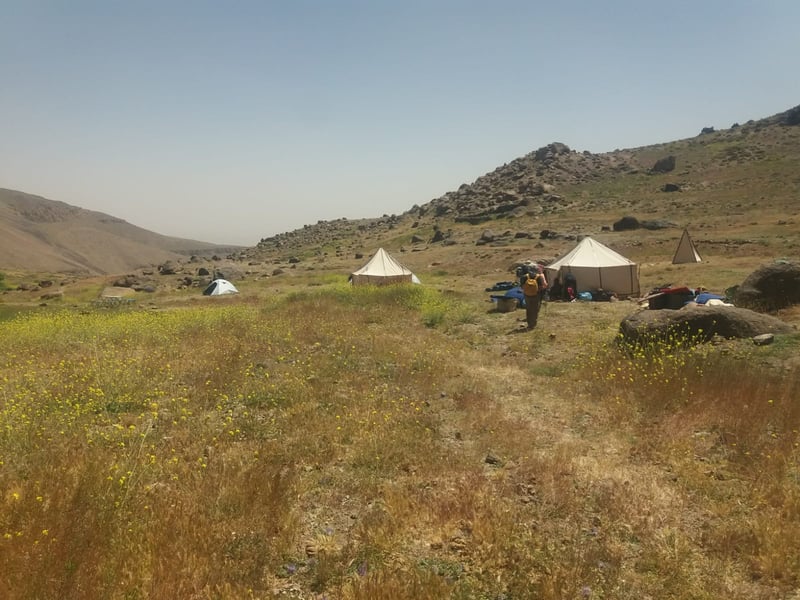
Most nights are wild camp on high pasture at seasonal shepherds' azibs. Tents and mats are supplied, meals are cooked in a dining shelter, and nights are cold and quiet above 2,200 metres. You bring your own sleeping bag.
Camps follow the walking line at Ait Tigga, Azib Iriri, Azib Azazegzan, Iferd Magous, Tagragra and Azib Tizgui. Facilities are simple field camps rather than lodges, with water from springs or what the team carries in.
Around Tislite, at the foot of the massif, the last mountain night may be a simple village house or guesthouse instead of a bivouac. Expect a warm Berber welcome, shared rooms and a quieter evening after the gorge walk, not a hotel stay.
If the group is still on the trail late, camp remains the fallback. Either way you are close to the short morning walk down to Laarbaa and the road back to Marrakech.
Tents, camping mats, kitchen and dining kit, tables and chairs travel with the mule team. You look after your own sleeping bag and personal hiking kit.
We collect you from your hotel or riad in Marrakech on the morning of day 1. The road south to Ait Tigga takes about four hours by taxi or minibus, with a picnic lunch on the way, and you reach camp in the village that afternoon.
On the last morning you walk about 45 minutes from Tislite down to Laarbaa, where the minibus is waiting for the five-hour return to Marrakech. Share your hotel name and a reachable phone number so the driver can find you in the medina lanes.
You should be used to walking five to six hours a day on uneven mountain paths, with a daypack, for several days in a row. Summit day is non-technical, yet the last section is steeper and looser, so steady legs and decent aerobic fitness matter more than climbing skill.
Regular hill walks in the months before you travel are the most useful preparation. If you have a heart, lung or joint condition, speak to your doctor and tell us before you travel, because camps sit between about 2,200 and 2,800 metres and the summit is 3,304 metres.
The minimum age on this trek is 16. Anyone under 18 must travel with a responsible adult who can manage the daily stages and the nights in camp.
This is a multi-day mountain itinerary rather than a family day walk, so we do not accept younger children on this product even if they have hiked elsewhere. Check ages for everyone in your group before you confirm.
We supply tents, camping mats, the kitchen and dining kit, tables and chairs, and a mule team to move that load plus your main bag. You walk with a daypack while camp is carried ahead.
You need your own sleeping bag (rated to at least 0°C), a liner if you want one, hiking boots, clothing layers, a head torch, sun protection and a 20 to 30 litre daypack. A soft duffel works better for the mule than a hard suitcase. Full notes sit in the kit list on this page.
Most nights are in wild camp at seasonal shepherds' azibs such as Ait Tigga, Azib Iriri, Azib Azazegzan, Iferd Magous, Tagragra and Azib Tizgui. Expect simple tents on high pasture, cooked meals in a dining shelter, and cold, quiet nights above 2,200 metres.
Around Tislite the stop may be a local house or guesthouse rather than a bivouac, depending on the season and the group's pace. There is no hotel night on the mountain itself. Bring a suitably rated sleeping bag so you stay warm once the sun drops.
Yes. The mule team carries camping equipment and a soft main bag for each walker, so you only need a daypack on the trail. Keep water, spare layers, snacks, sun cream, a camera and any medicine with you, because you will not see the mule loads until camp.
Pack the mule bag so it can be tied and balanced. Leave hard cases in Marrakech if your hotel will store them. Weight should stay reasonable, as the animals work long days on rough paths.
The climb from Iferd Magous is a walk, not a climb. The path winds through rocky volcanic slopes and becomes steeper and looser near 3,304 metres, so you need good balance and fitness, yet there are no ropes or technical moves in normal dry conditions.
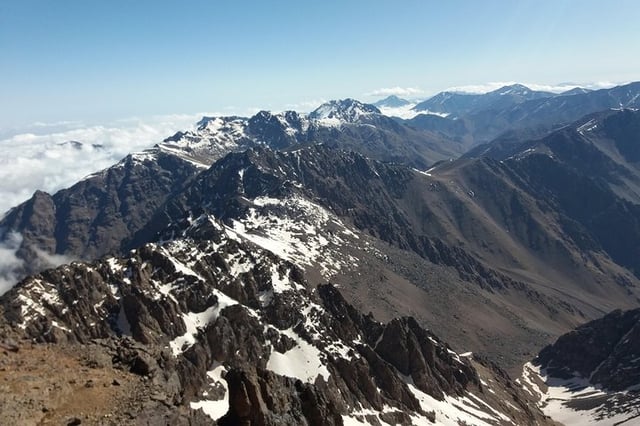
From the top you can see the High Atlas to the north and the Anti Atlas foothills to the south on a clear day. The descent to Tagragra follows a steeper line on the south-east side, and the guide will pick a careful pace on the loose sections.
April to June and September to November are the usual seasons on Siroua. Those windows keep daytime walking temperatures more comfortable on the open plateaus and reduce the chance of winter snow on the higher camps.
Midsummer can be hot on the lower approaches, and winter nights at 2,500 metres are properly cold. We will confirm the plan if weather on your dates looks poor. Travel insurance that covers mountain walking is strongly recommended.
Day 1 includes a picnic lunch on the drive to Ait Tigga. From the first camp onward, breakfasts, lunches and dinners are prepared by the cook using the kitchen kit that travels with the mules, with tea or coffee at camp.
Send any allergies or diet notes so the cook can plan shopping in Marrakech. Soft drinks and extra bottled water bought on the road are not included. Carry snacks if you like something extra between stages.
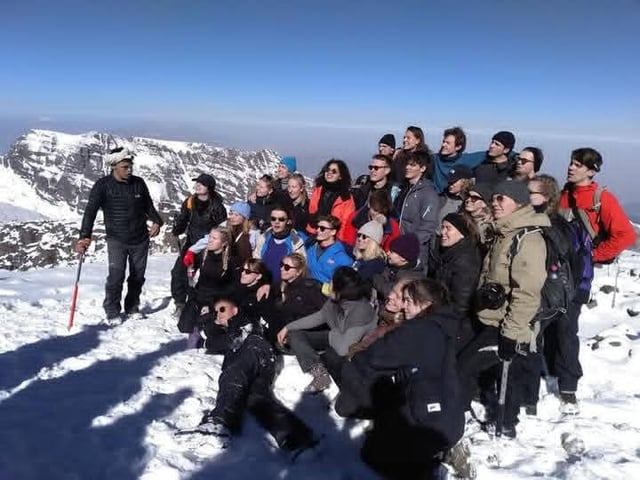
This trek runs for a minimum of 2 people and a maximum of 15. That keeps the walking group small enough for a single guide team and a manageable mule caravan on narrow paths.
Private departures for two or more can be discussed when you enquire. Larger parties sometimes need extra logistics, so tell us your numbers early if you are travelling as a club or extended family.
About the centre
Marrakech
We organise guided treks, desert journeys and adventure days across Morocco, from the High Atlas peaks to the Sahara dunes. Small groups travel with experienced local guides who know the trails, camps and villages along each route.
Whether you are planning a two-day summit attempt, a week-long camel trek or a balloon flight at dawn, we handle transport, camping kit and day-to-day logistics so you can focus on the landscape and the walking. Pickup from your hotel or riad in Marrakech or Casablanca can be arranged when your trip starts in either city.
Operated by Easygo Tours, a partner of adventuro.