We partner with Rewilding Britain to help protect our natural spaces for future adventures.
All centres are vetted for safety and quality. Your adventure is in good hands with adventuro.
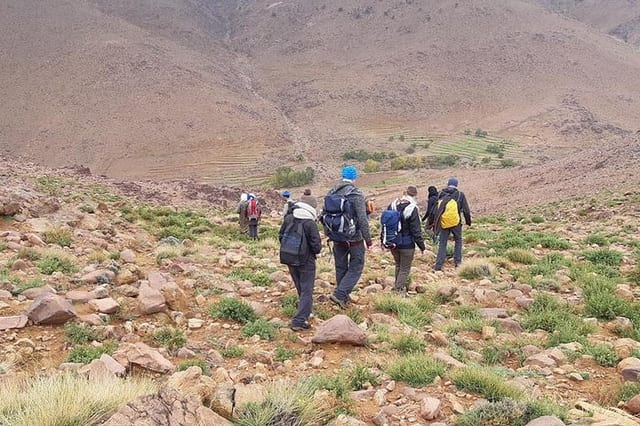
South of Ouarzazate the rock turns black, and Bab n'Ali marks the southern side of Jebel Saghro. You start in Marrakech, sleep in Tagdilt, then walk four to five hour stages with a mule team to wild camps. A long road home and an airport morning close the eight days.
Hotel pickup in Marrakech is available, or you can meet at Café France on Avenue Jamaa El Fna. Night one is in a four-star hotel or similar in the city after an airport transfer if you are arriving that day. The next morning you drive about six and a half hours south over Tizi-n-Tichka, through Ouarzazate, Skoura and the Dades valley, and sleep in a village house in Tagdilt.
From there the mule team joins you for the walking days: Tagdilt to Almou camp over Tizi Ouzarzam at 2,300 metres, Almou to Igli, Igli to Bab n'Ali and Ighazoun, then Ighzout to Tifrit near Nkob. Walking days are typically four to five hours. After the last camp you transfer about seven hours back to Marrakech via Ouarzazate, and the final morning is an airport drop-off at Marrakech Menara.
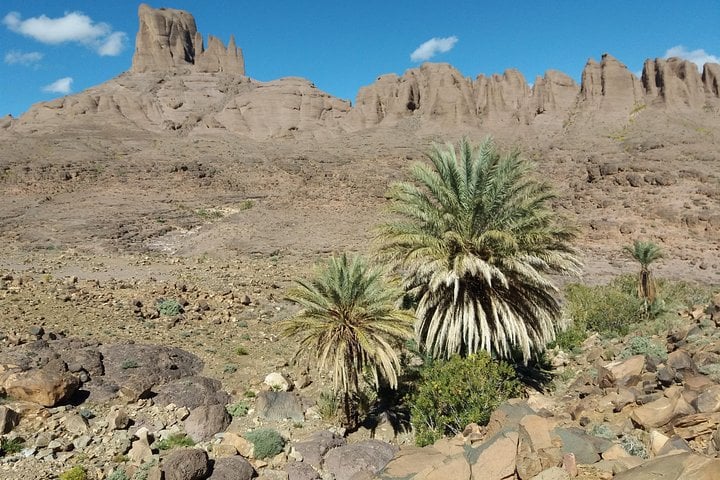
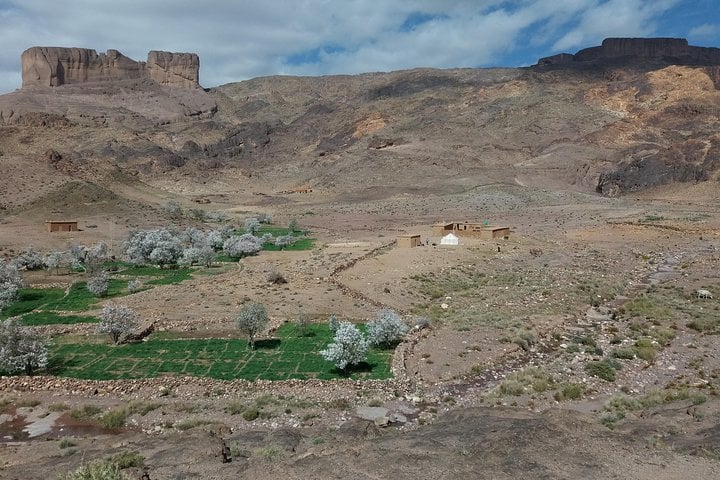
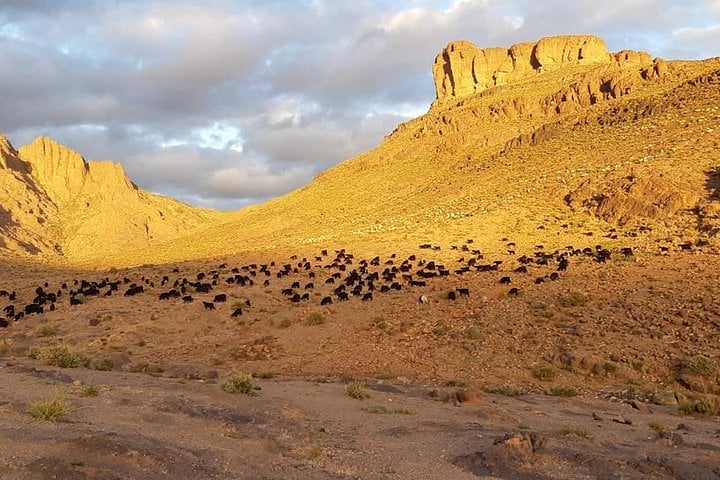
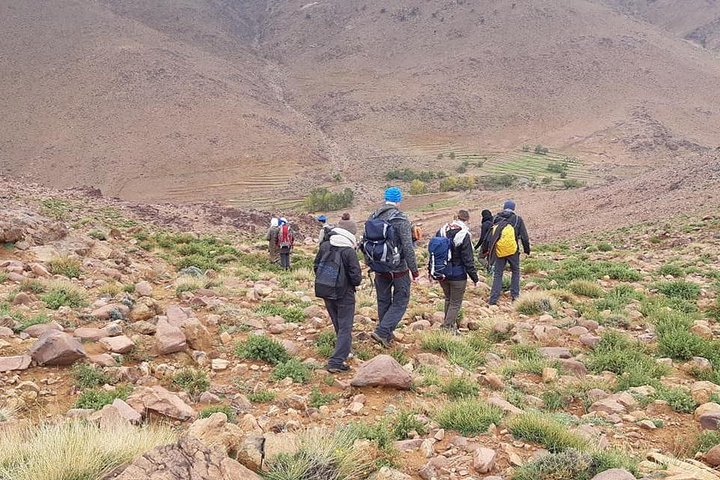
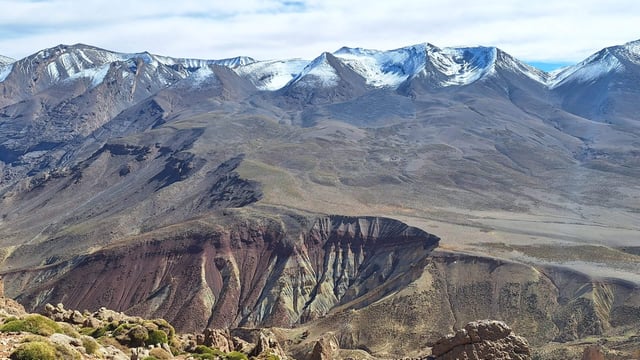
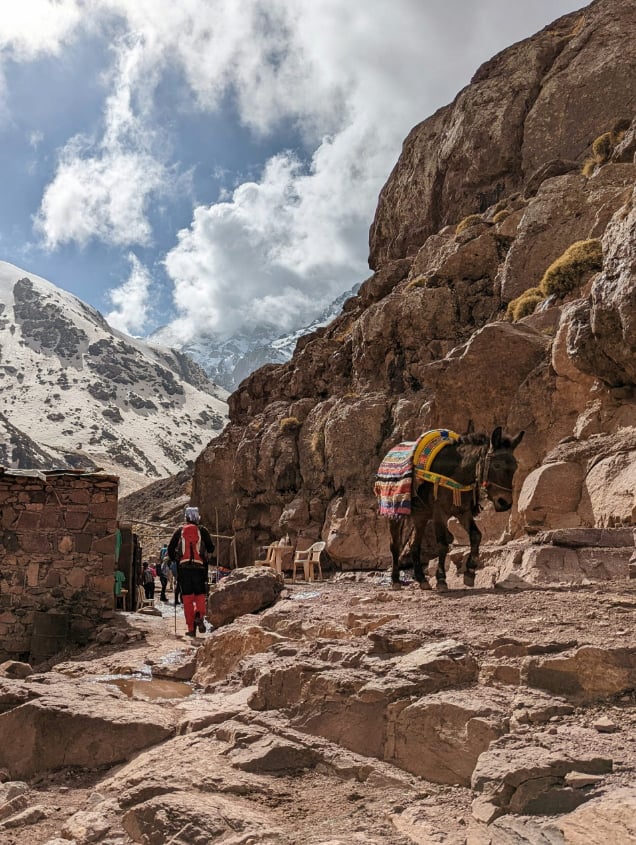
Jebel Saghro lies south of the High Atlas and Ouarzazate, a volcanic range of black peaks, dry gorges and open plateaus that sit above the Draa approaches and the village of Nkob. The walking country is more desert than alpine: palm pockets, barley plots, fig trees in the lower valleys, then bare rock as you climb toward Tizi Ouzarzam and Bab n'Ali. Ait Atta camps and shepherds still use the high pastures, so you may pass flocks on the trail.
The road in from Marrakech crosses Tizi-n-Tichka at 2,260 metres, then Skoura oasis, the Valley of Roses and the Dades before you leave the tarmac at Tagdilt. The walking finishes near Tifrit and Nkob, after which you drive back across the Draa and the Atlas to Marrakech. It is a southern massif itinerary, not a Toubkal summit week.
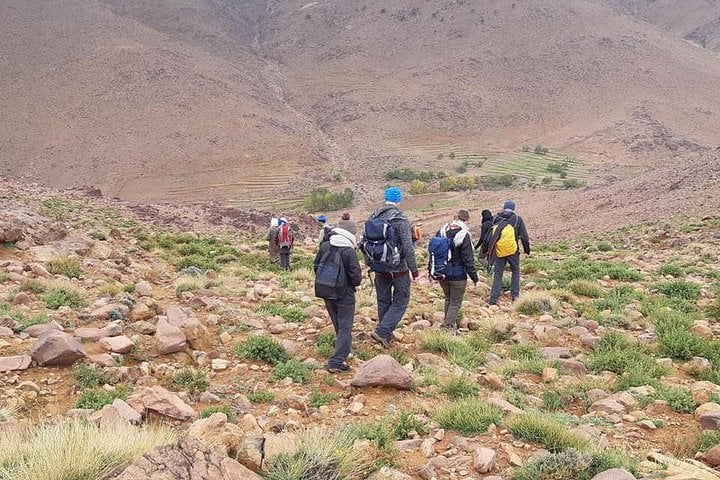
You should be comfortable walking four to five hours a day on rocky, uneven paths with a daypack, for several days in a row. The stages are shorter than a High Atlas summit week, yet the ground is rough, open and often without shade. No technical climbing is required.
The minimum age is 15, and anyone under 18 travels with an adult. Regular hill walks before you travel will make the week more enjoyable. Bring a sleeping bag suited to cool desert nights, broken-in boots and sun protection.
Guides on this route know the Ait Atta country, the water points and the line to Bab n'Ali, so the week stays on the quieter southern massif rather than the busier High Atlas corridors. Pickup from your Marrakech hotel or a meet-up at Café France on Jemaa el-Fnaa keeps the start simple, and the same team covers the long Tizi-n-Tichka drive and the return via Ouarzazate.
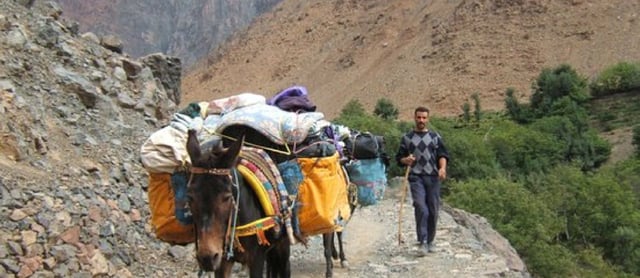
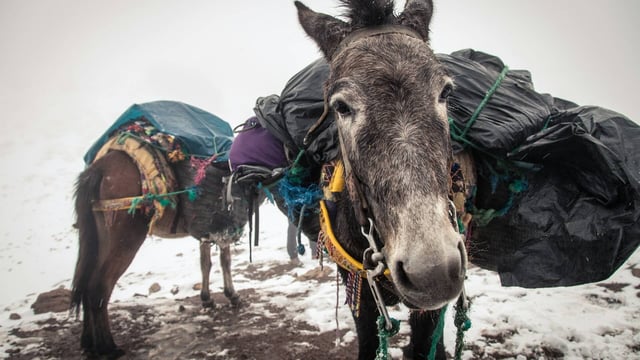
A mule team carries camp and your main bag, which leaves you with a daypack on the rocky plateaus. Nights mix a city hotel, a village house in Tagdilt and wild camps, so you feel the change from Marrakech to the Saghro without having to organise each stop yourself.
An airport transfer takes you from Marrakech Menara to your hotel. The night is in a four-star hotel or similar, with dinner at the hotel, so you can rest after the flight before the long road day south. Hotel or riad guests already in the city can join here, or meet later at Café France if that suits the group.
After breakfast you drive south over Tizi-n-Tichka at 2,260 metres, the highest road pass in Morocco, then through Ouarzazate, Skoura oasis, the Valley of Roses and the Dades valley. Lunch is in Ouarzazate. Late afternoon you reach Tagdilt and settle into a simple village house, which is the base for meeting the mule team the next morning. Plan on about six and a half hours in the vehicle.
You meet the trekking crew, load main bags onto the mules and walk with a daypack through small oases, barley fields and fig trees before climbing onto the volcanic flanks of Jebel Saghro. After a rest you cross Tizi Ouzarzam at 2,300 metres and drop to the first wild camp at Almou. Walking time is four to five hours.
The path crosses rocky plateaus, dry riverbeds and narrow gorges, with black peaks and changeable volcanic ground around you. A gentle descent leads into the Igli basin, where palms and small plots of cultivated land reappear under the cliffs. Camp is at Igli after four to five hours of walking.
From the oasis at Igli you walk toward Bab n'Ali, the twin rock towers that mark this side of Saghro. The trail moves from terraces onto more open, moon-like plateaus, and you may pass Ait Atta herds or seasonal streams. The stage continues to Ighazoun after time at the towers, which are a highlight of the week rather than a technical climb.
Leaving Ighzout you cross rocky plains, palm groves and dry riverbeds toward Tifrit, a small settlement near Nkob on the desert edge of the Anti-Atlas foothills. The walking mixes gentle slopes and rougher rock, with villages and shepherds along the way. Camp is near Tifrit, with a wider desert view opening as you arrive.
You leave the massif by road and travel back toward Marrakech via the Draa valley and Ouarzazate, with a short stop in town before climbing Tizi-n-Tichka again. The drive is about seven hours, and you reach Marrakech in the afternoon for a hotel night before the airport run.
A morning transfer takes you from your Marrakech accommodation to Marrakech Menara Airport (RAK) for your departure flight. If you are staying on in the city, tell us when you book so we can drop you at the hotel instead.
You can be collected from your hotel or riad in Marrakech, or meet at Café France, Avenue Jamaa El Fna, postcode 40000. If you arrive on day 1, an airport transfer to the hotel is included. Share your flight number and hotel name before you travel.
Day 2 is a long road day of about six and a half hours over Tizi-n-Tichka to Tagdilt. After the walking, day 7 is about seven hours back to Marrakech via Ouarzazate. The last morning is a transfer to Marrakech Menara Airport from your city accommodation.
Night one, and the night after the return drive, are in a four-star hotel or similar in Marrakech. Expect a proper bed, dinner on the first evening, and an easy base for the airport transfer at either end of the week.
The hotel is a rest stop rather than the focus of the trip. Confirm your flight times so check-in and the final pickup window work with your tickets.
Tagdilt is a simple village house on the south side of the range, used as a cultural stop and the launch point for the mule trek. Rooms are basic and shared in character, with a warm welcome and a chance to settle before the first walking day.
This is not a hotel. Bring your sleeping bag if you want extra warmth, and treat it as a homestay on the edge of the walking country.
Walking nights are wild camp: tents and mats on open ground at Almou, Igli, Ighazoun and Tifrit, with meals cooked by the trek team. Mules graze nearby and the dining shelter is the social centre of camp.
Nights can be cold and windy even when the days are warm. A sleeping bag you have tested at home is more useful than extra clothes in the mule bag.
Tents, camping mats, kitchen and dining kit, tables and chairs travel with the mule team. You look after your own sleeping bag and personal hiking kit.
The listed meeting point is Café France, Avenue Jamaa El Fna, Marrakech, 40000. Hotel or riad pickup in the city is also available, which is the easier option if you are staying in the medina and do not want to cross Jemaa el-Fnaa with bags.
If you land on day 1, the airport transfer takes you to the hotel. Tell us your flight number, hotel name and a phone that works in Morocco so the driver can find you. Many riads need a nearby street meet-up because vehicles cannot enter the lanes.
This is a multi-day mountain trek with long road days, wild camps and four to five hours of walking on rocky ground. We set the minimum age at 15 for that reason.
Anyone under 18 must travel with a responsible adult. We do not accept younger children on this route. Check the ages in your group before you confirm.
You should be comfortable walking four to five hours a day on rocky, uneven paths with a daypack, for several days in a row. The stages are shorter than a High Atlas summit week, yet the ground is rough, open and often without shade.
No technical climbing is required. Regular hill walks before you travel will make the week more enjoyable. Mention any medical notes and your recent hiking experience so we can advise honestly.
Night one is in a four-star hotel or similar in Marrakech. Night two is a simple village house in Tagdilt, which is a genuine local stay rather than a hotel. The walking nights are wild camp, with tents and mats supplied.
After the transfer back to Marrakech on day 7 you are in city accommodation again before the airport run. Bring your own sleeping bag for the village and camp nights, as desert evenings cool quickly once the sun goes.
Bab n'Ali, often called the Gates of Ali, is a pair of tall rock towers that rise from the desert floor on the southern side of Jebel Saghro. The walk from Igli toward those pinnacles is one of the clearest landmarks on this itinerary.
The approach crosses fertile pockets and then more open, moon-like plateaus. You may pass Ait Atta herders and, in season, small watercourses. It is a viewpoint and a natural monument, not a technical climb.
Day 2 is about six and a half hours from Marrakech to Tagdilt, crossing Tizi-n-Tichka at 2,260 metres and continuing through Ouarzazate, Skoura and the Dades valley, with lunch in Ouarzazate. Day 7 is about seven hours back to Marrakech via the Draa and Ouarzazate.
Those are full road days, so wear comfortable clothes and keep water to hand. The walking days themselves are on foot with the mule team, not in the vehicle. Day 8 is a shorter airport transfer from your Marrakech hotel.
We provide tents, camping mats, kitchen and dining kit, tables and chairs, and a mule team to move that load plus your main bag. Guiding, the listed meals and the road transfers are also part of the trip.
You bring a sleeping bag, hiking shoes or boots, sun protection, a daypack and your personal clothing. A soft bag is better for the mules than a hard case. The kit list on this page sets out the rest.
Yes. The week includes meals on the hotel, road and trek days, with lunch in Ouarzazate on the drive south and cooked food in camp once the mule team is with you. Dinner on night one is at the Marrakech hotel.
Send diet and allergy notes so shopping can be planned before you leave the city. Soft drinks and alcohol are not included. Carry a few snacks if you like something extra between stages.
Yes. You need a valid passport for travel in Morocco, and it is useful to keep it with you for hotel check-in and the airport transfer at the end of the week. A copy stored separately from the original is a sensible extra.
Visa rules depend on your nationality. Check current entry requirements before you fly. We do not arrange visas, and they are not part of the trip.
After the walk to Tifrit near Nkob you leave the massif by road. Day 7 is a seven-hour transfer back to Marrakech via the Draa valley and Ouarzazate, crossing Tizi-n-Tichka again, with a short stop in Ouarzazate on the way.
Day 8 is the airport transfer from your Marrakech accommodation to Marrakech Menara (RAK). Give us your flight time so the pickup window is realistic. If you are staying on in the city, say so and we can adjust the drop-off.
Über das Zentrum
Marrakech
We organise guided treks, desert journeys and adventure days across Morocco, from the High Atlas peaks to the Sahara dunes. Small groups travel with experienced local guides who know the trails, camps and villages along each route.
Whether you are planning a two-day summit attempt, a week-long camel trek or a balloon flight at dawn, we handle transport, camping kit and day-to-day logistics so you can focus on the landscape and the walking. Pickup from your hotel or riad in Marrakech or Casablanca can be arranged when your trip starts in either city.
Betrieben von Easygo Tours, einem Partner von adventuro.
Central & Atlas Mountains, Morocco
Ab $400
Central & Atlas Mountains, Morocco
Ab €790