We partner with Rewilding Britain to help protect our natural spaces for future adventures.
All centres are vetted for safety and quality. Your adventure is in good hands with adventuro.
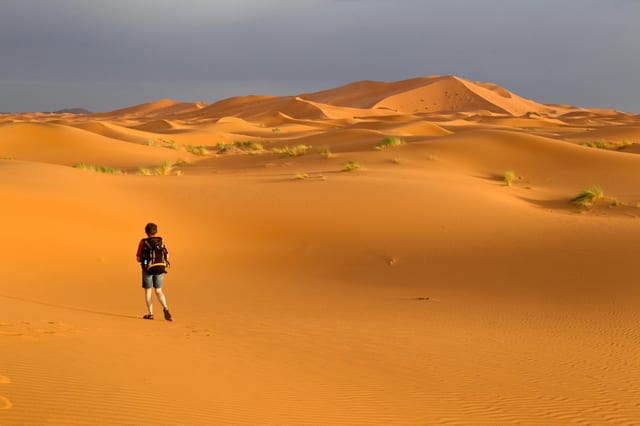
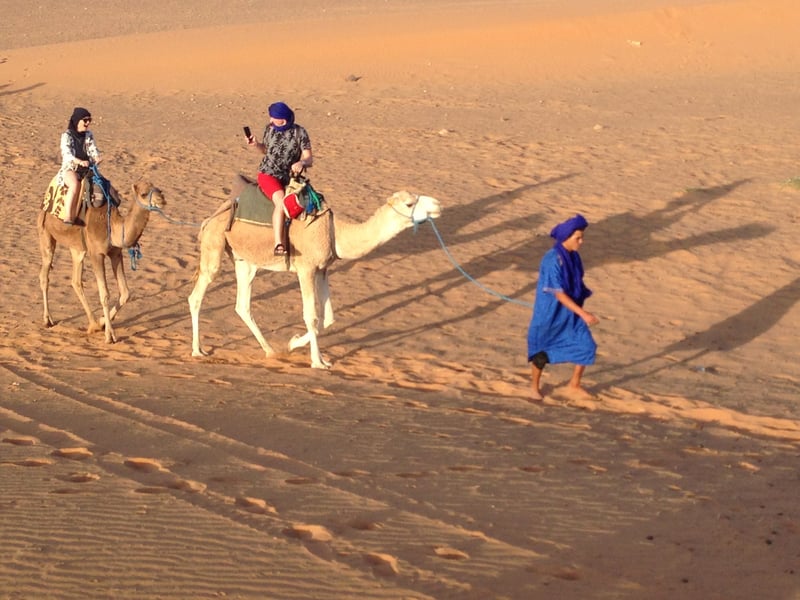
Sand, camels and long desert days link Marrakech with Mhamid, Erg Zehar and Chegaga. Pickup in the city starts a seven to eight hour road south over Tizi n'Tichka, then you walk five-hour stages while camels carry the bags. A 4x4 via Iriki and the Atlas road bring you home to a Marrakech hotel.
Pickup from your Marrakech hotel or riad starts the week, with Hotel Alandalous and Spa on Avenue du Président Kennedy as the meeting point. After breakfast you board a minibus over Tizi n'Tichka, pause for lunch in Ouarzazate, then continue through the Draa valley and Zagora to a first bivouac in the palm grove at Mhamid. That road day takes seven to eight hours and is a transfer, not a walk.
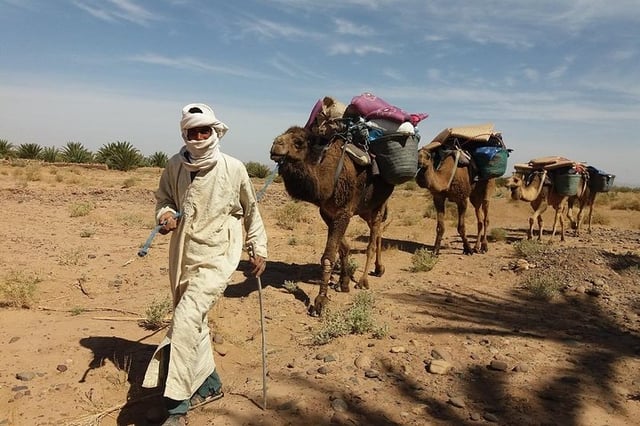
Four camel-supported walking days then run Mhamid to Sidi Naji, Erg Zehar, Ait Ounir and Chegaga, each around five hours. Bags load onto camels after breakfast, lunch is often a shade stop, and nights are simple bivouacs. A 4x4 crosses Iriki and Foum Zguid to Ouarzazate, and the last day climbs back over the High Atlas to a Marrakech hotel.
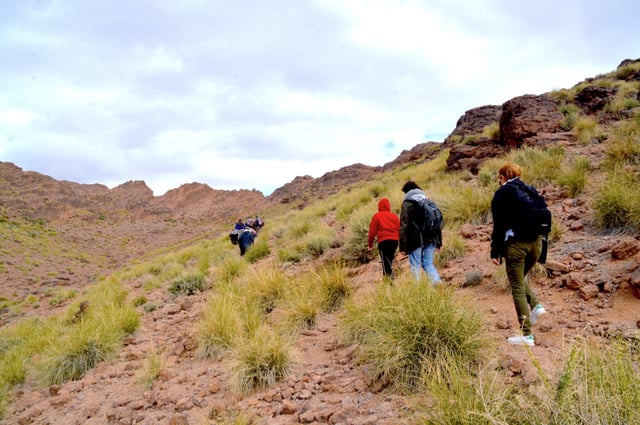
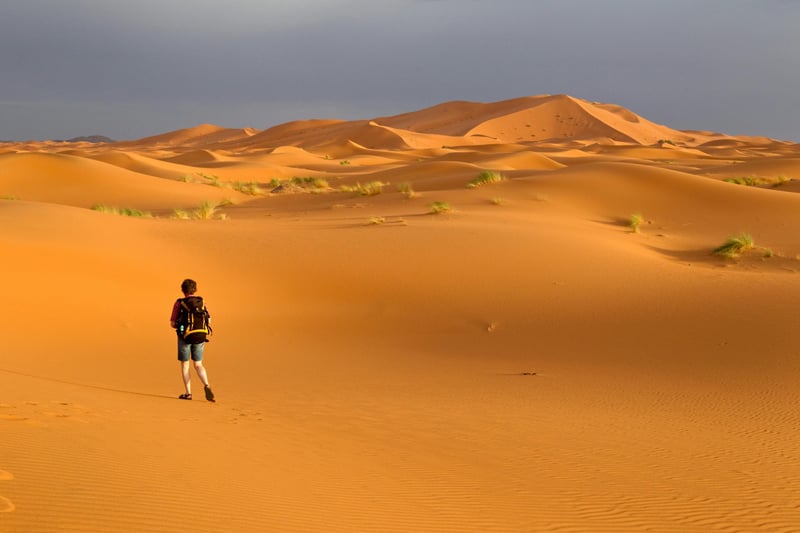
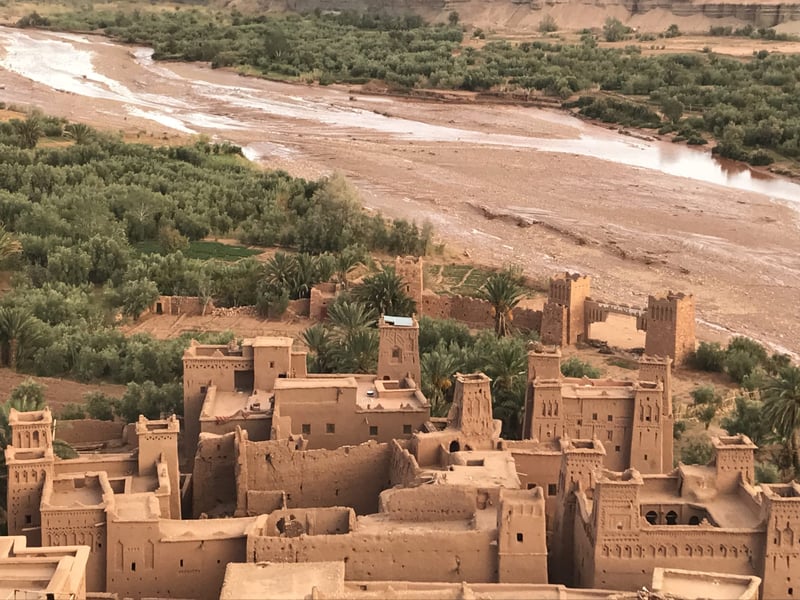
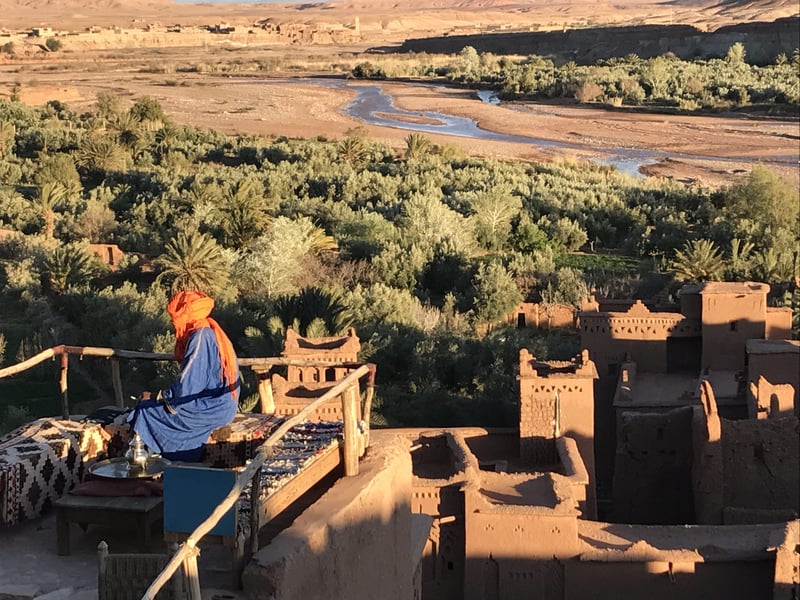
Mhamid sits at the southern end of the Draa, where palm groves give way to open Sahara. From there the walking line crosses plateau, tamarisk shade, small dunes and the larger sands of Erg Zehar before Ait Ounir and the wide Chegaga erg, with Wadi Draa appearing again as a sandy corridor.
You reach that country by the Tizi n'Tichka road from Marrakech through Ouarzazate and Zagora. The return uses Lake Iriki and Foum Zguid on dirt, then paved road to Ouarzazate and the Atlas pass back to the city, so the week is split between deep sand camps and long Moroccan road days.
This week suits improvers who already walk regularly and can manage five-hour days on mixed sand, rock and plateau. Day one is a long drive, then the walking block is consecutive, so tired legs still need to start again the next morning.
Minimum age is 12, and under-18s travel with an adult. Bring a sleeping bag, broken-in boots and sun protection. Tell us about fitness, previous trekking and any medical notes before you travel so the crew can judge pacing on the longer dune days.
The walking line is a real desert traverse rather than a single dune stop, with a crew who load camels each morning and pitch bivouacs at Sidi Naji, Zehar, Ait Ounir and Chegaga. Distances are honest five-hour stages on plateau, wadi and sand, so you cover ground instead of looping the same camp.
Road legs are built into the week on purpose: Tizi n'Tichka on the way out, then 4x4 tracks at Iriki and Foum Zguid on the way home. Pickup in Marrakech means you do not need to find a separate trailhead. Briefings cover heat, water and how the camel loads work before you leave the palm grove.
After breakfast in Marrakech you are collected and the minibus climbs Tizi n'Tichka toward Ouarzazate for lunch, then continues through the Draa valley and Zagora. Evening is a bivouac in the palm grove at Mhamid after a seven to eight hour road day.
This is a transfer, not a walking stage. Meet the desert crew on arrival, check how bags will load onto camels tomorrow, and sleep in camp beside the palms before the first five-hour walk.
Breakfast, then luggage goes onto the camels and you walk toward Sidi Naji. Lunch is a stop in tamarisk shade. The stage is around five hours, and the night is a bivouac at the dunes.
Keep the daypack for water and layers. The camel train moves the tents and kitchen, so you only see those bags again in camp. Soft sand can make the hours feel longer than a valley path of the same distance.
You cross plateau and small dunes, stop for lunch, then continue to the larger sands of Erg Zehar. Walking time is around five hours. Camp sits at the foot of the dunes.
The ground mixes firm plateau with softer patches, so footing changes through the day. Stay with the guide's line rather than cutting across unmarked sand. Evening is in bivouac again, with the same kitchen kit as Mhamid.
The path follows a plateau of acacia and other desert plants on rocky and sandy ground. In the afternoon you cross smaller dunes along Wadi Draa and stop for the night at Ait Ounir. Plan on five hours of walking.
Shade is patchy, so hats and water matter as much as on the bigger ergs. Camp is another bivouac, still with tents, mats and a cooked evening meal from the crew.
You walk about five hours into the large dunes at Chegaga. Tea is served in camp, and the last desert evening is spent with the nomad crew around the fire. If you climb the big dune after dark, the sky is the main show, then you sleep on the sand.
This is the end of the walking block. Sort the bag you want in the 4x4 tomorrow, because the camel loads finish here. Drink and rest in the heat of the afternoon once camp is up.
You leave Chegaga by 4x4, crossing toward Lake Iriki and Foum Zguid on desert track before joining the road to Ouarzazate. Expect dust, corrugations and a long sit after four walking days.
This is a vehicle stage, not a hike. Hold onto water and a scarf for the track. Overnight is in Ouarzazate, which sets you up for the Atlas pass in the morning.
You drive over the High Atlas to Marrakech and check in to a hotel in the centre of the city. That closes the Sahara week. There is no walking stage today, just the mountain road and a bed in town.
If you have a same-day flight, allow plenty of slack after a mountain transfer. Most guests stay the night and fly the next morning. Confirm your hotel drop-off when you book so the driver is not hunting a medina lane at dusk.
Hotel or riad pickup in Marrakech is included. The joining point is Hotel Alandalous and Spa on Avenue du Président Kennedy. Share your stay name and a nearby access street if the riad sits in a lane vehicles cannot enter.
If you are arriving from another city, make your own way to Marrakech the night before. The minibus leaves after breakfast on day one for the Tizi n'Tichka road, so late airport arrivals that morning are a poor fit unless we have already agreed a later join.
The first five nights are bivouacs: Mhamid palm grove, Sidi Naji, Erg Zehar, Ait Ounir and Chegaga. Tents, sleeping mats, kitchen kit, tables and chairs travel with the camel team. You bring a sleeping bag. Camps are simple, with limited washing water and no hotel plumbing.
After the 4x4 day you overnight in Ouarzazate, then finish in a Marrakech hotel in the city centre. Those two building nights are there so the long road days do not end back on the sand. Extra city luggage can stay in Marrakech if you arrange that with your stay before pickup.
We collect you from your hotel or riad in Marrakech. The joining address is Hotel Alandalous and Spa on Avenue du Président Kennedy. If your riad has no vehicle access, the driver waits on a nearby street and you walk out to meet them.
Send the stay name before you travel. Guests coming from Casablanca or another city still need to reach Marrakech themselves the night before, because the minibus leaves after breakfast for the Tizi n'Tichka climb.
Four consecutive days are around five hours each, on plateau, rocky ground, wadi sand and larger dunes toward Chegaga. The grade is improver rather than a first desert outing, because the stages stack and the surface changes underfoot.
Camels take the heavy bags, so you walk with a daypack. Heat and soft sand still slow you down. Previous hill or multi-day walking helps. Under-18s need an adult with them, and the minimum age is 12.
After breakfast you leave Marrakech by minibus, climb Tizi n'Tichka, take lunch in Ouarzazate, then continue through the Draa valley and Zagora to Mhamid. Plan on seven to eight hours in the vehicle, with stops, before the first bivouac in the palm grove.
This is a transfer day, not a walking day. Wear comfortable clothes, keep water to hand and download maps or music if you like a long road. The desert crew meets you at Mhamid in time to pitch camp.
Nights at Mhamid, Sidi Naji, Erg Zehar, Ait Ounir and Chegaga are bivouacs. Tents, mats, kitchen kit, tables and chairs come with the crew. Expect simple desert camps, not hotel rooms, and cool nights after hot afternoons.
You supply the sleeping bag. The last night of the week is a hotel in central Marrakech after the Atlas drive. Ouarzazate is the staging town on the 4x4 day before that final road.
Yes. On the walking days bags are loaded onto camels after breakfast and you set off on foot. Lunch is often a shade stop, such as under a tamarisk tree on the way to Sidi Naji, then you continue to the next bivouac.
Keep water, sun cream, a spare layer, medicines and documents in the pack on your back. You will not open the camel loads until camp is up. Soft bags sit better on the animals than hard cases.
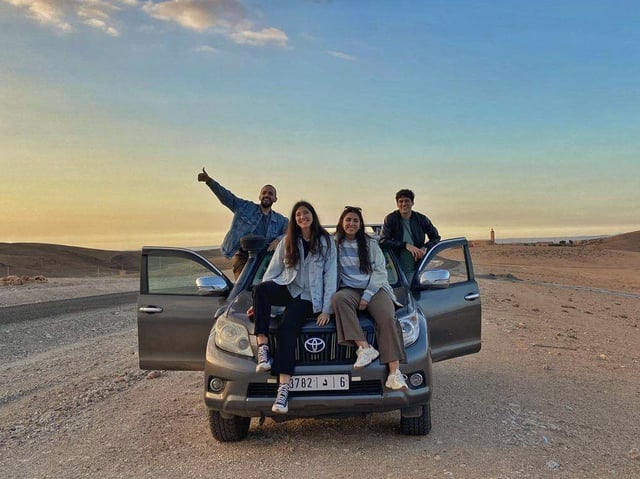
After Chegaga you leave the walking line and travel by 4x4 via Lake Iriki and Foum Zguid toward Ouarzazate. Part of this is desert track, then you join paved road. It is a vehicle day, so expect dust, bumps and a long sit after the dune stages.
The following day you cross the High Atlas back to Marrakech and check in to a city hotel, which closes the desert block. Timings depend on track conditions. Hold a scarf or buff for the dirt section.
Breakfast before the Marrakech departure, trail lunches and dinners in bivouac through the walking days are part of the programme. The cook works from the kitchen kit the camels carry, so meals are camp food rather than restaurant menus.
Share allergies and diets ahead of time. Soft drinks and alcohol are extra. Once you leave Zagora, shops are scarce, so bring any personal snacks you rely on and a bottle you can refill at camp.
The minimum age is 12. Younger children are not accepted on this week even if they have walked elsewhere. Anyone under 18 needs a responsible adult travelling with them.
Five-hour dune days in heat are a lot for a first multi-day trip. Tell us the child's recent walking before you travel so we can say honestly whether the Chegaga stages will suit them.
Tents, sleeping mats, kitchen and dining kit, tables and chairs are provided, along with the camel team that moves them. You bring a sleeping bag, boots, layers, sun protection, a head torch, a water bottle and personal washing kit.
A windproof jacket earns its place on plateau days. Camp shoes are a relief after boots. Walking poles help some people on soft sand. Do not expect a generator or charging table at every bivouac, so keep power banks topped up in Marrakech.
Departures run from one person up to 15. You share camels, meals and bivouac space with the others on your dates. Private groups can ask for their own departure within that size band.
Wind, heat and sand can slow a stage or shift a camp site. The crew changes start times rather than pushing on in unsafe conditions. Travel insurance for walking trips is strongly recommended, because vehicle days and dune days both sit outdoors.
About the centre
Marrakech
We organise guided treks, desert journeys and adventure days across Morocco, from the High Atlas peaks to the Sahara dunes. Small groups travel with experienced local guides who know the trails, camps and villages along each route.
Whether you are planning a two-day summit attempt, a week-long camel trek or a balloon flight at dawn, we handle transport, camping kit and day-to-day logistics so you can focus on the landscape and the walking. Pickup from your hotel or riad in Marrakech or Casablanca can be arranged when your trip starts in either city.
Operated by Easygo Tours, a partner of adventuro.