We partner with Rewilding Britain to help protect our natural spaces for future adventures.
All centres are vetted for safety and quality. Your adventure is in good hands with adventuro.
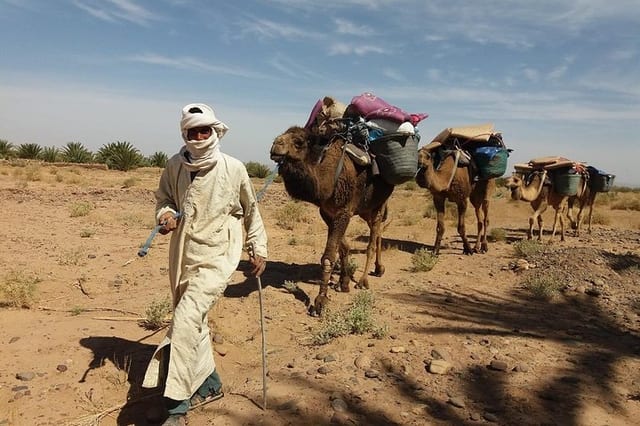
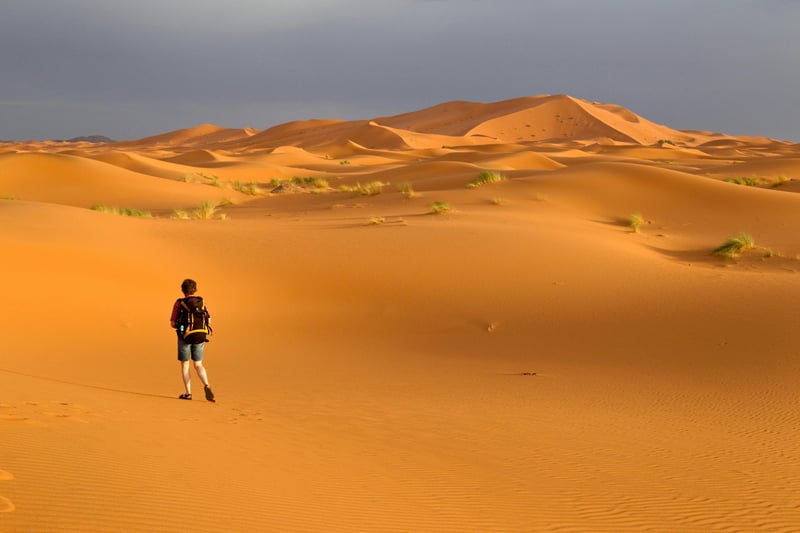
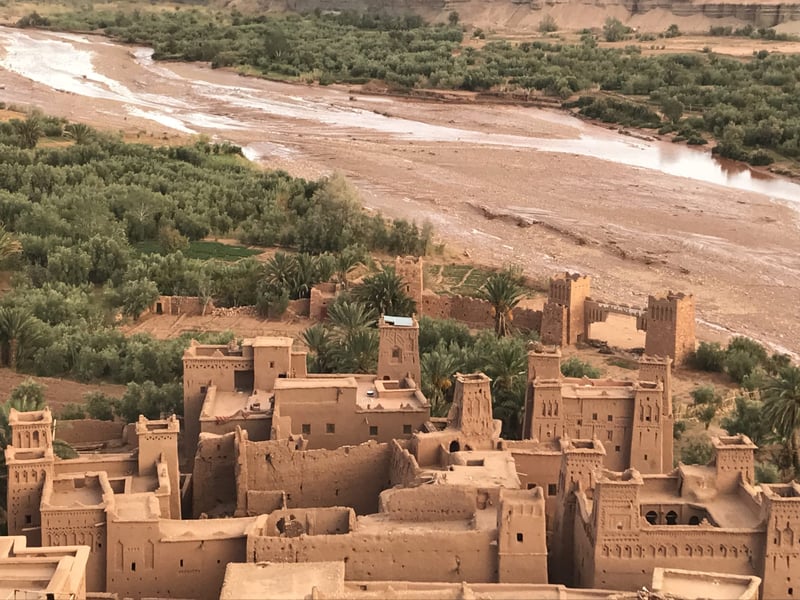
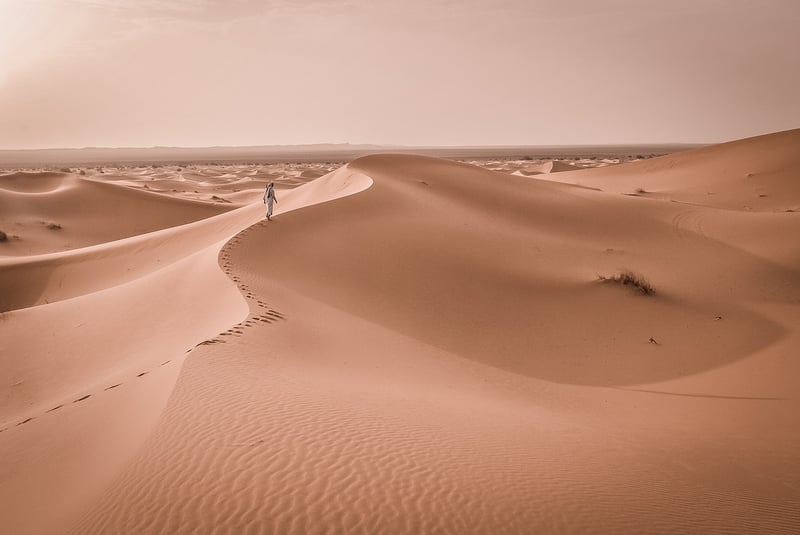
Leave the city behind for a week that mixes hotel nights with camel-supported walking through the Draa valley. After an airport transfer into Marrakech you drive to Zagora, then walk camp to camp toward Ouled Driss near Mhamid while camels carry the tents and kitchen. A medina day and an airport morning close the eight days.
You start in Marrakech with an included airport transfer to the joining hotel on Avenue du Président Kennedy. After a briefing and dinner, the next morning is a long drive to Zagora, where you meet the desert crew and walk into the Draa valley for the first night under canvas at Nsrat Dunes. Camels take the heavy bags, so you move on foot with a daypack.
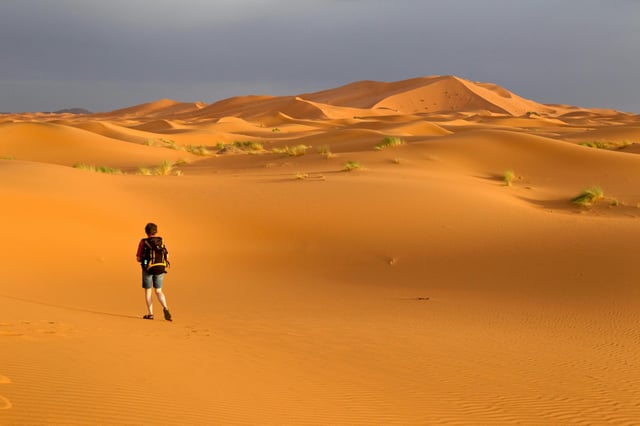
Four camel-supported walking days then link Nesrat, Tiraf, Sidi Draa and Ouled Driss near Mhamid, with camps moving ahead of you. Stages run around three to five hours on sand and valley tracks. A minibus returns you to Ouarzazate or Marrakech, you have a leisure day in the medina, and the eighth morning is breakfast before the airport.
The Draa valley south of Zagora is a long ribbon of palms, date groves and small villages before the country opens into dunes at Nsrat, Tiraf and Sidi Draa. Ouled Driss sits near Mhamid El Ghizlane, where the valley meets the edge of the Sahara and camps are pitched on sand rather than in town.
Marrakech is the start and finish, with the joining hotel on Avenue du Président Kennedy. Between the city and the desert you cross High Atlas roads toward Zagora, then spend several nights well away from traffic, returning for a medina day around Jemaa el-Fna before you fly.
You should be comfortable walking for three to five hours on sand, gravel and village tracks, with a light daypack. No previous camel-trek experience is needed, and the days are paced for beginners, but the heat and the uneven ground still ask for steady everyday fitness.
Minimum age is 18. Bring a sleeping bag suited to cool desert nights, broken-in walking shoes and sun protection. Tell us about medical conditions, recent injuries or diets before you travel so the crew can plan meals and rest stops.
Our desert crew works these Draa and Mhamid tracks through the season, so camp sites, lunch stops and walking hours are planned around heat, wind and how the group is moving. Camels carry the tents and kitchen, which keeps your pack light on the sand.
Hotel nights bookend the trek in Marrakech, so you are not camping on arrival or departure. The briefing on night one covers the next day's drive, water, clothing and how camp life runs, which means you step onto the first trail already knowing the rhythm.
An arrival transfer from Marrakech or Ouarzazate airport brings you to the joining hotel on Avenue du Président Kennedy. You settle in, then meet the team in the evening for a pre-departure briefing covering the drive south, water, clothing and how camp days run.
Dinner is at the hotel and you sleep in a proper bed before the desert section begins. Keep walking shoes and a warm layer easy to reach for the next morning's early start toward Zagora.
You leave Marrakech or Ouarzazate by minibus and drive out to Zagora, where the Sahara trek crew is waiting. After the handover you walk into the Draa valley, a long belt of palms and date groves, and reach camp at Nsrat Dunes for the first night under canvas.
The road stage is the long part of the day. Once you are with the camels, the walking is an introduction to the sand rather than a full five-hour stage. Dinner and overnight are in camp.
You set off from Nesrat Dunes and walk toward Tiraf, passing Sidi Salh village for a Moroccan lunch prepared with the crew. After the stop you continue to Tiraf Dunes and spend the night in camp on the sand.
Walking time is around five hours. Camels carry the tents and kitchen so you stay with a daypack. Drink often, cover your head, and use the village pause to refill bottles before the afternoon heat.
Camp is packed after breakfast and you leave Tiraf Dunes on foot for Sidi Draa valley, where the next tents will already be moving with the camel team. The stage is another five hours on mixed sand and valley ground.
Lunch is taken on the trail or at camp depending on timing. Overnight is at Sidi Draa, still with the same kitchen kit, mats and crew you have been travelling with since Zagora.
From Sidi Draa you walk toward the village of Ouled Driss, near Mhamid El Ghizlane, for lunch and a final desert camp. This stage is shorter, around three to four hours, which eases the last walking day before the road returns.
You are now at the edge of the wider Sahara around Mhamid. Evening is in camp again, with time to sort bags for the minibus in the morning.
You leave the dunes by minibus. Allow about four hours if you are heading to Ouarzazate, or around eight hours if the transfer continues all the way to Marrakech. The destination follows the plan confirmed at briefing.
Night is back in a hotel, with a shower after the camping days. Keep a change of clothes at the top of your bag. Tomorrow is a city day rather than a walking stage.
The day is yours in the Marrakech medina, with time to walk the lanes, look at workshops and get a sense of the city's history at your own pace. The afternoon stays free so you can rest, shop or sit in a cafe without a timed walking stage.
The final meal together is at Jemaa el-Fna. Stay in a group if you prefer a guided feel, or peel off and rejoin for dinner. Overnight is at the hotel before the airport morning.
After breakfast the eight days close with a transfer to the airport. You can book a flight at any reasonable hour; send the departure time so the driver can plan the run from the hotel.
If your flight is late, the morning is still a checkout rather than an extra touring day. Keep passport, boarding pass and a layer in hand luggage. That is the end of the organised programme.
If you fly into Marrakech or Ouarzazate, the arrival transfer to the joining hotel on Avenue du Président Kennedy is included on day one. Send your flight details so the driver can meet you.
If you are already staying in Marrakech, make your own way to the hotel for the evening briefing. That local taxi or bus is not included. The same street is the map pin for the start of the trip.
Night one, the return from the desert and the last night in Marrakech are hotel stays, starting at the joining hotel on Avenue du Président Kennedy. You have a bed, a shower and a place to leave extra luggage around the camping days.
Nights two to five are desert camps at Nsrat, Tiraf, Sidi Draa and Ouled Driss. Tents, sleeping mats, and a kitchen with tables and chairs are provided. You bring your own sleeping bag. Facilities are simple, and water for washing is limited, which is normal on a moving Sahara camp.
The joining hotel sits on Avenue du Président Kennedy in Marrakech. If you arrive by air at Marrakech or Ouarzazate, a driver collects you on day one and takes you there for the evening briefing, dinner and the first hotel night.
Guests already in town make their own way to that hotel. A local taxi or bus to the meeting point is not included, even though the airport arrival transfer is. Send your flight number so the driver can time the pickup.
Desert walking days are typically around five hours between Nesrat and Tiraf, and again from Tiraf to Sidi Draa. The stage toward Ouled Driss is shorter, usually three to four hours, which leaves time for lunch in camp.
The first full day is mostly a road transfer to Zagora before a shorter walk into the Draa valley. You carry a daypack only. Camels move the tents and heavier bags, so the walking is steady rather than loaded.
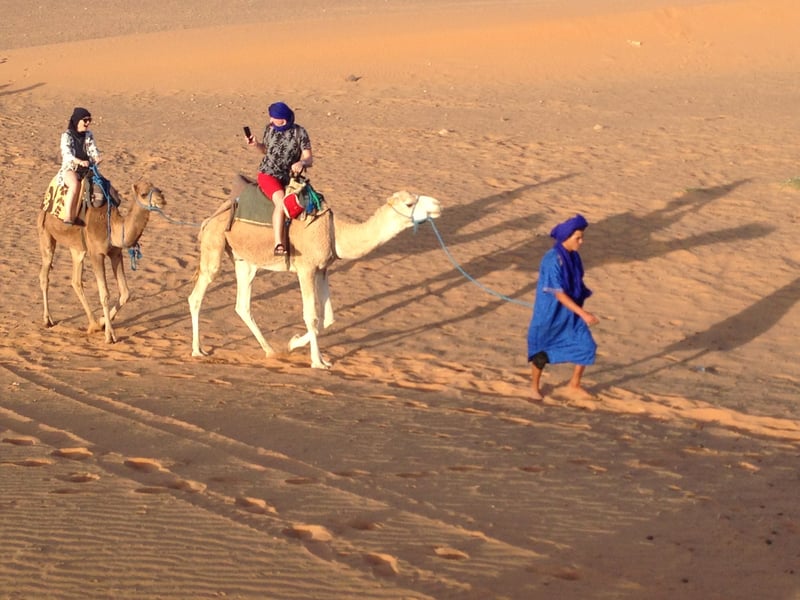
This is a walking trek. Camels carry camping kit, food and main luggage so you move on foot with a lighter pack. The hours listed each day are walking hours on sand and valley tracks, not a long seated ride.
You still spend the days with the camel team as camps are loaded and unpacked. If you have a concern about walking on soft sand, say so before you travel so we can talk through pacing and rest stops.
Nights on the sand are in tents with sleeping mats, plus a kitchen and dining set-up with tables and chairs. The crew cooks in camp, and evenings are spent around the same site rather than in a hotel.
You bring your own sleeping bag because desert nights can be cold even after a hot afternoon. A head torch is useful after dark. There is no hotel plumbing on dune nights, so pack wet wipes and a small towel.
Dinner on night one at the Marrakech hotel, meals through the camping days, a village lunch at Sidi Salh, lunch near Ouled Driss, the final meal at Jemaa el-Fna, and breakfast before you leave for the airport are all part of the trip.
Tell us about allergies or a vegetarian diet ahead of time so the cook can plan. Soft drinks, alcohol and extra snacks in town are your own cost. Do not rely on shops once you leave Zagora.
Minimum age is 18. You need everyday fitness for several hours on sand and uneven tracks in heat, with early starts on walking days. No previous desert trek is required, and the grade is beginner, but it is still a full week outdoors.
Share any heart, joint or heat-related conditions before you confirm. Good shoes you have already walked in matter more than new kit. The crew can slow the pace, but they cannot shorten the sand underfoot.
A sleeping bag, broken-in shoes, sun protection, a warm evening layer, a windproof jacket, a head torch, a water bottle and a small first aid kit cover most needs. A photocopy of your passport is useful in camp, where you will not want to handle the original all day.
Tents, mats and cooking kit are provided. Leave bulky suitcases for the hotel legs if you can, and keep medicines, passport and a spare layer in the bag you carry yourself during walking hours.
Hotel-to-hotel collection around the city is not part of this product. The included road service on day one is the airport arrival transfer to the joining hotel, plus the later minibus toward Zagora and the return after the trek.
If you are already staying elsewhere in Marrakech, plan a taxi to Avenue du Président Kennedy in time for the briefing. Keep that cost separate from the trip fee. The airport run on the last morning is included.
Desert days can be hot, windy or dusty, and nights drop in temperature. Walking hours are set to keep you moving in more reasonable parts of the day, with lunch in shade at a village or camp when the route allows.
Rain is uncommon but wind can lift sand. The crew may adjust camp position or start time if conditions are harsh. Pack a jacket and cover skin. Travel insurance that covers walking trips is strongly recommended.
Groups run from a single traveller up to 15 people. Private pairs and small friends' groups sit in the same range. Larger numbers are not the standard format for this desert week.
You share camp space, meals and the camel team with whoever is on your dates. If you want a quieter departure, ask whether a smaller private start can be arranged for your party.
About the centre
Marrakech
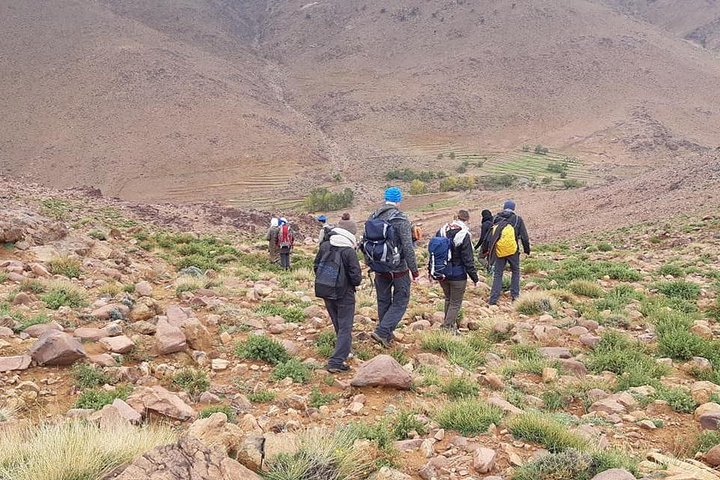
We organise guided treks, desert journeys and adventure days across Morocco, from the High Atlas peaks to the Sahara dunes. Small groups travel with experienced local guides who know the trails, camps and villages along each route.
Whether you are planning a two-day summit attempt, a week-long camel trek or a balloon flight at dawn, we handle transport, camping kit and day-to-day logistics so you can focus on the landscape and the walking. Pickup from your hotel or riad in Marrakech or Casablanca can be arranged when your trip starts in either city.
Operated by Easygo Tours, a partner of adventuro.