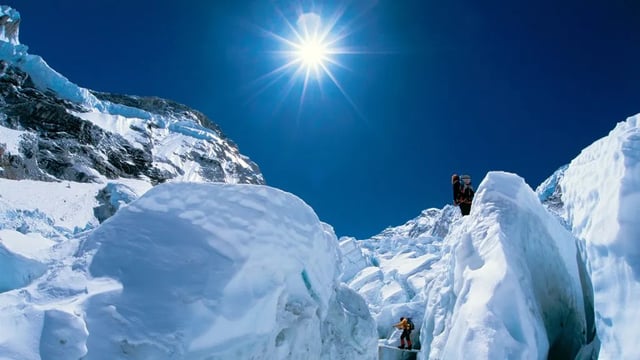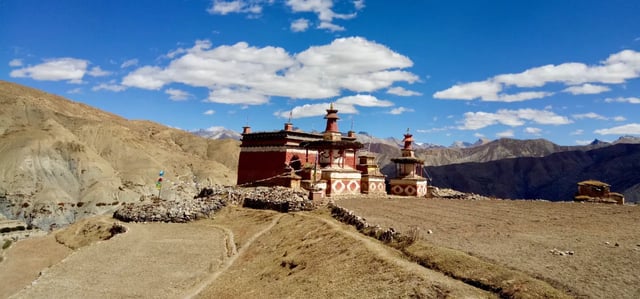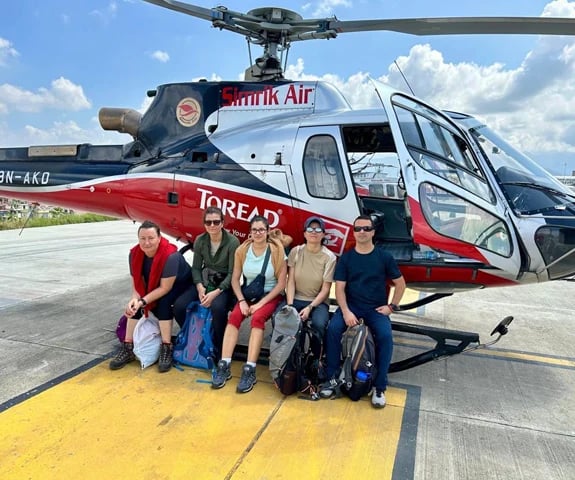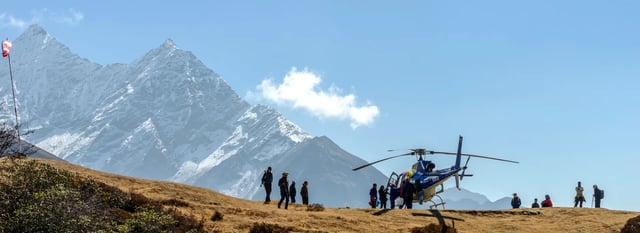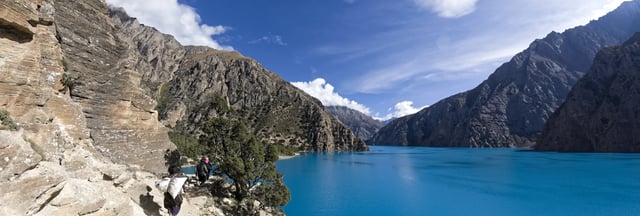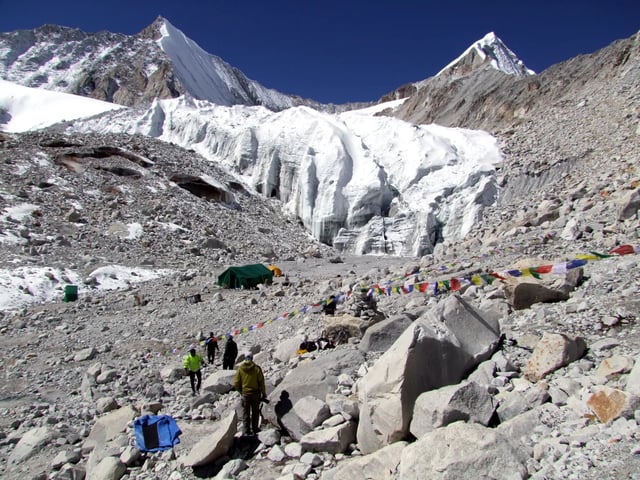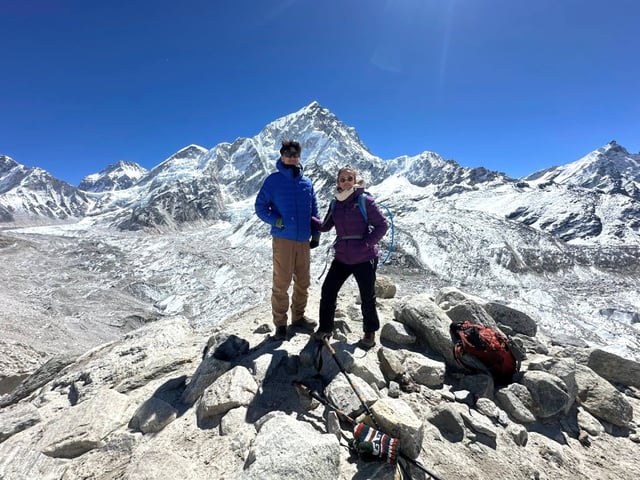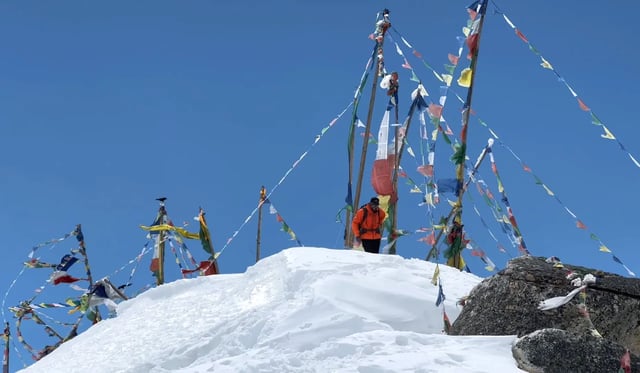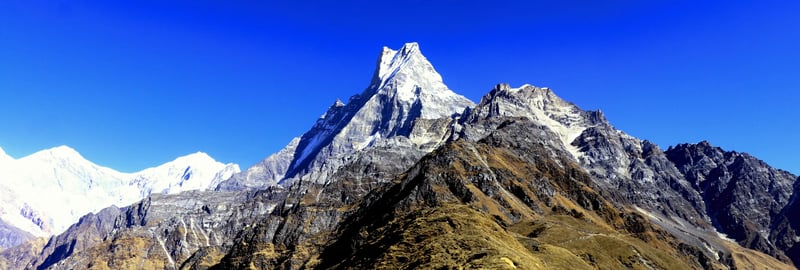
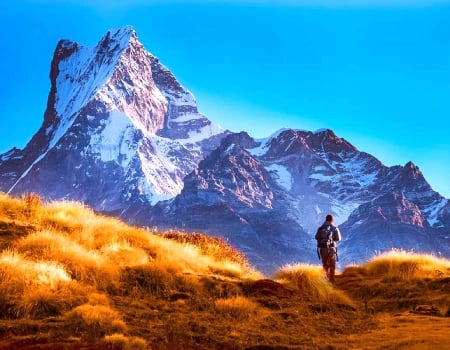
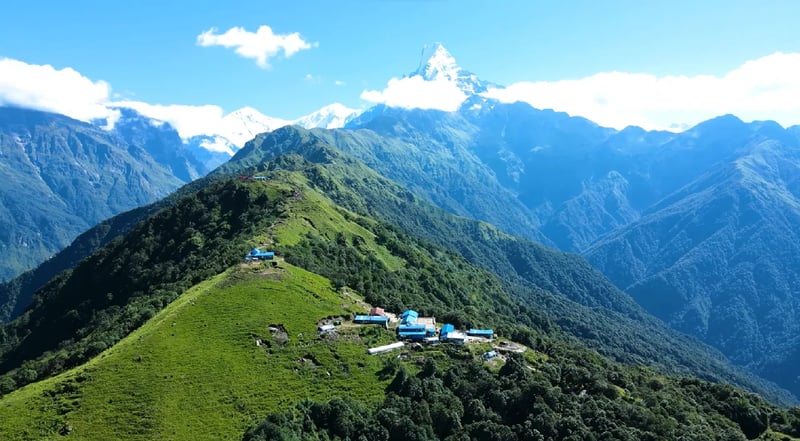
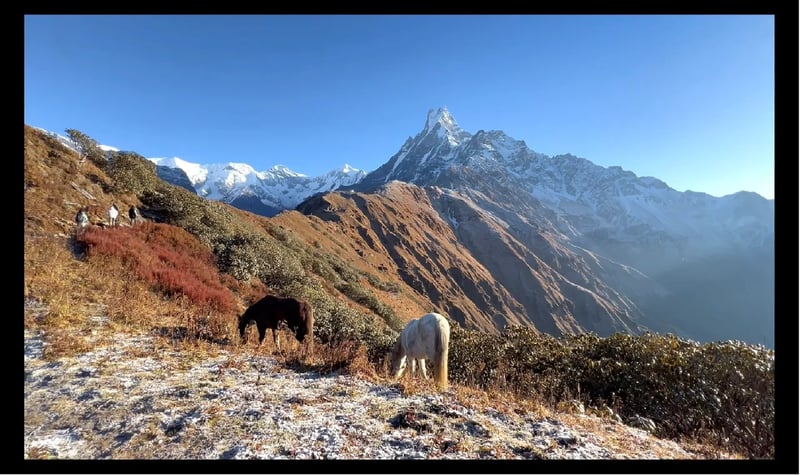
Mardi Himal is the quieter ridgeline east of the sanctuary, reached from Pokhara via Kande or Phedi. You climb through Forest Camp and Low Camp to High Camp, with Machhapuchhre filling the view. Forest Camp, Low Camp, and High Camp sit on a narrowing ridge with Machhapuchhre filling every window.
Base Camp sits on a narrow ridge facing Annapurna South and Hiunchuli. You descend toward Sidhing or the same forest trail back to the road and Pokhara. The last hour above High Camp, looking into the sanctuary, is the photograph this short trek is built for.
You'll sit an arrival briefing in Kathmandu covering the Pokhara road and the Mardi ridge, then we update the plan each evening once you are walking. The climb starts from Kande or Phedi through Forest Camp and Low Camp to High Camp. Our office books those narrower ridge lodges before you leave the lake.
Your guide watches cloud on Machhapuchhre before the last hour toward Mardi Himal Base Camp. We'll keep the 4,550 m viewpoint honest if the high-camp night sits in cloud. You descend toward Sidhing or the same forest trail back to Pokhara.
The majestic city of Kathmandu is glad to welcome you on its soil. Once you are out of TIA Gate, you will meet our team rep who will guide you to your overnight hotel. Please take as much time as you like to get relax.
In the evening, our guide will offer a brief overview about our Mardi Himal base Camp trek itinerary. Once through, feel free to wander the Kathmandu corners and get your first taste of Momos or feel the power of Dal Vat.
After a good breakfast, we will proceed to get on a tourist bus to travel to Pokhara, 200 km away from the capital and a very photogenic and most loved city of Nepal by tourists. Once we get through the traffic of Kalanki, breathe a sigh of relief as we venture over the 2250 m Thankot Pass.
Going down, our bus will join the Prithvi Highway that travel us toward Trishuli Valley. Traveling side by side with the green hills, our adventure then continues through Bandipur Town, another exquisite Newari Town that still possesses that medieval aura it had centuries ago.
Waking up early, we will take yet another short 45-minute drive towards Kande. It's time to set forth on the hiking journey towards Pritam Deurali. A well-built stone paved path will at first march us to Goldanda.
Now a rigorous ascending trail will run through the enchanting rhododendron thickets for around 1 hour 30 minutes. The landmark of the Australian Camp which formally called as the Thulo Kharka (2055 m) you reach. We will take a breather here in the fascinating company of Fishtail, Hiunchuli, Annapurna South, and Lamjung.
After a momentary break, we will now continue to move down to Pothana (1890 m).
Quite a steep and tough trail we will have today on our Mardi Himal Base Camp trek. The mossy forest trail after Pritam Deurali will take us to Tolka. We will run into a mountain stream which will then guide us toward a suspended bridge.
The path across will then direct us to the Landruk Gurung community. From here, the trail will rise even more through the beautifully carved chortens. A carved stone steps on a hill will take us to a temple offering a fantastic sight of the Ghandruk Village.
After about an hour, we will reach a vast open cleared area which is our spot of Forest Camp aka Kokar.
We will keep on progressing higher along the ridge for around 45 minutes. We will reach a spot where the vegetation has changed into somewhat of a cloud forest with lichens, ferns, mosses, and orchids. This is called the Rest Camp where every now and then we will get to see the Fishtail Peak to the north.
We will put some more effort into proceeding upward for around 2 hours and 30 minutes till we are at the Low Camp. Here we can find some tea houses that serve drinks and snacks for our lunch. Let's dive right into our climb that awaits our arrival at High Camp.
We will have to deal with 600 m sheer ascension so we will take it slowly and carefully.
Today is the longest hiking day of our Mardi Himal Base Camp trek so we will breakfast earlier and then set on the journey. We will follow the Kali Danda from High Camp which will shortly steepen along the rocky landscape. Climbing for around 3 to 4 hours with goats and sheep, we will finally be at the Mardi Himal base Camp, the highest and the major feature of our Mardi Himal Trek.
Once here, we can feel Mardi Himal separating us from Fishtail. We can also look at Annapurna I further away and in the distance, Tent Peak, Singu Chuli, Mount Fang (Baraha Shikhar), Hiunchuli, Annapurna South, Gandharva Chuli, Gangapurna, Ganesh and Dhaulagiri.
From Badal Danda, we will proceed down through Low Camp and follow the artistically constructed terraces. We will descend a total of around 2000 m as we pass the Mardi Khola to reach the Siding Village.
Here, we will experience the hospitality of the Brahmin and Gurung community after which our transport will pick us up and drive us through Lumre to Pokhara.
Ending our Mardi Himal Base Camp trek, we will again take the 200 km drive back to Kathmandu by tourist bus. Enjoying the landscape, hills, and Himalayas, we will again pass by Trishuli and arrive in the warmth of Kathmandu.
Our team will organize a farewell dinner for the evening so we can have your pleasant company before you return home.
Your Mardi Himal Base Camp trek is now closing and we sincerely hope you had a fantastic experience with our team.
We will arrange for your travel to airport transfer based on your flight time.
Most guests fly into Tribhuvan International Airport in Kathmandu. Share your arrival time ahead of travel so a Thamel hotel transfer can be arranged, or make your own way to the meeting hotel.
Many departures include a road transfer to Pokhara before walking starts from Nayapul or a nearby trailhead. Allow a little extra time after the trek before international flights home.
Twin or double rooms in a comfortable Kathmandu hotel cover your first nights and your return from the trail, with breakfast on those city stays when included in the package. Briefings happen at the hotel, and airport collection from Tribhuvan is available when flight times are shared in advance.
Family-run teahouses or lodges line the route with twin beds and a shared dining room. Rooms get simpler and colder as you climb, with shared bathrooms common at higher villages. Hot water, Wi-Fi, and charging are paid at the lodge when offered.
Spring from March to May and autumn from September to November usually bring the clearest views and stable walking conditions on this route. Winter is quieter but colder at altitude, while monsoon months bring cloud and wet trails at lower elevations.
Shoulder weeks need an honest weather call before high passes or dawn viewpoints. Monsoon cloud sits lower on the hills while winter brings ice on steps above village level.
You should be comfortable walking several hours a day on uneven paths with a daypack, including steady uphill sections as you gain height. Hill training and longer weekend walks in the months before travel help your legs and lungs on uphill trail days.
Hill training, stair climbing, and longer weekend hikes in the months before travel help your legs and lungs, even when acclimatisation days are built into the route. Break in boots before you fly and carry a light daypack on practice walks.
Guided trekking with licensed leaders, lodge nights on the trail, meals as described for walking days, and permits for the regions crossed are included when they are part of this trip. Domestic flights, porters, and airport transfers apply only when they are part of this trip.
Domestic flights, road transfers, porter support, and airport transfers apply only when they are part of this trip. Permits for the regions you cross are arranged in Kathmandu or Pokhara when included.
International flights to Nepal, visa fees, compulsory travel insurance, personal trekking clothing, snacks and drinks outside included meals, and tips for crew are not covered. Hot showers, Wi-Fi, and battery charging in lodges are usually paid locally when offered.
Charges for hot showers, Wi-Fi, or battery charging in lodges are paid locally when offered unless your trip notes say otherwise. International flights, visa fees, and personal insurance stay outside the trek package.
Pickup can be arranged from Tribhuvan International Airport or your hotel in Thamel when you share flight times ahead of travel. Thamel hotels are the usual meet point; drivers need flight numbers to meet you at the international terminal.
Some departures brief in Pokhara after the road from Kathmandu; your trip notes state which city hosts the main kit check. Allow a little extra time after the trek before international flights home in case mountain roads or flights move.
Guides set a steady pace and watch for headache, nausea, or dizziness as you gain height. Weather can shift daily plans, so your guide keeps a steady pace with regular breaks.
Tell your guide early if symptoms appear so tomorrow's stage can shorten or descent can start before conditions worsen. Trail conditions are checked each morning before the group moves.
Road transfer from Kathmandu to Pokhara and a short drive to Nayapul or another start point are common when transport is included. Your guide confirms departure times at briefing.
Motion sickness medicine helps on winding mountain roads. Your crew would rather wait for a safe window than rush marginal weather.
Annapurna Conservation Area Permit and TIMS registration apply on this route. The team arranges paperwork in Kathmandu or Pokhara when you provide passport copies and trek dates.
Keep copies in your daypack for checkpoint stops. Your crew would rather wait for a safe window than rush marginal weather.
Families join when children can manage the daily hours and terrain on this specific route. Pace and daily hours can be adjusted on private departures, though that may extend the calendar.
Ask our Kathmandu team if you are planning with younger walkers. Private departures can shorten daily hours, though that may add a day or two to the calendar.
Comprehensive travel insurance that covers trekking to the highest altitude on your itinerary, medical evacuation, and helicopter rescue when applicable is essential. Many standard policies exclude high altitude by name.
Read the wording before you travel so you can adjust cover if trekking above 5,000 metres is not named. Many standard policies exclude high altitude by name, so read the wording before you fly.
We partner with Rewilding Britain to help protect our natural spaces for future adventures.
All centres are vetted for safety and quality. Your adventure is in good hands with adventuro.
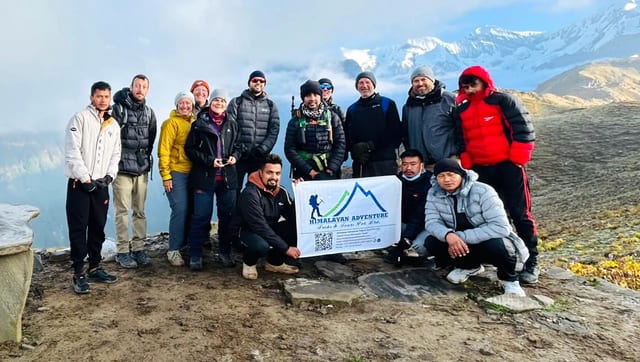

About the centre
Kathmandu
You'll travel with a Kathmandu-based team that plans treks, peak climbs, helicopter flights, motorbike journeys, and cultural trips across Nepal, Tibet, and Bhutan. Routes range from classic teahouse walks and high passes to luxury lodge itineraries and longer expedition-style climbs, with departures shaped around how you want to pace the mountains.
Licensed guides and office staff train regularly on mountain safety and guest care. Porters are insured, fairly paid, and equipped for the trail, with sensible load limits on lodge routes. We work with remote communities through sustainable tourism, including support for education in village areas, so your booking helps local people as well as your own adventure.
Operated by Himalayan Adventure Treks & Tours, a partner of adventuro.