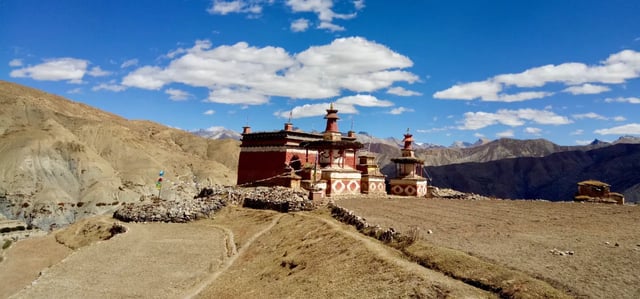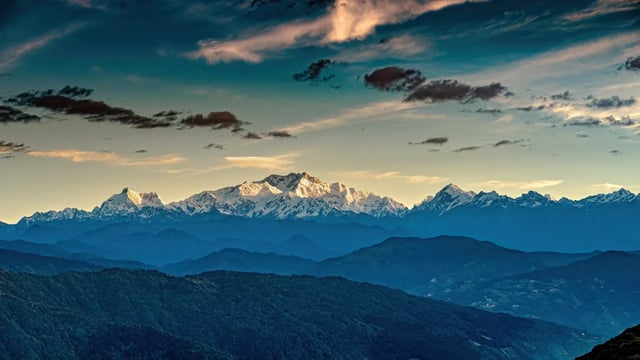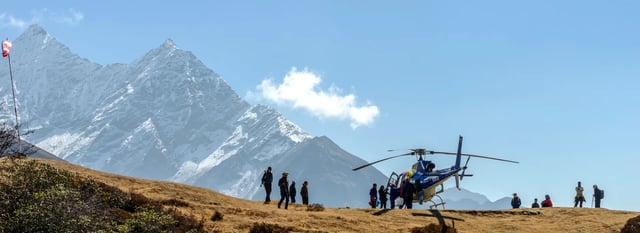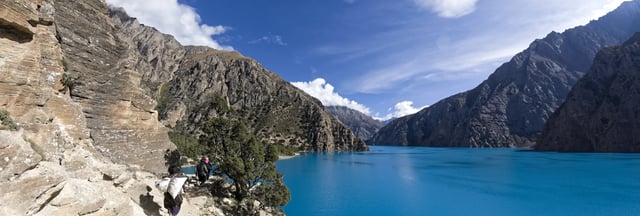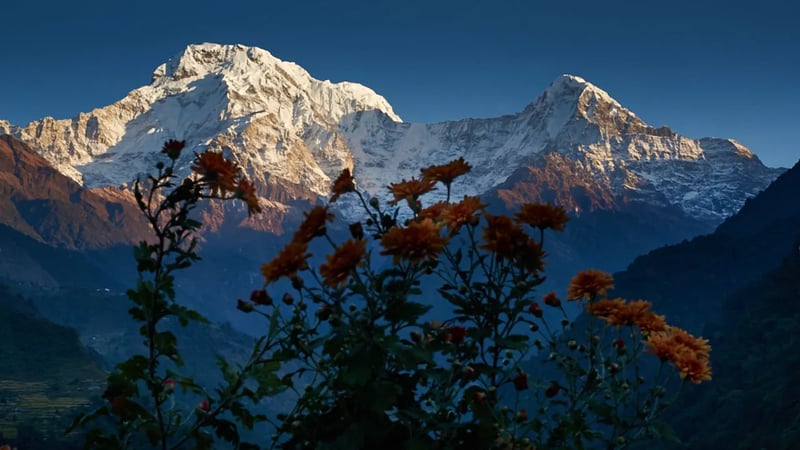
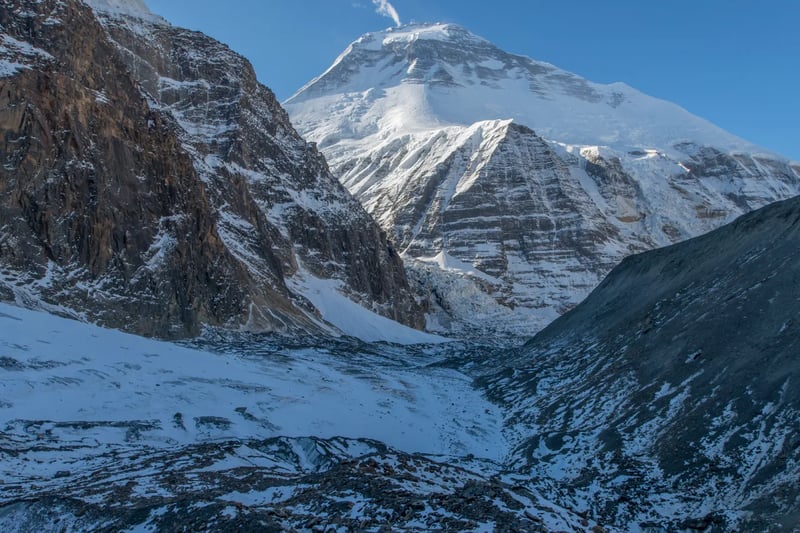
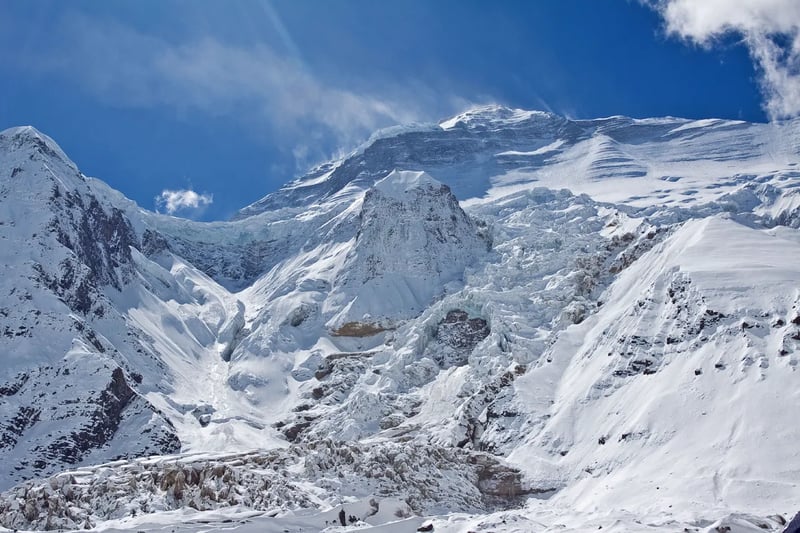
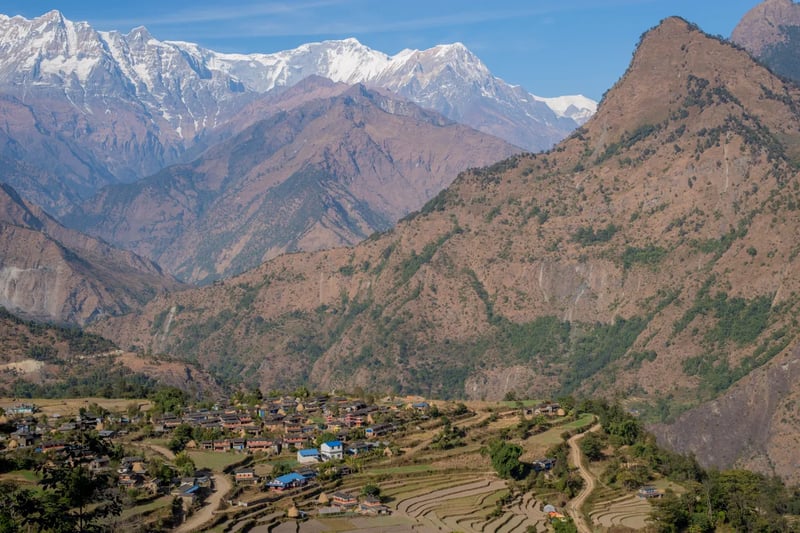
Dhaulagiri Base Camp is a remote, often camping itinerary west of the Kali Gandaki, crossing French Pass and Dhampus Pass with views of Dhaulagiri I and the Hidden Valley. You start from Beni or Italian Base Camp country with a full expedition crew. French Pass, the Hidden Valley, and Dhampus Pass put you under Dhaulagiri’s north face with a full camp crew.
Days are long, lodges give way to tents, and weather on the passes decides the calendar. The reward is the north face of Dhaulagiri and a wild finish back toward Jomsom or Marpha. Italian Base Camp country and a kitchen-tent line replace teahouse nights once you leave Beni.
This crossing runs with a camping crew, kitchen tents, and turn-around calls on French Pass and Dhampus Pass. We'll handle ACAP in Kathmandu before the Beni road, then walk from Italian Base Camp through Glacier Camp to Dhaulagiri Base Camp with a sirdar who would rather wait than chase a Hidden Valley photo. Guides train on altitude illness because those high camps stack height quickly.
Camp staff are insured and paid fairly, with kit renewed yearly, and loads stay around 25 to 30 kg once tents take over from the last lodges at Dobang and Sallaghari. You'll finish toward Yak Kharka and Marpha rather than relying on teahouse rooms above the tree line. Client funds sit behind a Ministry of Tourism security deposit.
Today is your arrival day in one of the glorious and trekking capitals of the world, Kathmandu. The Himalayan Adventure team will meet you at TIA with a private 4WD and driver.
You will be then driven towards your already arranged hotel in the city, where you will have moments to settle in. Later in the day, you will meet our mountain guide for the Dhaulagiri Base Camp trek.
He will discuss your Dhaulagiri Base Camp trek itinerary with you. Then, together, we will go for the purchase or the rental of the essential gear and items.
After an early organic breakfast, our Dhaulagiri Base Camp trek will set off with our exit from Kathmandu in a comfortable public bus through Thankot Pass. From here on, the royal Prithvi Rajmarga will begin to show us our way through the Trishuli Market green hills. Then, our drive will meet the Mugling-Narayanghat Highway, which will lead our ride towards Bandipur.
Ganesh, Annapurna, and Manaslu sparkle in the distant sky, while we will also see the Manakamana Temple atop a green cliff. Soon, the touristic vibe of Pokhara greets us, but we will keep on traveling beside the tender waves of the Myagdi Khola.
Our trekking stage of the Dhaulagiri Base Camp trek will commence from today. Lacing up, our path ahead will divert west from Beni, proceeding towards Mangalghat and Singha. From this point, we will proceed north to Tatopani, a very known destination for travelers who seek the therapeutic warmth of its natural hot springs.
The route will then advance us through Simalchaur, where we will traverse its two large suspension bridges. After this, our walking route will advance through the verdant greenery of old forests towards Babiachaur, our settling village for the night.
A very comfortable, easy graveled path after Babiachaur will first take us to Darbang Village. We will find a small government checkpost, which will scrutinize and register our permits for the Dhaulagiri Base Camp trek.
After this, our route will once again follow the beautiful waters of the Myagdi Khola. Walking on its western shore, we will walk up along the gentle slope of the Shahashradhara Village.
Duk River flows by calmly, which we will navigate along the moderate hung bridge. Now, the path ahead will suddenly climb up steeply towards the Ratorunga Village, showing us our way towards Dharapani.
Following the rich organic breakfast, we will follow the rising trail that will elevate us to Hille Pokhari. Our path for a while will run alongside the peaceful edge of the Ghatti Khola. A gently climbing trail through the ancient forest will lead us to Takam (1670 m) village.
From here, we will follow another marvelous flow of the Dhara Khola. The path across this river will gradually elevate us to Sibang Village (1800 m). A steep ascent will then finally lead us to Muri Village, a community largely inhabited by the Magar people.
Gurja, Manapathi, and Dhaulagiri shine across the sky of this village.
The path after Muri will wind along the steep hillside of around 900 m. Finally, we will be on top of the 1700 m tall slope of the Ghorband Dhara.
Beneath this pass, the Dhora Khola flows magnificently with its white currents, while the pass itself gives us the unbelievable sight of Ghustung South. Our trekking route will become stony but comfortable, which will continue to ascend for the next 1 to 2 hours.
En route, we will navigate through the very gorgeous settlements of Mahatala and Naura before we are able to settle ourselves at Boghara Village. Aka Bagar, this village is also dominated by the magical presence of Dhaulagiri and Manapathi Himal, along with the beautiful Magar community.
We are pretty sure from today on, we will be entirely alone on our Dhaulagiri Base Camp trek trail. After Boghara, a beautiful canyon will show us our way through the subtropical jungle towards Jyardan Village. The inclined route from here will guide us up to a very scenic ridge, leading us forward towards Lipshe Village.
Following the continuous rhythm of ascending and descending slopes, we will finally be able to take a breather at Lapche Kharka (2310 m). Now, only 200 m of the final steep ascent is left for us to deal with before we reach the peaceful isolation of Dobang.
From Dobang, our path will trace the beautiful pine and rhododendron forests that will lead us straight to Chartare. This photogenic location is an excellent spot to see what Dhaulagiri is all about.
Next, the wide meadowy green path will ascend us toward Sallaghari, the jungle of pines, where we have a spectacular clearing for pitching our camp for the night settlement.
Our Dhaulagiri Base Camp trek itinerary will lead us today to the glacial land of the Italian Base Camp. The mountain challenge is slowly enveloping us as we proceed along the sharp rocky terrain towards the Chhonbarban Glacier.
Although the land is gradually becoming barren, we can still see some scattered rhododendron bushes here and there. The Italian Base Camp will soon arrive, where the western wall of Dhaulagiri will simply gaze upon us.
We can also look at the route that will take us ahead towards the Glacier Camp. The Italian Base Camp is locally called the Upper Vungini, which allows us to appreciate not only Dhaulagiri I, II, III, IV, and V but also Tukuche Peak.
From the Italian Base Camp, we will cross the rocky inclined slope of the Pakhoban Ridge (4700 m) and pass by the 3770 m tall Swiss Base Camp. The rugged outcrops will be on our route as we progress onwards towards the impressive petite glacier of Chhonbarban canyon. Get ready for one of the hardest and technical sections of the Dhalagiri Base Camp trek.
There will be large stones and loose boulders, and we have to climb over them using the handrail and maybe ropes. Now, the route will be simpler comparatively as we finally make it all the way to the Glacier Camp.
The final stage of our Dhaulagiri Base Camp trek has arrived, when we will have to navigate through the rocky moraine of the Chhonbarban glacier. En route, the presence of crevasses will need our attention for careful crossing.
In around five hours, we will finally arrive at the main base camp of Dhaulagiri, which turns into home for many expeditioners aiming to ascend this massive pile of giant. From this base camp, we will have the excellent spectacle of individual peaks of the Dhaulagiri massif: I, II, III, IV, V, and VI, along with Tukuche and Sita Chuchura.
We will be traversing the highest location of our Dhaulagiri Base Camp trek itinerary, the daunting heights of the French Pass. Rising very early, we will follow the path heading in the northeast direction of Dhaulagiri. Again, we will follow the gentle glacial track of the Chhonbarban Glacier and take the left route.
En route, we will have to ascend over the sharp moraine and scree to reach a vast plateau. From here, we will take the western route and stand at the ultimate height of the French Pass, where once in 1950 stood the brave souls of the French team, comprising Lionel Terray, Gaston Rebuffat, and Luis Lachenal.
Before starting the descending journey of the Dhaulagiri Base Camp trek, we will have to make one final ascent of yet another very enormous Dhampus Pass. It may take around two hours to reach this pass, where the Dhampus and Annapurna reward us with their incredible presence. We will now climb down gently and carefully, as there will be a 1500 m steep descent that we will have to overcome.
The path ahead will reenter the green landscape of the Kali Gandaki Valley as we leave Dhaulagiri behind. By the afternoon, we will be setting tents in the grasslands of the Yak Kharka, where Annapurna, Dhampus, and Tukuche Peaks will be ready to make our evening enchanting.
We have a final stretch of trekking today. From Yak Kharka, we will march down towards the alpine vast landscape of Alubari.
The descent will then take us toward the Marpha town of the Kali Gandaki Valley, known in Nepal for its apple production.
We will now soon be closing our Dhaulagiri Base Camp trek 17 days journey. From Marpha, a public bus will travel us through Jomsom, Tatopani, and Ghasa to Beni, where we will exit from Dhaulagiri Conservation Area.
From here, the Pokhara Baglung Highway will take us straight towards the heavenly tourist town of Pokhara.
From Pokhara, we will again get on the large comfortable bus to head on along the royal Prithvi Rajmarga to return to Kathmandu. If you desire, at an additional fee, you can also choose to reach Kathmandu via half hour flight from Pokhara.
In the evening, we will officially end our mountain expedition of the Dhaulagiri Base Camp trek and attend a farewell dinner hosted by our team.
Our team will arrange a private airport transfer for you around three hours before your departure flight.
Fly into Tribhuvan International Airport in Kathmandu unless the itinerary uses another regional hub. Airport or hotel pickup can be arranged when you share arrival details ahead of travel.
Briefings cover road or domestic travel to the trailhead. Build buffer time before onward international flights in case mountain weather shifts the schedule.
Twin or double rooms in a comfortable Kathmandu hotel cover your first nights and your return from the trail, with breakfast on those city stays when included in the package. Briefings happen at the hotel, and airport collection from Tribhuvan is available when flight times are shared in advance.
Family-run teahouses or lodges line the route with twin beds and a shared dining room. Rooms get simpler and colder as you climb, with shared bathrooms common at higher villages. Hot water, Wi-Fi, and charging are paid at the lodge when offered.
Spring from March to May and autumn from September to November usually bring the clearest views and stable walking conditions on this route. Winter is quieter but colder at altitude, while monsoon months bring cloud and wet trails at lower elevations.
Shoulder weeks need an honest weather call before high passes or dawn viewpoints. Monsoon cloud sits lower on the hills while winter brings ice on steps above village level.
You should be comfortable walking several hours a day on uneven paths with a daypack, including steady uphill sections as you gain height. Hill training and longer weekend walks in the months before travel help your legs and lungs on uphill trail days.
Hill training, stair climbing, and longer weekend hikes in the months before travel help your legs and lungs, even when acclimatisation days are built into the route. Break in boots before you fly and carry a light daypack on practice walks.
Guided trekking with licensed leaders, lodge nights on the trail, meals as described for walking days, and permits for the regions crossed are included when they are part of this trip. Domestic flights, porters, and airport transfers apply only when they are part of this trip.
Domestic flights, road transfers, porter support, and airport transfers apply only when they are part of this trip. Permits for the regions you cross are arranged in Kathmandu or Pokhara when included.
International flights to Nepal, visa fees, compulsory travel insurance, personal trekking clothing, snacks and drinks outside included meals, and tips for crew are not covered. Hot showers, Wi-Fi, and battery charging in lodges are usually paid locally when offered.
Charges for hot showers, Wi-Fi, or battery charging in lodges are paid locally when offered unless your trip notes say otherwise. International flights, visa fees, and personal insurance stay outside the trek package.
Pickup can be arranged from Tribhuvan International Airport or your hotel in Thamel when you share flight times ahead of travel. The pre-trek briefing is usually held at the hotel before the Lukla flight or helicopter sector.
Allow buffer days after the trek in case mountain flights move. Thamel hotels are the usual meet point; drivers need flight numbers to meet you at the international terminal.
Guides set a steady pace and watch for headache, nausea, or dizziness as you gain height. Weather can shift daily plans, so your guide keeps a steady pace with regular breaks.
Tell your guide early if symptoms appear so tomorrow's stage can shorten or descent can start before conditions worsen. Trail conditions are checked each morning before the group moves.
Jeep or bus days to the remote trailhead are arranged when they are part of your package. Your guide confirms departure times at briefing.
Motion sickness medicine helps on winding mountain roads. Your crew would rather wait for a safe window than rush marginal weather.
National park or restricted-area permits apply depending on the valleys you cross. The team arranges paperwork in Kathmandu or Pokhara when you provide passport copies and trek dates.
Keep copies in your daypack for checkpoint stops. Allow a little extra time after the trek before international flights home in case mountain roads or flights move.
Families join when children can manage the daily hours and terrain on this specific route. Pace and daily hours can be adjusted on private departures, though that may extend the calendar.
Ask our Kathmandu team if you are planning with younger walkers. Private departures can shorten daily hours, though that may add a day or two to the calendar.
Comprehensive travel insurance that covers trekking to the highest altitude on your itinerary, medical evacuation, and helicopter rescue when applicable is essential. Many standard policies exclude high altitude by name.
Read the wording before you travel so you can adjust cover if trekking above 5,000 metres is not named. Many standard policies exclude high altitude by name, so read the wording before you fly.
We partner with Rewilding Britain to help protect our natural spaces for future adventures.
All centres are vetted for safety and quality. Your adventure is in good hands with adventuro.
About the centre
Kathmandu
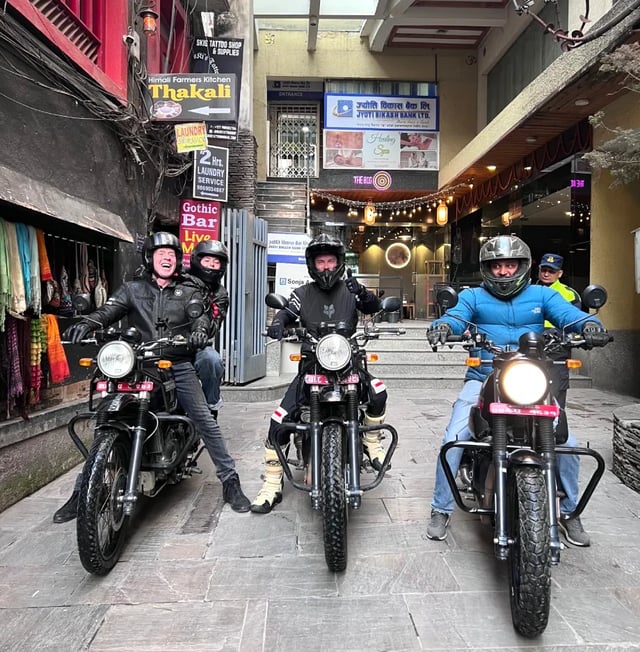
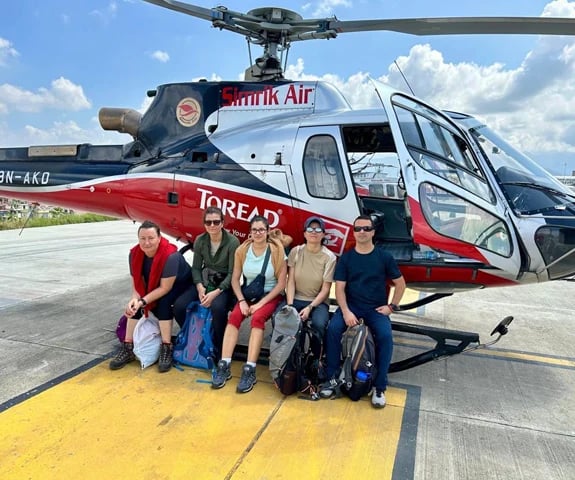
You'll travel with a Kathmandu-based team that plans treks, peak climbs, helicopter flights, motorbike journeys, and cultural trips across Nepal, Tibet, and Bhutan. Routes range from classic teahouse walks and high passes to luxury lodge itineraries and longer expedition-style climbs, with departures shaped around how you want to pace the mountains.
Licensed guides and office staff train regularly on mountain safety and guest care. Porters are insured, fairly paid, and equipped for the trail, with sensible load limits on lodge routes. We work with remote communities through sustainable tourism, including support for education in village areas, so your booking helps local people as well as your own adventure.
Operated by Himalayan Adventure Treks & Tours, a partner of adventuro.
Bagmati Province, Nepal
From $7000