A 58-day Everest expedition briefs in Kathmandu, flies to Lukla, and walks the Khumbu to Everest Base Camp with a Lobuche East rotation before the icefall. You train on ladders, crampons, and oxygen, then rotate through Camps I to III on the Lhotse Face. Icefall ladders and oxygen caches on the Lhotse Face are practised before anyone sleeps on the South Col.
The summit window uses Camp IV on the South Col, the Balcony, Hillary Step, and 8,848.86 m, with 1:1 Sherpa support and contingency days. You clean Base Camp, walk to Lukla, and fly home after a full climbing season on the mountain. Weather holds decide the summit window more than any single calendar day.
Bhagwat started as a porter in 1998, is a licensed guide, and still joins groups when he can, and this expedition sits under the same Ministry of Tourism licence and security deposit. We'll arrange Sagarmatha permits, the liaison officer, Lukla seats for you and the Nepali staff, and cargo for food and personal climbing kit up to Base Camp. Your climbing sirdar and Base Camp manager run the Sherpa team; each climber has a high-altitude Sherpa for the rotations above the icefall.
You'll acclimatise on Lobuche East before the Everest rotation through Camps I to III and the South Col. Guides are trained on altitude illness, and descent or a delayed summit window is discussed early rather than pushed. Client funds stay backed at the Ministry, and itineraries can shift when the Khumbu Icefall or jet stream closes the route.
You land at Tribhuvan International Airport and transfer to your Kathmandu hotel. After check-in, rest from the flight and unpack kit you will need in the days ahead.
In the evening you meet the climbing team and your lead guide over a welcome dinner. Use the time to ask about permits, baggage limits, and the Lukla or Ramechhap start.
After breakfast your guide walks through the expedition plan, then you collect climbing and trekking permits needed for the Khumbu and Everest. A session with mountaineering staff covers how you will use jumars, crampons, ice axes, and fixed ropes on the mountain.
The team checks personal gear and helps you rent or buy anything still missing. Keep the evening free in Thamel; tomorrow includes heritage sites and an early pack for the mountain flight.
You visit Swayambhunath, Boudhanath, and Pashupatinath with time to walk the courtyards and stupas before the expedition leaves the valley. The tour finishes early so you can pack duffles and sleep well. In spring and autumn the Lukla flight often leaves from Ramechhap, which can mean a 1 or 2 a.
hotel pickup and a four-to-five-hour road transfer. The same diversion can apply on the way home, so keep documents and a warm layer in your daypack.
An early mountain flight to Lukla opens views toward Makalu, Kangchenjunga, and Everest. You meet porters and the trail crew at the airstrip, then walk the Dudh Koshi toward Phakding.
The path drops through Chheplung, Ghat, and pine forest to your first teahouse night. Expect three to four hours on foot after the short flight.
You follow the river through Zapute, Benkar, and Monjo to the Sagarmatha National Park gate for permit checks, then continue to Jorsalle and the Hillary suspension bridge. After the bridge a steep hour leads to the Top Danda viewpoint for first close views of Everest, Lhotse, and Thamserku.
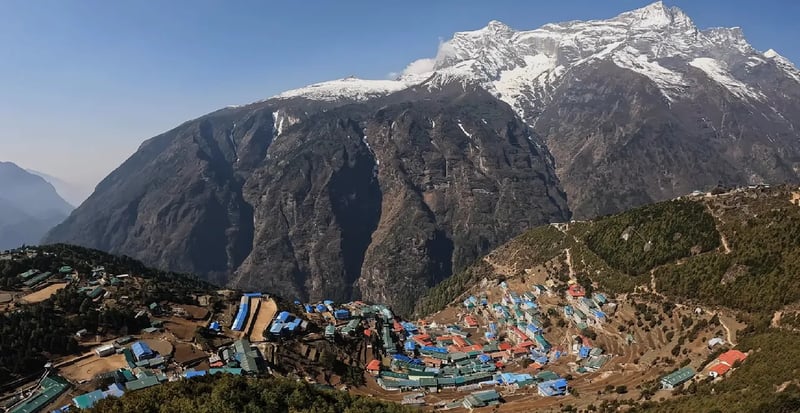
The last pull into Namche Bazaar is consistently steep. Plan six to seven hours on the trail and a teahouse night in the Sherpa market town.
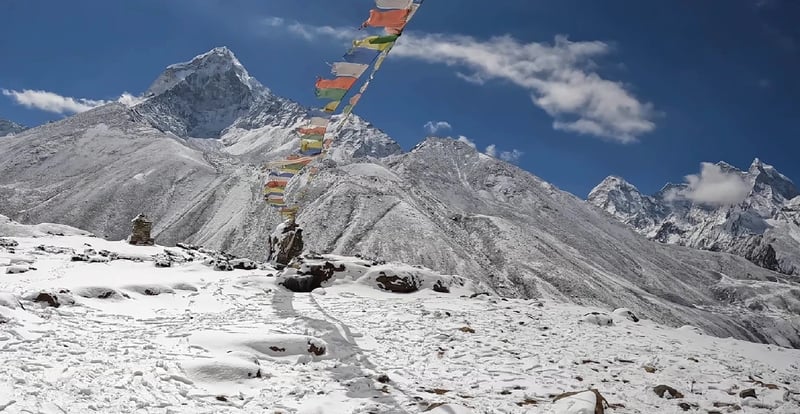
You sleep in Namche and walk higher for the day, often toward Hotel Everest View above Syangboche for a wide Khumbu skyline. Ama Dablam, Nuptse, Lhotse, and Everest sit close on a clear afternoon.
Return to the same lodge to sleep low. Markets and bakeries fill the evening if you still have energy after the four-to-five-hour hike.
A shorter acclimatisation walk heads toward Syangboche and Khunde before Khumjung. The trail levels after the stone staircase into the village bowl.
You can visit the monastery and Sherpa museum, including the relic kept there. Three to four hours on foot and a lodge night at about 3,790 m.
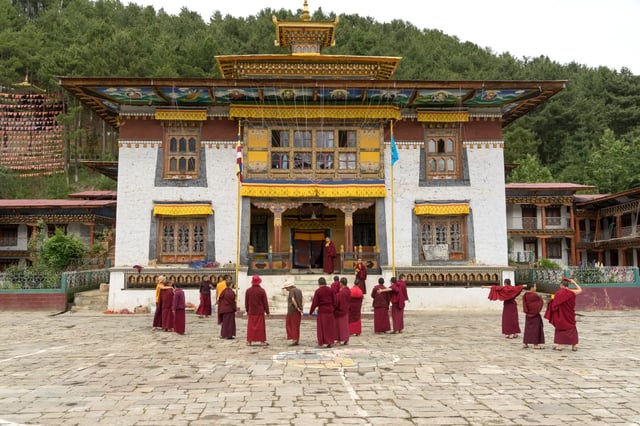
You cross the Imja Khola, pass Sanasa, and climb the slope above Phungi Thenga to Tengboche. The last two hours are a steady ascent to the monastery ridge.
If timing allows, walk the gompa grounds with Nuptse, Ama Dablam, and Kangtega on the skyline. Four to five hours to the lodge.
The path climbs to Debuche, follows the Imja Khola, and rises to Pangboche, where you can pause at the village monastery. Rocky ground through Orsho and Shomare leads into Dingboche.
You sleep at about 4,410 m among stone-walled fields. Five to six hours on the trail.
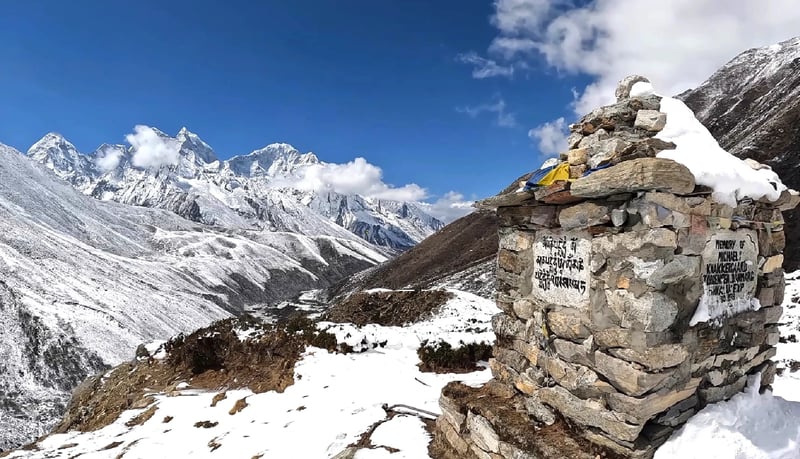
You walk via Dusa to Thukla, then climb to Chukpi Lara Pass where memorial chortens stand for climbers lost in the Khumbu. The last section crosses Khumbu Glacier moraine into Lobuche.
Nights are colder here at about 4,910 m. Five to six hours of walking.
You stay in Lobuche and take a shorter hike, often toward the Italian Pyramid Observatory, then return to the same lodge. Views of Lobuche East, Nuptse, and Lhotse sit above the village.
Keep the afternoon easy so you recover before the move to Everest Base Camp. Three to four hours if you choose the optional walk.
From Lobuche you climb Khumbu and Changri glacier terraces over Lobuche Pass to Gorak Shep, then continue to Everest Base Camp at 5,364 m beside the Khumbu Icefall. The crew pitches expedition tents while you settle into camp life.
These days cover rest, a Sherpa puja for a safe season, and practical training with jumars, ladders, ice axes, crampons, radios, and oxygen. You stay at Base Camp rather than walking a new village each night.
The expedition uses Lobuche East as a rotation peak before the Everest summit window, so you descend from Base Camp through Gorak Shep back to Lobuche. The drop helps you recover while staying in the same valley.
Three to four hours on the return trail and a teahouse night in the village. You eat and sleep lower so the Lobuche East rotation starts with fresher legs.
You leave Lobuche village, climb the Lobuche Glacier to about 4,900 m, then continue another 300 m to high camp at 5,200 m. Sleeping higher shortens the summit morning.
Five to six hours of climbing on glacial slopes. Tents and a cold night sit above the village lodges.
An alpine start around 2 or 3 a. follows head-torch light onto icy slopes and fixed ropes on 45- to 60-degree ground to Lobuche East at 6,119 m. Clear mornings open Lhotse, Everest, Pumori, and Ama Dablam.
You descend the same ropes through high camp and base camp to sleep in Lobuche village. Plan eight to nine hours on the move.
You stay in Lobuche after the long summit day and eat, hydrate, and sort layers for the return to Everest Base Camp. The village night is warmer and lower than high camp.
Use the day to check boots and crampon fit before the climbing period above the icefall. Guides review the weather window and oxygen plan with you in the lodge.
You recross Lobuche Pass and Gorak Shep to the expedition tents at Everest Base Camp. Six to seven hours on familiar moraine brings you back beside the icefall.
The next block is the Everest rotation and summit period, so rest well once bags are in camp. Sherpas check the icefall route while you recover in the expedition tents.
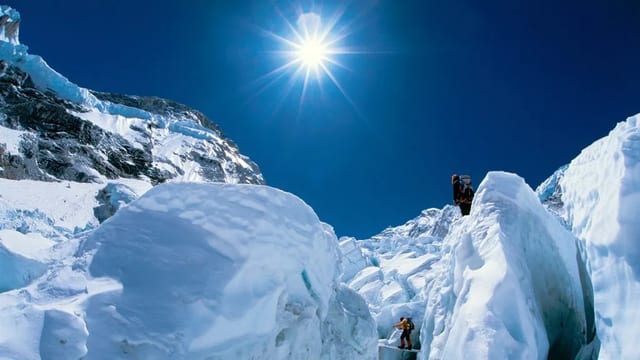
The first rotation climbs the Khumbu Icefall to Camp I at 6,065 m on a shifting route of crevasses, seracs, and ladders, then continues to Camp II at 6,400 m on the Lhotse Face. A rest at Camp II is followed by a climb toward Camp III at 7,200 m on steep ice, then a descent to Base Camp to recover. Days 26 to 31 are rest and practice at Base Camp, or a paid drop to Tengboche, Pangboche, or Lobuche if you want lower air.
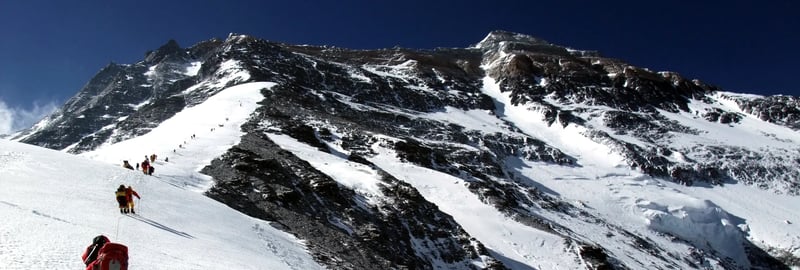
Sherpas keep watching weather and the route while you recover from the rotation. The summit push, with contingency days through about Day 50, typically returns via Camp II and Camp III to Camp IV on the South Col at 7,920 m, crossing the Yellow Band and Geneva Spur. From Camp IV you climb through the Balcony, South Summit, Cornice Traverse, and Hillary Step to 8,848.86 m, then descend to Camp II and Base Camp.
Your climbing sirdar sets the timing; each climber has a 1:1 Sherpa on the high phase, and oxygen is used from Camp III onward. Weather and health can move these days, which is why contingency nights are built into the calendar.
You stay at Base Camp and pack out expedition waste to the bins used by the Sagarmatha Pollution Control Committee. Tents and group kit are sorted for the walk out.
Four to five hours of camp work rather than a long trail day. Sleep one more night at 5,364 m before the descent.
Tents come down and you walk through Gorak Shep and Lobuche, then over Dughla Pass into Pheriche. Four to five hours of downhill brings richer air at 4,288 m.
Teahouse nights resume after the expedition camp period. Knees feel the long stone descents, so poles help.
A long descent passes Shomare, Pangboche, Debuche, Tengboche, and Sanasa back to Namche beside the Dudh Koshi. Five to six hours on familiar trail.
Hot showers and bakery stops in Namche feel like a reward after high camp. Sleep in a teahouse in town.
The last walking day drops through Top Danda, Monjo, Benkar, Phakding, and Ghat to Lukla. Five to six hours ends the trek portion of the expedition.
Celebrate with the local crew in the evening and pack flight documents where you can reach them at dawn. Weather can still move the Kathmandu sector.
An early flight returns you to Kathmandu, or to Ramechhap with a road transfer if the capital airstrip is congested. The mountain sector is short once the weather window opens.
Back in the city you can shower, sort laundry, and rest at the hotel. Keep insurance details handy until you are fully home.
A free day in the capital after the expedition. You can visit a heritage site with your guide, book a spa, or stay at the hotel.
A farewell dinner and your expedition certificate close the trip in the evening. Sleep in before the airport transfer.
A hotel transfer to Tribhuvan International Airport, timed about three hours before your international departure. Allow for Kathmandu traffic on the way to the terminal.
Keep passport, visa, and insurance papers in your hand luggage until you are through check-in. Extra hotel nights apply if mountain flights delayed your return to the city.
Most guests fly into Tribhuvan International Airport in Kathmandu. Share your arrival time ahead of travel so a Thamel hotel transfer can be arranged, or make your own way to the meeting hotel.
Pre-trek briefings usually take place in Kathmandu before the Lukla flight or helicopter sector. Allow extra days after the trek in case mountain flights are postponed by weather.
Twin or double rooms in a comfortable Kathmandu hotel cover your first nights and your return from the trail, with breakfast on those city stays when included in the package. Briefings happen at the hotel, and airport collection from Tribhuvan is available when flight times are shared in advance.
Family-run teahouses or lodges line the route with twin beds and a shared dining room. Rooms get simpler and colder as you climb, with shared bathrooms common at higher villages. Hot water, Wi-Fi, and charging are paid at the lodge when offered.
March to May rhododendron bloom and October to November crisp air are peak windows for this itinerary. July and August mean leeches and cloud on lower slopes; December to February can ice steps above village level.
Your guide reads the forecast before long cols or sunrise hikes. Shoulder weeks need an honest weather call before high passes or dawn viewpoints.
You should be comfortable walking several hours a day on uneven paths with a daypack, including steady uphill sections as you gain height. Hill training and longer weekend walks in the months before travel help your legs and lungs on uphill trail days.
Hill training, stair climbing, and longer weekend hikes in the months before travel help your legs and lungs, even when acclimatisation days are built into the route. Break in boots before you fly and carry a light daypack on practice walks.
Guided trekking with licensed leaders, lodge nights on the trail, meals as described for walking days, and permits for the regions crossed are included when they are part of this trip. Domestic flights, porters, and airport transfers apply only when they are part of this trip.
Domestic flights, road transfers, porter support, and airport transfers apply only when they are part of this trip. Permits for the regions you cross are arranged in Kathmandu or Pokhara when included.
International flights to Nepal, visa fees, compulsory travel insurance, personal trekking clothing, snacks and drinks outside included meals, and tips for crew are not covered. Hot showers, Wi-Fi, and battery charging in lodges are usually paid locally when offered.
Charges for hot showers, Wi-Fi, or battery charging in lodges are paid locally when offered unless your trip notes say otherwise. International flights, visa fees, and personal insurance stay outside the trek package.
Share your Tribhuvan arrival time ahead of travel for a Thamel hotel transfer, or make your own way to the meeting hotel in the capital. Thamel hotels are the usual meet point; drivers need flight numbers to meet you at the international terminal.
Briefings cover Lukla bag weight, porter duffle limits, and what to wear on the mountain flight. Weather can shift daily plans, so your guide keeps a steady pace with regular breaks.
The itinerary builds rest days and climb-high, sleep-low hikes where the route requires them. Your crew would rather wait for a safe window than rush marginal weather.
Tell your guide early if symptoms appear so tomorrow's stage can shorten or descent can start before conditions worsen. Trail conditions are checked each morning before the group moves.
Mountain weather can delay or postpone Lukla flights even in peak season, and Ramechhap diversions happen when the airstrip is congested. Allow a little extra time after the trek before international flights home in case mountain roads or flights move.
Build buffer days after the trek for international connections, and follow crew advice if schedules change or flights shift to Ramechhap. Monsoon cloud sits lower on the hills while winter brings ice on steps above village level.
Sagarmatha National Park and Khumbu municipality permits apply in the Everest region. The team arranges paperwork in Kathmandu or Pokhara when you provide passport copies and trek dates.
Keep copies in your daypack for checkpoint stops. Your crew would rather wait for a safe window than rush marginal weather.
Families join when children can manage the daily hours and terrain on this specific route. Pace and daily hours can be adjusted on private departures, though that may extend the calendar.
Ask our Kathmandu team if you are planning with younger walkers. Private departures can shorten daily hours, though that may add a day or two to the calendar.
Comprehensive travel insurance that covers trekking to the highest altitude on your itinerary, medical evacuation, and helicopter rescue when applicable is essential. Many standard policies exclude high altitude by name.
Read the wording before you travel so you can adjust cover if trekking above 5,000 metres is not named. Many standard policies exclude high altitude by name, so read the wording before you fly.
We partner with Rewilding Britain to help protect our natural spaces for future adventures.
All centres are vetted for safety and quality. Your adventure is in good hands with adventuro.
About the centre
Kathmandu
You'll travel with a Kathmandu-based team that plans treks, peak climbs, helicopter flights, motorbike journeys, and cultural trips across Nepal, Tibet, and Bhutan. Routes range from classic teahouse walks and high passes to luxury lodge itineraries and longer expedition-style climbs, with departures shaped around how you want to pace the mountains.
Licensed guides and office staff train regularly on mountain safety and guest care. Porters are insured, fairly paid, and equipped for the trail, with sensible load limits on lodge routes. We work with remote communities through sustainable tourism, including support for education in village areas, so your booking helps local people as well as your own adventure.
Operated by Himalayan Adventure Treks & Tours, a partner of adventuro.