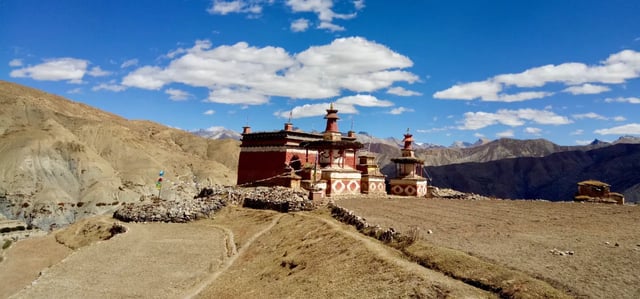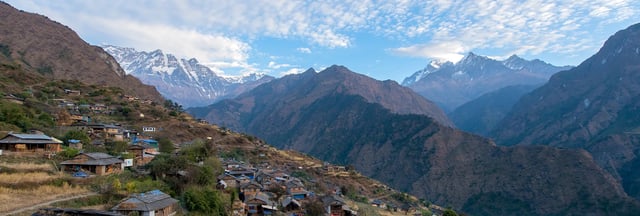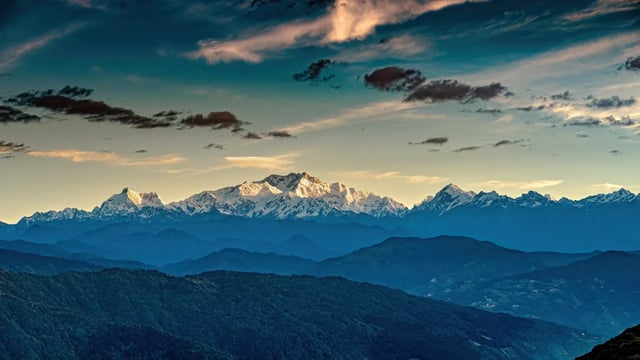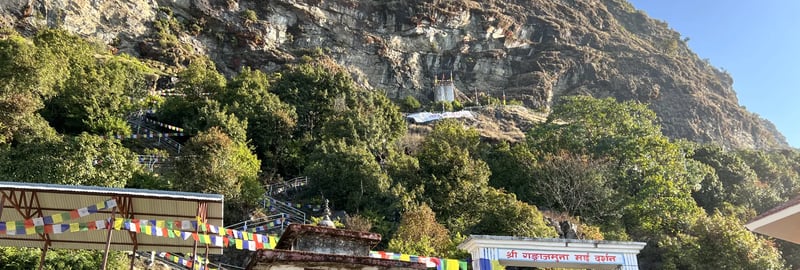
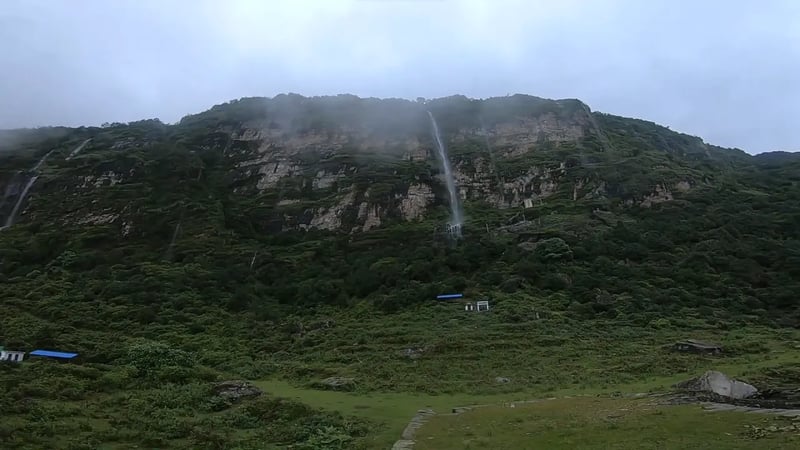
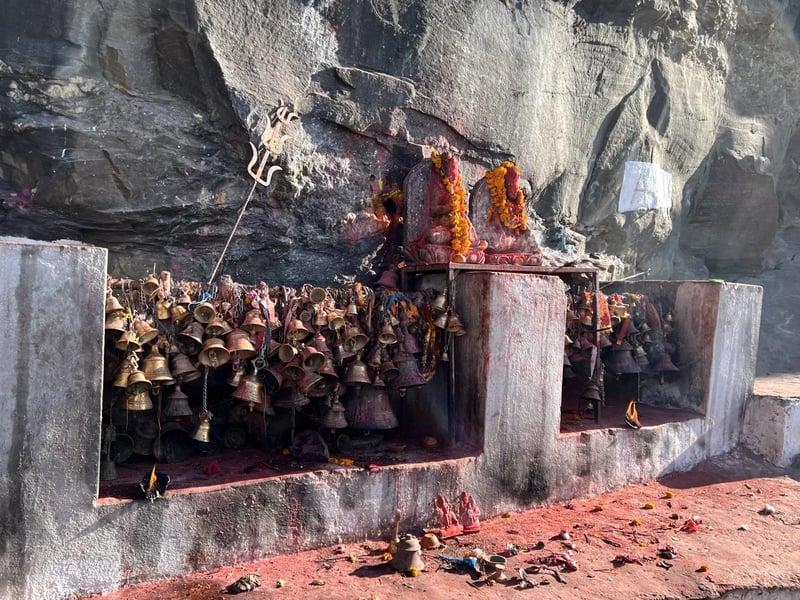
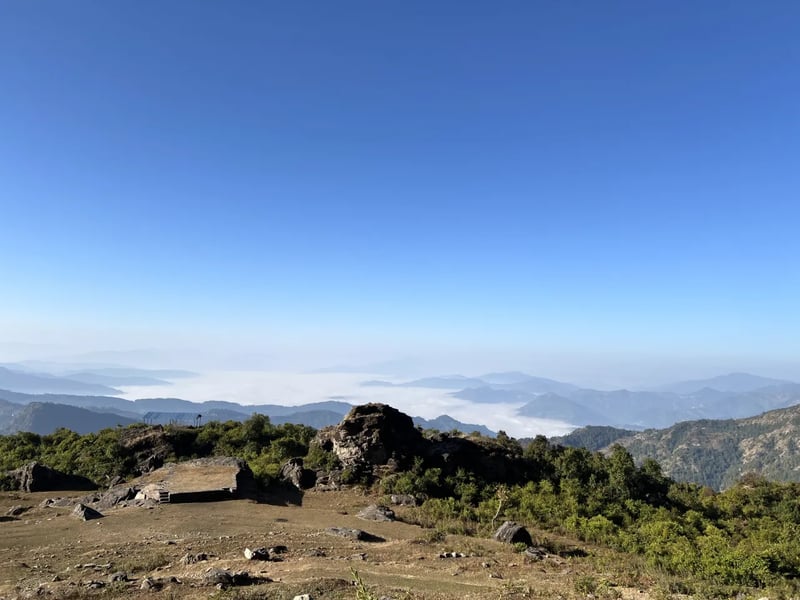
Ganga Jamuna is a mid-hill trek in the Ganesh Himal foothills, walking between two sacred rivers and Tamang or Gurung villages. You drive from Kathmandu toward the trailhead and sleep in homestays or small lodges. Two sacred rivers, Tamang villages, and waterfall trails sit under Ganesh Himal.
Waterfalls, terraces, and Ganesh Himal on a clear day are the views. The walk stays cultural and green in the mid-hills. Dhading Besi is the roadhead, and the shrine at the river confluence is the cultural centre of the walk.
You'll drive from Kathmandu toward Dhading Besi and walk Jyamrung Danda, Karki Gaon, and the Ganga Jamuna shrine with an office team trained for village itineraries and shrine days. A share of profits goes to school students in remote hills, which is part of how we stay welcome in these Tamang and Gurung homes.
We'll book homestay rooms before you leave the city and share the next day's plan each evening so the rest day at the shrine and the Arughat walk-out stay easy to change. Your guide knows which village nights still have simple twin beds under the Ganesh Himal skyline.
Day 1 of the Ganga Jamuna Trek focuses on arrival and preparation. You land at Tribhuvan International Airport in Kathmandu at 1,400 meters. Our team greets you with a signboard and assists with luggage.
A private vehicle transfers you to your hotel in Thamel, the trekking hub. The drive takes 30 minutes through bustling streets. Kathmandu sits in a valley surrounded by hills, offering your first glimpse of Nepal's urban rhythm.
Settle into your hotel room and rest. Jet lag often affects travellers arriving from distant time zones. We recommend light movement to adjust.
Cultural immersion defines today’s purpose. Kathmandu Valley shelters seven UNESCO World Heritage Sites formed by centuries of Hindu and Buddhist exchange. We visit four critical locations before mountain travel.
Boudhanath Stupa’s 36-meter mandala structure dominates the skyline. Pilgrims spin prayer wheels while monks chant nearby. You walk the perimeter path with locals.
This practice builds trail mindfulness for the 2nd day of the Ganga Jamuna Trek.
On the 3rd day of the Ganga Jamuna Trek, the road from Kathmandu to Dhading Besi tests your patience. Six hours of winding mountain highways replace city noise with engine strain and dust. Vehicles crawl along narrow routes carved into steep slopes. You pass terraced fields where farmers work with hand tools.
River valleys flash between sharp turns. This drive covers 90 kilometres through Nepal’s Middle Hills region. Dhading Besi sits at 850 meters elevation near the Trisuli River. The trek begins immediately after lunch.
You step onto dirt trails while porters adjust overloaded baskets. The first hour follows riverbanks. Water rushes over boulders below, while stone steps appear as the trail climbs.
We start walking before sunrise when temperatures hover near ten degrees Celsius at Jyamrung Danda's 1,200-meter elevation point. The initial descent follows ancient footpaths worn smooth by generations of porters carrying grain and tools.
Stone steps descend sharply through oak forests where morning mist clings to tree trunks. You feel the impact on your knees immediately, requiring controlled movements with each downward step.
We climb steadily from Karki Gaon's stone houses into higher terrain where the air thins noticeably above 2,000 meters elevation. Your breathing deepens with each step as the trail gains 350 meters over fourteen kilometres toward the Ganga Jamuna campsite. Juniper and dwarf bamboo replace the rhododendron forests.
The path follows ancient trade routes used for centuries by salt caravans moving between Tibet and Nepal. Loose rocks and shifting gravel demand constant attention to foot placement.
Rest days serve critical physiological purposes at 3,244 meters elevation, where oxygen saturation drops below 90 per cent according to guidelines. Ganga Jamuna's stone shelters provide essential recovery space after three consecutive trekking days. We monitor your resting heart rate each morning using portable pulse oximeters.
Normal readings fall between 65-75 beats per minute at this altitude based on Himalayan Rescue Association protocols. You explore the village systematically, avoiding strenuous activity. Tamang community members harvest barley in terraced fields surrounding the campsite.
Their traditional sickles cut golden stalks in rhythmic motions unchanged for centuries.
We transition from Ganga Jamuna's high-altitude rest to Budathum's forested descent, covering eighteen kilometres through three distinct terrain zones. Your lungs adjust to lower oxygen demands as elevation drops from 3,244 meters to 1,000 meters. The initial trail section cuts through fields where loose scree requires precise foot placement on each downward step.
Porters demonstrate efficient descent techniques using a wooden staff to absorb impact on steep 35-degree slopes. They shorten their stride length while maintaining a forward lean to protect their knees.
We transition from Budathum's forest trails to Arughat Bazaar's riverfront chaos, covering fifteen kilometres before a seven-hour road journey back to Kathmandu. Your legs feel the cumulative effect of five trekking days as elevation drops from 1,000 meters to 600 meters near the Budhi Gandaki River confluence. The final Ganga Jamuna Trek segment follows muddy paths where monsoon rains wash out sections requiring careful navigation around deep ruts.
Porters move with urgency today, knowing their work concludes at Arughat. They carry dismantled tents and empty food sacks balanced on narrow trails alongside rushing water.
We wake before dawn to complete final departure tasks at 1,400 meters in Kathmandu. Hotel staff prepare breakfasts based on your flight schedule confirmed through an online portal. Check room inventory against your arrival checklist, ensuring no items remain behind.
Settle all outstanding bills using Nepalese rupees or credit cards, but the processing can cause delays at this hour. Airport transfers require precise timing. Vehicles depart Thamel for Tribhuvan International Airport's international check-in opening.
The 5-kilometer route takes 25 minutes via busy roads, doing our best to avoid daytime traffic congestion. Our Ganga Jamuna Trek reps handle luggage loading while verifying all travel documents, including passports and boarding passes.
Fly into Tribhuvan International Airport in Kathmandu unless the itinerary uses another regional hub. Airport or hotel pickup can be arranged when you share arrival details ahead of travel.
Briefings cover road or domestic travel to the trailhead. Build buffer time before onward international flights in case mountain weather shifts the schedule.
Twin or double rooms in a comfortable Kathmandu hotel cover your first nights and your return from the trail, with breakfast on those city stays when included in the package. Briefings happen at the hotel, and airport collection from Tribhuvan is available when flight times are shared in advance.
Family-run teahouses or lodges line the route with twin beds and a shared dining room. Rooms get simpler and colder as you climb, with shared bathrooms common at higher villages. Hot water, Wi-Fi, and charging are paid at the lodge when offered.
Stable trekking weather most often falls in pre-monsoon spring and post-monsoon autumn. Monsoon cloud sits lower on the hills while winter brings ice on steps above village level.
If your dates sit in winter or monsoon, pack rain and cold layers and accept that flight or pass days may move by a day when safety requires it. Weather can shift daily plans, so your guide keeps a steady pace with regular breaks.
You should be comfortable walking several hours a day on uneven paths with a daypack, including steady uphill sections as you gain height. Hill training and longer weekend walks in the months before travel help your legs and lungs on uphill trail days.
Hill training, stair climbing, and longer weekend hikes in the months before travel help your legs and lungs, even when acclimatisation days are built into the route. Break in boots before you fly and carry a light daypack on practice walks.
Guided trekking with licensed leaders, lodge nights on the trail, meals as described for walking days, and permits for the regions crossed are included when they are part of this trip. Domestic flights, porters, and airport transfers apply only when they are part of this trip.
Domestic flights, road transfers, porter support, and airport transfers apply only when they are part of this trip. Permits for the regions you cross are arranged in Kathmandu or Pokhara when included.
International flights to Nepal, visa fees, compulsory travel insurance, personal trekking clothing, snacks and drinks outside included meals, and tips for crew are not covered. Hot showers, Wi-Fi, and battery charging in lodges are usually paid locally when offered.
Charges for hot showers, Wi-Fi, or battery charging in lodges are paid locally when offered unless your trip notes say otherwise. International flights, visa fees, and personal insurance stay outside the trek package.
Hotel meet in Thamel is typical; send flight numbers so pickup can meet you at the international terminal. Allow a little extra time after the trek before international flights home in case mountain roads or flights move.
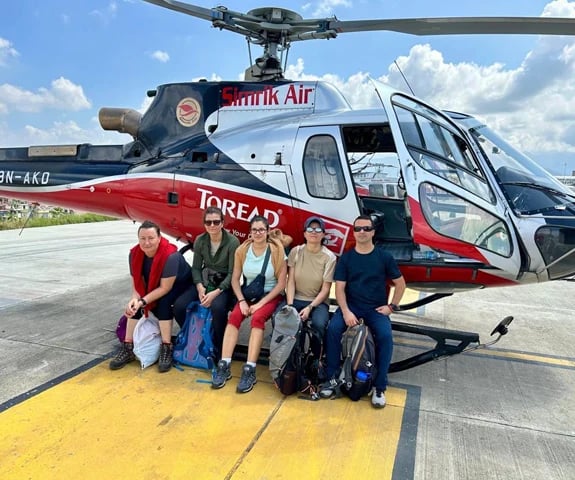
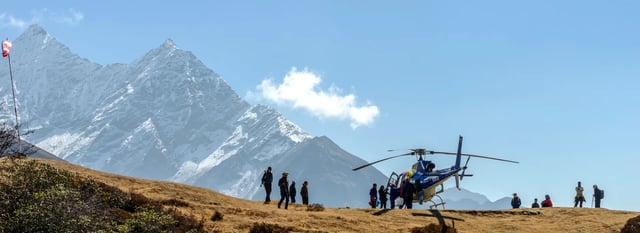
Rest day buffer after the trek helps if Lukla or helicopter sectors slip by a day. Trail conditions are checked each morning before the group moves.
Guides set a steady pace and watch for headache, nausea, or dizziness as you gain height. Your crew would rather wait for a safe window than rush marginal weather.
Tell your guide early if symptoms appear so tomorrow's stage can shorten or descent can start before conditions worsen. Thamel hotels are the usual meet point; drivers need flight numbers to meet you at the international terminal.
Jeep or bus days to the remote trailhead are arranged when they are part of your package. Your guide confirms departure times at briefing.
Motion sickness medicine helps on winding mountain roads. Shoulder weeks need an honest weather call before high passes or dawn viewpoints.
National park or restricted-area permits apply depending on the valleys you cross. The team arranges paperwork in Kathmandu or Pokhara when you provide passport copies and trek dates.
Keep copies in your daypack for checkpoint stops. Your crew would rather wait for a safe window than rush marginal weather.
Families join when children can manage the daily hours and terrain on this specific route. Pace and daily hours can be adjusted on private departures, though that may extend the calendar.
Ask our Kathmandu team if you are planning with younger walkers. Private departures can shorten daily hours, though that may add a day or two to the calendar.
Comprehensive travel insurance that covers trekking to the highest altitude on your itinerary, medical evacuation, and helicopter rescue when applicable is essential. Many standard policies exclude high altitude by name.
Read the wording before you travel so you can adjust cover if trekking above 5,000 metres is not named. Many standard policies exclude high altitude by name, so read the wording before you fly.
We partner with Rewilding Britain to help protect our natural spaces for future adventures.
All centres are vetted for safety and quality. Your adventure is in good hands with adventuro.
About the centre
Kathmandu
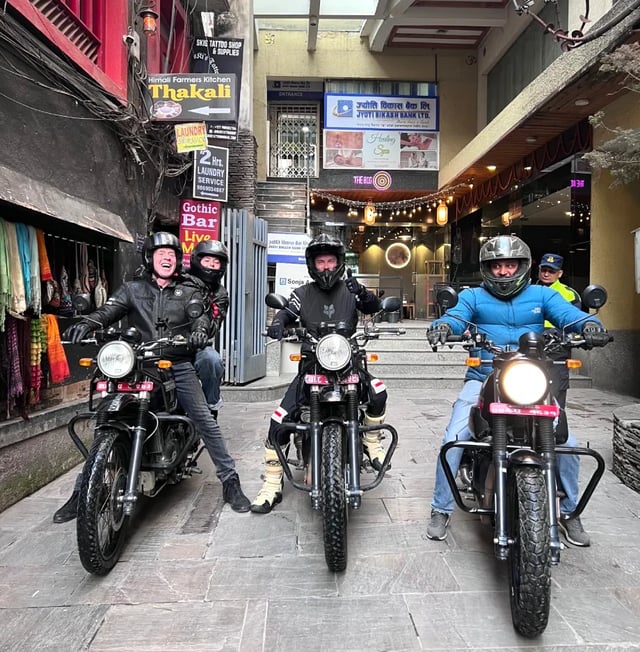
You'll travel with a Kathmandu-based team that plans treks, peak climbs, helicopter flights, motorbike journeys, and cultural trips across Nepal, Tibet, and Bhutan. Routes range from classic teahouse walks and high passes to luxury lodge itineraries and longer expedition-style climbs, with departures shaped around how you want to pace the mountains.
Licensed guides and office staff train regularly on mountain safety and guest care. Porters are insured, fairly paid, and equipped for the trail, with sensible load limits on lodge routes. We work with remote communities through sustainable tourism, including support for education in village areas, so your booking helps local people as well as your own adventure.
Operated by Himalayan Adventure Treks & Tours, a partner of adventuro.
Bagmati Province, Nepal
From $7000