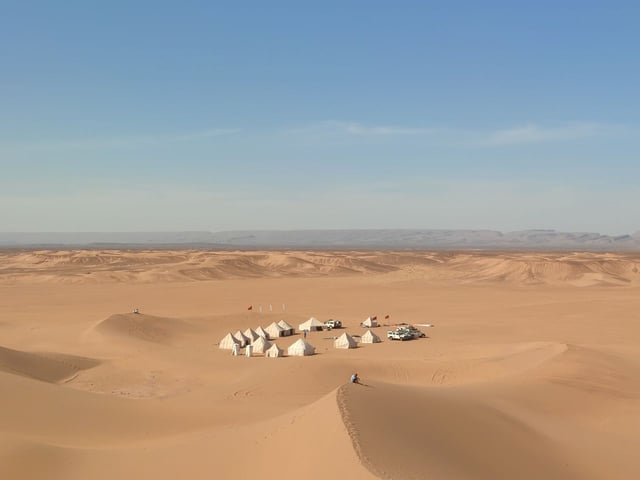
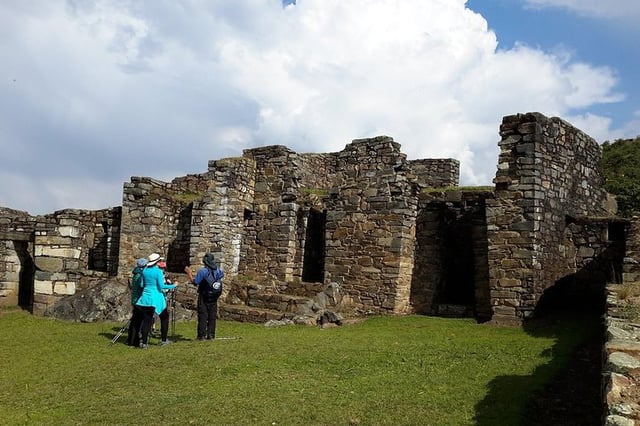
We partner with Rewilding Britain to help protect our natural spaces for future adventures.
All centres are vetted for safety and quality. Your adventure is in good hands with adventuro.
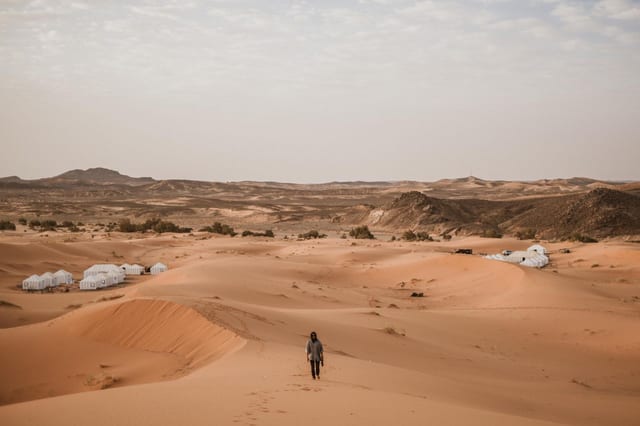
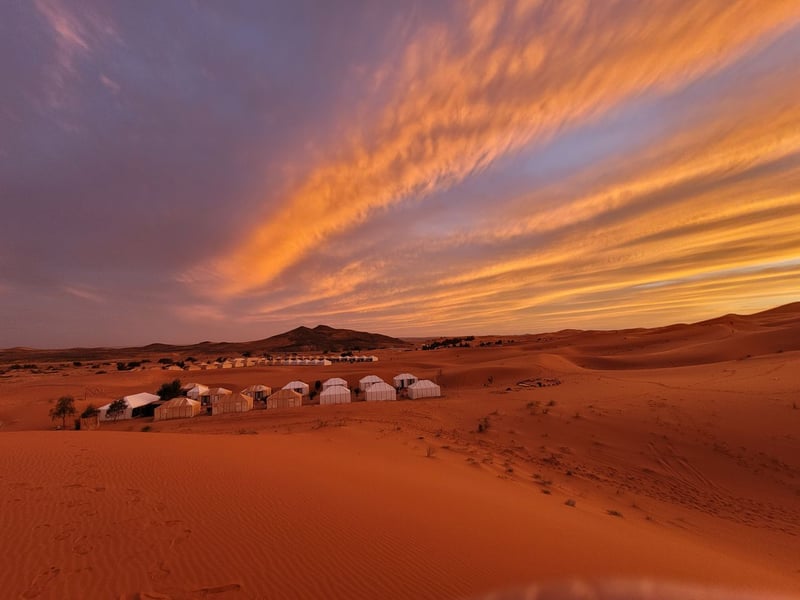
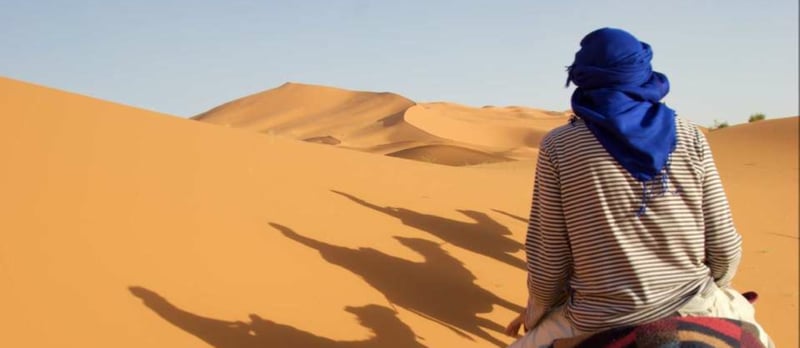
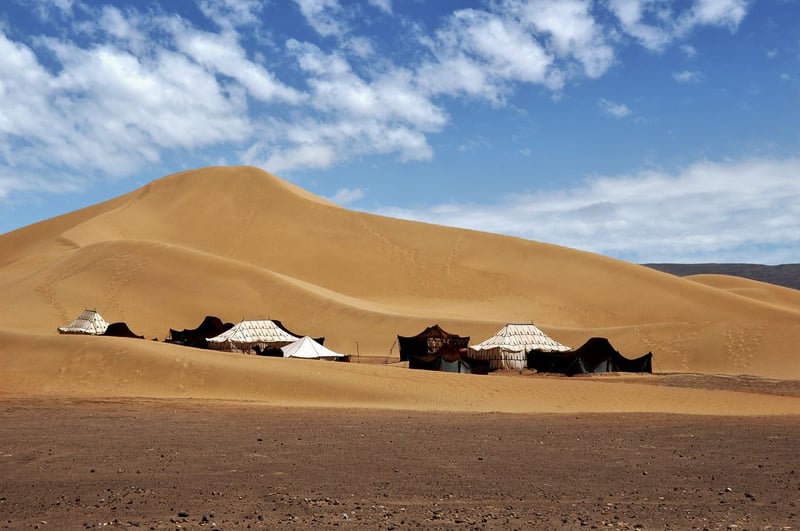
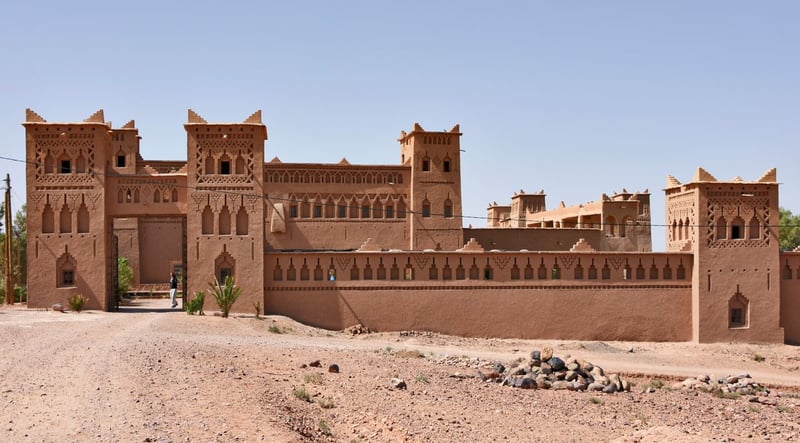
This seven-day walking trek explores the Erg Chegaga dune sea on foot with camp crew support each day. You'll trek across open sand day after day, deeper into the Chegaga wilderness than a single photo stop allows. Bivouac nights, local guides and vehicle backup keep the journey comfortable in remote country.
Transfer days at each end cross the Atlas and Draa Valley toward Mhamid, where the paved road ends and the walking section begins. The middle days are on-foot stages across hamada and dune lines with bivouac nights, following guides who know water points, sheltered camp spots and safe routes through shifting sand.
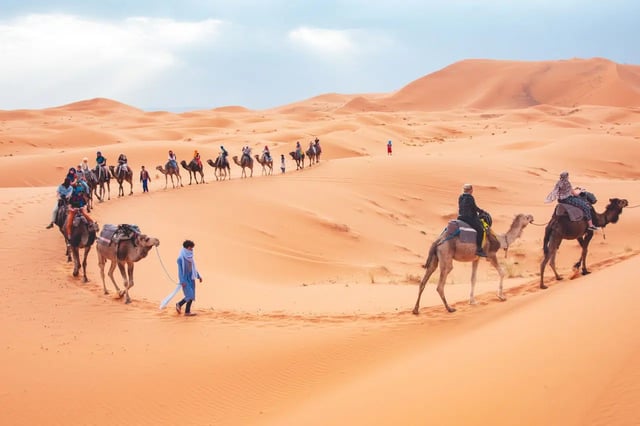
Walking hours vary with heat and conditions, usually morning and late afternoon with rest at midday shade. Camels may carry camp kit while you walk beside them through dune ridges that change colour through the day. The return to Marrakech completes a full week focused on foot travel in empty desert far from village traffic.
Erg Chegaga lies south of Mhamid where tourist traffic thins and horizons open into one of Morocco's wildest dune fields. Walking lets you feel dune scale in a way vehicle access cannot, with long ridges and silent basins between the sand lines.
The Draa Valley bookends the trek on transfer days, with palm oases contrasting stone desert and soft sand on walking days. Chegaga sits beyond the easy Merzouga access road, so nights are dark and the sand feels genuinely remote.
You need good fitness for multi-hour sand walking and basic camp comfort. Previous trekking experience helps, especially if you have walked uneven ground for several days in a row.
Share daily distance preferences when you enquire so stages suit your group pace and the season. Desert heat shapes how far we walk each morning and afternoon.
Desert guides with deep Chegaga knowledge lead route choice, camp placement and safety away from tracks. They read wind and sand conditions daily so the walking week stays comfortable and secure.
A full week on foot rewards walkers who want silence, wide horizons and nights far from the main roads. You go deeper into the dune sea than any two-day 4x4 visit allows.
You arrive in Marrakech and transfer to a local hotel for the night. Share your flight or arrival time when you enquire so the driver can meet you.
This is a rest evening before the long drive south. Keep walking shoes and a sun hat ready for the morning.
After breakfast you drive toward Ouarzazate over Tizi n'Tichka at 2,260 metres, with a stop at Telouet kasbah, then Agdz, Zagora and Faija. The road day is about 400 kilometres with breaks.
Night two is the first desert camp at Faija. The walking begins the next morning.
You walk the desert plateau past farms at the foot of Jebel Bani, then climb Col Oum Laachar toward Oued Lemhasser and an oasis camp. Expect five to six hours and about 17 kilometres.
The pass is the first real climb of the week. Drink steadily and tell the guide if the heat is hard.
You leave Oued Lemhasser and walk toward the Chegaga dunes, camping at the base of the sand. Expect five to six hours and about 20 kilometres.
This is the longest walking day. Closed shoes and a sun hat matter more here than on the plateau.
You leave Chegaga and walk to the Bougarn dunes, with camp among the sand. Expect about five hours and 16 kilometres.
The day stays in the heart of the dune field. Take the pace the guide sets on the softer sand.
After breakfast you leave Bougarn and cross Oued Naam, where camp is set for the last desert night. Expect five to six hours and about 16 kilometres.
The wadi is a change from the open dunes. Keep a layer handy for the evening at camp.
A shorter morning walk of about three hours heads toward the Mhamid dunes, then you drive Zagora and the long road back to Marrakech, about eight hours with breaks.
Drop-off is at your hotel or a point you agree in advance, usually in the evening.
Day one is a transfer to a Marrakech hotel after you arrive. Day two pickup is from that hotel for the drive over Tizi n'Tichka to Faija.
Day seven drops you back in Marrakech after the walk to the Mhamid dunes and the long drive from Zagora, usually in the evening.
Night one is in a Marrakech hotel after you arrive. Nights two to six are desert camps at Faija, Oued Lemhasser, the Chegaga dunes, Bougarn and Oued Naam.
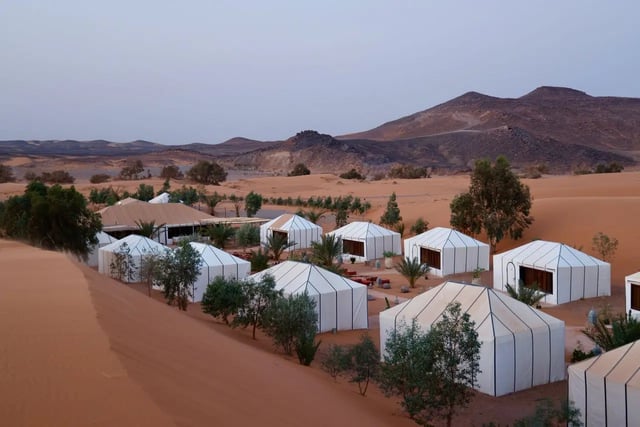
Camps are simple tents with a shared dinner. Bring a warm layer for every camp night. Day seven returns you to Marrakech in the evening.
You'll be collected from your Marrakech hotel on day one.
You return to Marrakech on day seven after the walking section ends. Share your hotel, riad or port arrival details when you enquire and we confirm pickup time the day before travel, including the nearest vehicle access on narrow medina lanes.
Typical days include three to five hours walking split around midday rest, depending on heat and group pace.
Tell us your preferred distance when you enquire. Tell us about mobility or fitness concerns when you enquire and your guide adjusts gorge walks, medina time and driving breaks around the group rather than a rigid schedule.
Bivouac tents on walking days, guesthouses on transfer days at the start and end.
Bring a season-suitable sleeping bag for desert nights. Hotel nights are in private rooms for your group, while desert camp is simple shared tents with mattresses and blankets under the stars.
Camp crew cook on walking days. Transfer days include meals on the itinerary.
Tell us about dietary needs when you enquire. Drinks are not included. Breakfast and dinner are usually included where the itinerary lists hotel or camp nights, with lunch often on the road at a café or picnic stop between driving legs.
Light trekking clothes, sun protection, warm jacket for nights, gaiters or closed shoes for sand, and a daypack are essential.
Trekking poles help on dune ascents. Protect electronics from sand. Keep a refillable water bottle and any daily essentials in the bag you carry in the vehicle, and ask when you enquire if you want seasonal advice for Atlas cold or desert heat.
Camp crew and camels carry group equipment. You walk with a daypack for water and personal items.
Soft bags work best for loading. Leave hard suitcases in Marrakech if possible. Your driver-guide builds these stops into the day around weather, light and group pace, and can extend or shorten time on site when you ask on the road.
Teenagers with trekking experience may join. Long hot walking days suit older active children only.
Share ages when you enquire. Share children's ages and how they handle long travel days when you enquire, and we advise honestly on pacing, seat comfort and whether a longer itinerary would suit your family better.
Heat dictates midday rest. Wind may shorten walking or move camp.
Guides never continue into unsafe sandstorms. Schedule buffer allows lost days. Winter snow can slow High Atlas passes and desert wind may shift camel timing, so we adjust for safety and keep you informed rather than pushing a fixed timetable.
You walk as the main activity rather than riding short loops near a paved road.
Camels may support camp kit while you walk beside them through the dune lines. Share any questions when you enquire and we confirm practical details when your booking is accepted so the first morning runs smoothly for your group.
No. Experienced desert guides lead every stage. You follow their pace and route choice.
Guides read wind, sand and local knowledge for safe travel. Your driver-guide builds these stops into the day around weather, light and group pace, and can extend or shorten time on site when you ask on the road.
About the centre
Marrakech
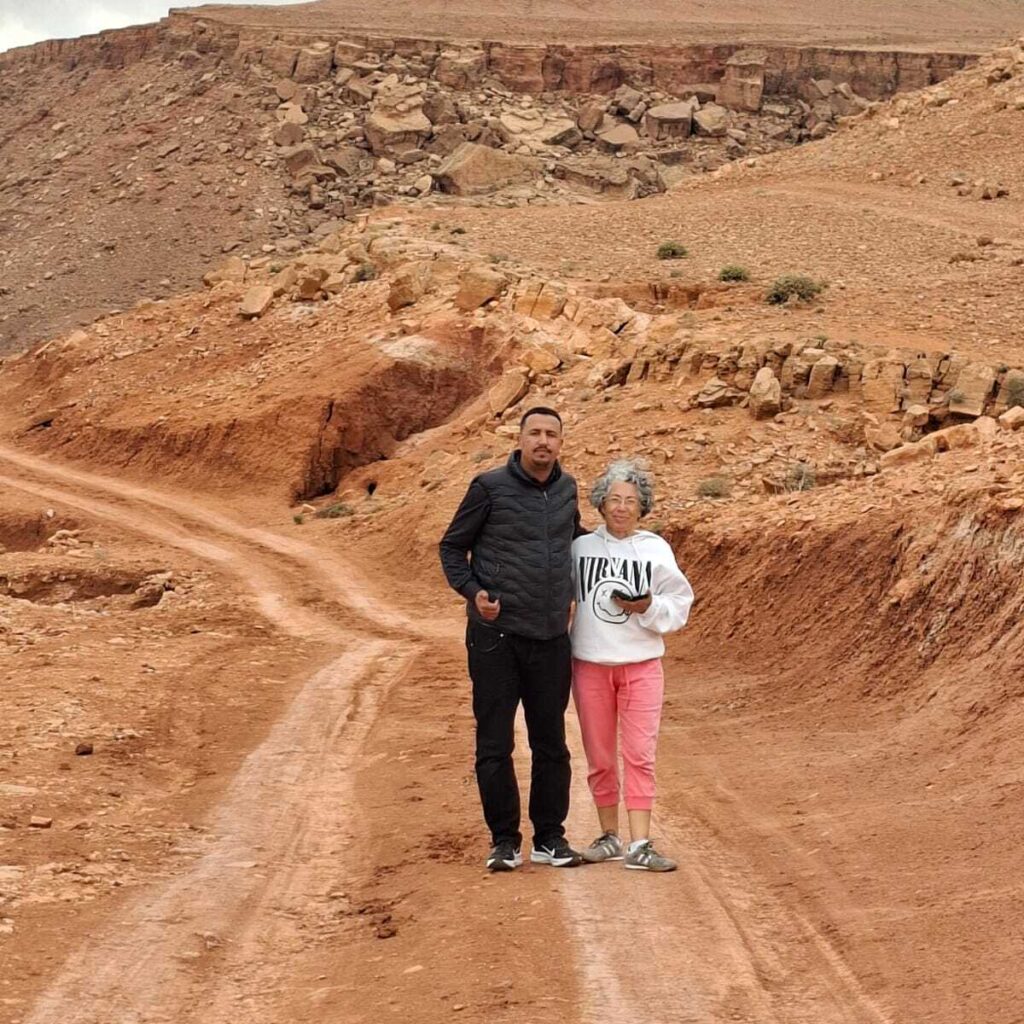
Operated by Trek Morocco Desert, a partner of adventuro.
Bagmati Province, Nepal
From $1358
Brașov and Southern Carpathians, Romania
From €1216
Central & Atlas Mountains, Morocco
From €2000
Saharan & Southern Provinces, Morocco
From €850