We partner with Rewilding Britain to help protect our natural spaces for future adventures.
All centres are vetted for safety and quality. Your adventure is in good hands with adventuro.
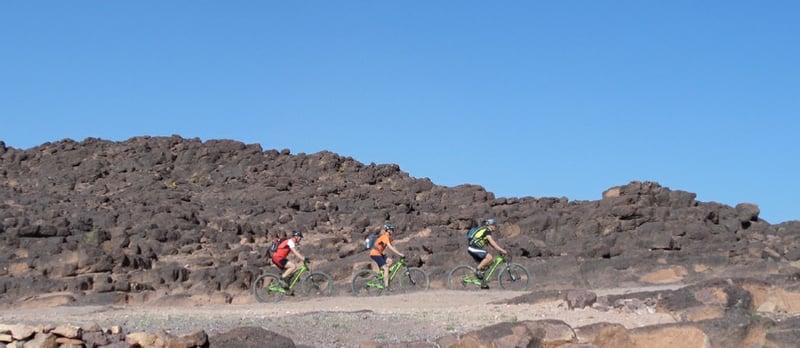
Fifteen days on foot cross High Atlas Berber villages and Sahara camel country on an expedition mixing hill walking, refuge nights and Erg Chebbi dunes. Village trails with mule support open week one toward Toubkal foothills, pre-Sahara pistes and camel caravan days fill week two, and gorges and kasbah country carry the return to Marrakech. Serious walkers gain cultural depth beyond a standard vehicle transfer.
From the Imlil approach, days one through five trek Berber village trails and refuge nights with mule support, on steep rocky paths where walking is the main activity rather than vehicle touring. Pre-Sahara and Erg Chebbi country with camel caravan days across pistes toward Merzouga fill days six through ten, alternating long walking days with driving support when terrain demands. Todra, Dades and kasbah country on days eleven through fifteen mix walking and driving on the return west to Marrakech to suit the group.
Mountain refuges, village gîtes and Erg Chebbi desert camp nights replace standard hotels for much of the route, and a three-season sleeping bag suits altitude and desert cold. The expedition approaches Toubkal country without guaranteeing a summit unless you request that add-on separately.
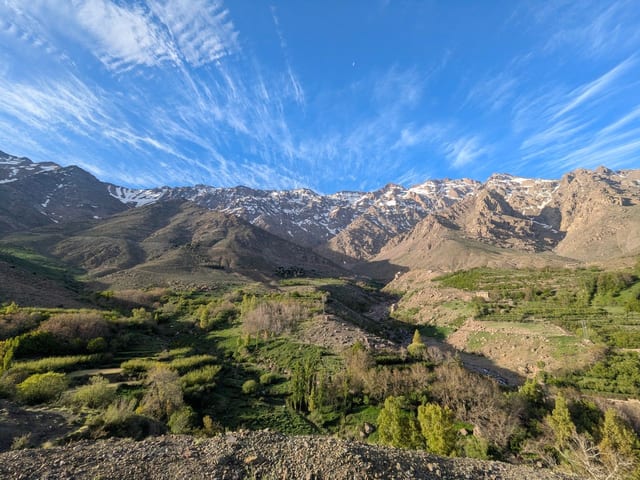
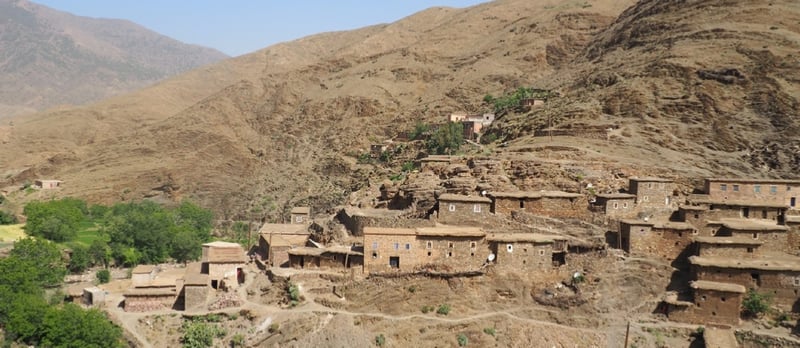
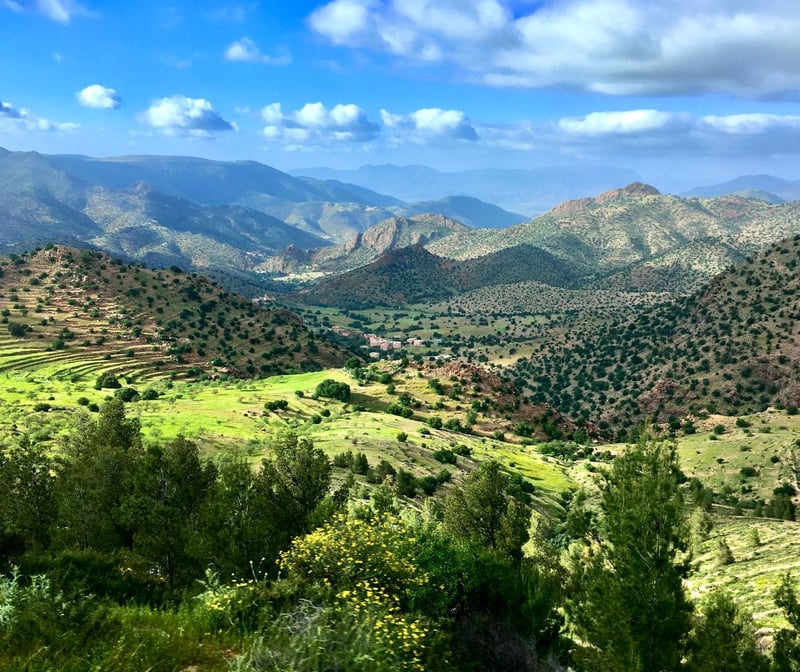
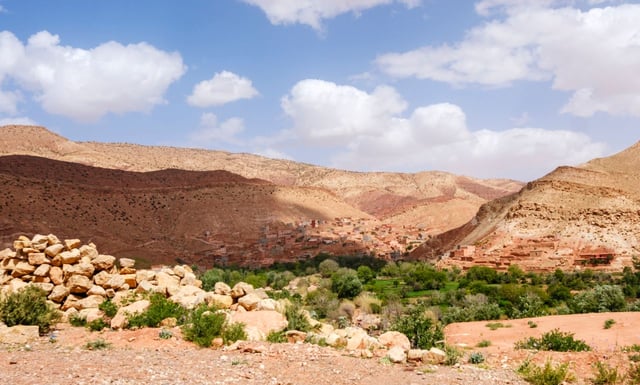
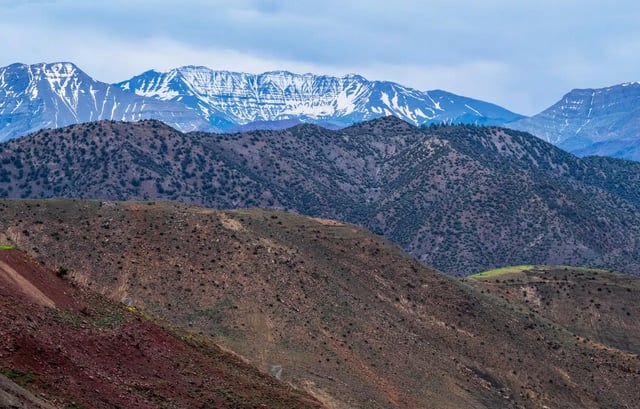
High Atlas Berber villages around Imlil and Toubkal foothills open the trek with walnut groves, terraced valleys and refuge nights above the Marrakech plain. Mule-supported trails link hamlets where valley life unfolds at walking pace rather than through a vehicle window.
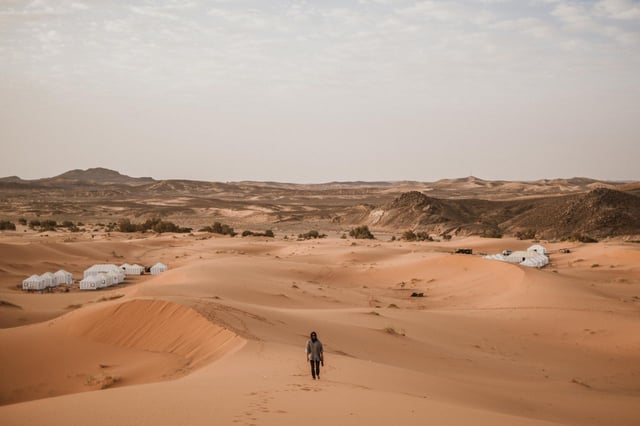
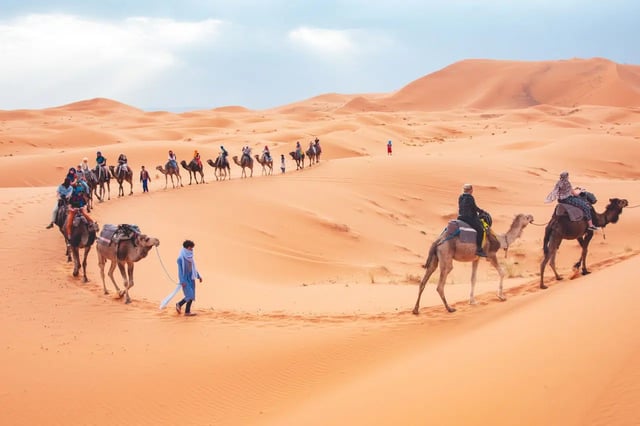
Pre-Sahara pistes and Erg Chebbi camel caravan days bring nomad fringe scenery and tall dunes on the eastern leg, while Todra and Dades gorges frame the westbound return through red cliff country and kasbah viewpoints. Fifteen days connect mountain culture and Sahara sand on one sustained expedition route.
Hill-walking fitness for multi-hour days on rocky Atlas paths and a sustained desert trek day is essential, with recent trekking experience helping on steep uneven terrain. Bring walking boots with ankle support, warm layers, a waterproof jacket and a three-season sleeping bag for refuge and desert nights.
Pack a daypack with water and snacks for walking days while mules carry heavier bags on Atlas stages and camels support desert legs. Let your guide know about any knee or altitude concerns so daily distance and refuge nights are paced honestly for your group.
Mule support on Atlas stages and camel support in the Sahara let you trek with a lighter daypack across fifteen varied days rather than carrying full load every step. Village trails, refuge nights and Erg Chebbi camp connect Berber valley culture with desert sand on one continuous expedition from Marrakech.
Your guides know village path conditions, refuge timing and when to shift from walking to vehicle support on pre-Sahara pistes. The sustained private format keeps the same crew coherent across mountain and desert legs with pacing adjusted around fitness and weather.
Transfer to Imlil trailhead village opens first walks through walnut groves and Berber hamlets in the High Atlas foothills. You spend the night in a village gîte with mule support arranged for the walking days ahead.
Wear walking boots with ankle support and pack a day bag with water. Village trails on rocky paths are tomorrow.
Mule-supported walking on rocky paths between terraced valleys includes mountain lunch on the trail with your guide setting a steady pace. The walking is steep and uneven on established village routes rather than groomed footpaths.
Keep snacks and water in your daypack while mules carry heavier bags. A full trekking day through Atlas valley scenery is day three.
A full walking day through High Atlas scenery toward refuge country unfolds with your guide adjusting pace around group fitness and weather. Mules carry camp gear so you walk with a lighter daypack on established mountain routes.
Bring sun protection and a warm layer for higher sections even in summer. The trail climbs toward refuge country on day four.
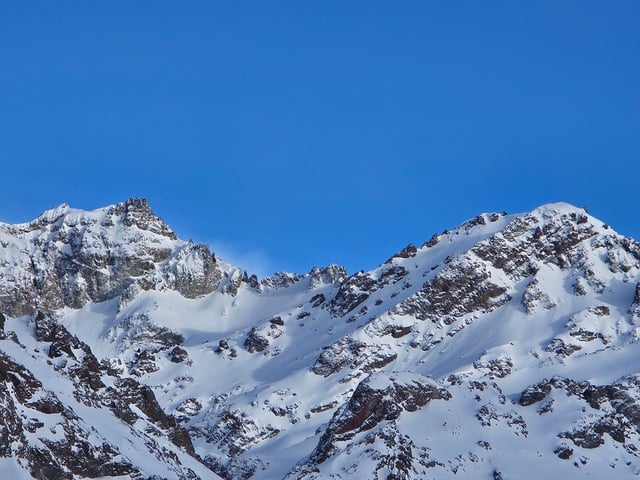
The trail climbs toward Toubkal foothills with a refuge or high gîte night above the valley and views opening across the peaks. Altitude can feel cooler than the valleys, so warm layers matter once the sun drops.
Bring a three-season sleeping bag suited to altitude cold at the refuge. Morning views and descent toward lower valleys are day five.
Morning views from refuge country reward an early start, then descent toward lower valleys and a village gîte night brings you back to greener terrain. Your guide adjusts distance around weather and how the group is feeling on the trail.
Trekking poles help on steep descent sections if you use them. Vehicle support joins as you turn east toward the pre-Sahara on day six.
Walking sections alternate with vehicle support as you turn east toward the pre-Sahara fringe and the landscape opens from green valleys to drier plains. Lunch stops break the transition day between mountain trekking and desert approaches.
Sun protection matters as shade becomes scarce on the eastern plains. Your first camel caravan day is tomorrow.
The first camel caravan day crosses pistes with nomad tea stops and camp under the stars on the pre-Sahara fringe. Long walking days alternate with driving support on this leg so the pace stays sustainable across the two-week route.
Closed shoes and a scarf help on open piste walking. Sustained desert trekking beside camel support continues on day eight.
Sustained walking beside camel support through pre-Sahara scenery carries you toward Merzouga country with nomad tea breaks along the route. Sun protection and closed shoes matter on open piste days where shade is limited.
Water in your daypack is essential on long walking sections. A second caravan day toward Erg Chebbi is tomorrow.
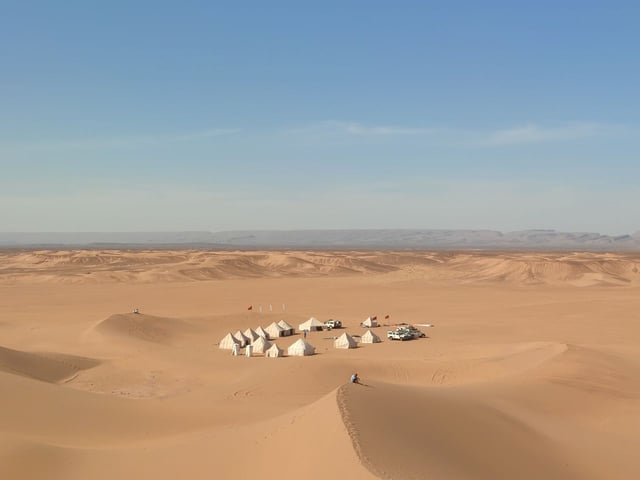
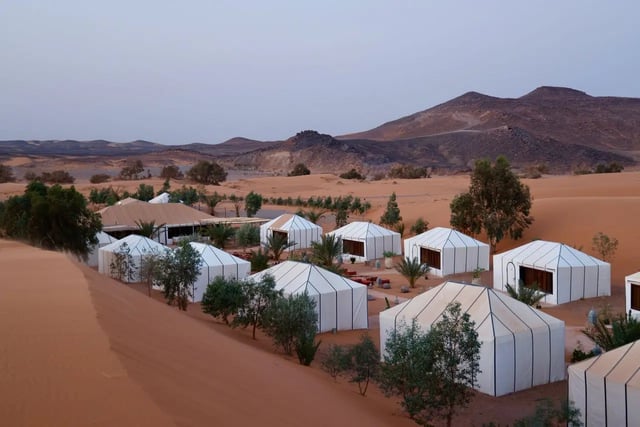
A second caravan day brings camp dinner and drums as the dunes grow on the horizon toward Merzouga. You sleep in desert camp or a guesthouse near the dunes depending on routing and camp availability.
A warm layer helps after dark in camp. Tall sand lines at Erg Chebbi open on day ten.
Tall sand lines at Merzouga unfold with camel support and a camp night on Erg Chebbi after a full day among the dunes. Sunrise on the sand opens day eleven before the road west toward the gorges.
Bring a scarf for sun and sand on dune sections. Walking and driving mix on the return leg from tomorrow.
Early light on the dunes rewards an early start, then the road west toward Todra and Dades gorge country mixes walking and driving on the return leg. Your guide chooses stops where short walks break up the westbound road day.
Closed shoes help on uneven gorge paths. A dedicated Todra Gorges walk is planned for day twelve.
Optional gorge walks between red cliff walls include photo stops and a guesthouse night in Dades or Todra country. Flat riverbed paths suit most trekkers after the desert leg without demanding another high mountain day.
The pace eases compared with Atlas refuge sections earlier in the trek. Kasbah viewpoints and valley walks are day thirteen.
Kasbah viewpoints and valley walks break the road toward the Ouarzazate area with your guide choosing paths that reward an extra hour on foot. Lunch with a view toward mud-brick ksars fits the cultural tone of the return west.
Wear comfortable shoes for ksar visits and short walks. The High Atlas crossing back toward Marrakech opens on day fourteen.
High Atlas village stops and foothill roads carry you toward the Marrakech side of the pass with flexible photo breaks in Berber hamlets. Breaking the final crossing across two days keeps day fifteen manageable after two weeks on the trail.
A warm layer helps in higher villages even on sunny days. Tizi n'Tichka descent into Marrakech is tomorrow.
Tizi n'Tichka descent into Marrakech includes flexible photo stops on the pass if your group wants a final mountain view. Drop-off at your riad is usually by afternoon on the last day of the trek from Imlil to Erg Chebbi and back.
Keep water in the vehicle on the final road sections. This closes the fifteen-day Atlas-to-Sahara trekking route.
Pickup is from your Marrakech riad on day one before the drive into Imlil and the High Atlas village trails that open the trekking week. Mule support and refuge nights sit on the mountain leg before the route turns east toward Merzouga and the desert caravan section.
Day fifteen returns to Marrakech, usually by afternoon, with drop-off at your riad after the final Atlas descent. Pack a day bag for village walks and refuge nights while main luggage travels in the support vehicle, and share your riad name for medina access on return.
Mountain refuges and village gîtes on Atlas trekking stages give bunk or shared dormitory sleeping with basic facilities after long walking days. Refuge nights are simple and communal, with mattresses and blankets provided in high mountain country where luggage goes by mule support.
Village guesthouses break up valley trekking with private or family rooms where available, and Erg Chebbi camp brings shared Berber tents with dinner under the stars on the desert leg. Bring a three-season sleeping bag for refuge and camp nights, and pack light for walking days while mules carry the main load.
You'll be collected from your Marrakech riad on day one.
The route heads into Imlil and Atlas villages before turning east toward the dunes, with drop-off on day fifteen, usually by afternoon. Share your hotel, riad or port arrival details when you enquire and we confirm pickup time the day before travel, including the nearest vehicle access on narrow medina lanes.
Expect multi-hour walking days on rocky Atlas paths and sustained desert trekking.
Improver fitness and recent hill experience help. Your driver-guide builds each day around weather, light and group pace, and can extend or shorten time on site when you ask on the road.
The route approaches Toubkal country without guaranteeing a summit unless you request that add-on.
Share goals when you enquire. Your driver-guide builds each day around weather, light and group pace, and can extend or shorten time on site when you ask on the road.
Bring a three-season bag for refuge and desert nights suited to your travel dates.
We confirm seasonal advice when you enquire so altitude cold and desert evenings are covered comfortably. Hotel nights are in private rooms for your group, while desert camp is simple shared tents with mattresses and blankets under the stars.
Mountain refuges, village gîtes and Erg Chebbi desert camp nights.
Bring a sleeping bag suited to altitude and desert cold. Hotel nights are in private rooms for your group, while desert camp is simple shared tents with mattresses and blankets under the stars.
Meals on trek days are included at refuges, gîtes and camp.
Tell us about dietary needs when you enquire. Drinks are not included. Breakfast and dinner are usually included where the itinerary lists hotel or camp nights, with lunch often on the road at a café or picnic stop between driving legs.
Walking boots with ankle support, warm layers, waterproof jacket and a daypack with water and snacks.
Mules carry heavier bags on Atlas stages while camels support desert legs. Keep a refillable water bottle and any daily essentials in the bag you carry in the vehicle, and ask when you enquire if you want seasonal advice for Atlas cold or desert heat.
This expedition suits older teenagers with recent hill-walking experience. Share ages and fitness when you enquire.
We advise honestly before you book rather than guessing a minimum age. Share children's ages and how they handle long travel days when you enquire, and we advise honestly on pacing and seat comfort for the driving days on this route.
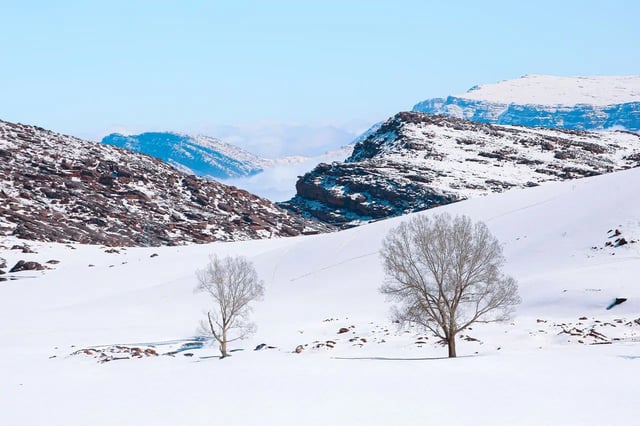
Atlas snow and desert wind can change daily distance. Your guide shifts between walking and vehicle support for safety.
Refuge nights may be adjusted when mountain conditions demand it. Winter snow can slow High Atlas passes and desert wind may shift camel timing, so we adjust for safety and keep you informed rather than pushing a fixed timetable.
Mule support on Atlas stages and camel support in the Sahara let you trek with lighter daypacks across fifteen varied days.
Village trails, refuge nights and Erg Chebbi camp connect Berber valley culture with desert sand on one expedition.
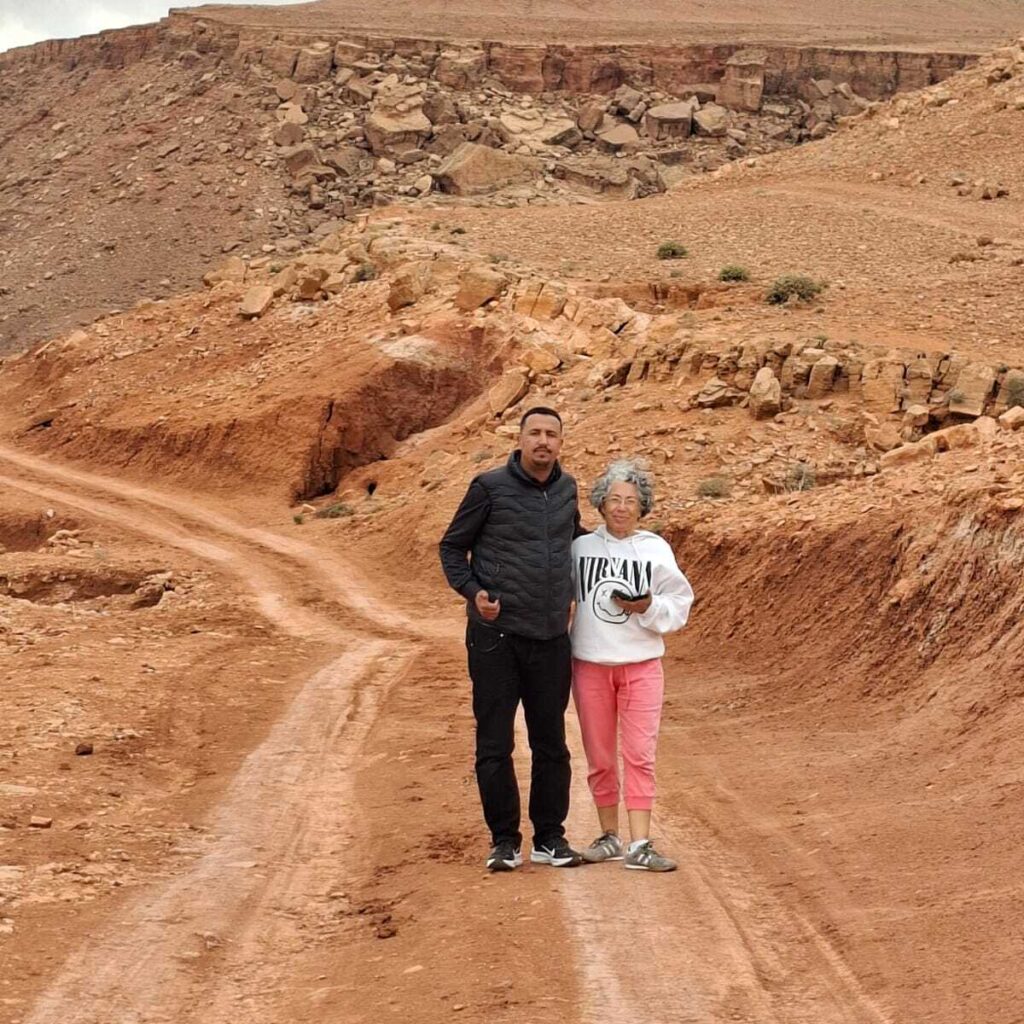
About the centre
Marrakech
Operated by Trek Morocco Desert, a partner of adventuro.
Central & Atlas Mountains, Morocco
From €2000
Saharan & Southern Provinces, Morocco
From €850