We partner with Rewilding Britain to help protect our natural spaces for future adventures.
All centres are vetted for safety and quality. Your adventure is in good hands with adventuro.
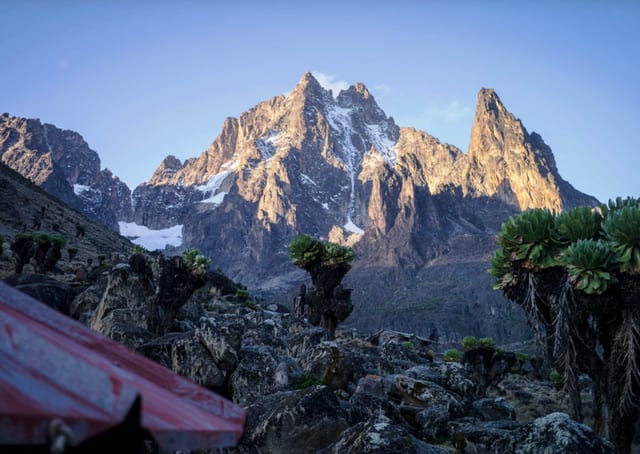
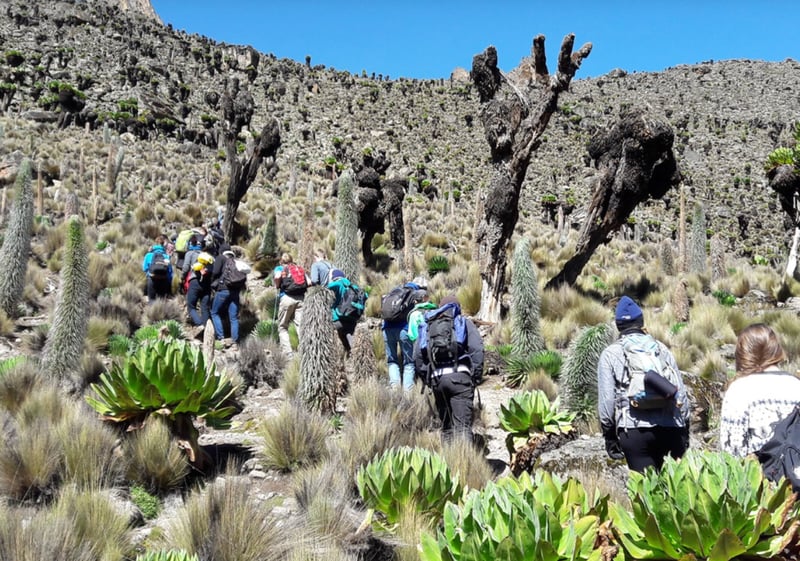
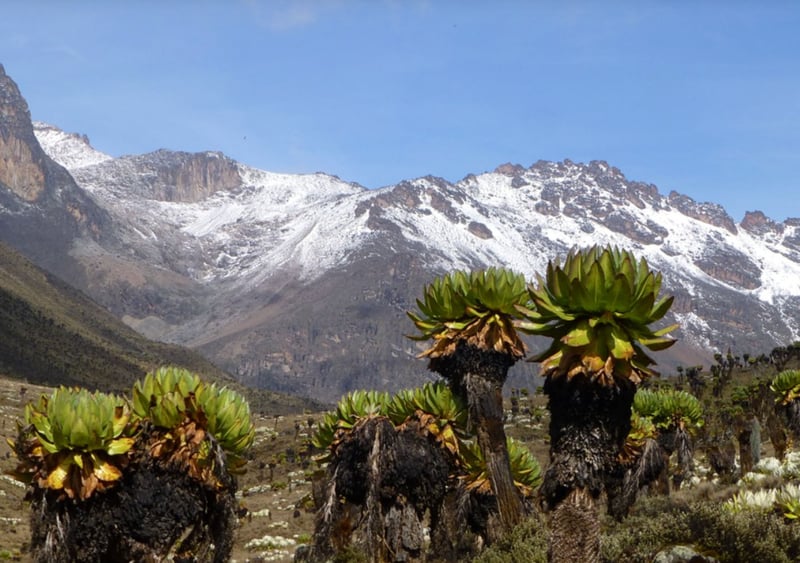
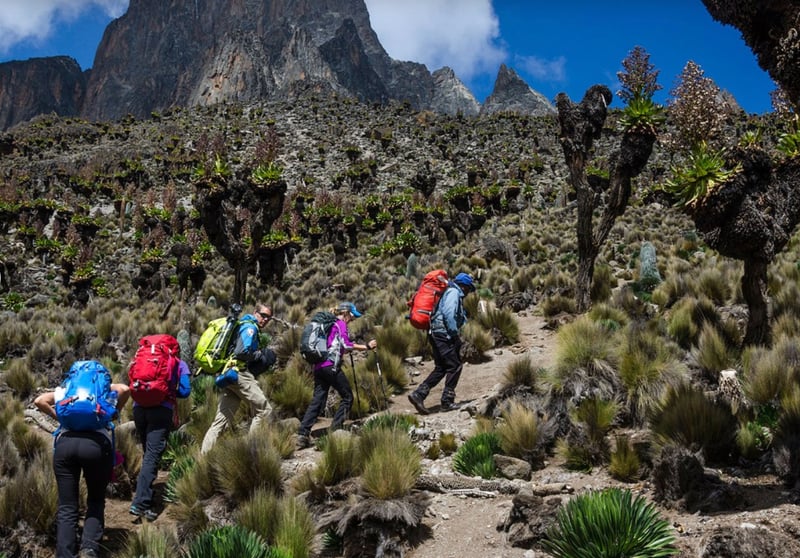
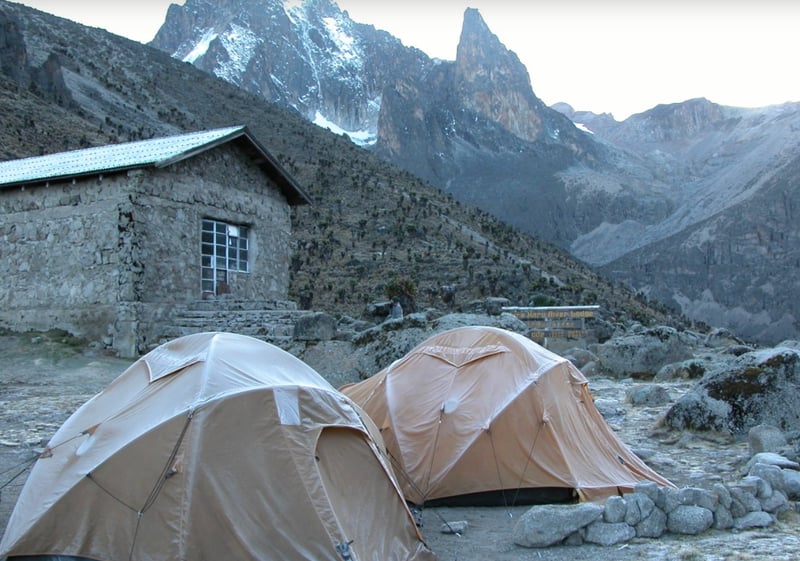
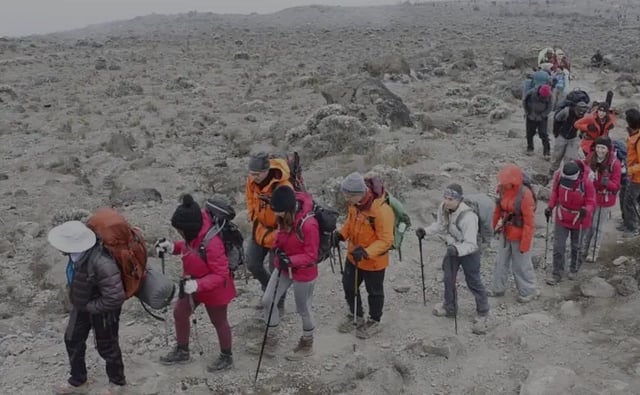
This five-day traverse combines two of the most scenic approaches on Mount Kenya, ascending via Sirimon on the mountain’s dry western side and descending through the lush Chogoria valley. The result is a highly varied trek featuring open alpine landscapes, wide glacial valleys, bamboo forests, and rich highland vegetation.
The itinerary offers a natural acclimatisation profile and suits trekkers who want a more diverse experience than single-route ascents. With professional guides, porter support, and structured daily stages, the route provides a well-balanced challenge for those aiming to reach Point Lenana.
After breakfast, depart Nairobi with your mountain guide and travel north to Nanyuki, arriving in time for lunch. The afternoon is spent acclimatising with an easy walk in the surrounding region, including a visit to Mau Mau Caves, which hold historical significance from the independence era. Dinner and overnight are arranged in a Nanyuki hotel.
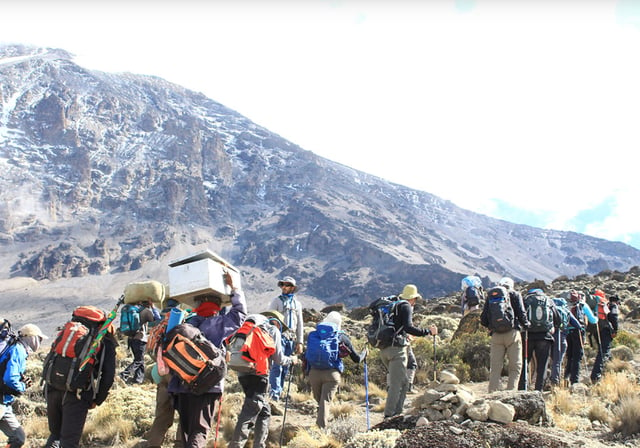
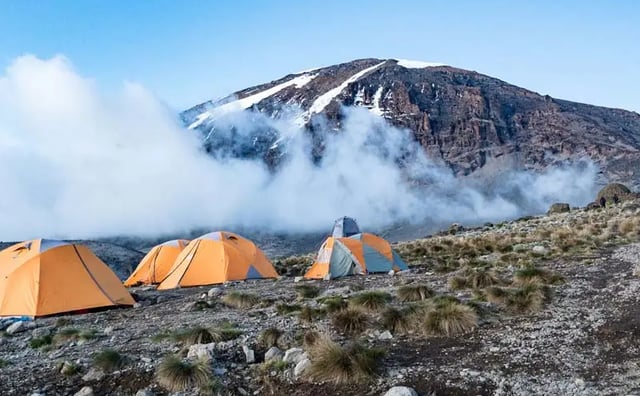
After breakfast, drive to the Sirimon Park Gate to begin the ascent. The hike to Old Moses Camp typically takes around five hours, following a well-defined path that gradually enters the heathland zone. Dinner and overnight are at the hut, offering a good introduction to the mountain environment.
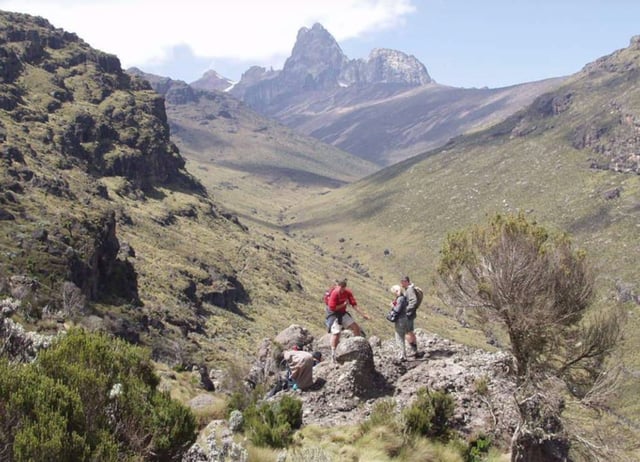
The trek continues from Old Moses through Mackinder’s Valley, gaining steady elevation and opening into striking alpine scenery. This section highlights some of the geological features characteristic of the Sirimon side. Arrive at Shipton’s Camp for dinner and overnight, preparing for the early summit push.
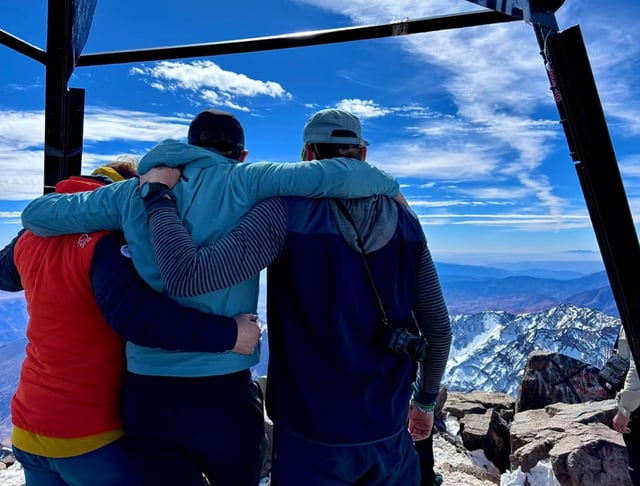
Begin the ascent around 02:30 to reach Point Lenana at sunrise. Clear mornings can offer long-range views toward Kilimanjaro, Mount Elgon, and the eastern coastline. After summiting, descend to Mintos Hut for breakfast. Continue to Roadhead for lunch before trekking onward to Chogoria Bandas for dinner and overnight. This day covers both high-altitude terrain and the transition into greener forest zones.
After breakfast, walk toward the Chogoria Gate before reaching Chogoria town for lunch. A transfer then returns you to Nairobi, typically in the late afternoon. An optional jeep is available to cover part of the 32 km descent between Bandas and the Park Gate; this is arranged locally and not included in the package.
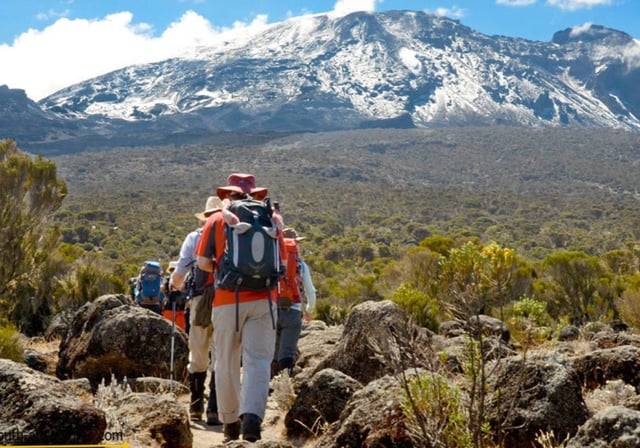
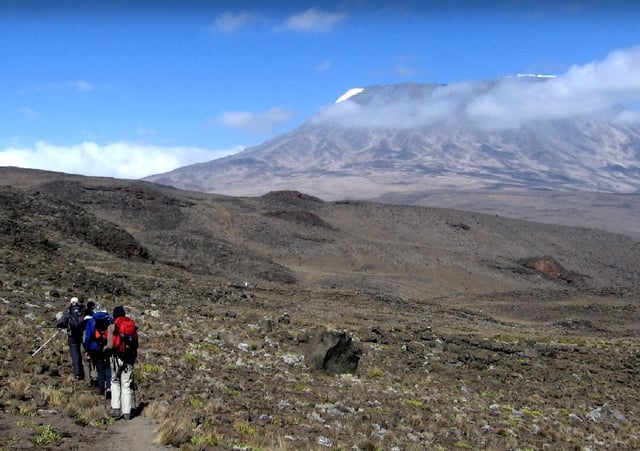
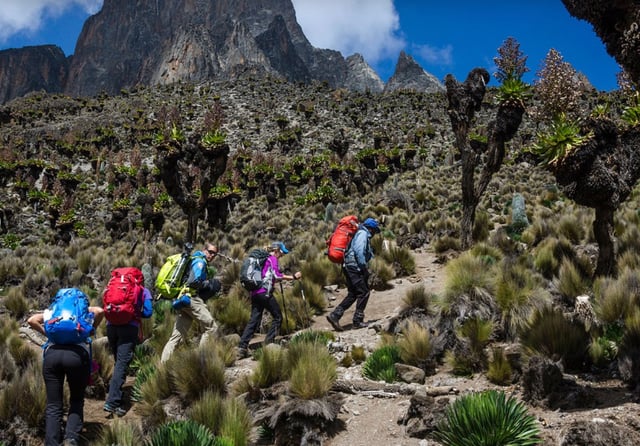
The Sirimon approach begins on the north-western flank of Mount Kenya, offering a dry, reliable trail with distinctive alpine vegetation and wide valley systems. Its steady elevation profile makes it a strong choice for acclimatisation while providing varied scenery throughout the ascent.
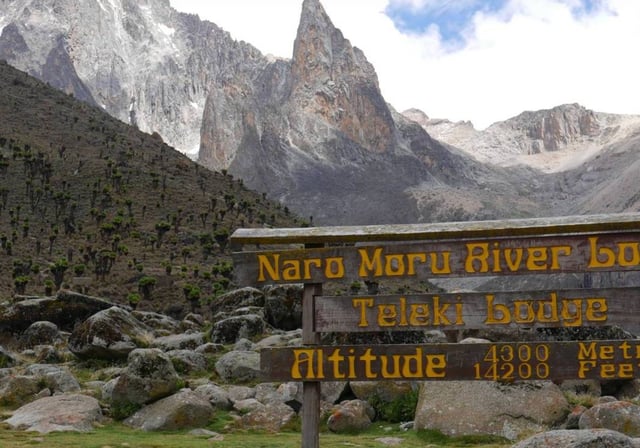
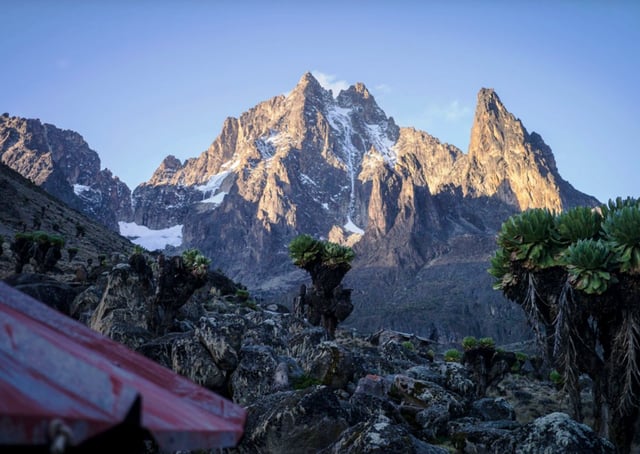
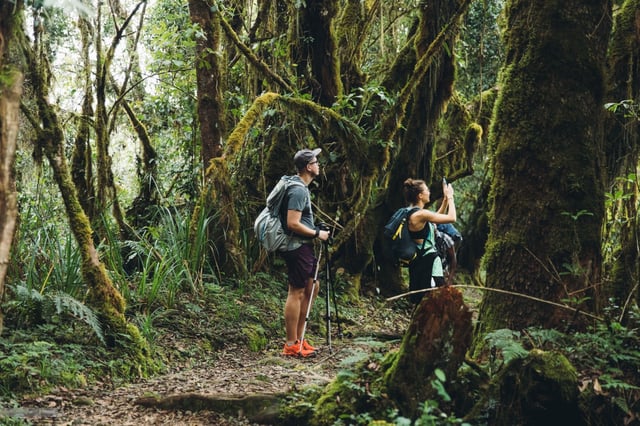
The descent through Chogoria reveals a very different side of the mountain. Expect dramatic cliffs, highland tarns, bamboo forest, and expansive meadows as the terrain softens toward the lower slopes. This combination of opposing landscapes makes the traverse one of the most visually rewarding routes available.
This trek is suitable for participants with good fitness and some experience of multi-day hiking. Daily distances and elevation gains require stamina, and the summit attempt involves hiking in cold pre-dawn conditions. A steady pace and good preparation will contribute to a successful ascent.
Altitude is an important consideration, and acclimatisation should be taken seriously. Spending the first afternoon in Nanyuki walking gently and hydrating well supports your adjustment before entering the higher zones. Guides monitor participants closely and set pacing based on group performance.
Guides on this traverse have extensive experience across both the Sirimon and Chogoria routes, allowing them to manage acclimatisation, trail timing, and summit coordination with confidence. Their familiarity with the terrain ensures safe movement across rapid elevation changes and varied environments.
All mountain logistics—including meals, camp arrangements, porter support, and transfers—are organised in advance. This allows trekkers to focus on the experience rather than the complexity of managing a high-altitude expedition. The combination of expert support and a diverse route makes this a particularly strong option for those seeking a complete Mount Kenya experience.
The Sirimon–Chogoria combination offers greater variety than routes that ascend and descend the same side of the mountain. Sirimon provides open alpine landscapes, while Chogoria offers lush forests, waterfalls, and dramatic cliffs. This diversity makes the traverse one of the most visually satisfying Mount Kenya experiences.
Because the descent is gentler and more scenic, many trekkers find this route more enjoyable overall, especially after the altitude stresses of summit day.
The trek is considered challenging due to sustained elevation gain, variable terrain, and the pre-dawn summit attempt. Participants should be comfortable hiking multiple days in a row with significant altitude changes.
The itinerary supports acclimatisation by gradually increasing sleeping elevation and providing time for rest at key camps. Guides pace the group carefully to ensure safe progress.
Accommodation includes huts or designated camps at Old Moses, Shipton’s, and Chogoria Bandas. These facilities offer practical shelter and communal spaces suited to high-altitude trekking.
Before entering the park, accommodation in Nanyuki provides a comfortable base with access to gear checks, hot showers, and a stable acclimatisation environment.
Essential items include sturdy boots, warm layers, waterproof clothing, gloves, a headlamp, and a suitable daypack. Thermal insulation is critical for summit day. Trekking poles are helpful for both ascent and descent.
Trekkers should also carry personal medication, refillable water bottles, and preferred snacks for additional energy. Gear rental may be possible in Nanyuki, though owning well-fitted equipment is preferable.
Summit day begins around 02:30, allowing arrival at Point Lenana around sunrise. The ascent is steady but demanding due to cold temperatures and altitude. Clear mornings may offer long-range views across East Africa.
After summiting, you descend through Mintos and Roadhead toward Chogoria Bandas, making summit day the longest stage in terms of distance and elevation change.
Sirimon is generally on the dry side of the mountain, with more predictable trail conditions. Chogoria, by contrast, receives more moisture and has lush vegetation. Temperatures drop significantly at night, especially at Shipton’s.
Rain is more likely during April–June and October–December, although weather can shift rapidly at altitude. Waterproof layers and warm clothing should always be accessible.
Daily trekking times range from 4–6 hours, except summit day, which is significantly longer due to the ascent and extended descent. Breaks for hydration, acclimatisation, and meals are incorporated into the schedule.
The first day involves only light acclimatisation walking, giving trekkers time to adjust before entering the park.
Groups are usually small—often between two and seven trekkers—to allow personalised pacing and better acclimatisation control. Smaller groups also make movement smoother through narrow or technical sections of the trail.
A dedicated porter team carries the majority of equipment, allowing trekkers to hike with lighter daypacks.
All meals on the mountain are included and consist of simple, energy-rich foods such as rice, pasta, vegetables, and warm drinks. Meals are prepared on site by support staff.
Dietary restrictions can often be accommodated with prior notice. Bringing personal snacks is recommended, especially for summit day.
About the centre
Mount Kenya National Park
Operated by Bencia African Adventure and Safaris, a partner of adventuro.
Basseterre & South Peninsula, Saint Kitts and Nevis
From $109.99
Kilimanjaro & Arusha, Tanzania
From $850
Cheshire, United Kingdom
From £699