We partner with Rewilding Britain to help protect our natural spaces for future adventures.
All centres are vetted for safety and quality. Your adventure is in good hands with adventuro.
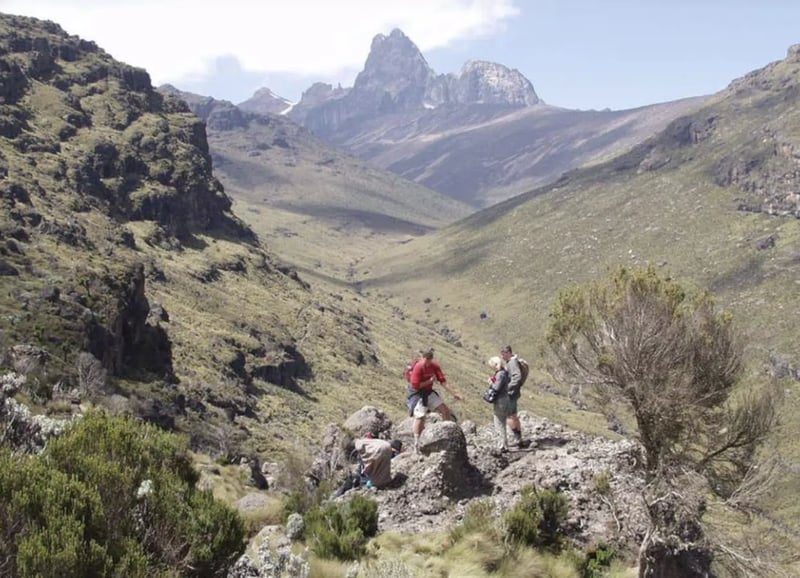
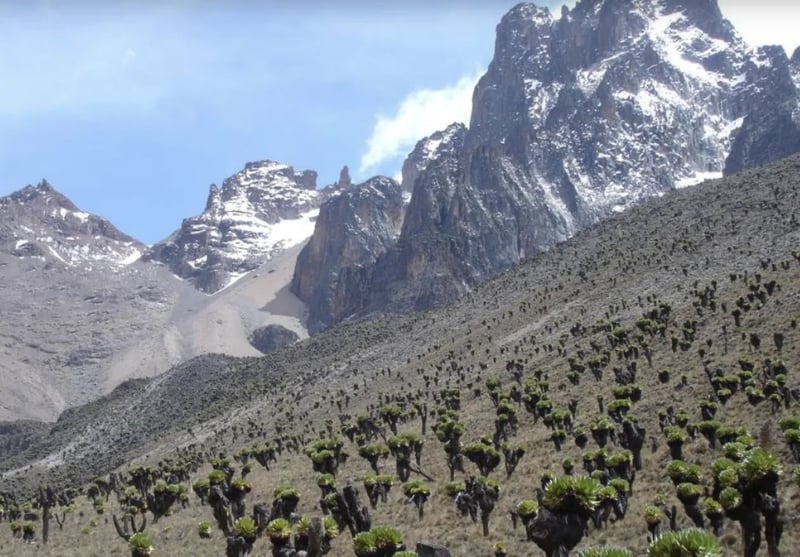
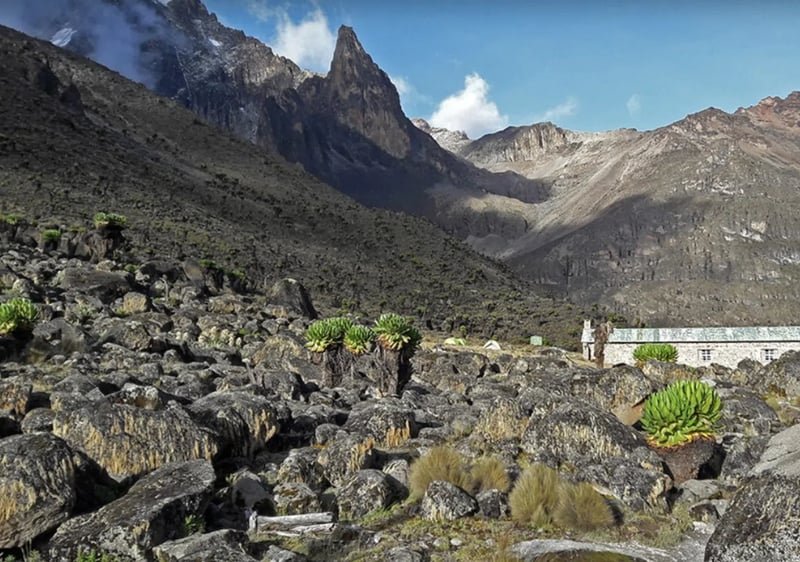

The Naro Moru Route offers one of the most direct approaches to Point Lenana and is a popular choice for hikers seeking a challenging but non-technical ascent of Mount Kenya. This five-day itinerary includes progressive acclimatisation, structured camp stages, and early access to key viewpoints across the Teleki Valley.
The route is well suited to trekkers who want a focused ascent with consistent trail conditions and comfortable acclimatisation steps. Professional guides and porters support the hike throughout, ensuring safe pacing, mountain-ready meals, and organised overnight arrangements.
Depart Nairobi around 09:00, travelling north past the Equator before arriving in Nanyuki for lunch. The afternoon is spent acclimatising and enjoying the mountain scenery. Overnight accommodation is arranged in Nanyuki, giving time to rest, organise equipment, and prepare for the hike.
The morning is dedicated to sorting personal gear before driving to the start of the Naro Moru Track. The road leads to the Meteorological Station, where you will spend the night. A short afternoon acclimatisation walk helps prepare for the altitude, making this an important transition day.
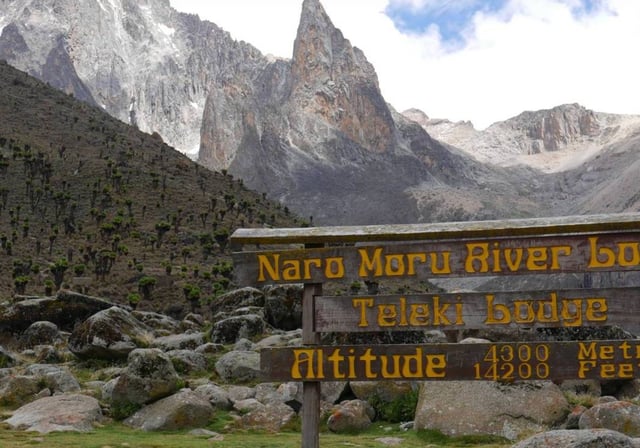
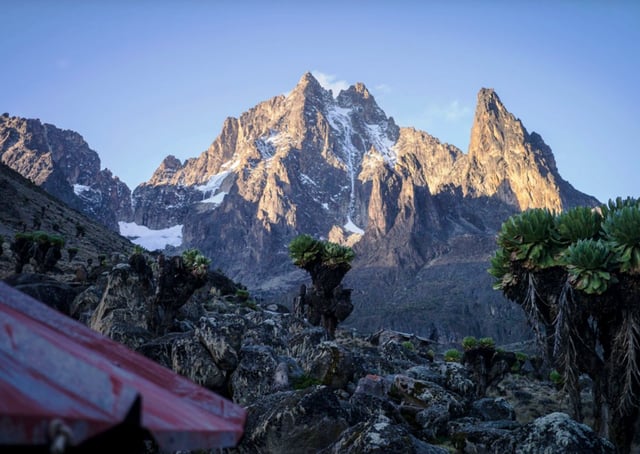
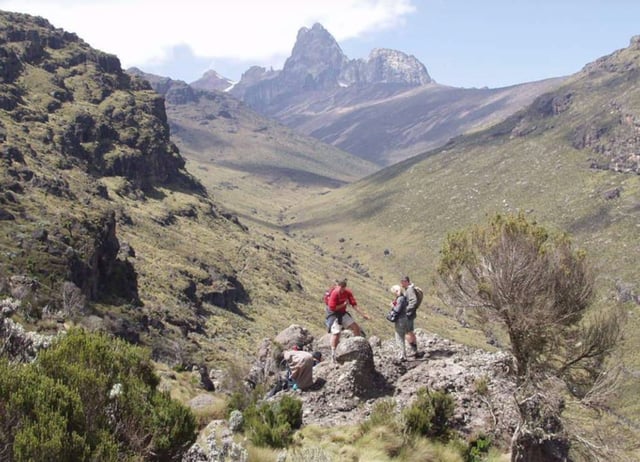
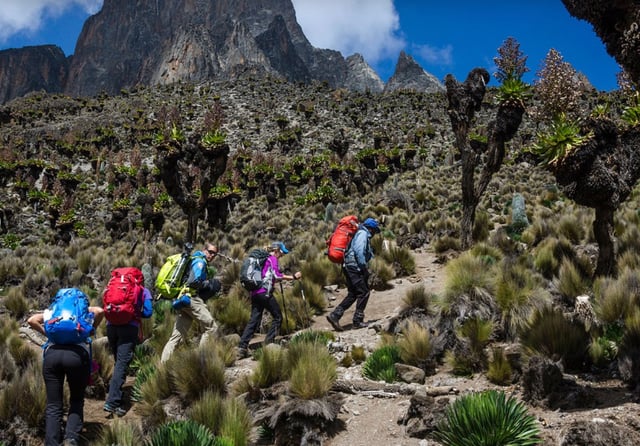
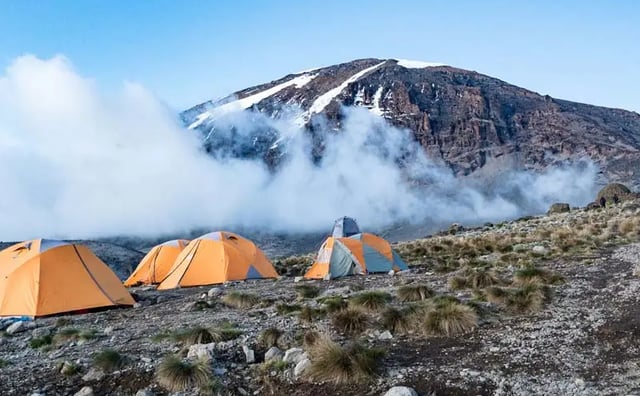
The hike continues through the upper moorland and into the Teleki Valley, offering impressive views of the main peaks. Walking time is typically 4–6 hours, with steady elevation gain. Arrive at Mackinder’s Camp for dinner and overnight, resting ahead of the summit attempt.
Start before dawn to reach Point Lenana for sunrise, when visibility is usually at its best. After summiting, descend to base camp and continue down the mountain, exiting via the Naro Moru Gate. A transfer returns you to Nanyuki for an overnight stay, allowing full recovery after the long summit day.
Enjoy a relaxed morning before beginning the return journey to Nairobi. Lunch is taken en route, and you typically arrive in the afternoon.
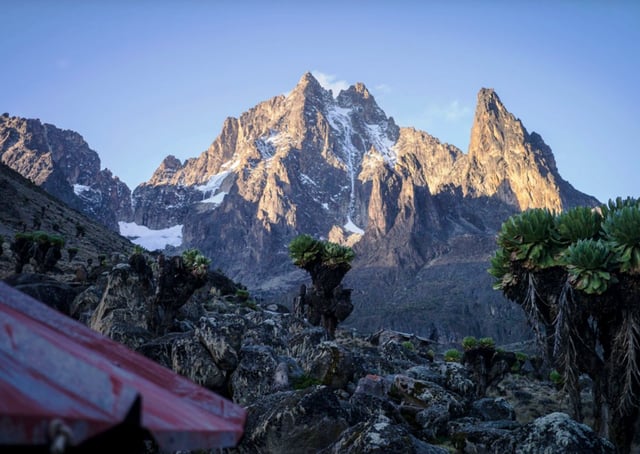
The Naro Moru Route approaches Mount Kenya from the western side and is known for being one of the quickest trails to gain altitude. The track passes through montane forest, moorland vegetation, and finally the alpine zone surrounding the Teleki Valley, offering varied terrain and clear views of the peaks.
Nanyuki serves as the base town at the start and end of the itinerary. Its moderate elevation makes it a suitable location for acclimatisation, equipment preparation, and post-climb recovery. The road network between Nanyuki and the Naro Moru Gate ensures straightforward access to and from the national park.
Trekkers should be comfortable hiking for several hours per day while carrying a daypack. The route involves significant elevation gain and a pre-dawn summit push, requiring good fitness and strong mental pacing. Previous multi-day hiking experience is helpful but not essential.
Altitude is a key factor, and participants should understand the basics of altitude safety, hydration, and steady pacing. The itinerary includes structured acclimatisation, but individual responses to altitude vary. Guides monitor the group closely and adjust pacing when necessary.
Guides on this route are highly experienced with the Naro Moru ascent and understand the timing, acclimatisation needs, and safety considerations required for a successful summit. Their daily monitoring and support help ensure that trekkers progress steadily and confidently.
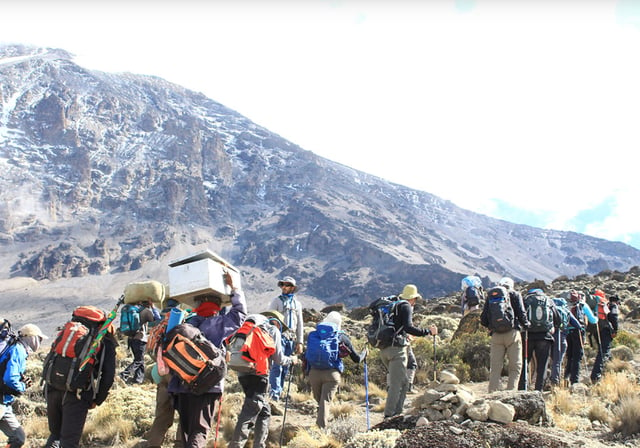
Porters manage equipment, meals are freshly prepared on the mountain, and all accommodation and transfers are coordinated in advance. This structured approach reduces logistical stress and allows trekkers to focus on enjoying the mountain, its landscapes, and the overall experience.
This route is considered challenging due to its rapid altitude gain and steep sections on the ascent to Mackinder’s Camp. Trekkers should have good fitness and be prepared for long hiking days, including a pre-dawn summit attempt in cold conditions.
Although non-technical, altitude remains the primary challenge. The itinerary provides structured acclimatisation, and guides help maintain safe pacing throughout the climb.
You will stay overnight in Nanyuki before and after the climb, providing a comfortable space to acclimatise and recover. Accommodation here typically includes warm beds, hot showers, and restful surroundings.
On the mountain, accommodation is in huts or designated camps near Met Station and Mackinder’s Camp. These are functional facilities designed for safety and shelter rather than comfort, with shared spaces and basic amenities.
Essential kit includes sturdy hiking boots, warm layers, a waterproof jacket and trousers, gloves, a headlamp, and a suitable daypack. Temperatures drop significantly at higher elevation, so thermal clothing is important.
Personal snacks, refillable water bottles, sunscreen, and medication should also be packed. Although equipment rental may be available in Nanyuki, bringing your own well-fitting gear is recommended for comfort and reliability.
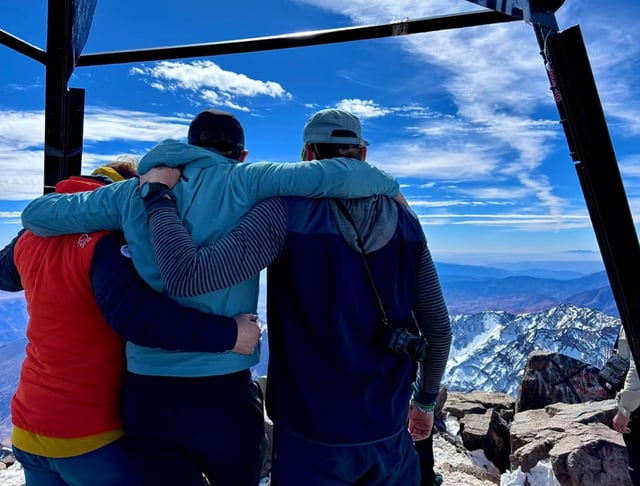
Summit day begins before dawn, typically around 02:00–03:00. The ascent to Point Lenana is steady but demanding due to altitude and cold temperatures. Arriving for sunrise provides the best visibility and a clear view across the surrounding peaks.
After reaching the summit, the descent follows the same route back to Nanyuki, making summit day the most physically demanding part of the itinerary.
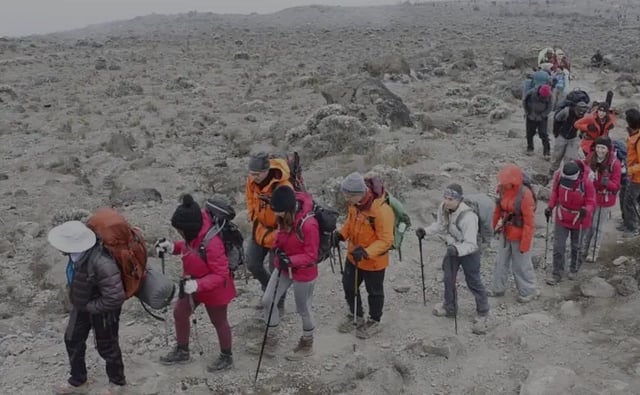
Most days involve 3–6 hours of walking, depending on terrain and altitude. Day 3 to Mackinder’s Camp and the summit day are the most strenuous sections. Breaks for hydration and acclimatisation are incorporated into the schedule.
After the summit, the remaining descent to the Naro Moru Gate and onward transfer to Nanyuki complete the day’s itinerary.
Weather conditions vary but often include warm days, cold nights, and the possibility of rapid changes at altitude. Rain can occur during the wet seasons (April–June and October–December), while dry periods offer more stable conditions.
Regardless of season, warm layers and waterproofs should always be accessible. Guides will monitor forecasts and adjust daily timings accordingly.
Groups are typically small, between two and seven participants. This ensures manageable pacing and personalised support. Smaller group sizes also contribute to safer acclimatisation and a smoother overall ascent.
Porters accompany the group, carrying camp equipment and supplies so trekkers can hike with lighter loads.
Meals include simple, energy-rich foods such as rice, pasta, vegetables, bread, and warm drinks. These are prepared by support staff and designed to provide adequate fuel at altitude.
If you have dietary requirements, these can often be accommodated with advance notice. Personal snacks are recommended, especially for summit day.
Guides monitor acclimatisation closely and watch for signs of altitude discomfort. The itinerary includes staged elevation gains to allow the body to adjust gradually. Hydration, steady pacing, and good nutrition all contribute to safer high-altitude performance.
If significant symptoms appear, guides will adjust the pace or descent plan depending on the situation.
About the centre
Mount Kenya National Park
Operated by Bencia African Adventure and Safaris, a partner of adventuro.
Basseterre & South Peninsula, Saint Kitts and Nevis
From $109.99
Kilimanjaro & Arusha, Tanzania
From $850
Cheshire, United Kingdom
From £699