We partner with Rewilding Britain to help protect our natural spaces for future adventures.
All centres are vetted for safety and quality. Your adventure is in good hands with adventuro.
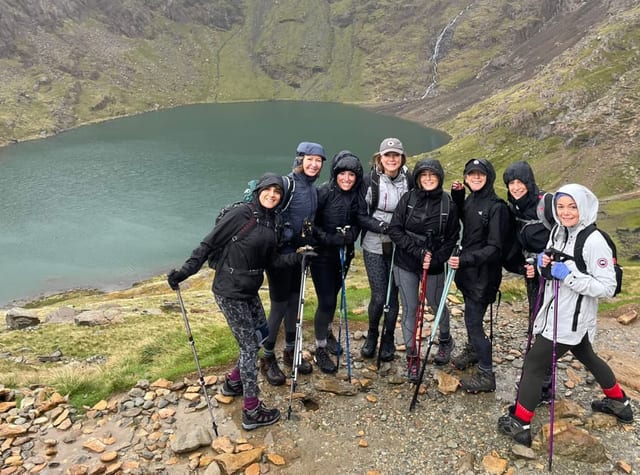
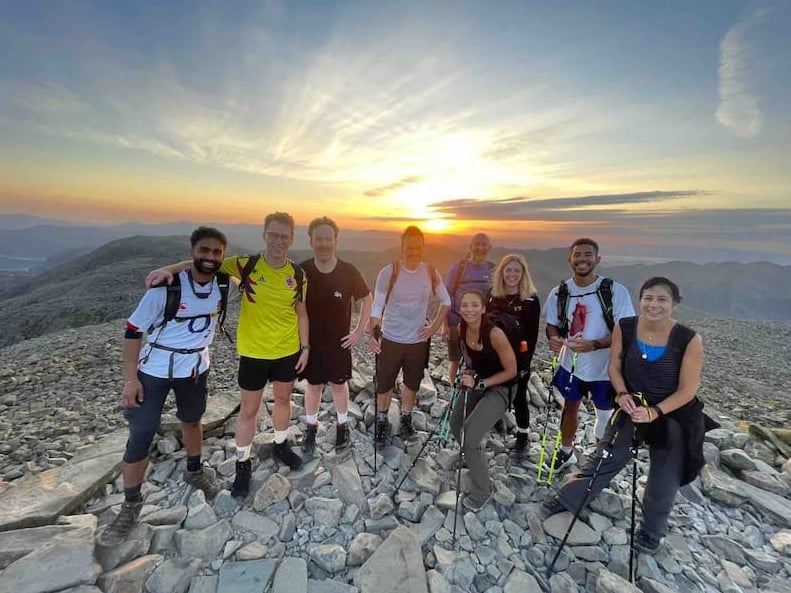
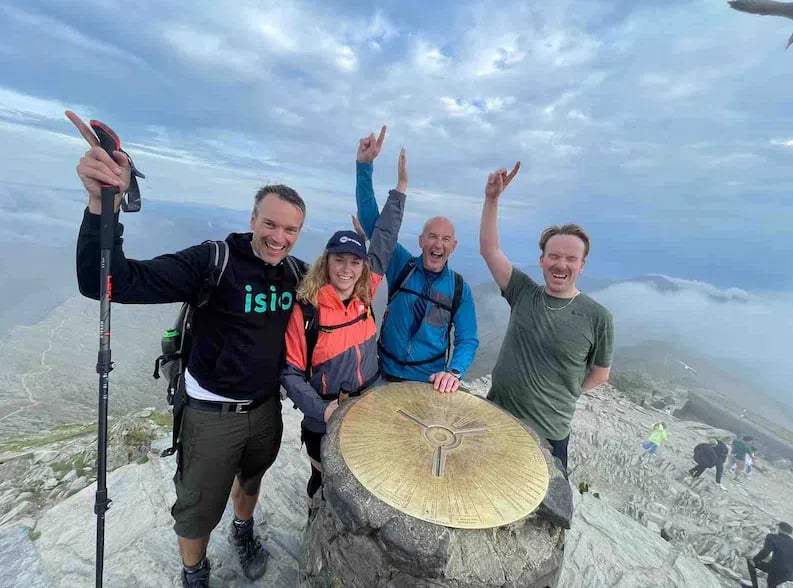
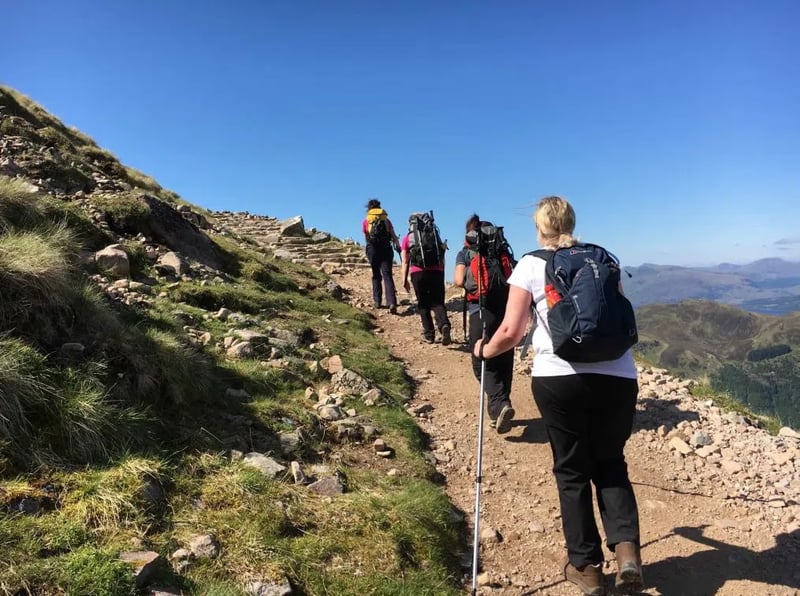
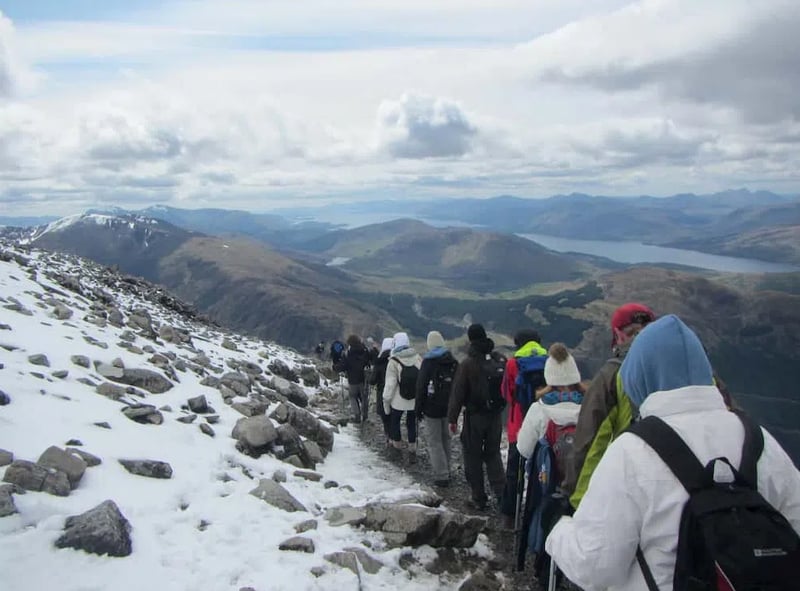
This 4-day itinerary lets you complete the National Three Peaks Challenge over three separate days, turning it into a more enjoyable and manageable adventure. You’ll climb Ben Nevis, Scafell Pike and Snowdon with professional leaders, comfortable B&B stays and full transport between each mountain. This format keeps the challenge exciting while giving you time to rest properly between summits.
Once everyone has checked in, you’ll meet your leader for a full briefing covering safety, pacing, kit checks and what to expect over the challenge. The evening gives you time to settle in, organise your gear and get a proper night of rest before climbing begins.
Ben Nevis starts with a steady incline and becomes rockier towards the summit. Your leader manages the group pace and supports you throughout the climb. After descending, you’ll begin the scenic transfer south for a well-earned night in the Lake District.
Scafell Pike is steep from the start and shorter than Ben Nevis, providing a strong test without technical climbing. After descending you’ll make the long transfer into North Wales, ready for the final peak the following morning.
Snowdon offers a smoother finish to the challenge. Once you’ve completed the descent, the driver will return everyone to the agreed drop-off points, marking the end of your 3-day Three Peaks experience.
The challenge takes you through three of the UK’s most iconic mountain regions: the Scottish Highlands, the Lake District, and Snowdonia. Each area offers its own dramatic landscapes, distinct terrain, and weather patterns. You’ll travel between these regions in a comfortable mini-bus with plenty of time to rest between climbs.
Ben Nevis rises from Fort William and gives you a panoramic view over the Highlands. Scafell Pike stands at the heart of the Lake District with rugged valleys surrounding it, while Snowdon offers incredible views across Snowdonia National Park, finishing in the busy village of Llanberis.
You’ll stay in comfortable B&B hotels each night with twin rooms as standard and single rooms available for an additional supplement. Each property provides a warm bed, hot showers, and facilities to organise your gear after each mountain. This is one of the reasons the 3-day format is so popular, as it allows proper rest and recovery between climbs.
Breakfast is included at each B&B, and there will be time each evening to get food locally or relax before the next day’s ascent. Staying in accommodation rather than sleeping on the mini-bus offers a far more enjoyable experience and helps preserve your energy for the mountains.
This challenge is suited to anyone with good general fitness and the ability to walk uphill for several hours at a steady pace. No mountain experience is required, but preparation beforehand will make the experience far more comfortable. Training guidance is provided after booking to help you get ready.
Medical questionnaires are sent out around six weeks before the event to ensure the team can support anyone with conditions or specific needs. If you have concerns before booking, you can discuss these with the organisers to make sure the challenge is suitable.
The guiding team is made up of experienced UK-qualified mountain leaders who know these routes inside out and understand exactly what support people need on multi-day challenges. They manage pacing, navigation, safety checks and weather assessments while keeping the atmosphere calm and encouraging. Their background includes years of working with mixed-ability groups, youth programmes and charity events, so they’re used to helping people push their limits in a supportive and well-structured way.
Behind the scenes, you benefit from a team that handles everything from logistics to accommodation coordination, allowing you to focus fully on each climb. Transport is arranged with reliable drivers, B&Bs are chosen for rest and comfort, and every stage is planned to keep the days smooth and stress-free. This combination of guiding expertise and careful organisation ensures a high-quality experience from the moment you book to the moment you complete your final summit.
You take on the same three mountains as the traditional challenge, but instead of pushing through the night and sleeping on the mini-bus, you enjoy a proper B&B stay between each climb. This gives you time to rest properly, shower, refuel and reset before starting the next mountain. It makes the experience far more enjoyable without removing the physical element that makes the Three Peaks so iconic.
By approaching each summit with fresh legs, you’ll find the climbs more manageable and the overall journey more rewarding. You still cover the same mileage and ascent, but the extra recovery time allows you to stay focused, comfortable and ready for whatever the weather brings on each mountain.
You’ll climb the highest mountain in Scotland, then England, then Wales, following the classic National Three Peaks order. These are Ben Nevis at 1,344m, Scafell Pike at 978m, and Snowdon at 1,085m. Each has its own character, terrain, and feel, giving you three very different days on the hill.
Although the total distance is only around 23 miles, the combined ascent of more than 3,000m is what makes the challenge demanding. Completing the climbs over three days helps keep your energy consistent and makes the most of the scenery along the way.
You’ll notice that Ben Nevis is the longest climb, following a well-established path that heads steadily upward for several hours. Scafell Pike is shorter but steeper, so it feels more intense from the start. Snowdon offers the shortest ascent thanks to the higher starting point, but by the time you reach Wales you’ll already have climbed two major mountains.
Deciding which one is “hardest” depends entirely on your fitness, experience and how your body copes with long days out. Many people find Ben Nevis the toughest because of its length, while others struggle more with the steep start of Scafell Pike. Snowdon can feel easier physically, but the accumulated fatigue often adds an extra challenge.
The total distance is 23 miles across the three mountains, with an ascent of just over 10,000 feet (3,048m). Each mountain usually takes between 4 and 6 hours depending on weather, group pacing and conditions underfoot, and your leader will guide the timings to keep the experience smooth.
Doing the event over three days spreads the effort out and gives your body time to recover between climbs. This format removes the pressure of the 24-hour deadline while still offering the full sense of achievement that the Three Peaks is known for.
You don’t need technical skills or scrambling experience because the routes used follow straightforward, well-used paths. There are a couple of rocky steps along the way, but nothing that requires ropes or climbing techniques. As long as you are fit enough to walk uphill for long periods, you’ll be able to enjoy the challenge.
Many people complete this event as their first major mountain trip. Training beforehand will make a huge difference to your comfort, and guidance is provided after booking to help you prepare. The leaders manage pacing, navigation and safety, so you’ll always be supported.
You’ll be supported throughout the climbs, and most issues are spotted early by the leader, who can adjust the pace or offer guidance. If someone needs to stop lower down the mountain, it may be possible for them to return to the start point depending on location and conditions. Every situation is different, and the leader makes decisions that keep the whole group safe.
It’s extremely rare for an entire group to turn around due to a single person being unable to continue. Fitness-related withdrawals generally happen near the bottom of the mountain, where managing the change of plan is most straightforward. Safety always comes first, and the leader will guide whatever decision is needed.
Your leader sets a pace that aims to complete each mountain in a sensible time while still giving you short opportunities to drink, have a snack or catch your breath. The walking style is best described as steady and purposeful, rather than relaxed, so you should feel ready for continuous uphill movement with minimal long pauses.
Breaks are deliberately short because stopping for too long cools the body down and makes restarting harder. If you fall behind the pace consistently, the leader will talk through the options so you can find the safest way forward for yourself and the group.
You’ll need mountain-ready clothing and equipment, including waterproofs, warm layers, a rucksack, head torch, first aid kit and at least two litres of water. Snacks for the mountain and a small spare-clothes bag for the mini-bus are also important. A complete kit list is provided after booking so you know exactly what to bring.
Walking boots with ankle support are essential and expected. The terrains on all three mountains are rocky and very slippery when wet, and fatigue increases the risk of rolled ankles or strains. For safety reasons, you may not be allowed to join the climb if you arrive without suitable boots.
Pick-ups take place at Birchwood (WA3 7PU), Warrington Bank Quay, Glasgow Central and Glasgow International Airport, with timings provided before the event. Drop-offs include Chester Station, Warrington Bank Quay and Birchwood, depending on your needs. Return times vary due to mountain conditions and traffic, so it’s best to have flexible onward travel.
You can leave extra belongings on the mini-bus and keep your daypack for the mountains. Bags remain locked when everyone is away from the vehicle, and having a separate kit bag makes it easy to change clothes, refresh and reorganise between each climb.
About the centre
Warrington
Operated by Mountaineerin, a partner of adventuro.
Cheshire, United Kingdom
From £499