We partner with Rewilding Britain to help protect our natural spaces for future adventures.
All centres are vetted for safety and quality. Your adventure is in good hands with adventuro.
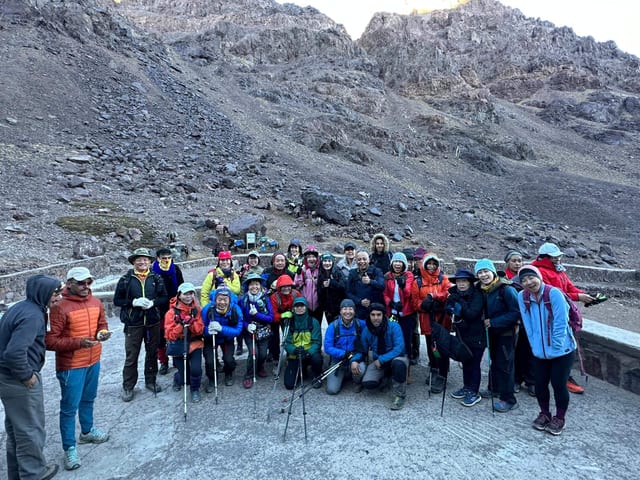
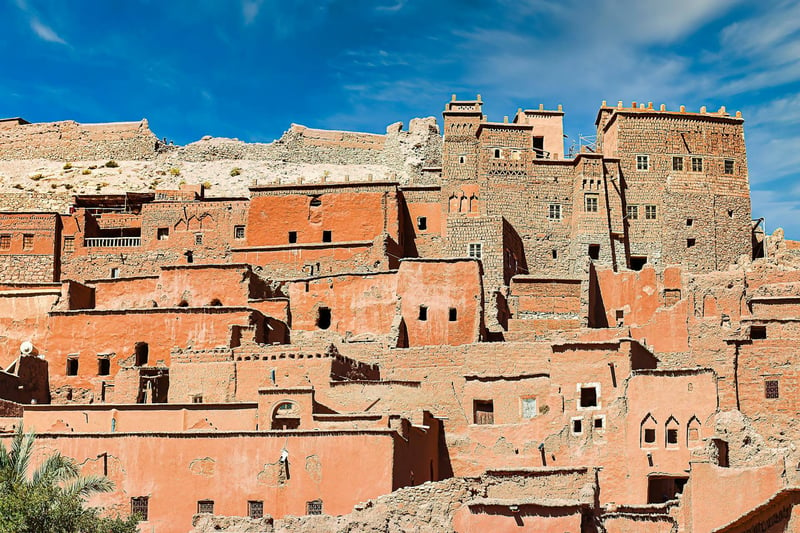
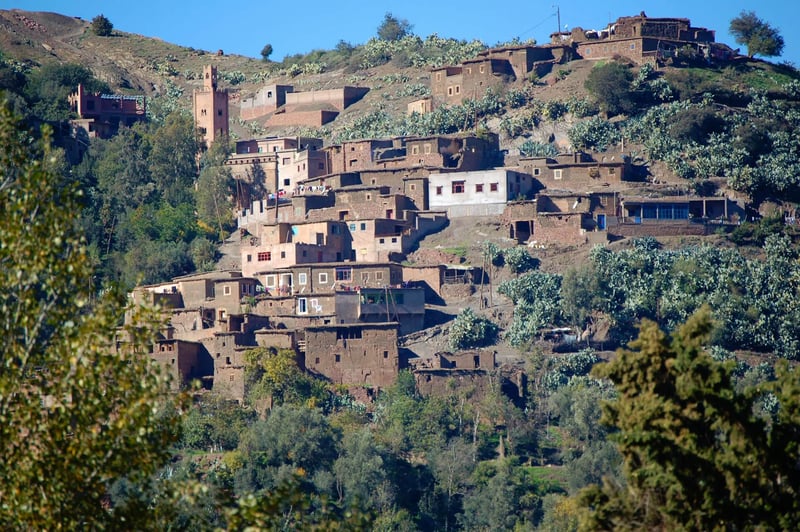
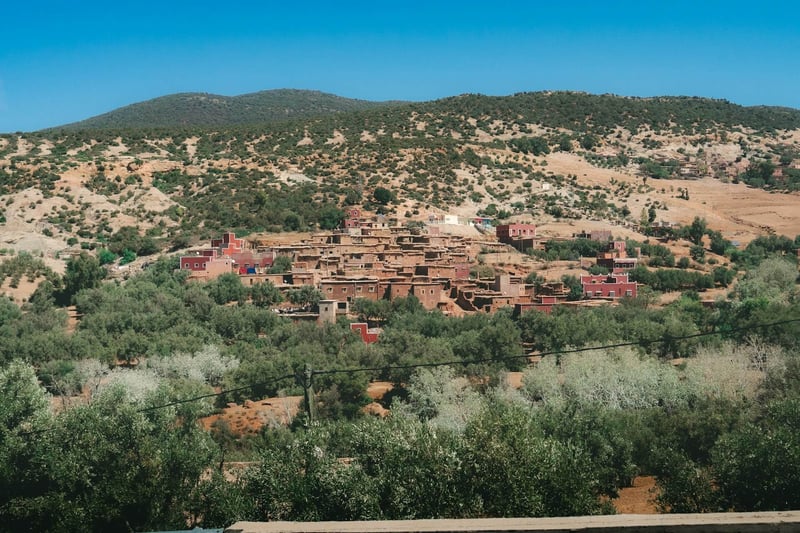
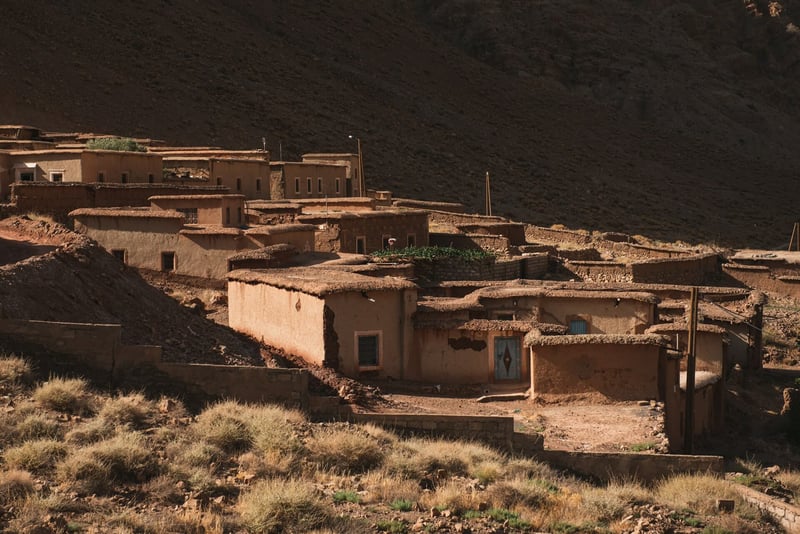
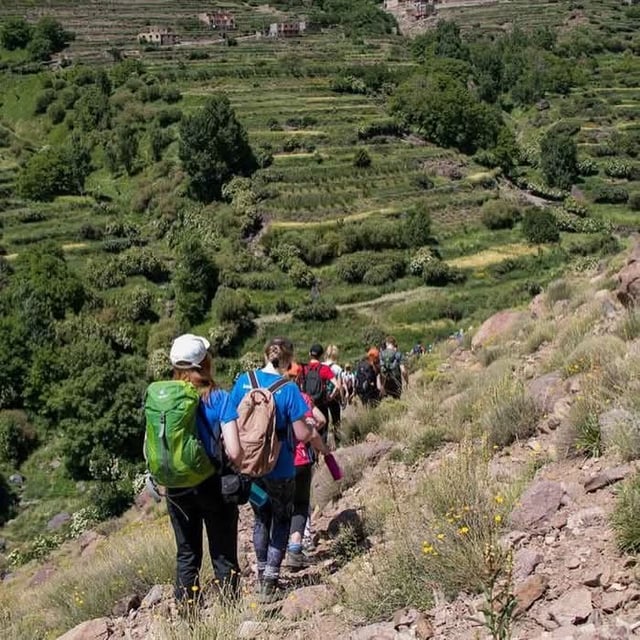
This four-day journey follows quieter paths through the valleys and villages of the western High Atlas. From Marrakech or Imlil, you begin near Agersioual and climb over Tizi n'Oudit towards Tahliouin, then continue through mountain country to Tekkent. The route combines steady ascents, open ridgelines, cultivated terraces and welcoming settlements where daily life remains closely tied to the landscape.
The second half brings the trek's highest pass at Tizi n'Tegdalt, around 2,700 metres, before descending to Tizi Oussem for the final night. On day four, you visit the valley waterfalls and cross Tizi n'Mezzik on the return towards Imlil. Mule support carries main bags, while planned meals and simple overnight stays keep the focus on walking, scenery and an unhurried experience of Berber mountain culture.
Local guides bring practical knowledge of the paths, passes and villages that make this route special. They manage the pace around the group and conditions, explain the landscape without overwhelming the walk, and help each day flow smoothly from the first trailhead to the evening stop. This creates a supported trek that still feels personal and exploratory.
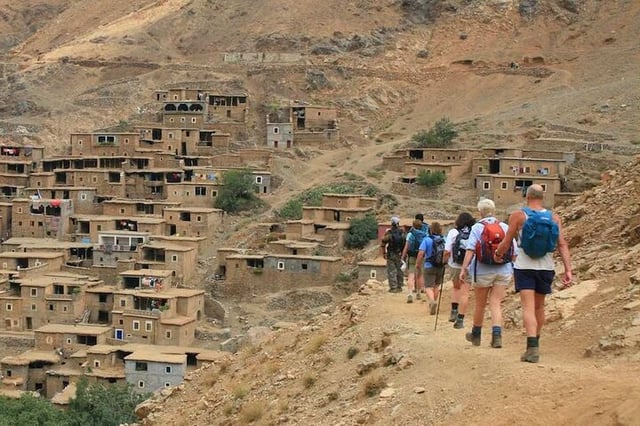
The itinerary balances a genuine multi-day challenge with accessible daily stages for active beginners. Transfers, meals, accommodation and mule logistics are organised as one coherent journey, reducing the practical load on walkers. You can concentrate on the changing valleys, high crossings and the rhythm of village-to-village travel.
Leave Marrakech or Imlil and travel towards Agersioual, where you meet the guide and mule team and prepare for the trail. The walk follows cultivated valley paths before climbing steadily towards Tizi n'Oudit, with views opening over villages and terraced slopes.
After crossing the pass, descend through quieter mountain country towards Tahliouin. Settle into simple accommodation, share an evening meal and rest after the first full day on foot.
Wake in Tahliouin and continue deeper into the High Atlas on paths used by local communities. The day's walking moves between cultivated pockets, dry slopes and small settlements, with time to settle into the rhythm of the trek.
Reach Tekkent later in the day and meet your hosts at the overnight stop. A freshly prepared meal and a quiet mountain evening provide recovery before the higher crossing ahead.
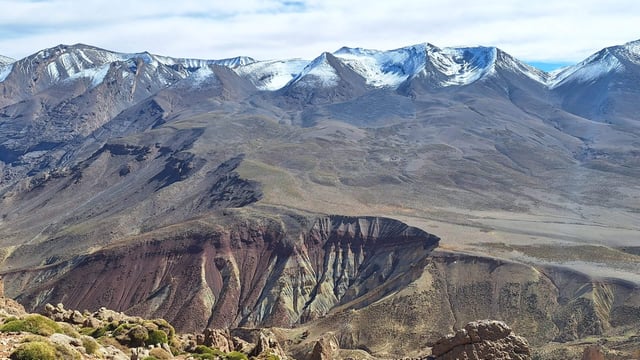
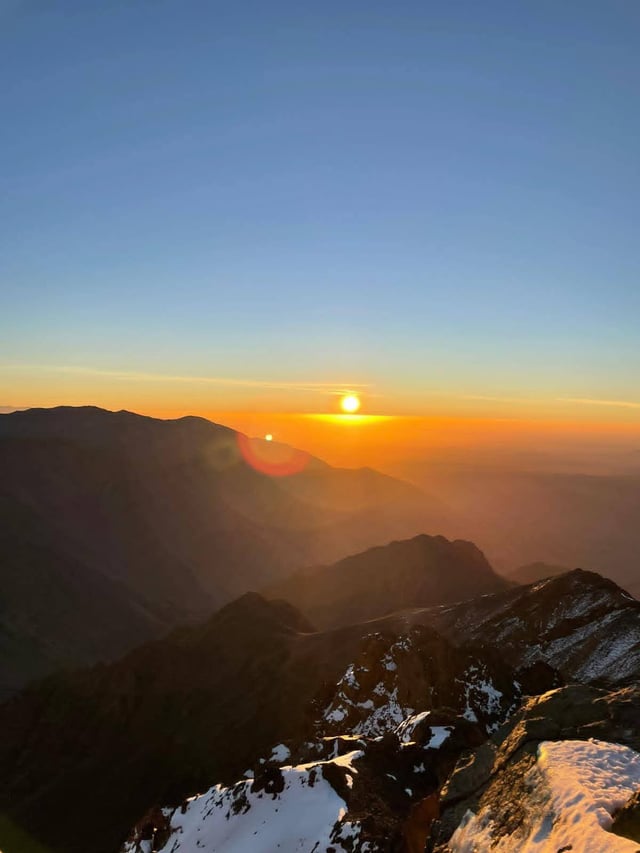
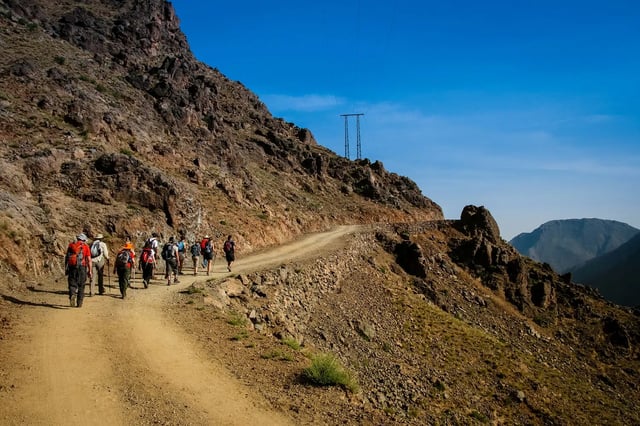
Climb from Tekkent towards Tizi n'Tegdalt, the trek's high point at about 2,700 metres. The ascent rewards steady pacing as the valley falls away and wider High Atlas ridges come into view.
Cross the pass and begin the descent towards Tizi Oussem, watching the terrain soften as you approach the village. Spend the final mountain night in a local guesthouse or gite, with dinner served after a satisfying high-level day.
Begin with a walk towards the waterfalls above Tizi Oussem, where rushing water and a greener valley setting contrast with the previous day's pass. Continue upwards towards Tizi n'Mezzik for one final mountain crossing and broad views over the Imlil valley.
Descend towards Imlil, meet the vehicle and say goodbye to the mule team. The journey ends with the included return transfer to Marrakech or at the agreed point in Imlil.
Pickup is arranged from your hotel or riad in Marrakech, or from an agreed meeting point in Imlil. Riads in pedestrian parts of the medina may not have direct vehicle access, so your driver may meet you at a nearby accessible point before the journey towards the High Atlas.
At the trailhead, you meet your mountain guide and mule team, organise the luggage and begin walking. After the final descent to Imlil on day four, included transport returns you to the agreed drop-off point in Marrakech or completes the journey in Imlil, according to your starting arrangement.
Three nights are spent in simple mountain guesthouses or village gites along the route through Tahliouin, Tekkent and Tizi Oussem. Accommodation is practical and locally run, with shared rooms or sleeping areas, communal meals and basic washing facilities that fit the remote setting.
Expect warmth and hospitality rather than hotel-style luxury. Electricity, hot water and heating can be limited, particularly in smaller villages, so bring a head torch, power bank and season-suitable sleeping bag. These stays keep you close to the valleys and communities that define the trek.
The route is graded medium and suits active beginners who are ready for four consecutive walking days. Expect steady climbs, rocky paths and mountain passes, including Tizi n'Tegdalt at about 2,700 metres.
You do not need technical climbing skills, but a reasonable fitness base will make the trek more enjoyable. Regular hill walking before departure is the best preparation for the repeated ascents and descents.
Pickup can be arranged from an agreed hotel or riad in Marrakech, or you can meet the team in Imlil. The walking route begins around the Imlil and Agersioual area before heading deeper into the mountains.
The final day returns towards Imlil after the waterfalls and Tizi n'Mezzik crossing. Included transport then takes you back to the agreed Marrakech drop-off point when Marrakech pickup formed part of your arrangement.
The three nights are spent in simple mountain guesthouses or village gites along the route. Rooms and washing facilities are normally shared, with practical comforts suited to a remote trekking itinerary.
Standards are more basic than a city hotel, but the stays provide a warm place to eat and rest after each walking day. Bring a season-suitable sleeping bag for comfort, especially during colder months.
Meals are prepared for the group during the four trekking days, including breakfasts, trail lunches and evening meals according to the itinerary. Food is generally nourishing Moroccan mountain fare designed to support active days.
Share allergies and dietary requirements with the team before departure so the cook can prepare appropriately. Carry any specialist snacks you rely on, as shops are limited once the trek enters the valleys.
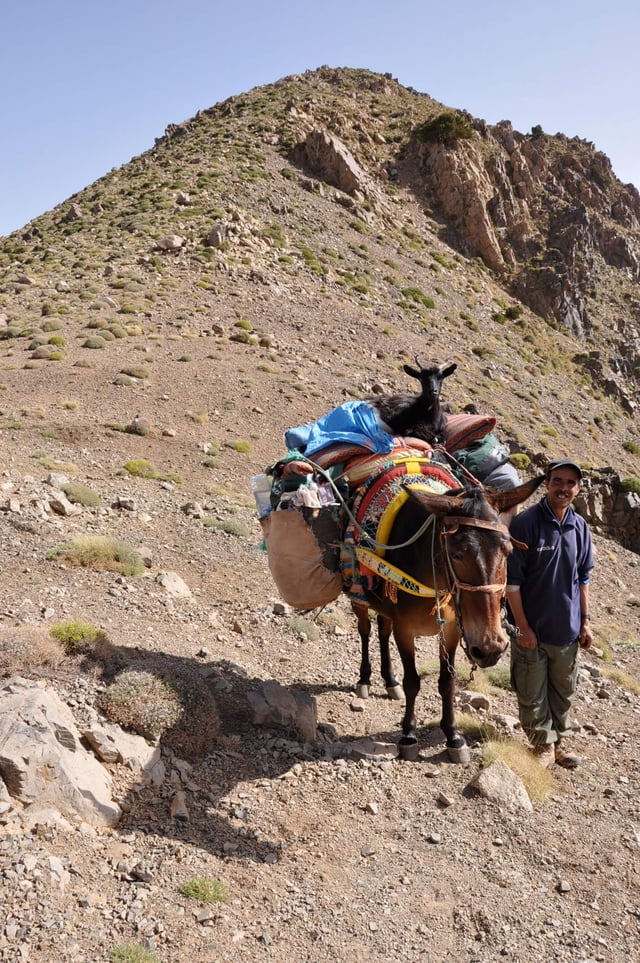
Mules carry the main soft-sided luggage and shared supplies between overnight stops. This lets you walk with a smaller daypack rather than carrying everything needed for four days.
Keep water, waterproofs, warm layers, medication, sunscreen and valuables with you during the day. Mule bags may not be accessible until the group reaches the next accommodation.
Your daypack should hold water, spare layers, waterproof clothing, sun protection, personal medication and a few snacks. A comfortable pack with a secure waist or chest strap is useful on uneven paths.
The weather can change between sheltered valleys and exposed passes, so keep both sun and rain protection close at hand. Trekking poles are optional but can help on long descents.
Children aged 10 and over may join when they are active, confident walkers and accompanied by a responsible adult. Four back-to-back mountain days can be tiring, even for children who enjoy shorter walks.
Consider the child's recent hill-walking experience, ability to manage simple accommodation and comfort on rocky ground. Share relevant experience with the team before departure so the route's suitability can be assessed honestly.
High Atlas conditions can shift quickly, especially on exposed passes. The guide monitors the weather and may adjust timings, rest points or the route to keep the group safe.
Flexibility is part of trekking in the mountains, and an alternative valley path may be used if a high crossing is unsuitable. The team will explain any changes and help the group prepare for the revised day.
Travel insurance is not included and should cover multi-day hiking at the elevations reached on this route. Look for protection that includes emergency medical treatment and mountain evacuation where available.
Read the altitude and activity limits carefully, as standard policies do not always cover trekking on remote mountain trails. Carry your policy details and emergency contact information with you.
Mountain guesthouses and gites usually provide shared sleeping areas, communal dining spaces and basic washing facilities. Hot water, heating and electricity can be limited or vary between villages.
Bring toiletries, a small towel, a head torch and a charged power bank for personal comfort. A flexible attitude to simple facilities is an important part of enjoying this village-to-village route.

Central & Atlas Mountains, Morocco
From £407

About the centre
Marrakech
Operated by Active Treks Morocco, a partner of adventuro.