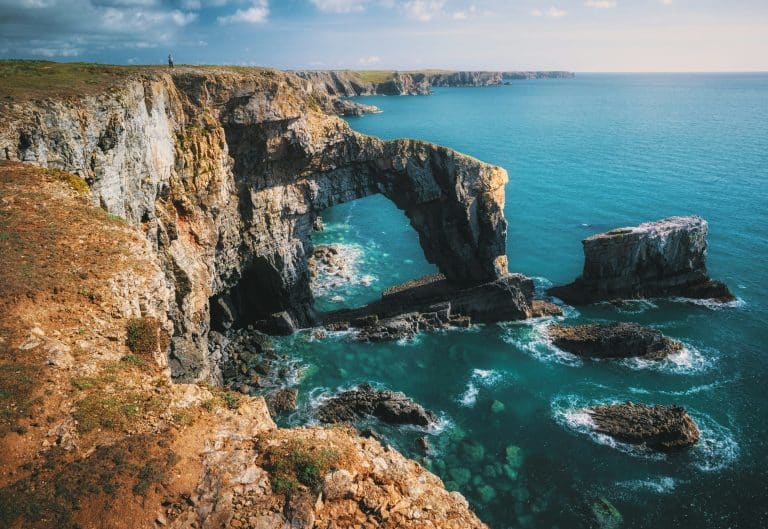
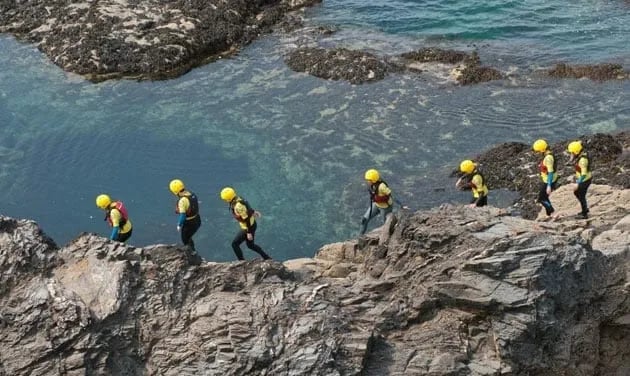
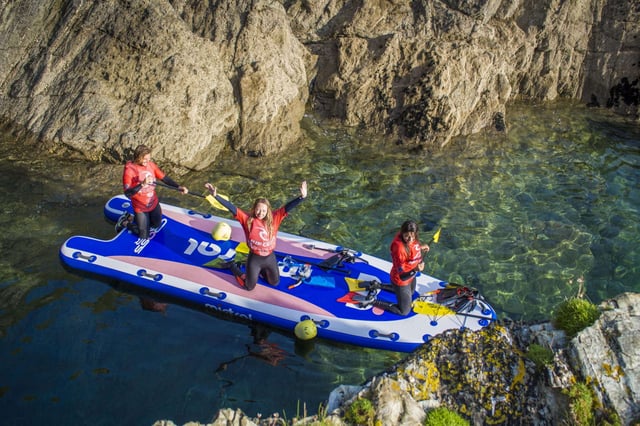
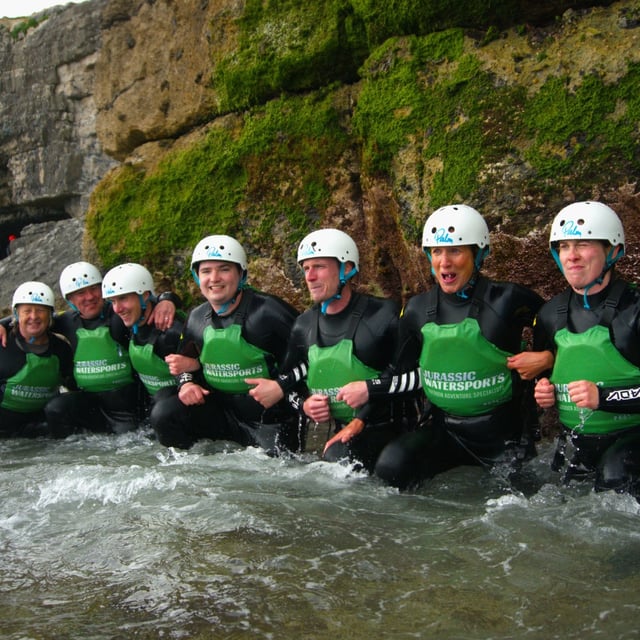
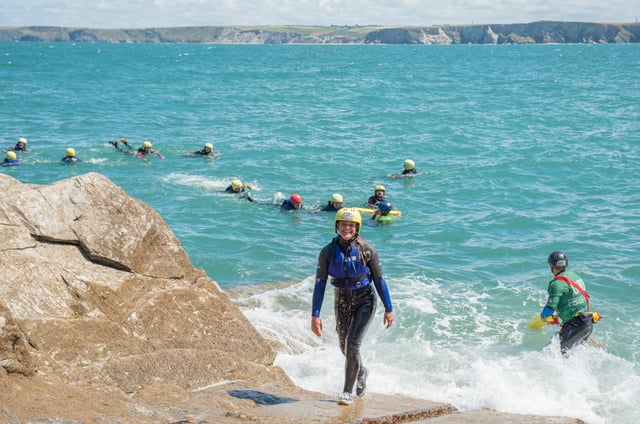
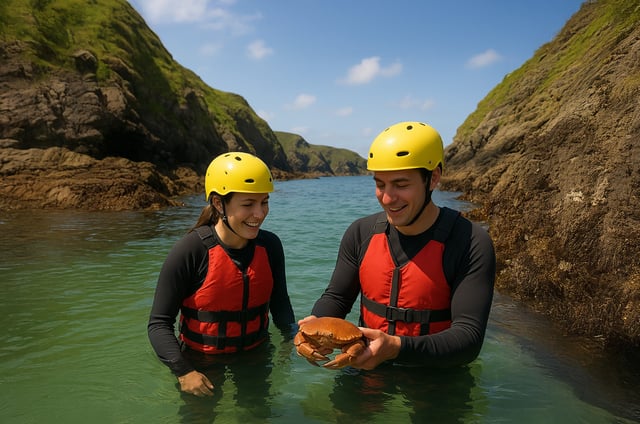
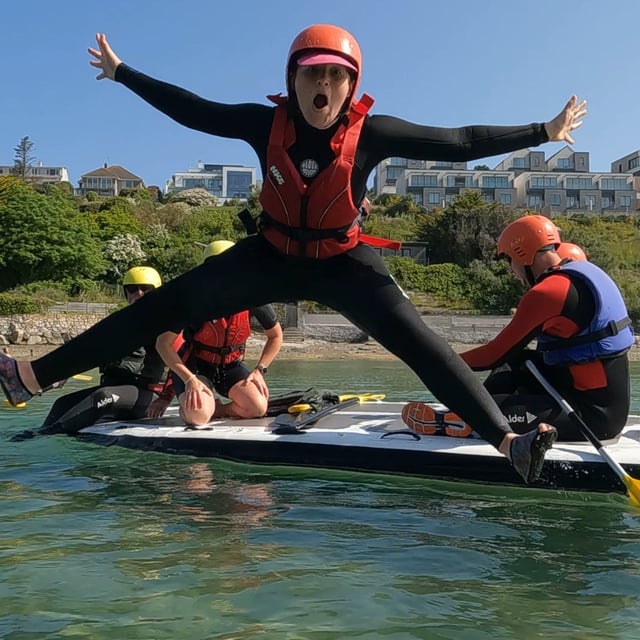
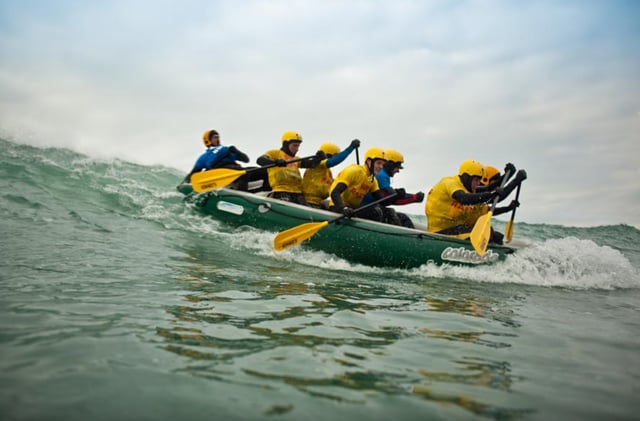
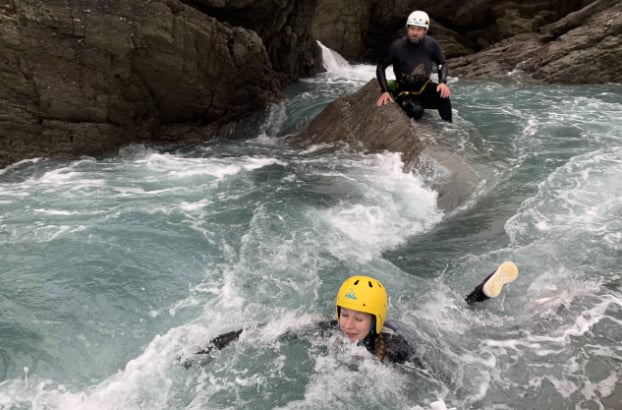
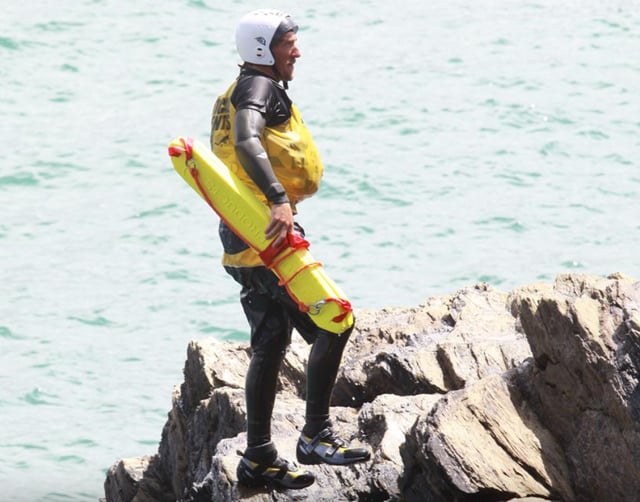
The South West has some of the finest coasteering terrain in Britain, and it doesn't take much imagination to see why. Atlantic-facing granite headlands, sea caves worn into the cliff face by a few million years of ocean, and water clear enough that you can see the bottom on the way down from a jump. Cornwall and Devon between them offer everything from gentle introduction sessions to properly committing routes for those who've done this before. The sport originated in Pembrokeshire, but the South West has made it its own.
What is coasteering?
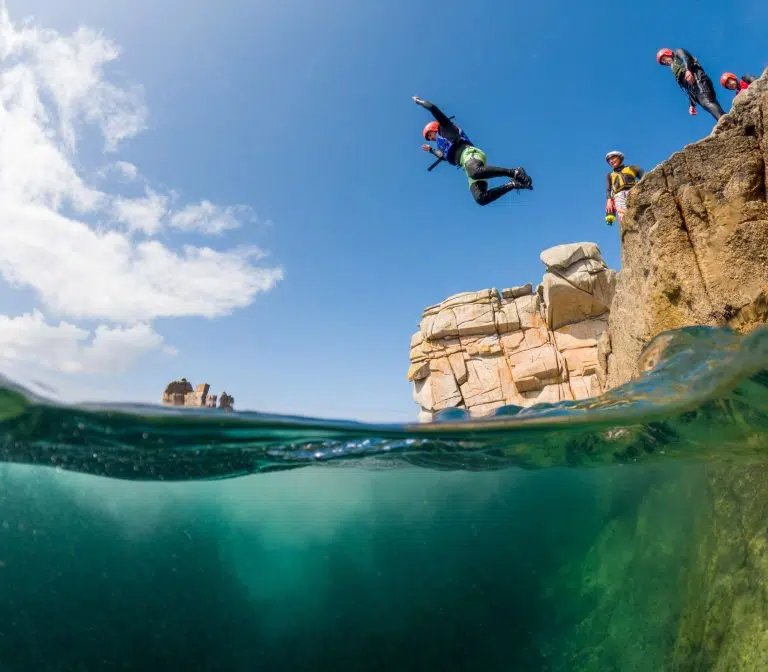
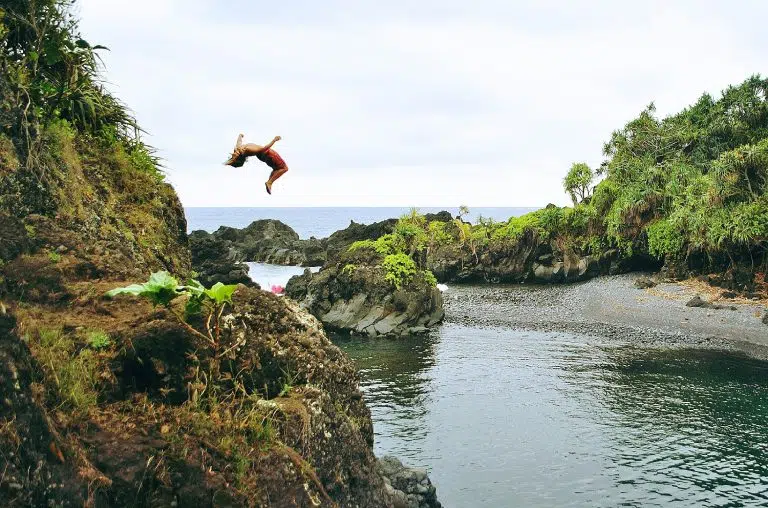
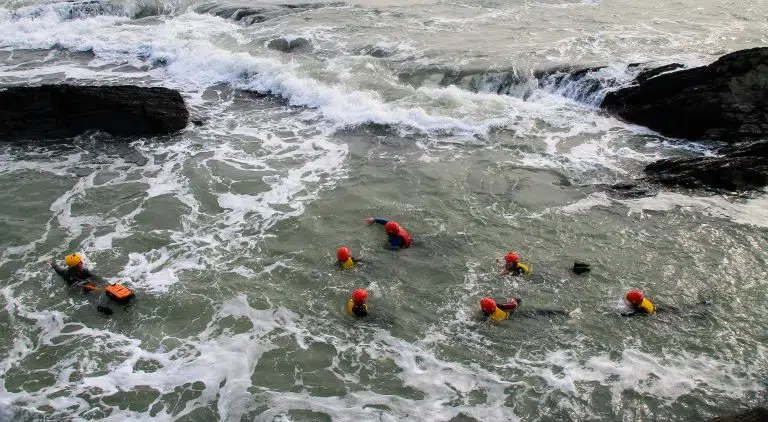
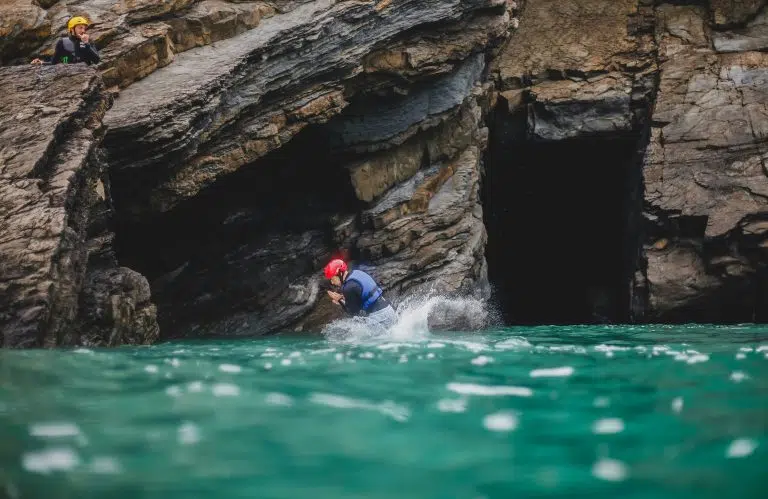
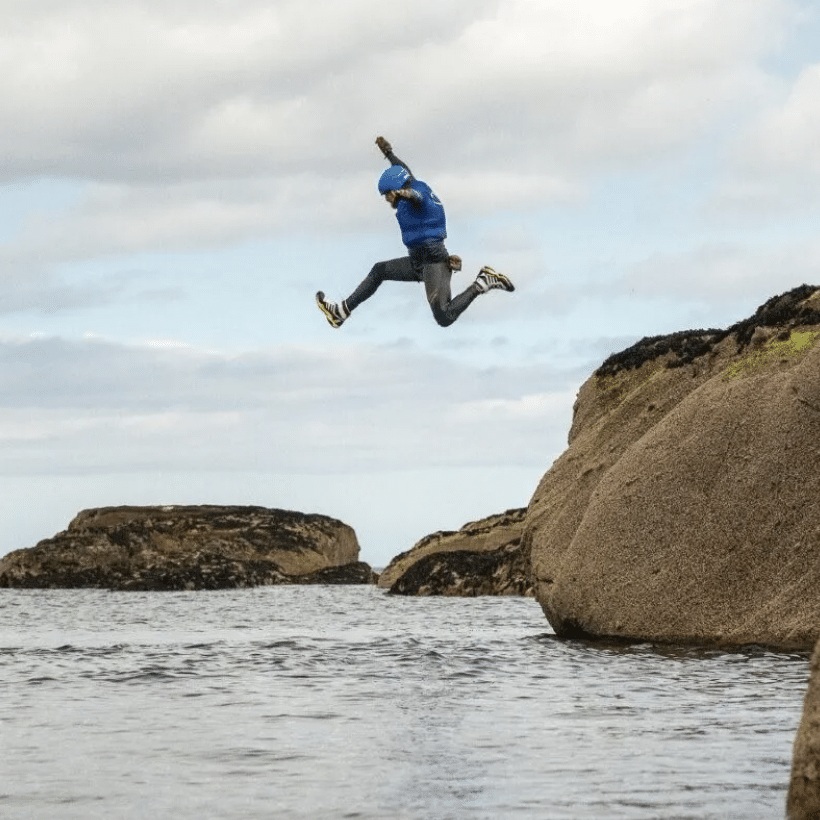
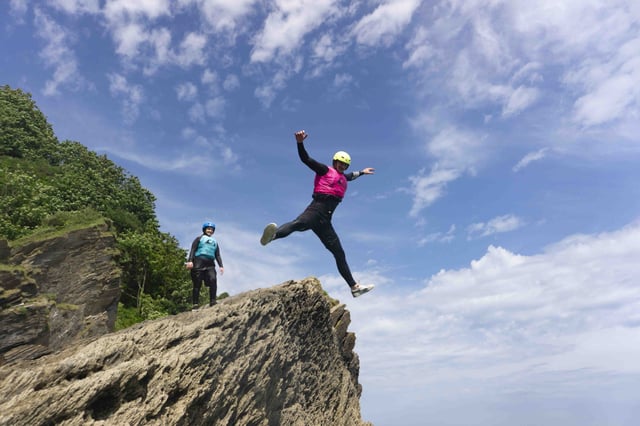
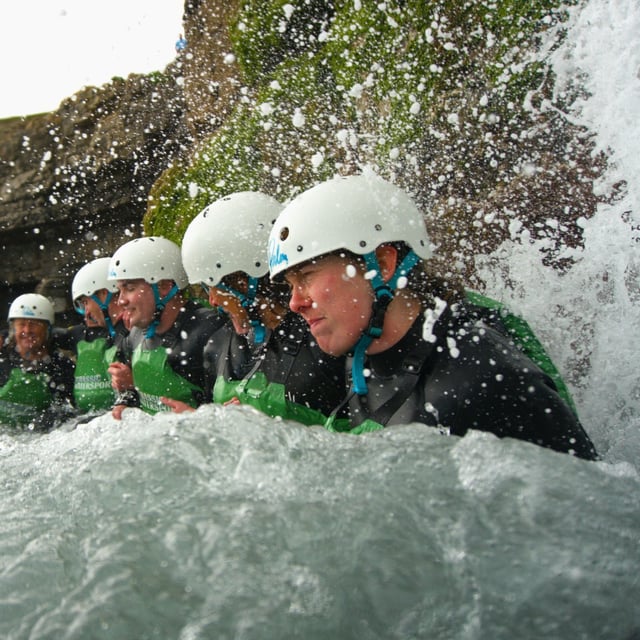
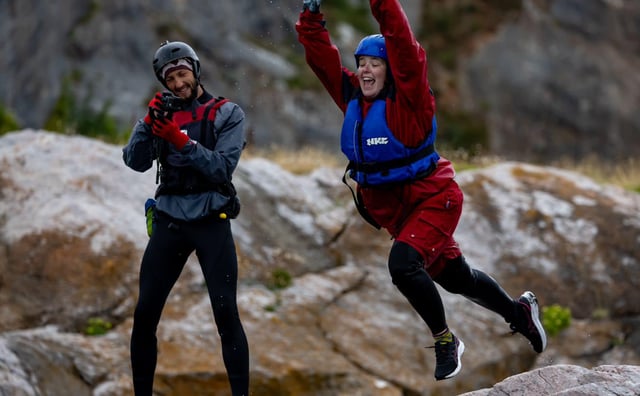
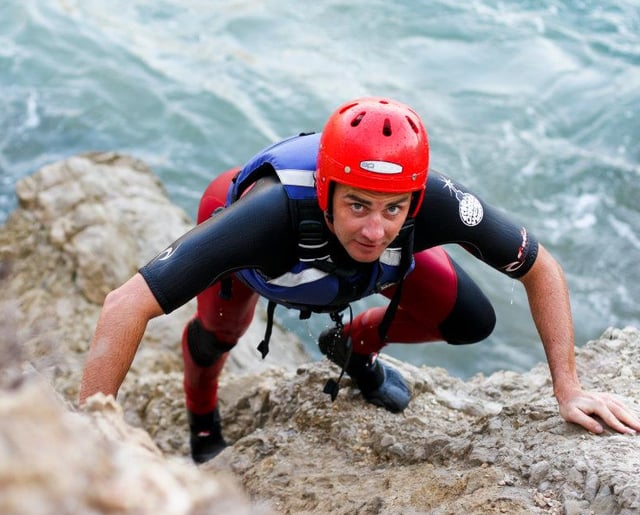
Coasteering is a guided, shore-based activity that takes you along a rocky coastline at sea level — swimming through gullies, scrambling over barnacled ledges, exploring sea caves and, where conditions allow, jumping from rock platforms into deep water. It requires no prior experience and no particular fitness level beyond a reasonable confidence in the sea. Your guide leads a small group along a pre-selected route, managing the risks around tidal windows and swell height. Jumps are graded and entirely optional — the most popular decision of many a session is whether to do the big one or watch someone else try it first.
Where to go coasteering in the South West
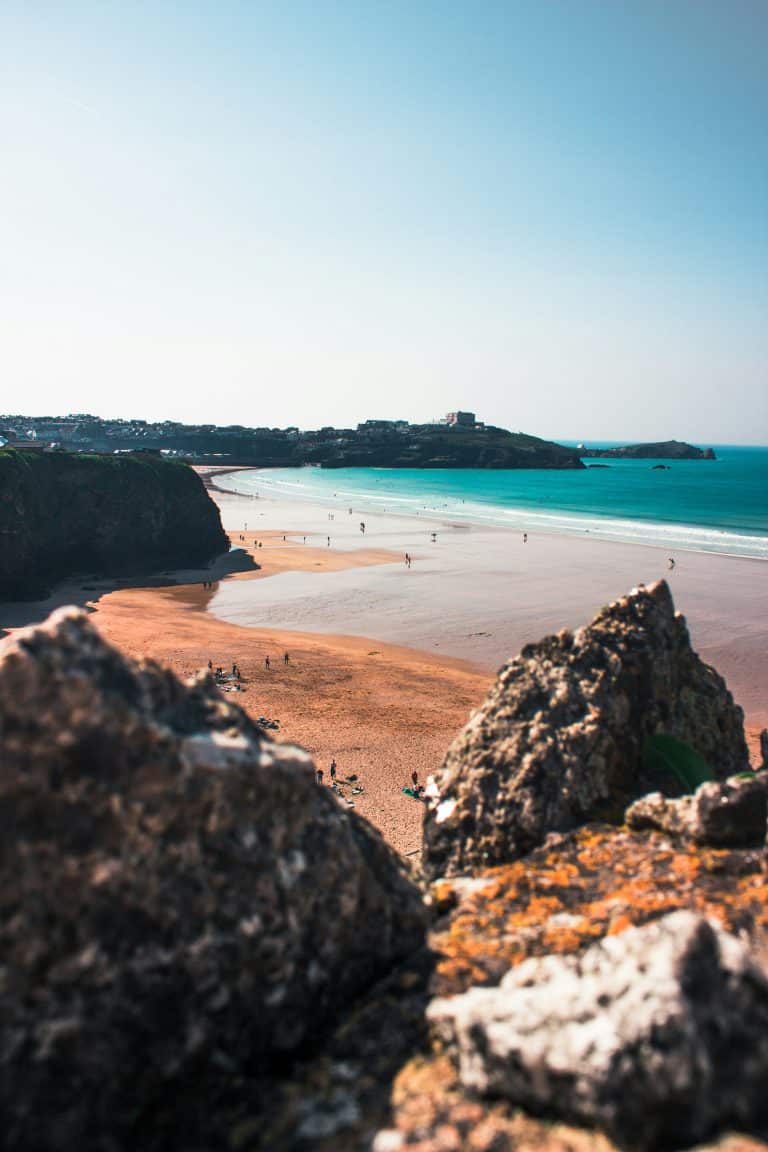
Cornwall carries the lion's share of South West coasteering. Newquay's headlands are the classic starting point — dramatic, accessible and with a good spread of difficulty. St Agnes, the Lizard Peninsula, Kynance Cove and the cliffs around Land's End all have established routes, and the geology varies from session to session. North Devon has a different character — slate and sandstone rather than granite, with Hartland Point providing particularly dramatic terrain for experienced groups. The South Devon coast, especially around Torquay's limestone and the South Hams, offers more sheltered options with interesting cave systems. The Jurassic Coast on the Dorset border has its own appeal — sandstone stacks and ledges with a geological backdrop that's hard to equal.
Conditions and safety
A qualified coasteering guide checks tide tables and swell forecasts before every session and selects the route accordingly. If conditions deteriorate — and on a coast this exposed, they can — your guide will move to a more sheltered venue or postpone. This is not excessive caution; it's how competent sea professionals operate. Groups are kept small (typically 6–8 people), guides carry first-aid kits and hold relevant rescue qualifications, and the thick wetsuits provided do an excellent job of protecting against scrapes on barnacle-covered rock as well as keeping you warm.
What to bring and what's provided
All centres provide a 5mm or thicker wetsuit, buoyancy aid and helmet. You need swimwear, old trainers or watersports shoes with good grip on wet rock (neoprene boots work well), and a towel. Leave valuables in the car — waterproof pouches are useful but cameras and watches don't always survive even the most careful coasteering session.
Coasteering centres in the South West on adventuro
- Cornwall: Kernow Coasteering, Cornish Rock Tors, Rock Solid Coasteering, Barefeet Coasteer, Newquay Activity Centre, Cornish Wave, Porthpean Outdoor, Global Boarders, Freewave Surf Academy
- Devon: North Devon Coasteering, Adventure South, Coastal Adventures, Rock and Rapid Adventures
- Dorset: Jurassic Watersports, Land & Wave