
Coasteering frente a saltos desde acantilados: comprende las diferencias
29 de julio de 2024 · 6 min de lectura · Max Hayward
Los entusiastas de los deportes de aventura suelen buscar la emoción de explorar los extremos de la naturaleza’s, y dos actividades que proporcionan una dosis considerable de adrenalina son el coasteering y el salto desde acantilados. Aunque a primera vista puedan parecer similares, son bastante distintos en cuanto a alcance, técnicas y experiencia general. Delimitemos las diferencias entre el coasteering y el salto desde acantilados.
¿Qué es el coasteering?
El coasteering es un deporte de aventura polifacético que consiste en recorrer la zona intermareal de costas rocosas mediante una combinación de natación, escalada, trepa y saltos desde acantilados. Se originó en Gales en la década de 1970 y desde entonces ha ganado popularidad en todo el mundo.
El coasteering ofrece una experiencia intensa e inmersiva, en la que los participantes atraviesan terrenos rocosos, escalan acantilados, nadan por canales y exploran cuevas marinas y barrancos. A diferencia del salto desde acantilados, que se centra únicamente en el salto, el coasteering ofrece una aventura integral que conecta a los participantes con el entorno costero.
Durante una sesión típica de coasteering, es posible que tengas que trepar por rocas escarpadas, nadar en aguas abiertas y saltar desde distintas alturas, siempre bajo la atenta supervisión de guías experimentados. Estos guías no solo garantizan tu seguridad, sino que también enriquecen la experiencia al compartir sus conocimientos sobre la vida marina y la geología locales.
¿Qué es el salto desde acantilados?
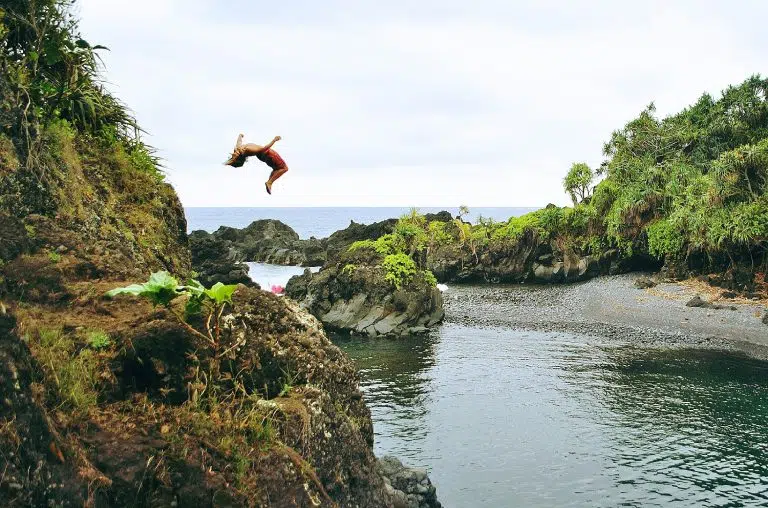
En cambio, el salto desde acantilados es una actividad sencilla que consiste en saltar desde acantilados o formaciones rocosas elevadas al agua que hay debajo. Este deporte suele practicarse como una actividad independiente en busca de emociones fuertes o como parte de otras actividades, como la natación y el senderismo. El objetivo principal es el propio salto, que requiere valor, confianza y capacidad para evaluar las zonas de aterrizaje seguras. A diferencia del coasteering, el salto desde acantilados no implica recorrer terrenos costeros ni nadar largas distancias. En su lugar, se centra en la descarga de adrenalina del salto.
La sencillez del salto desde acantilados es tanto su atractivo como su riesgo. Sin la orientación de instructores profesionales, los participantes deben evaluar por su cuenta la seguridad de los lugares de salto, incluida la profundidad del agua, los obstáculos subacuáticos y las condiciones del oleaje. Por desgracia, esto puede provocar situaciones peligrosas, especialmente entre quienes carecen de experiencia.
¿Qué es el tombstoning?
El tombstoning es una actividad extrema que consiste en saltar desde un punto elevado, normalmente un acantilado, un puente u otra estructura alta, a masas de agua naturales como el mar, ríos o lagos. El nombre “tombstoning” deriva de la posición vertical que suele adoptar quien salta, parecida a la caída de una lápida. Esta actividad es muy popular entre quienes buscan emociones fuertes por su sencillez y la descarga de adrenalina que proporciona. Sin embargo, también es conocida por sus importantes riesgos y peligros potenciales.
Se han producido numerosos incidentes en los que el tombstoning ha provocado lesiones graves o muertes. Por ejemplo, en 2018, la Guardia Costera del Reino Unido informó de que había habido 20 muertes y 70 lesiones graves relacionadas con el tombstoning durante los últimos 10 años .
Diferencias en seguridad
Una diferencia importante entre el coasteering y el salto desde acantilados radica en las medidas de seguridad estructuradas del primero, frente a la naturaleza a menudo informal del segundo. El coasteering suele realizarse en grupos dirigidos por guías experimentados que conocen bien el terreno local y los patrones de las mareas. Los participantes llevan equipo de seguridad esencial, incluidos cascos, trajes de neopreno, ayudas a la flotación y calzado adecuado. Este enfoque integral minimiza los riesgos y garantiza una experiencia más segura para todos los participantes.
En cambio, el salto desde acantilados suele hacerse de forma independiente o con amigos, por lo que quienes saltan deben evaluar su propia seguridad. Esta falta de protocolos de seguridad formales puede dar lugar a situaciones peligrosas. Recuerdo un incidente que puso de relieve estos riesgos de forma especialmente clara. Durante una salida para saltar desde acantilados, vi a dos chicas saltar desde una altura considerable y caer de espaldas completamente planas. El impacto fue grave y, al no llevar ayudas a la flotación, tuvieron dificultades para mantenerse a flote. Solo sobrevivieron gracias a la rápida intervención de otras personas que se lanzaron al agua para rescatarlas; ambas quedaron inconscientes en el agua. Este incidente subraya la importancia de contar con medidas de seguridad adecuadas y los peligros potenciales de saltar desde acantilados sin la preparación y el equipo necesarios.
Aunque el tombstoning comparte similitudes con el salto desde acantilados y algunos aspectos del coasteering, difiere considerablemente en cuanto a medidas de seguridad y estructura de la actividad. El coasteering incluye orientación profesional, sesiones informativas de seguridad y el uso de equipos de protección, como cascos y ayudas a la flotación. El salto desde acantilados, cuando se practica de forma responsable, suele incluir una evaluación minuciosa del lugar y la preparación necesaria. El tombstoning, sin embargo, se practica con frecuencia de forma impulsiva y sin estas precauciones, lo que aumenta el riesgo de accidentes.
Interacción con el entorno
El coasteering y el salto desde acantilados también se diferencian en la forma en que conectan a los participantes con el entorno costero. El coasteering te sumerge en el paisaje y te permite explorar formaciones rocosas, cuevas marinas y vida marina. La actividad fomenta una conexión profunda con la naturaleza, ya que recorres distintos elementos de la costa y experimentas la interacción dinámica entre la tierra y el mar.
El salto desde acantilados, por otro lado, se centra más en la emoción inmediata del salto y ofrece menos interacción con el entorno circundante. Aunque las vistas desde los puntos de salto pueden ser impresionantes, la actividad en sí gira en torno al instante del salto y al chapuzón posterior.
Ubicaciones y accesibilidad
El coasteering es popular en regiones con costas escarpadas y entornos marinos diversos. En el Reino Unido, zonas como Pembrokeshire, Cornwall y North Wales son famosas por sus oportunidades para practicar coasteering. Estos lugares ofrecen una variedad de rutas adaptadas a distintos niveles de habilidad, desde principiantes hasta aventureros experimentados. A nivel mundial, algunos destinos de coasteering son la Costa Brava en España, el Algarve en Portugal y las costas de Nueva Zelanda.
El salto desde acantilados está muy extendido en lugares con acantilados adecuados y aguas profundas. Entre los lugares populares se encuentran Acapulco, en México; el lago Powell, en Estados Unidos; y los acantilados de la costa Amalfitana, en Italia. Además, muchas pozas naturales, canteras y acantilados costeros de todo el mundo son lugares populares para saltar desde acantilados.
Conclusión
Tanto el coasteering como el salto desde acantilados ofrecen emociones y experiencias únicas. El coasteering es una actividad más inmersiva que combina distintos elementos de los deportes de aventura, por lo que resulta ideal para quienes desean explorar e interactuar de forma integral con el entorno costero. El salto desde acantilados, centrado exclusivamente en la emoción de lanzarse al agua, es ideal para los amantes de la adrenalina que buscan una experiencia sencilla e intensa.
Elegir entre coasteering y salto desde acantilados depende de tus preferencias en cuanto a aventura y exploración. Elijas la opción que elijas, prioriza la seguridad, utiliza el equipo adecuado y respeta el entorno natural. Ten siempre en cuenta los posibles riesgos y prepárate adecuadamente para disfrutar de una aventura emocionante y segura.