
Coasteering : toutes vos questions trouvent leur réponse
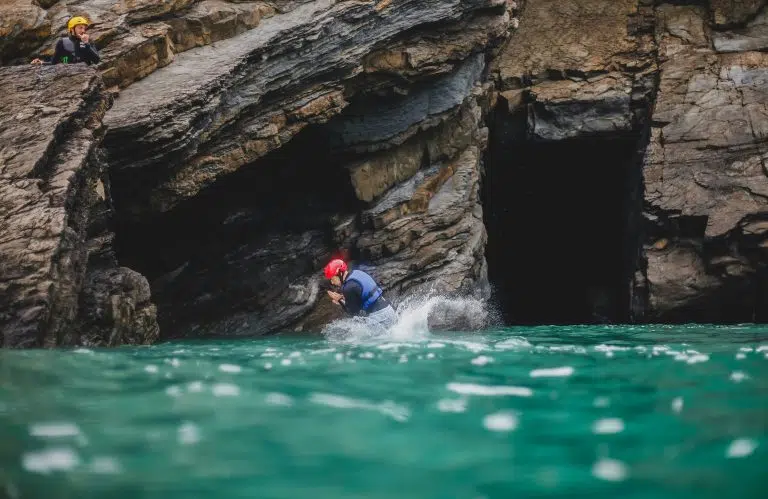
Le coasteering est un sport d’aventure qui gagne rapidement en popularité au Royaume-Uni. Le coasteering combine l’escalade, la nage et les sauts de falaise le long de parcours côtiers. Il offre une façon unique d’explorer la beauté sauvage du littoral britannique.
Ce qui distingue le coasteering, c’est son caractère immersif. Contrairement à la randonnée ou à l’escalade traditionnelles, le coasteering implique une interaction directe avec l’environnement. Il faut escalader des rochers, avancer dans des bassins soumis aux marées et plonger dans les vagues, au plus près de la nature. Ajoutez à cela le défi physique et vous obtenez une activité inoubliable.
Je souhaite répondre à certaines des questions les plus fréquemment posées (FAQ) que les débutants peuvent se poser sur le coasteering. Que vous soyez curieux d’en connaître les bases, préoccupé par la sécurité ou que vous vous demandiez comment il se compare à des activités similaires comme le canyoning et la descente de torrents, vous trouverez ici toutes les réponses.
- 1. Qu’est-ce que le coasteering ?
- 2. Le coasteering convient-il aux débutants ?
- 3. De quel équipement ai-je besoin ?
- 4. Quel doit être mon niveau de forme physique ?
- 5. Tout le monde peut-il pratiquer le coasteering ?
- 6. Le coasteering est-il sûr ?
- 7. Que dois-je porter ?
- 8. Que dois-je apporter ?
- 9. Comment choisir un prestataire de coasteering ?
- 10. Que se passe-t-il si je ne sais pas nager ?
- 11. À quoi puis-je m’attendre pendant une séance de coasteering ?
- 12. Quels sont les meilleurs sites de coasteering au Royaume-Uni ?
- 13. Que se passe-t-il si le temps est mauvais ?
- 14. Combien de temps dure une séance de coasteering ?
- 15. Quelle faune peut-on observer pendant une séance de coasteering ?
Section 1 : Débuter le coasteering
1. Qu’est-ce que le coasteering ?
Le coasteering est un sport d’aventure qui consiste à parcourir la zone intertidale de côtes rocheuses en combinant nage, escalade, progression sur les rochers et sauts. Né au pays de Galles dans les années 1970, le coasteering est devenu une activité populaire offrant une manière palpitante d’explorer les environnements côtiers.
Une séance de coasteering typique commence par l’enfilage d’une combinaison, d’un casque, d’un gilet d’aide à la flottabilité et d’autres équipements de sécurité, avant de partir avec un guide sur un itinéraire côtier défini. Les participants rencontrent différents défis, notamment :
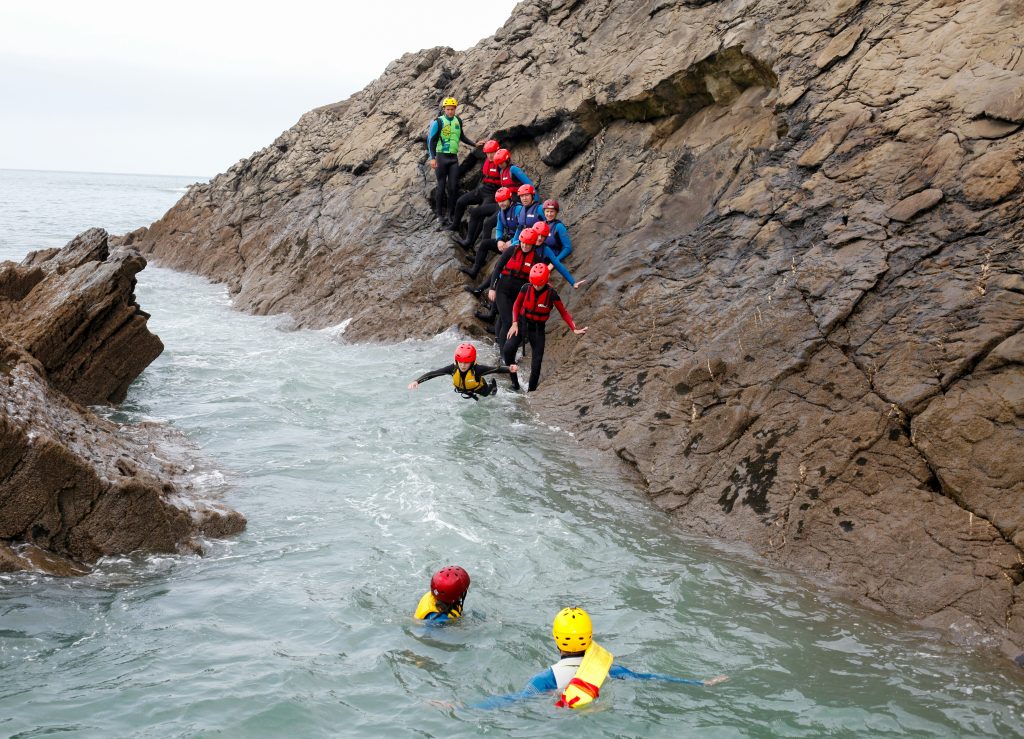
- Progression sur les rochers : Se déplacer sur un terrain rocheux demande agilité et équilibre.
- Nage en mer : De courtes traversées à la nage dans les vagues et les bassins soumis aux marées sont courantes.
- Sauts de falaise : Pour beaucoup, sauter de hauteurs dans l’eau en contrebas est un moment fort.
- Exploration de grottes marines et de ravins : Découvrez des formations côtières cachées et la vie marine.
Le coasteering présente des similitudes avec d’autres sports d’aventure comme le canyoning et la descente de torrents. Le canyoning consiste à descendre des canyons à l’aide de techniques comme la descente en rappel, la glissade et le saut, mais dans des environnements d’eau douce. La descente de torrents, quant à elle, consiste à remonter ou descendre des cours d’eau de montagne, en combinant escalade, progression dans l’eau et parfois nage dans les torrents.
2. Le coasteering convient-il aux débutants ?
Absolument ! Le coasteering est accessible à un large éventail d’âges et de conditions physiques. Les meilleurs guides sont ceux qui connaissent différents itinéraires ou savent en adapter un pour convenir aussi bien aux personnes très confiantes qu’à celles qui le sont moins.
- Pour les enfants : De nombreux prestataires de coasteering proposent des itinéraires adaptés aux familles et aux enfants dès 8 ans. Ces itinéraires privilégient une progression douce sur les rochers, des sauts sécurisés depuis de faibles hauteurs et des passages en eau peu profonde. La sécurité est prioritaire : les enfants sont toujours étroitement surveillés par des guides expérimentés, qui veillent à ce qu’ils restent dans leur zone de confort.
- Pour différentes conditions physiques : Le coasteering convient à différents niveaux de forme physique. Pour les personnes en surpoids ou moins sportives, des itinéraires pour débutants sont spécialement conçus pour être moins éprouvants, en évitant les escalades trop difficiles et les longues traversées à la nage. L’objectif est de s’amuser et de découvrir le milieu côtier plutôt que de repousser ses limites physiques. Les guides sont formés pour aider tous les participants et adapter l’expérience à leurs besoins.
- Débutants et expériences de niveau supérieur : Les débutants découvrent les bases du coasteering sur des itinéraires faciles, avec une progression peu exigeante sur les rochers et des sauts modérés. Ces séances permettent de prendre confiance et de se familiariser avec les techniques nécessaires aux itinéraires plus avancés. Pour ceux qui recherchent une aventure plus intense, les expériences de niveau supérieur comprennent des escalades plus difficiles, des sauts plus hauts et des traversées à la nage plus longues, qui exigent une meilleure condition physique et davantage d’expérience.
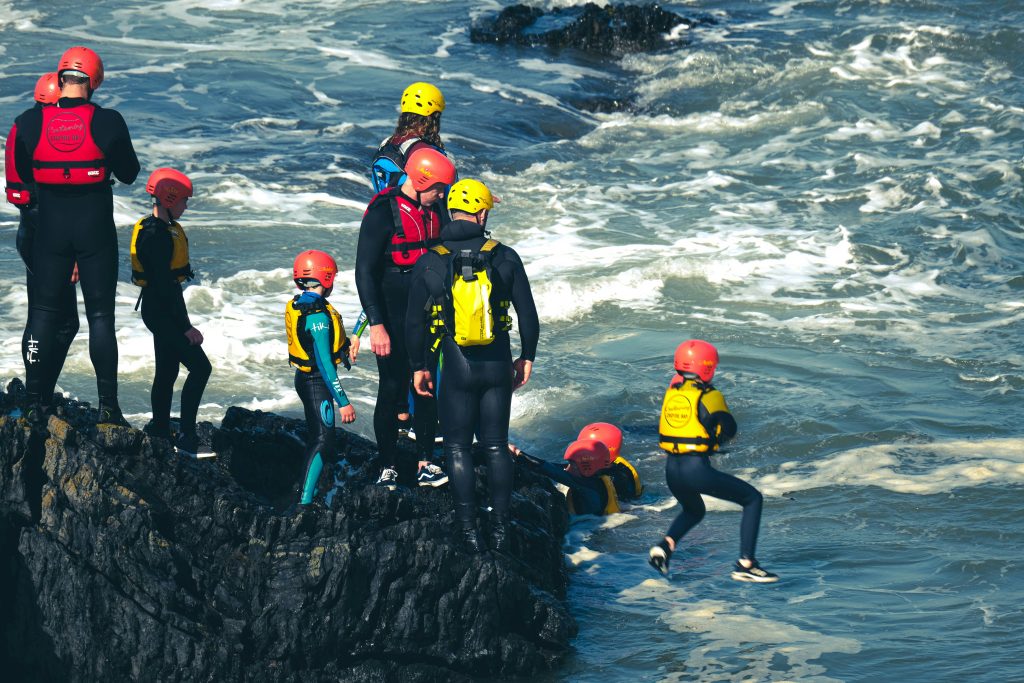
Choisir le bon guide et le bon lieu est essentiel pour vivre une expérience réussie. Recherchez des prestataires de coasteering agréés qui proposent des séances pour débutants et jouissent d’une bonne réputation en matière de sécurité et de professionnalisme. Parmi les sites du Royaume-Uni adaptés aux débutants figurent Pembrokeshire, Anglesey et Cornwall, où le relief côtier offre un équilibre parfait entre sensations fortes et accessibilité.
3. De quel équipement ai-je besoin ?
Pour pratiquer le coasteering en toute sécurité et dans de bonnes conditions, il est essentiel de disposer du bon équipement. Voici ce qu’il vous faut :
- Équipement indispensable :
- Combinaison : Une combinaison de bonne qualité est indispensable pour vous tenir chaud et vous protéger des surfaces rocheuses rugueuses. Elle offre également une certaine flottabilité dans l’eau.
- Casques : Protéger votre tête est une priorité, car vous progresserez sur les rochers et pourrez effectuer des sauts.
- Gilets d’aide à la flottabilité : Ils vous aident à rester à flot et apportent une sécurité supplémentaire.
- Éléments facultatifs, mais recommandés :
- Gants : Des gants en néoprène peuvent protéger vos mains des éraflures et de l’eau froide, surtout dans des conditions difficiles.
- Chaussures aquatiques : Des chaussures aquatiques solides et antidérapantes offrent une excellente adhérence sur les rochers glissants et protègent vos pieds
La plupart de nos prestataires de coasteering fournissent l’équipement dans le prix de la séance ; pensez donc à consulter la FAQ sur la page de l’activité.
4. Quel doit être mon niveau de forme physique pour pratiquer le coasteering ?
Le coasteering combine progression sur les rochers, nage en mer et parfois sauts depuis des hauteurs. En tant que débutant, vous n’avez pas besoin d’être un athlète, mais une condition physique raisonnable vous aidera à mieux profiter de l’expérience. Les exigences de base comprennent :
- Endurance : Vous devez pouvoir marcher ou faire une randonnée d’environ une heure sans ressentir de fatigue excessive.
- Natation : Être à l’aise dans l’eau est important. Sans avoir besoin d’être un nageur expert, vous devez pouvoir nager de courtes distances (environ 20 mètres) en eau libre.
- Mobilité : Vous devrez être suffisamment agile pour vous déplacer sur un terrain rocheux et escalader de petites sections.
- Comment vous préparer physiquement avant votre première séance : si vous êtes nerveux, mais souhaitez tenter l’expérience, envisagez de faire certains des exercices suivants à l’avance :
- Faites du jogging, de la natation ou du vélo pour améliorer votre endurance ; commencez par 30 min deux fois par semaine.
- Pratiquez des exercices qui renforcent la sangle abdominale, comme les planches, les squats et les fentes
- Si vous n’êtes pas un nageur très sûr de vous, passez du temps à votre piscine locale à pratiquer les nages de base et à vous sentir à l’aise dans l’eau.
5. Tout le monde peut-il pratiquer le coasteering ?
Le coasteering est conçu pour être accessible et agréable au plus grand nombre. Cependant, certains éléments importants concernant l’âge, la santé et l’accessibilité doivent être pris en compte :
- Considérations relatives à l’âge et à la santé :
- Âge : De nombreux prestataires de coasteering proposent des séances pour les enfants dès 8 ans, à condition qu’ils soient accompagnés d’un adulte. Pour les adolescents et les adultes, il n’y a pas de limite d’âge supérieure, tant qu’ils remplissent les conditions physiques de base.
- Santé : Il est important d’être en bonne santé générale. Les personnes souffrant de problèmes cardiaques, d’asthme sévère ou d’autres problèmes médicaux graves doivent consulter un professionnel de santé avant de participer. Si vous avez des problèmes de santé, informez toujours votre guide à l’avance afin qu’il puisse adapter l’expérience à vos besoins.
- Grossesse : Le coasteering est généralement déconseillé pendant la grossesse.
- Accessibilité pour les personnes en situation de handicap : Le coasteering peut être adapté à certains handicaps afin de garantir une expérience inclusive :
- Handicaps physiques : Certains prestataires proposent des séances personnalisées pour les personnes ayant un handicap physique, avec notamment des itinéraires adaptés évitant les obstacles les plus difficiles et un accompagnement supplémentaire des guides.
- Handicaps cognitifs : Les prestataires peuvent également adapter les séances pour les personnes ayant un handicap cognitif, en proposant une surveillance accrue et des consignes simplifiées afin de garantir une expérience sûre et agréable.
- Si vous avez des besoins particuliers, vous pouvez en informer l’équipe adventuro et nous serons ravis de vous aider.
6. Le coasteering est-il sûr ?
La sécurité est une priorité absolue en coasteering et, lorsqu’il est pratiqué sous la supervision de professionnels, ce sport est sûr et exaltant. Comme tout sport d’aventure, le coasteering comporte des risques inhérents, mais les incidents sont relativement rares lorsque les protocoles de sécurité sont respectés. La plupart des incidents sont mineurs et peuvent être rapidement pris en charge par des guides expérimentés.
Voici quelques mesures et consignes de sécurité essentielles pour garantir une expérience sûre et agréable
- Mesures et consignes de sécurité :
- Encadrement professionnel : Pratiquez toujours le coasteering avec un guide certifié, formé aux premiers secours et aux procédures d’urgence. Les guides connaissent bien le terrain local et les conditions maritimes.
- Équipement adapté : Portez l’équipement de sécurité approprié, notamment un casque et un gilet d’aide à la flottabilité. Ces équipements vous protègent des chocs, assurent votre flottabilité et vous tiennent chaud.
- Briefing avant la séance : Avant le départ, les guides organisent un briefing de sécurité complet expliquant l’itinéraire, les dangers potentiels et les bonnes techniques d’escalade, de nage et de saut.
- Limitation de la taille des groupes : Pour garantir la sécurité, les groupes de coasteering sont restreints et comptent généralement 10 participants au maximum par guide. Cela permet une meilleure supervision et une attention plus personnalisée.
- Vigilance concernant la météo et les marées : Les séances sont planifiées en fonction de conditions météorologiques et de marée favorables. De fortes vagues, des courants puissants et une mauvaise visibilité peuvent entraîner le report ou l’annulation d’une séance pour des raisons de sécurité.
- Blessures courantes et leurs causes : Les blessures graves sont rares, mais certaines blessures légères sont fréquentes :
- Coupures et éraflures : Elles sont souvent causées par des rochers tranchants et des bernacles.
- Ecchymoses : Elles résultent de glissades ou de chutes sur des surfaces rocheuses. Les casques et les gilets d’aide à la flottabilité protègent contre les chocs plus importants.
- Entorses et foulures : Elles surviennent généralement à la suite de glissades ou de réceptions maladroites lors des sauts. Des chaussures adaptées et des conseils sur les techniques de saut sûres peuvent réduire ces risques.
- Hypothermie : Elle peut être à craindre dans une eau froide. Porter une combinaison adaptée et maintenir les séances à une durée raisonnable aide à la prévenir.
Veillez à toujours écouter votre guide pendant la séance. Il ne vous forcera jamais à faire quelque chose qui vous met mal à l’aise et il existe *généralement* un passage plus facile si nécessaire.
7. Que dois-je porter pour pratiquer le coasteering ?
Porter des vêtements adaptés est essentiel pour votre confort et votre sécurité pendant la séance. Voici ce que vous devriez porter :
- Tenue adaptée au coasteering :
- Combinaison : Une combinaison bien ajustée est indispensable. Elle offre une isolation thermique, de la flottabilité et une protection contre les éraflures. Au Royaume-Uni, une combinaison de 5mm est recommandée pendant la majeure partie de l’année, mais une combinaison plus fine peut convenir en été.
- Casque : Un casque robuste protège votre tête des chocs contre les rochers et autres impacts.
- Gilet d’aide à la flottabilité : Il vous aide à flotter facilement et apporte une sécurité supplémentaire.
- Gants et chaussettes en néoprène : Ils apportent davantage de chaleur et protègent vos mains et vos pieds des rochers tranchants et de l’eau froide.
- Conseils pour rester à l’aise et en sécurité :
- Superposez les couches : Par temps froid, portez un haut thermique ou une première couche sous votre combinaison pour avoir plus chaud.
- Chaussures adaptées : Portez des chaussures aquatiques solides ou des baskets offrant une bonne adhérence pour vous déplacer en toute sécurité sur les rochers glissants.
- Évitez les vêtements amples : Les vêtements amples peuvent s’accrocher aux rochers ; privilégiez donc une tenue près du corps.
- Hydratez-vous et faites le plein d’énergie : Buvez beaucoup d’eau et prenez un repas léger avant la séance pour maintenir votre niveau d’énergie.
8. Que dois-je apporter pour pratiquer le coasteering ?
Préparer les bons articles peut rendre votre expérience de coasteering plus agréable et moins stressante. Voici ce qu’il faut apporter et ce qu’il vaut mieux laisser à la maison :
- Articles indispensables à emporter :
- Serviette et vêtements secs : Après la séance, vous voudrez vous sécher et enfiler quelque chose de chaud et confortable.
- Eau et encas : Rester hydraté et prendre un encas après le coasteering favorise la récupération.
- Protection solaire : Même par temps nuageux, les rayons UV peuvent être forts près de l’eau. Apportez de la crème solaire résistante à l’eau et un chapeau pour vous protéger.
- Médicaments personnels : Si vous avez des besoins médicaux particuliers, comme un inhalateur pour l’asthme, veillez à l’emporter et à en informer votre guide.
- À laisser à la maison :
- Objets de valeur : Laissez vos bijoux, montres et appareils électroniques non indispensables à la maison pour éviter de les perdre dans l’eau.
- Sacs lourds : Prenez uniquement un sac léger et étanche pour vos affaires essentielles, car les sacs lourds peuvent être encombrants.
9. Comment choisir un prestataire de coasteering ?
Choisir le bon prestataire de coasteering est essentiel pour vivre une expérience sûre et agréable. Voici les principaux critères à prendre en compte ainsi que quelques prestataires recommandés au Royaume-Uni :
- Certifications et expérience : Si vous venez avec des enfants, vérifiez que le prestataire est certifié par l’Adventure Activities Licensing Authority (AALA) et qu’il emploie des guides expérimentés et qualifiés.
- Bilan de sécurité : Recherchez des prestataires affichant un solide bilan en matière de sécurité et des avis positifs de participants précédents.
- Qualité de l’équipement : Vérifiez que le prestataire fournit du matériel de sécurité de qualité, notamment des combinaisons, des casques et des gilets d’aide à la flottabilité.
- Taille du groupe : Les groupes plus petits permettent une meilleure supervision et une expérience plus personnalisée.
- Lieu et variété des itinéraires : Choisissez des prestataires proposant des itinéraires adaptés à votre niveau et à vos préférences.
10. Que se passe-t-il si je ne sais pas nager ? Puis-je quand même participer ?
Ne pas être un nageur sûr de soi ne doit pas vous empêcher de découvrir les sensations fortes du coasteering. Voici ce qu’il faut savoir sur les exigences en matière de natation et l’accompagnement disponible pour les non-nageurs :
- Exigences en matière de natation :
- Même si savoir nager est un atout, de nombreux prestataires de coasteering proposent des itinéraires adaptés aux non-nageurs ou aux personnes ayant des capacités limitées en natation. En général, vous devez être à l’aise dans l’eau et savoir flotter avec un gilet d’aide à la flottabilité.
- Pendant la séance, il peut y avoir de courtes traversées à la nage en eau calme, mais elles sont généralement accessibles grâce au gilet de flottabilité. Le gilet vous maintient à flot et les guides restent toujours à proximité pour vous aider.
- Alternatives et accompagnement pour les non-nageurs :
- Accompagnement par un guide : Les guides professionnels sont formés pour aider les non-nageurs pendant toute la séance. Ils vous aideront à traverser les passages aquatiques en toute sécurité et vous proposeront des itinéraires alternatifs pour éviter les portions de nage plus difficiles.
- Itinéraires en eau peu profonde : Choisissez des itinéraires privilégiant la progression et l’escalade sur les rochers plutôt que la nage en eau profonde. De nombreux itinéraires de coasteering adaptés aux débutants se concentrent davantage sur le parcours du littoral que sur les longues traversées à la nage.
- Prise de confiance : Les guides commencent souvent les séances par des exercices simples pour se familiariser avec l’eau et vous aider à vous sentir plus à l’aise. Cela peut inclure des techniques de flottaison et de courtes nages encadrées.
- Dynamique de groupe : Pratiquer le coasteering en groupe offre davantage de sécurité et de soutien. Les autres participants et les guides peuvent vous encourager et vous apporter une aide concrète, afin que vous vous sentiez en sécurité tout au long de l’aventure.
En communiquant à l’avance vos capacités en natation au prestataire, vous vous assurez qu’il adaptera la séance à votre niveau de confort et pourrez profiter du coasteering en toute sécurité et confiance.
Section 3 : L’expérience du coasteering
11. À quoi puis-je m’attendre pendant une séance de coasteering ?
Une séance de coasteering typique regorge de sensations fortes et d’activités variées. Voici, étape par étape, ce à quoi vous pouvez vous attendre :
- Arrivée et briefing :
- Accueil : À votre arrivée, vous rencontrerez vos guides et les autres participants.
- Briefing de sécurité : Les guides présenteront en détail l’itinéraire, les dangers potentiels et l’utilisation correcte de l’équipement.
- Équipement : Vous serez équipé d’une combinaison, d’un casque, d’un gilet d’aide à la flottabilité et de tout autre matériel nécessaire.
- L’aventure en coasteering :
- Progression sur les rochers : La séance commence souvent par le franchissement de rivages rocheux, l’escalade de blocs et le parcours de sentiers côtiers.
- Nage en mer : Selon l’itinéraire, vous pourrez nager de courtes distances en mer. Ces traversées se font généralement entre des zones rocheuses et restent accessibles à tous les niveaux.
- Sauts de falaise : Moment fort pour beaucoup, le saut de falaise consiste à se jeter dans la mer depuis différentes hauteurs. Les guides vous montreront les techniques de saut sûres et proposeront des options adaptées à chaque niveau de confiance.
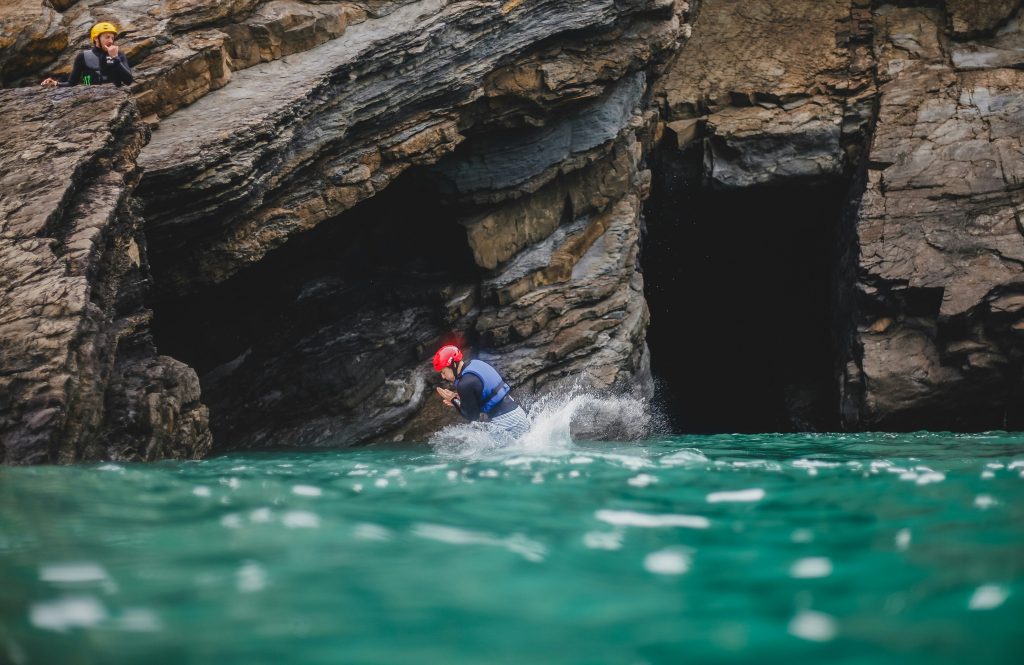
- Exploration de grottes et de ravins : Vous aurez l’occasion d’explorer des grottes marines cachées et des ravins étroits, ce qui enrichira l’aventure et vous permettra de découvrir des portions du littoral autrement inaccessibles.
- Fin de la séance :
- Retour au point de départ : Une fois l’itinéraire terminé, vous reviendrez au point de départ.
- Retrait de l’équipement et bilan : Vous retirerez et rendrez votre équipement, puis participerez à un bilan au cours duquel les guides reviendront sur l’expérience et vous donneront leurs commentaires.
12. Quels sont les meilleurs sites de coasteering au Royaume-Uni ?
Le Royaume-Uni possède certains des meilleurs sites de coasteering, chacun offrant des paysages et des défis uniques. Voici quelques sites incontournables :
- Pembrokeshire, pays de Galles :
- Considéré comme le berceau du coasteering, le Pembrokeshire offre des falaises sauvages, des grottes marines et des eaux préservées. Parmi les sites populaires figurent la Blue Lagoon, la baie d’Abereiddy et Stackpole Quay.
- Cornwall :
- Anglesey, au nord du pays de Galles :
- Anglesey offre des itinéraires variés, avec de spectaculaires arches marines, des criques isolées et une faune abondante. C’est un endroit idéal pour les débutants comme pour les adeptes expérimentés du coasteering.
- Devon :
- Le littoral du nord du Devon, notamment autour de Ilfracombe et de Croyde, offre d’excellentes possibilités de coasteering, avec des falaises impressionnantes et des formations rocheuses spectaculaires.
- Écosse
- Explorez des promontoires rocheux, escaladez des îles soumises aux marées et plongez dans l’aventure de coasteering sur la côte de l’East Lothian
13. Et si la météo est mauvaise ?
Les conditions météorologiques jouent un rôle important dans le coasteering. Voici comment le mauvais temps affecte le coasteering et quelles mesures sont généralement prévues :
- Impact de la météo :
- Fortes vagues et courants puissants : Une mer agitée peut rendre le coasteering dangereux et entraîner l’annulation ou la modification de l’itinéraire.
- Mauvaise visibilité : Le brouillard ou les fortes pluies peuvent réduire la visibilité et accroître le risque d’accident.
- Politiques d’annulation et de report :
- La plupart des prestataires proposent des conditions flexibles, permettant de reporter les séances ou d’obtenir un remboursement en cas de mauvais temps.
- Il est toujours préférable de vérifier la politique du prestataire concernant la météo au moment de la réservation et de suivre les prévisions météorologiques à l’approche de votre séance.
14. Combien de temps dure une séance de coasteering ?
La durée d’une séance de coasteering peut varier selon l’itinéraire et la dynamique du groupe :
- Durée habituelle :
- Une séance standard de coasteering dure généralement entre 2 et 3 heures.
- Certains prestataires proposent des expériences d’une demi-journée ou d’une journée complète, av
- ec des pauses incluses pour les séances plus longues.
- Facteurs influençant la durée :
- Taille du groupe : Les groupes plus nombreux peuvent mettre davantage de temps à parcourir l’itinéraire.
- Niveau d’expérience : Les groupes de débutants peuvent avoir besoin de plus de temps pour les explications et les briefings de sécurité.
- Sur adventuro, veuillez consulter les détails de la page de l’activité, où la durée approximative sera indiquée.
15. Quelle faune pouvez-vous observer pendant une séance de coasteering ?
Le coasteering permet d’approcher la faune, aussi bien au-dessus qu’en dessous de la ligne de flottaison. La diversité du littoral britannique abrite une multitude d’espèces marines et côtières, faisant de chaque aventure de coasteering un véritable safari animalier potentiel. Voici un aperçu détaillé de ce que vous pourriez observer et de la manière d’interagir de façon responsable avec la faune :
- Rencontres avec la faune :
- Mammifères marins :
- Phoques : Les phoques communs (Phoca vitulina) et les phoques gris (Halichoerus grypus) sont fréquemment observés le long du littoral britannique. Ces animaux curieux nagent souvent près des groupes de coasteering, offrant un spectacle mémorable.
- Dauphins et marsouins : Bien que moins fréquents, les grands dauphins (Tursiops truncatus) et les marsouins communs (Phocoena phocoena) peuvent parfois être aperçus dans les eaux côtières.
- Oiseaux marins :
- Macareux : Dans certaines régions comme le Pembrokeshire et le Northumberland, vous pourrez apercevoir des macareux (Fratercula arctica) nichant sur les falaises pendant leur période de reproduction, d’avril à juillet.
- Mouettes et sternes : Diverses espèces de mouettes et de sternes sont communes ; on les voit souvent plonger pour attraper des poissons ou se percher sur des formations rocheuses.
- Cormorans et cormorans huppés : Ces oiseaux sont fréquemment observés en train de sécher leurs ailes sur les rochers après avoir plongé à la recherche de poissons.
- Animaux des mares rocheuses :
- Étoiles de mer et oursins : Les étoiles de mer (Asteroidea) et les oursins (Echinoidea) sont courants dans les zones intertidales, souvent accrochés aux rochers des mares rocheuses.
- Crabes et homards : Diverses espèces de crabes, notamment le crabe vert commun (Carcinus maenas), et parfois des homards (Homarus gammarus), peuvent être aperçus se déplaçant sur le fond marin.
- Anémones et balanes : Les anémones de mer (Actiniaria) et les balanes (Cirripedia) sont fréquemment observées fixées aux rochers, ajoutant des couleurs éclatantes au paysage sous-marin.
- Poissons :
- Blennies et gobies : De petits poissons comme les blennies (Blenniidae) et les gobies (Gobiidae) sont souvent observés virevoltant dans les mares rocheuses.
- Labres et lieus jaunes : De plus gros poissons, comme les labres (Labridae) et les lieus jaunes (Pollachius pollachius), peuvent parfois être aperçus dans les eaux plus profondes pendant les baignades.
- Mammifères marins :
Interaction responsable :
- Gardez vos distances : Observez toujours la faune à une distance respectueuse afin d’éviter de la stresser ou de la déranger. Par exemple, les phoques peuvent devenir anxieux si vous vous approchez trop près, ce qui pourrait les amener à abandonner leur lieu de repos.
- Ne nourrissez pas les animaux : Nourrir la faune peut perturber ses comportements et son régime alimentaires naturels. La nourriture humaine est souvent inadaptée aux animaux et peut entraîner des problèmes de santé.
- Respectez les habitats : Évitez de toucher les organismes marins fragiles ou de marcher dessus, ainsi que leurs habitats. Par exemple, certaines anémones de mer et balanes sont sensibles aux perturbations et peuvent être facilement endommagées.
- Ne laissez aucune trace : Veillez à laisser l’environnement dans l’état où vous l’avez trouvé. Emportez tous vos déchets et évitez de ramasser des coquillages ou d’autres éléments naturels qui font partie de l’écosystème.
- Informez-vous et sensibilisez les autres : Renseignez-vous sur la faune que vous pourriez rencontrer et partagez ces connaissances avec les autres. Comprendre le comportement et les besoins des animaux marins peut enrichir votre expérience de coasteering et favoriser les efforts de conservation.
15. Le coasteering est-il réservé aux débutants ?
Absolument pas ! Nous avons d’excellents guides sur adventuro qui sauront vous mettre au défi. Nous proposons même du coasteering de nuit !