SHY
A great course delivered by Artur for anyone wanting the basics of power boating or to get their ICC. Being in the Thames you also get to experience most of the key London landmarks. I would definitely recommend AMR Marine!

We partner with Rewilding Britain to help protect our natural spaces for future adventures.
All centres are vetted for safety and quality. Your adventure is in good hands with adventuro.


The Short Range Certificate is the minimum qualification you need to operate a marine VHF radio on a UK flagged vessel. In one day at a Thameside London clubhouse you study the syllabus, practise on training radios, and sit the examination before you leave.
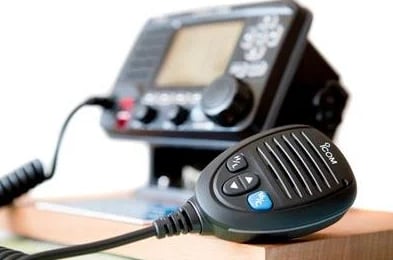
You spend the day at the Thameside clubhouse rather than on the water. The morning is taught study: radio rules, channels, and the phrases you will need when it matters. After that you pick up modified marine radios and work through the same buttons you will meet in the exam, from volume and squelch to DSC distress.
The examination follows the teaching. You sit a written paper and a practical assessment on the radio. If you have already completed the study component with another provider, you can still take the examination here. Online study is also offered, with the exam still held at the clubhouse. Dates and start times are on the booking calendar. Wear comfortable clothing for a full day indoors and bring lunch or money for nearby shops.
The clubhouse sits at Shadwell Pierhead on Glamis Road, beside Shadwell Basin, a short hop from Tower Bridge and the Thames. You are on the river without needing to board a boat for this course, which keeps the day focused on radio rather than weather or tide.
Shadwell and Wapping stations are close, and the D3 bus stops outside. That makes a classroom day in East London realistic if you are travelling in from elsewhere in the city. Parking is limited, so plan on public transport unless you have a blue badge.
You must be at least 16 years old to sit the examination. No previous radio or boating qualification is required.
If you have already completed the Short Range Certificate study component with another provider, you can still take the examination at this clubhouse. Training radios are provided for the practical work.
Teaching happens on the same stretch of the Thames where the team already runs powerboat courses, so the clubhouse is set up for RYA classroom work as well as time on the water. You use modified marine radios rather than slides alone, which is the difference between recognising a button and being able to press it under exam conditions.
The day is built to get you through study and assessment in one visit. If you already learned the theory elsewhere, you can still sit the exam here. Book a date that fits, turn up at the pierhead, and leave with the assessment done.
Arrive at the Shadwell Pierhead clubhouse, settle in, and meet the instructor. You cover why the Short Range Certificate exists, what the examiner will look for, and how the rest of the day will run, including the written paper and the practical radio assessment.
Classroom study covers channels, voice procedures, distress, urgency, safety, and medical calls, plus Digital Selective Calling and how VHF fits into GMDSS. This is the theory you need before you pick up a handset, taught without assuming any previous radio time.
You practise on modified marine radios that share the standard controls found on most sets. Volume, squelch, channel selection, and DSC buttons are worked through until the sequence for a routine call and a Mayday feels ordinary rather than theoretical.
The examination is taken at the same clubhouse after the teaching. You sit a written paper and a practical assessment on the radio. Pass, and the RYA issues the Short Range Certificate. If you studied online or with another provider, this is still the sitting you attend in person.
Meet at 3 to 4 Shadwell Pierhead, Glamis Road, London E1W 3TD. Travel by train or bus if you can. The D3 bus stops outside. Wapping, Shadwell, and Limehouse stations are a short walk.
You will see a large locked black gate. Use the smaller gate beside it, which can look locked, then walk down the private road to the main building. Someone will meet you there. If the door is unmanned, go into reception and ask for the radio course. Parking is limited unless you are a blue badge holder; email ahead if you need to check a space.
The Short Range Certificate is the minimum qualification required by law to operate VHF and VHF Digital Selective Calling equipment on a British flagged vessel that carries a radio, including handheld sets. If you skipper a powerboat, yacht, or dinghy with a radio on board, this is the licence that lets you use it properly.
It also covers distress, urgency, and safety calls, so you can reach the Coastguard and other vessels without blocking emergency traffic. Many commercial and coastal routes expect at least one person on board to hold it.
The taught course and the examination are completed in one day at the Thameside London clubhouse. You work through the syllabus first, then sit the written and practical assessment with the same team, using modified marine radios for the practical part.
Exact start and finish times are on your booking confirmation. Some dates on the booking calendar are scheduled as weekday evenings rather than a single daytime sitting. The content is the same: study, then exam.
Yes. If you take the classroom day at the clubhouse you will use modified marine radios that share the standard controls found on most sets. Instructors walk you through volume, squelch, channel selection, DSC buttons, and the sequence for a Mayday so the exam is not the first time you touch a set.
Radios vary by manufacturer, but the layout is consistent enough that the training set prepares you for the set you will meet on a boat.
No prior radio or boating qualification is required. The course is aimed at anyone who needs to operate a fixed or handheld VHF, including powerboat skippers, crew, and people who carry a handheld set on smaller craft.
You do need to be at least 16 years old to take the examination. If you have already completed the study component with another provider, you can still sit the examination at this clubhouse. Ask when you book so the team can place you on an exam sitting.
Your booking confirmation is the place to check whether the RYA exam and certificate issue fee is included. The RYA charges its own fee for processing the Short Range Certificate, and many centres collect it separately.
If it is not listed as included, you pay it to the RYA when you sit the exam. Do not assume it is bundled unless the confirmation says so.
The clubhouse is at 3 to 4 Shadwell Pierhead, Glamis Road, London E1W 3TD, beside Shadwell Basin. The D3 bus stops outside. The nearest stations are Wapping, Shadwell, and Limehouse, all a short walk.
Parking is limited unless you hold a blue badge, so train or bus is the reliable option. There is space for motorcycle and bicycle parking. Access is through a smaller gate beside the large locked black gate, then down the private road to the main building.
The website also offers the study component online, with the examination still taken at the clubhouse. That route is useful if you cannot spare a full classroom day for the theory, but you still need to attend in person to be assessed.
Book a VHF course date that matches how you want to learn, or email before you pay if you have already studied elsewhere and only need the exam.
Wear comfortable clothing for a full day in the classroom. You do not need waterproofs or boat shoes for this course, because the teaching and exam are shore-based at the clubhouse.
Bring a packed lunch, or use the shops nearby. A notebook and a passport-style photo can be useful if the examiner asks for one with the application. Check the booking email for anything extra for your date.
The exam has a written paper and a practical assessment on a marine radio. The practical checks that you can make routine calls, use DSC, and follow distress, urgency, and safety procedures without hesitation.
If you do not meet the standard on the day, you will get clear feedback on what to revise. You can arrange another exam sitting rather than treating the day as a dead end. Extra tuition, if you need it, is arranged separately.
Once you pass, the RYA issues the Short Range Certificate. That is the document you keep with you when you operate a VHF on a UK flagged vessel. It does not expire in the way some instructor tickets do, but you should stay in practice so the phrases and DSC steps stay automatic.
It is a common next step after Powerboat Level 2 if you want to work commercially or cruise somewhere a radio is expected. It does not replace a first aid certificate, medical, or commercial endorsement, which are separate.

A great course delivered by Artur for anyone wanting the basics of power boating or to get their ICC. Being in the Thames you also get to experience most of the key London landmarks. I would definitely recommend AMR Marine!
Operated by NXT Marine Training, a partner of adventuro.


Surrey, East and West Sussex, United Kingdom
From £150
Derbyshire and Nottinghamshire, United Kingdom
From £120