We partner with Rewilding Britain to help protect our natural spaces for future adventures.
All centres are vetted for safety and quality. Your adventure is in good hands with adventuro.
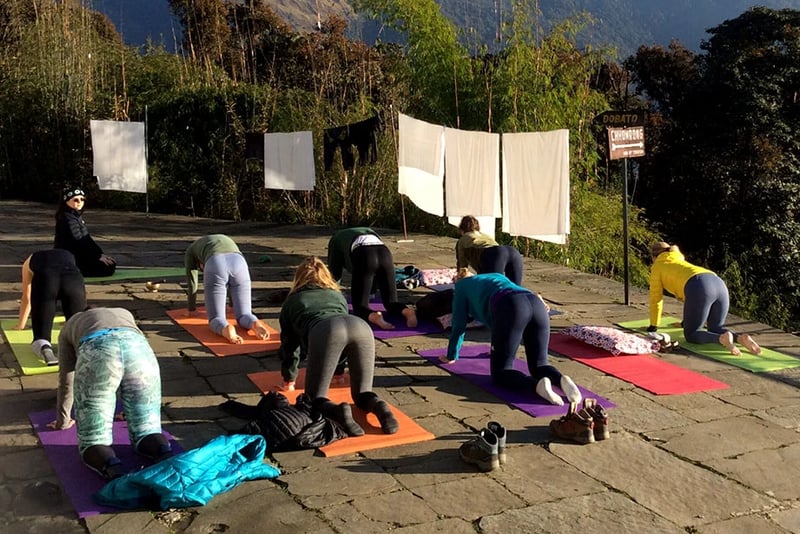
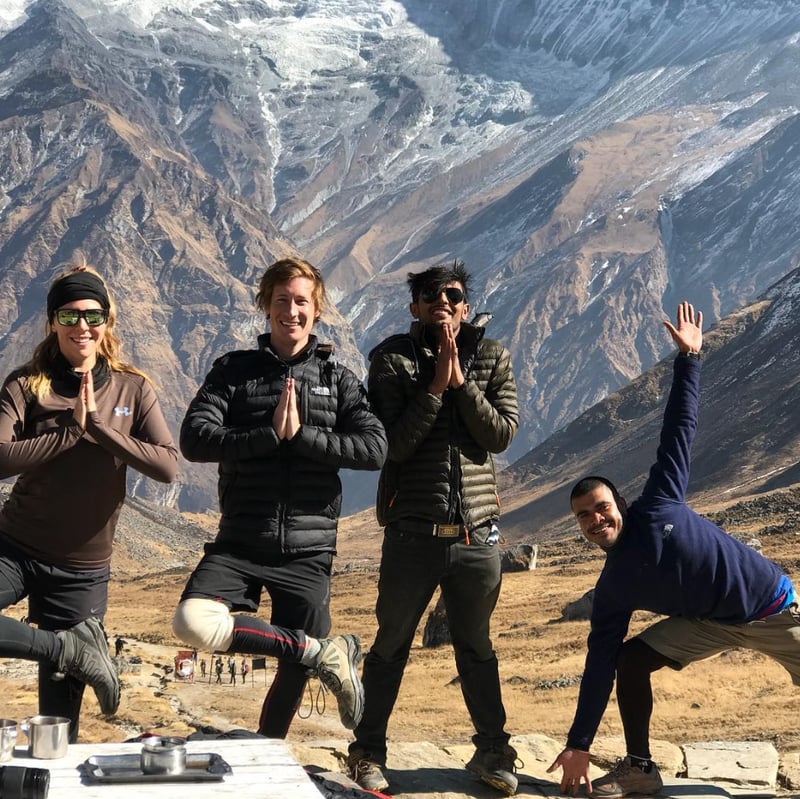
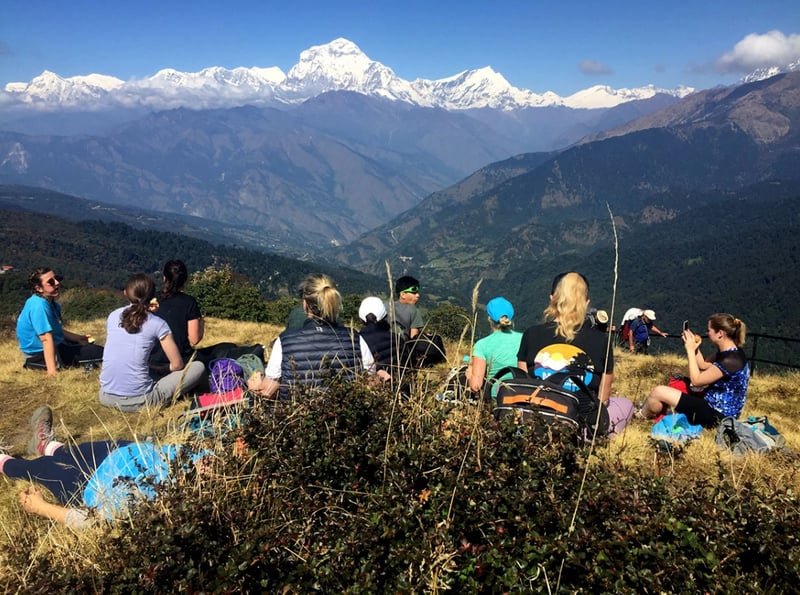
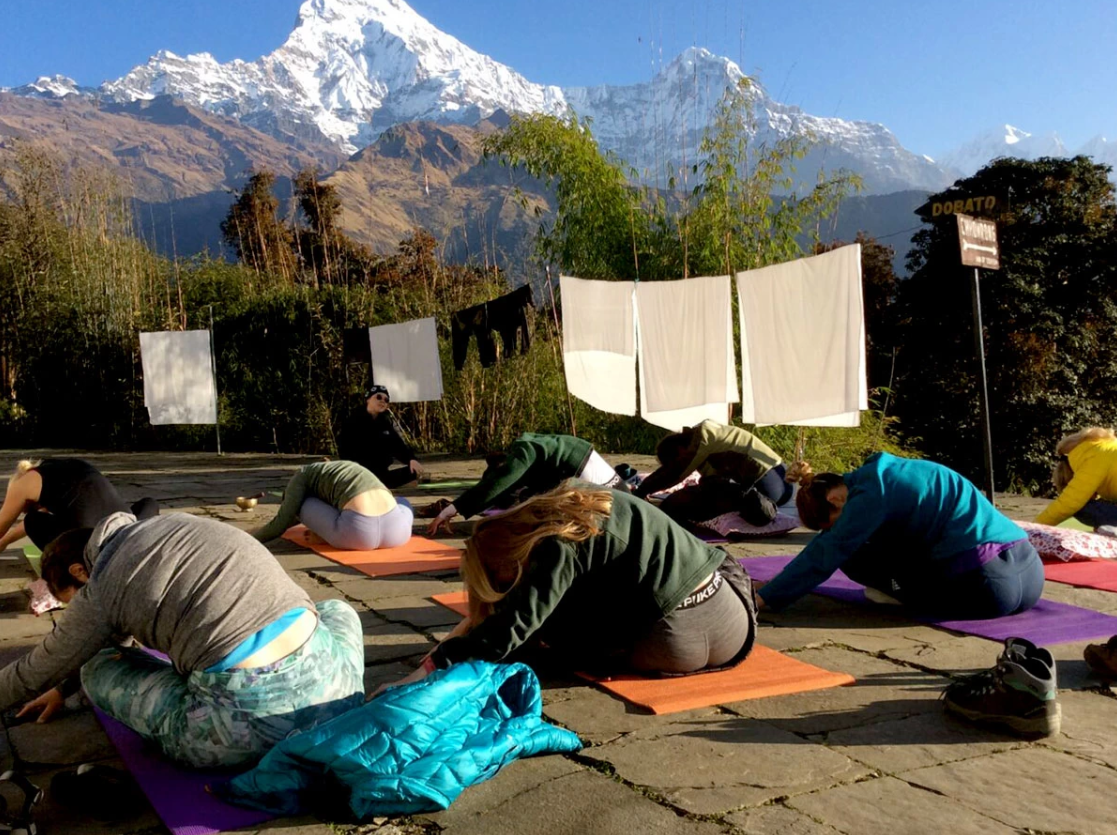
Combining trekking with daily yoga sessions, this 10-day experience leads you through Nepal’s cultural hubs and the Annapurna region’s scenic trails. Beginning and finishing in Kathmandu, the trip offers a balance of city exploration, mountain landscapes, and wellness practices designed to refresh both body and mind.
Day 01: Kathmandu Arrival
Arrive in Kathmandu and transfer to your hotel. In the evening, meet the guides and receive a briefing to prepare for the days ahead.
Day 02: Kathmandu to Pokhara
Enjoy a scenic bus ride from Kathmandu to Pokhara, passing through small villages and streams along the Prithvi Highway.
Day 03: Pokhara to Ulleri
Drive to Nayapul, then trek to Ulleri at 2010 metres. Two yoga sessions are held on this day, one in the morning and one in the evening.
Day 04: Ulleri to Ghorepani
Trek from Ulleri to Ghorepani (2874 metres), with yoga practice continuing twice daily.
Day 05: Ghorepani to Poon Hill to Tadapani
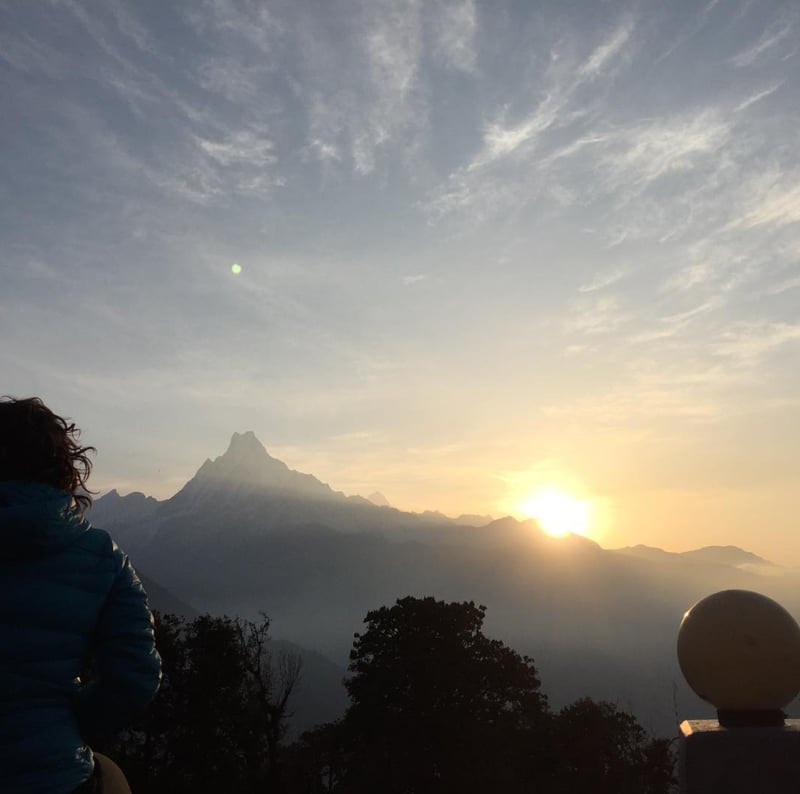
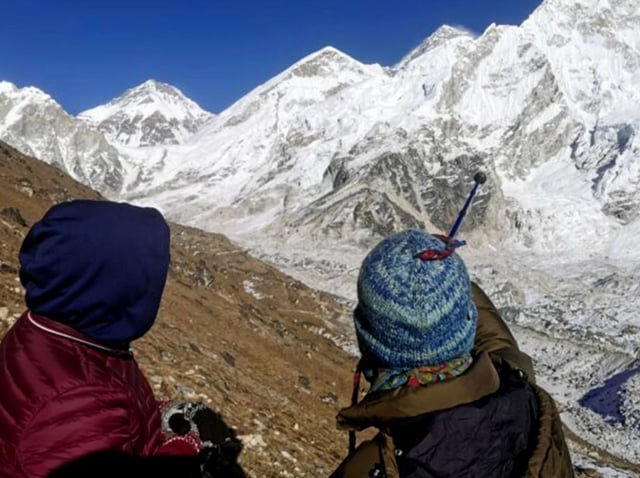
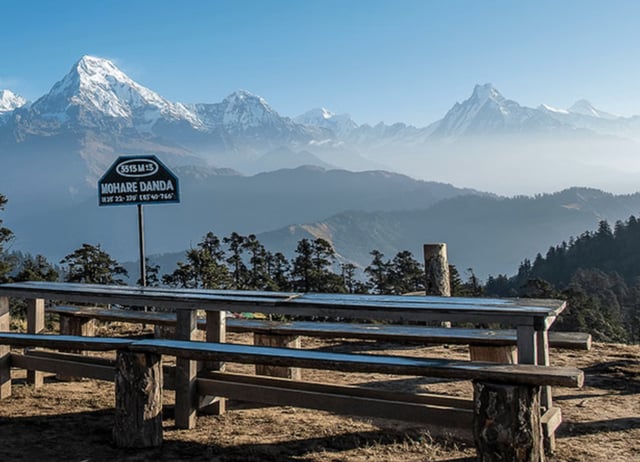
Begin early with a hike to Poon Hill to watch the sunrise over the Annapurna range, including Mount Dhaulagiri. After breakfast, trek onwards to Tadapani. Yoga sessions remain twice daily.
Day 06: Tadapani to Ghandruk
Trek to the large village of Ghandruk (1980 metres), exploring its local culture and museum. Yoga classes are held morning and evening.
Day 07: Ghandruk to Pokhara
Trek down to Upper Syauli Bazaar (1200 metres) before a two-hour drive back to Pokhara. Yoga continues with two sessions this day.
Day 08: Pokhara Rest Day
Spend the day at leisure in Pokhara with opportunities to relax, shop, or explore. Yoga classes are held morning and evening.
Day 09: Pokhara to Kathmandu
Travel back to Kathmandu by tourist bus and stay overnight.
Day 10: Departure from Kathmandu
Transfer to the airport for your onward journey or extend your stay to enjoy other activities.
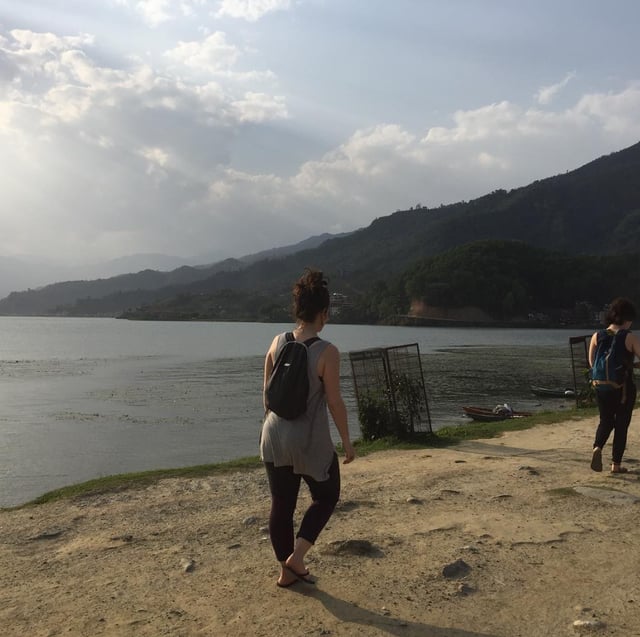
Kathmandu, Nepal’s capital, is rich in history and culture, offering an energetic mix of ancient temples, bustling markets, and vibrant street life. Pokhara, set beside a large lake and beneath the Annapurna mountain range, provides a calm contrast with its relaxed atmosphere and stunning views.
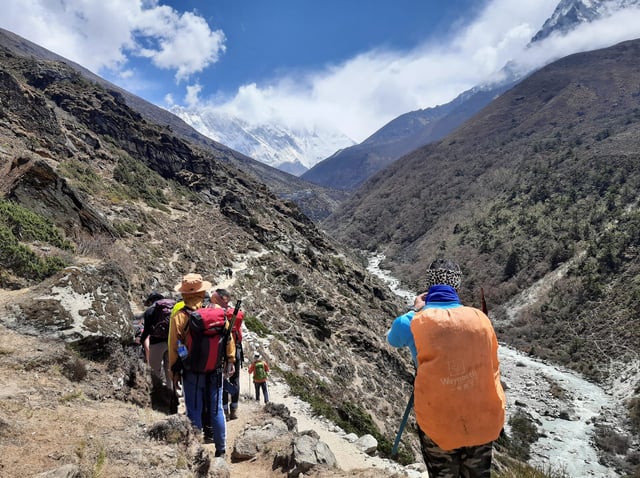
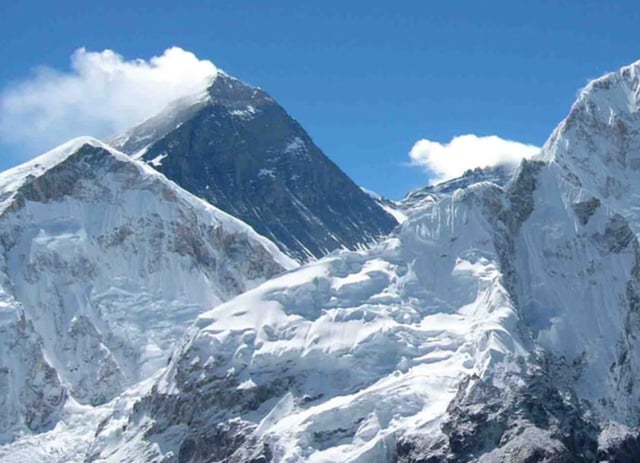
The trekking route passes through the Annapurna region’s diverse landscapes, from forested hills to traditional villages like Ulleri, Ghorepani, Tadapani, and Ghandruk. The famous viewpoint at Poon Hill offers panoramic vistas of some of the highest peaks in the Himalayas, including a memorable sunrise experience.
Accommodation in Kathmandu and Pokhara consists of comfortable hotels with breakfast included, providing a good standard of rest and facilities between trekking days. These hotels offer easy access to local amenities and a chance to enjoy the cities’ unique atmospheres.
During the trek, accommodation is arranged in tea houses, simple lodges that offer basic but clean rooms and meals. Staying in these mountain lodges allows a closer connection to the local culture and environment, while providing the necessary comfort for restful evenings after each day’s walk.
People joining should be physically prepared for trekking several hours daily on varied terrain. While previous trekking experience is helpful, those new to trekking can also enjoy the trip with suitable fitness and preparation.
Yoga experience is not mandatory as classes are led by professional instructors who cater to all levels. Openness to learning and participating in the yoga sessions will enhance the overall benefit of the journey.
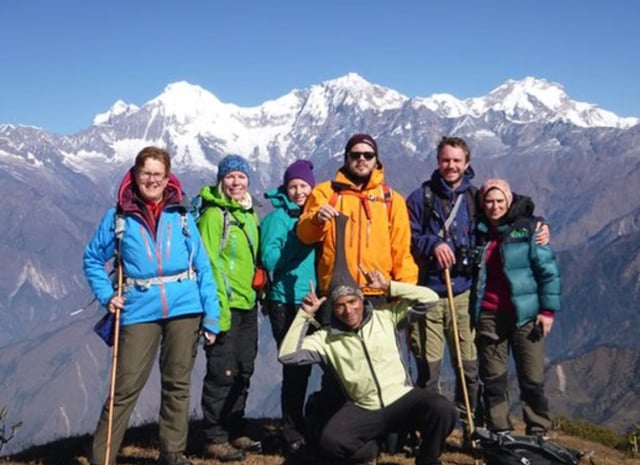
The team combines expertise in trekking and wellness to provide a unique experience that balances physical activity with mental well-being. Their professional guides and yoga instructors ensure a safe, supportive environment throughout the trip.
Committed to community support, the centre employs guides from remote areas and donates part of its revenue to local projects. This approach helps travellers contribute positively to the regions they visit while enjoying authentic cultural experiences.
The trek involves walking for several hours each day on varied terrain, including uphill and downhill sections. While it does not require advanced mountaineering skills, a moderate level of fitness is important to fully enjoy the experience and keep up with the group pace. Regular walking or hiking practice before the trip will be beneficial.
People new to trekking can participate if they prepare physically in advance. It is recommended to gradually increase your walking distance and include some hill training if possible. The guides will support all persons throughout the trek and adjust the pace if needed, but a reasonable baseline of stamina is needed for comfort and safety.
No prior yoga experience is necessary. The professional yoga instructors lead classes that are suitable for beginners through to intermediate levels. They will guide you through basic postures, breathing exercises, and meditation techniques designed to enhance your physical and mental well-being.
The sessions focus on improving flexibility, strength, and relaxation, allowing everyone to benefit regardless of skill level. Whether you are new to yoga or have some experience, the classes are tailored to help you gain the most from each practice in the peaceful mountain setting.
Daily walking times vary from about 3 to 8 hours, with some days including steep ascents such as the climb to Poon Hill. Terrain can be uneven and involves stone steps, dirt paths, and occasional rocky sections. The altitude reaches up to around 2874 metres, which may require acclimatisation.
The itinerary is designed to balance trekking and rest, including a rest day in Pokhara. Yoga sessions twice daily also support recovery and help maintain flexibility and strength. Guides will ensure the pace suits the group’s overall ability.
Accommodation in Kathmandu and Pokhara is in comfortable hotels with breakfast included, offering basic amenities and a good standard of comfort. These hotels are located conveniently to explore local culture, shops, and dining options.
On the trek, accommodation is in mountain tea houses, which are simple lodges providing clean rooms, communal dining, and heating in the evenings. Facilities are basic but sufficient for rest and recovery. Staying in tea houses allows a closer connection with local life and the Himalayan environment.
All meals during the trekking days are included: breakfast, lunch, and dinner. The tea houses serve typical Nepali dishes such as dal bhat (lentil soup with rice), noodles, and vegetables, alongside some international options.
In Kathmandu and Pokhara, breakfast is included with hotel stays, but lunch and dinner are not covered, giving you flexibility to explore local cuisine. It is recommended to try local restaurants to experience Nepalese food culture.
Yoga classes are scheduled twice daily, usually in the morning and evening. Each session typically includes a mix of asanas (postures), pranayama (breathing exercises), and meditation, aiming to improve strength, flexibility, and mental focus.
Sessions are led by qualified instructors who tailor the classes to all levels and help ensure safe practice. Practising yoga regularly during the trek supports physical endurance and helps with relaxation and acclimatisation at higher altitudes.
Yes, the itinerary is planned to allow gradual ascent and include rest periods to minimise the risk of altitude sickness. For example, there is a rest day in Pokhara before the trekking begins and the trekking days involve moderate altitude gains.
Participants are encouraged to stay hydrated, avoid overexertion, and communicate any symptoms of altitude sickness to the guides immediately. The team is experienced in recognising and managing altitude-related issues to keep everyone safe.
About the centre
Kathmandu
Operated by Happyland Treks, a partner of adventuro.
Bagmati Province, Nepal
From $3093
Bagmati Province, Nepal
From $1770
Bagmati Province, Nepal
From $2500
Bagmati Province, Nepal
From $1300