
Ready to find a course or session?
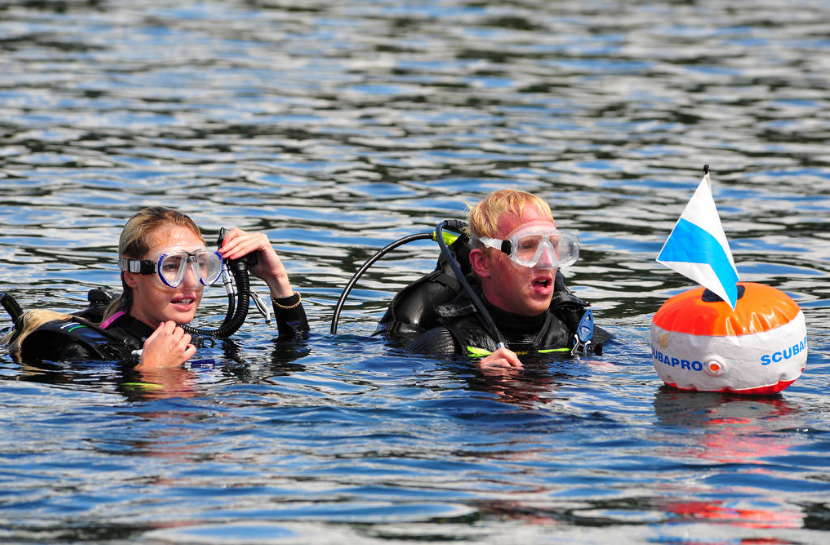
A delayed surface marker buoy is the orange sausage your buddy deploys from depth so boats know where the group is surfacing. Get it wrong and you tangle the line, lose buoyancy or pop up away from the shot line. Get it right and drift dives, boat dives and UK sea days feel far less stressful.
PADI teaches this as the Surface Marker Buoy Diver specialty: two open water dives focused on SMB and DSMB deployment, reel handling and signalling to surface support. It is one of those skills every experienced diver assumes you have until they watch a first attempt in a choppy swell.
Most centres run it in a day with a short knowledge review and two training dives. You will practice from depth and at the surface until deployment feels deliberate rather than panicked.
Assessment is in the water, not a classroom exam.
Quick answers about this qualification. For anything else, use live chat or browse bookable activities below.
Find activitiesA delayed surface marker buoy is an inflatable tube deployed during a dive, usually from depth, to mark your position for boats and surface support before you ascend.
An SMB is a similar buoy but the emphasis in training covers both surface and delayed deployment techniques. The names blur in everyday dive talk; the course teaches you when each method fits.
Open Water Diver or equivalent. You should be comfortable with ascents and safety stops before adding a reel and buoy to the task.
If your last dive was years ago, consider ReActivate first. Leave a comment when you book with your certification agency if you trained outside PADI.
Most centres complete it in one day with two open water dives. Briefings and debriefs add a few hours either side.
Some providers pair it with Boat Diver or a club sea day so you practise in realistic conditions.
Centres usually provide training gear. Owning your own reel and DSMB after certification helps because muscle memory matters.
Ask on your booking page what is included. Leave a comment when you book if you want advice on kit to buy for UK sea diving.
No separate exam. Knowledge reviews and instructor briefings cover theory. Assessment is practical deployment and line handling in open water.
Expect your first attempts to feel clumsy. That is why the course exists.
UK sea dives often involve boats, tides and surfacing away from the shot line. A visible buoy gives the coxswain a target and reduces separation anxiety on drift dives.
Many clubs expect members to carry a DSMB on open water trips even though Open Water certification does not formally teach deployment.
Standard dive kit, warm layers for boat intervals and gloves if your hands run cold handling line. Mask and fins you trust matter on repetitive skill dives.
If the centre loans a reel, note the model so you can practise the same mechanism on future dives.
Ten years old with Open Water Diver certification. Junior divers follow standard depth and supervision limits.
Centres may set a higher minimum for sea deployments in challenging conditions. Ask when you book for younger divers.
If you already completed a surface marker buoy Adventure Dive during Advanced Open Water, talk to your instructor before enrolling. You may receive credit toward this specialty.
Even with credit, many divers take the full specialty to sharpen skills before regular boat diving.
Dive on boats and drift sites with a proper surface signalling habit. Pair the skill with Deep Diver or Night Diver if those are your next goals.
Rescue-oriented divers often follow with Rescue Diver once buoyancy and signalling are solid.
adventuro lists PADI centres offering DSMB and surface marker buoy training on quarries, coasts and holiday reefs. Compare boat fees, kit hire and whether dives are from shore or boat.
Leave a comment when you book if you need a centre that trains in sea conditions similar to your local club diving.
