
What to wear kayaking: river, lake, and sea paddling kit
Kayaking spans flat-water hire on a canal, river tours under aqueducts, and open-coast sea kayak days. The boat changes; the clothing logic does not. Dress for water temperature, wind, and the realistic chance you will get wet to the waist or beyond.
This guide covers what to wear for kayaking in the UK, whether you are hiring for an hour or booking a guided sea kayak tour.
Before anyone launches, I check three things: BA zipped and snug, nothing cotton against the skin, and shoes that stay on in mud.
What the centre usually provides
Hire sessions like canoe and kayak hire on the River Avon (from £20) typically include the boat, paddle, and buoyancy aid. Clothing is yours unless the listing mentions wetsuit hire.
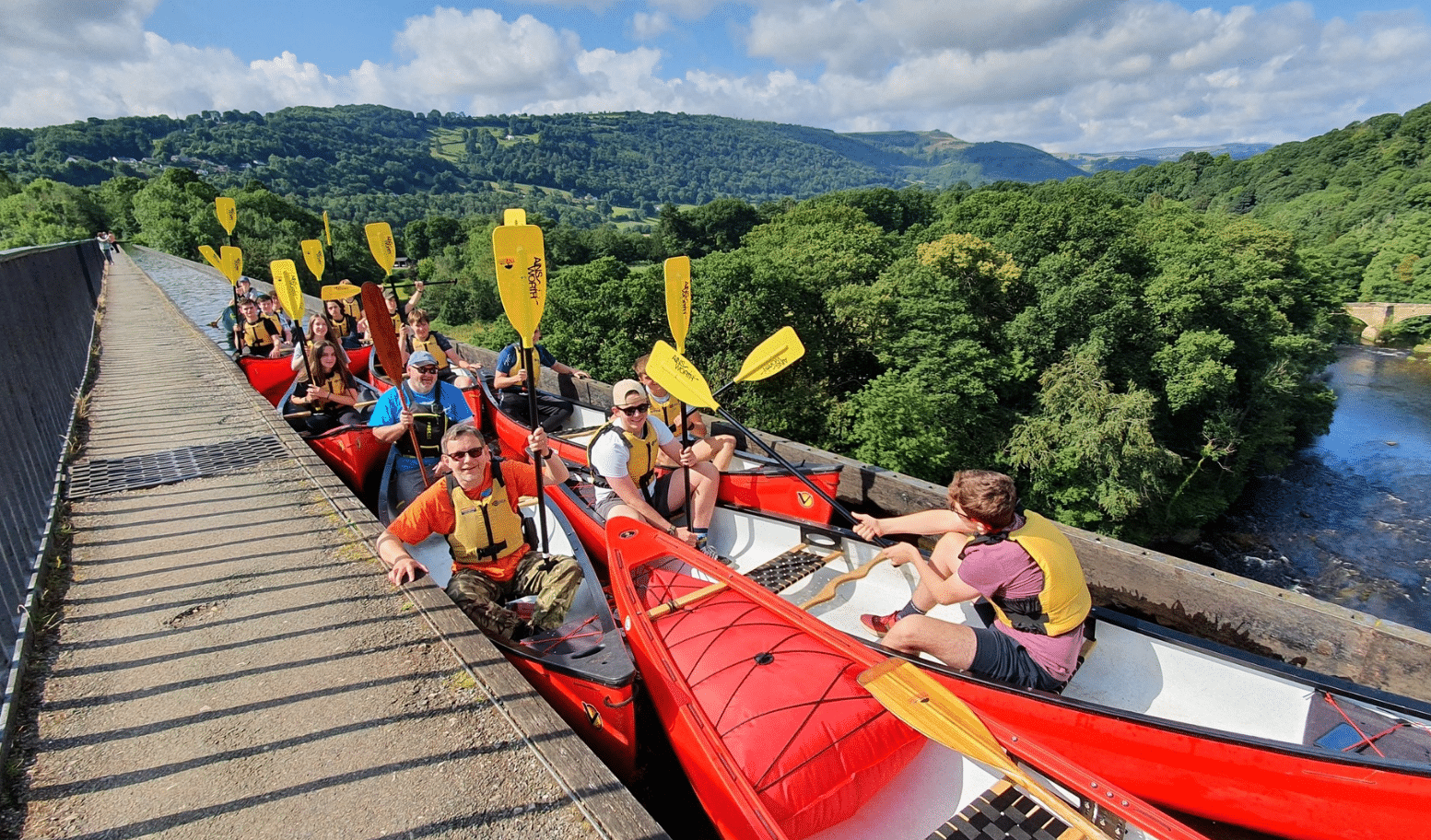
Guided tours such as the kayak aqueduct cruise in Llangollen (from £45) or sea kayak tour on the Lizard, Cornwall supply boat, paddle, BA, and often a wetsuit or spray deck on colder water. Check each listing.
Sit-on-top vs sit-in: how clothing differs
| Type | Typical use | What to wear |
|---|---|---|
| Sit-on-top (SOT) | Hire on lakes, slow rivers, summer coast | Swimwear or quick-dry layers; wetsuit if water is cold; you will get splashed and may swim. Expect a wet seat and water in the footwell even if you stay upright. |
| Sit-in kayak | River tours, sea kayaking, cooler water | Wetsuit or drysuit on sea and whitewater; spray skirt keeps torso drier; layers matter more |
| Canoe (often grouped with kayaking) | Family river days, aqueduct cruises | Similar to SOT: expect wet legs; wetsuit or waterproofs depending on season |
Essential kit for every kayak session
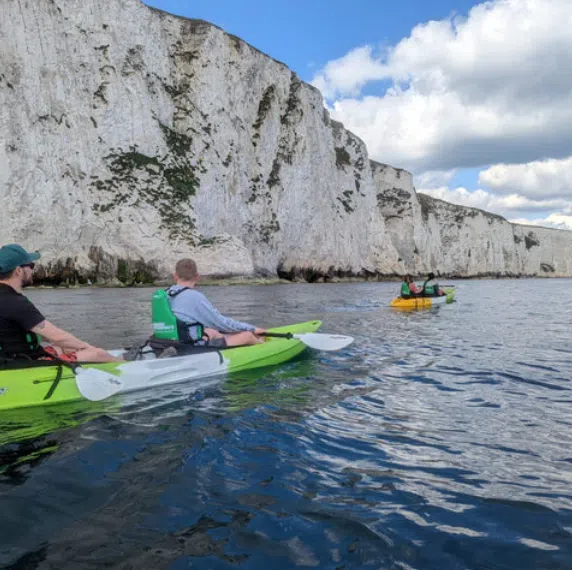
- Buoyancy aid (BA): worn and fastened at all times on the water; centres supply these. If your BA will not zip over your jacket, take the jacket off before launch. A loose BA rides up and does not float you properly.
- Footwear: neoprene boots or old trainers that can get wet; not flip-flops
- Quick-dry or wetsuit layers: cotton is a poor choice on any UK water
- Waterproof jacket: for wind and spray on sea and open loch days
- Sun protection: hat, sunscreen, sunglasses with retainer
- Dry clothes in the car for after
Wetsuit guide for UK kayaking
Neoprene works by trapping a thin layer of water against your skin that your body warms. A 3/2 mm suit means 3 mm torso and 2 mm limbs; the number is not marketing, it is thickness and therefore warmth.
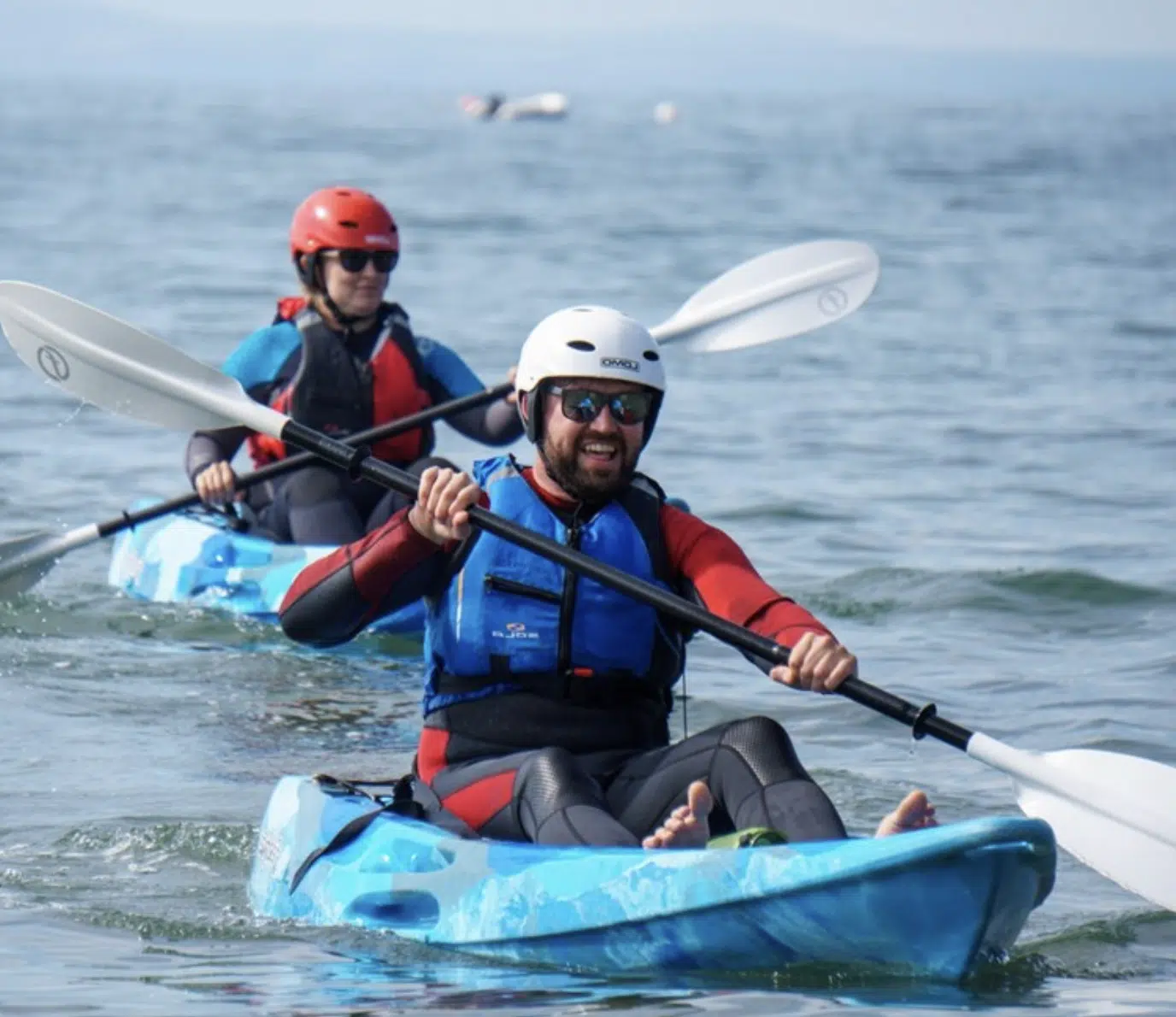
Full wetsuit (3/2 mm or thicker): sea kayaking, spring/autumn river tours, any session where immersion is likely. UK sea surface temperatures are often 12 to 18°C in summer and 8 to 12°C in spring, far below comfortable skin temperature. In water below roughly 15°C, heat loss through conduction is rapid even for strong swimmers.
Shorty or wetsuit top: warm summer lake hire when you accept intermittent splashing but want core warmth. Fine when water is above 18°C and sessions are short.
No wetsuit: only on hot, sheltered flat-water hire where the centre explicitly says street clothes are fine, and still bring quick-dry kit.
Sea kayak tours almost always expect you to dress for cold water, not air temperature. A sunny 22°C day with 14°C sea water can still trigger cold water shock on an unexpected capsize: gasp reflex, hyperventilation, and loss of coordination in the first minutes.
Sea kayaking vs inland hire
Inland hire (canal, lake, slow river): lighter kit in summer; wetsuit or waterproofs in spring/autumn. Kayak hire sessions on adventuro span both guided and self-drive.
Sea kayaking: wetsuit, windproof layer, and the fitness to paddle in tide and swell. Book a guided tour for your first open-coast day; do not hire a sit-on-top and head around a headland alone.
White water: specialist kit and training; wetsuit, helmet, and sometimes a dry top are standard. Follow the school's list exactly.
Spray skirts, drysuits, and extras
On sit-in sea kayaks, a spray deck keeps waves out of the cockpit. Centres fit these for you on guided tours.
Drysuits appear on winter sea kayaking and some advanced centres. They are usually hired or included on the course. They are not typical on beginner hire.
You do not need to buy a spray skirt for a first taster; the guide handles boat setup.
What to pack in a dry bag
If the tour allows a small dry bag on the boat:
- Water and snack
- Phone in a waterproof pouch (centres may prefer you leave it ashore)
- Light fleece if the forecast drops
Keep keys and wallet locked in the car when possible.
Common mistakes
- Jeans and hoodies: heavy, cold, and dangerous if you capsize. Cotton is what sends hire groups back to the car on cool river mornings.
- Loose BA over a thick jacket: fit the BA snugly over appropriate layers
- Bare feet on rocky launch sites: cut feet ruin the day
- No warm layer after: shivering through checkout is avoidable
- Treating sea kayaking like lake hire: different boat, different risk, different kit
Ready to paddle
River hire is the easiest entry. Guided aqueduct or estuary tours add scenery without needing your own navigation. Sea kayak tours are the step up when you want coast and tide with a qualified guide.
Browse kayaking → · More paddle days in our North Wales guide and solo-friendly adventures roundup.
More kit guides: hiking · paddleboarding · canyoning · wild swimming · sailing · power boating
🌿 A portion of adventuro bookings supports conservation through our partnership with Rewilding Britain.
FAQs
Do I need a wetsuit for kayak hire?
Dress for water temperature, not the forecast on your phone. UK inland lakes and rivers are often 15 to 20°C in summer but can be colder after rain or in spring. Below about 18°C, a wetsuit or at least a neoprene top slows heat loss if you swim or sit in a wet SOT footwell. On sheltered hire in high summer, quick-dry synthetics may be enough for short sessions if you accept getting cold when wet. Sea tours and spring/autumn paddling: assume a full suit unless the listing says otherwise.
What is the difference between a buoyancy aid and a life jacket?
A buoyancy aid (BA) is designed for active paddling: foam panels front and back, freedom to swim, and you are expected to be conscious and mobile. A life jacket (often auto-inflating on ferries) turns an unconscious person face-up with more buoyancy but restricts movement. Kayak centres issue BAs because you need to paddle and re-enter a boat. Wear it fully zipped; a loose BA rides up and does not keep your mouth clear of the water if you are tired.
Why are my legs wet on a sit-on-top kayak?
Sit-on-top kayaks are self-bailing: scupper holes let water drain through the footwell. Splash from your paddle, waves, and your own drips keep the deck wet by design. That is normal, not a fault. Wear quick-dry leggings or shorts, not cotton joggers that stay damp and draw heat from your legs. Neoprene boots help if the water is cool.
Can I kayak in swimwear only?
On hot sheltered hire in calm water, swimwear plus a BA can work for short sessions. UK open water is different: wind across wet skin accelerates cooling, and UV reflects off the surface (see SUP section below for sun maths). For anything beyond a brief splash on a warm lake, add quick-dry layers or neoprene. Children lose body heat faster than adults because of higher surface-area-to-volume ratio: wetsuits matter sooner for kids.
What shoes should I wear kayaking?
Neoprene boots or grippy water shoes that stay on in mud and on slippery launch ramps. Bare feet are OK on sandy beaches in warm weather only. Flip-flops float away and offer no protection on barnacle-covered rocks. Old trainers work for hire if you accept they will not dry for days.
Do children need wetsuits for kayaking?
Yes outside peak summer on UK water, and often even then on sea or long sessions. Children cool faster than adults and may not notice they are cold until they are miserable. A child-sized BA is mandatory; neoprene extends comfortable paddling time. Check minimum ages on each listing before booking.