We partner with Rewilding Britain to help protect our natural spaces for future adventures.
All centres are vetted for safety and quality. Your adventure is in good hands with adventuro.
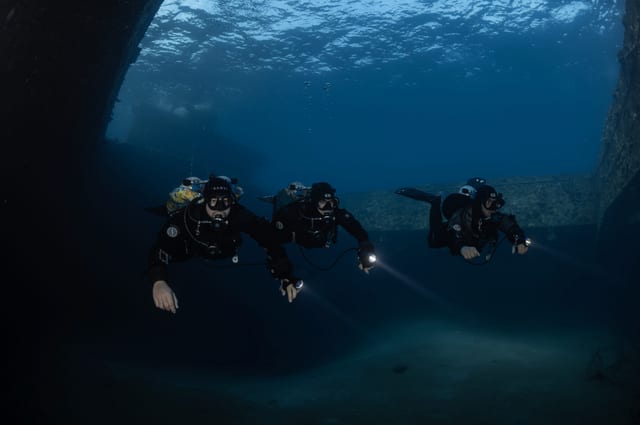
This advanced technical diving programme qualifies you to conduct extended-range dives to a maximum of 50 metres using two decompression gases. You will refine high-level planning, gas management, emergency skills, and multi-stop decompression techniques, building the competence and discipline required for deeper and more complex technical environments.
The Tec 50 programme deepens your understanding of decompression theory, advanced gas planning, and multi-cylinder management. You’ll begin with five knowledge development sections that review decompression obligations, oxygen exposure limits, gas switches, and the operational discipline required for extended-range dives. These lessons directly support the four practical application sessions where you will configure your equipment, conduct pre-dive checks, analyse gases, and prepare for staged decompression work.
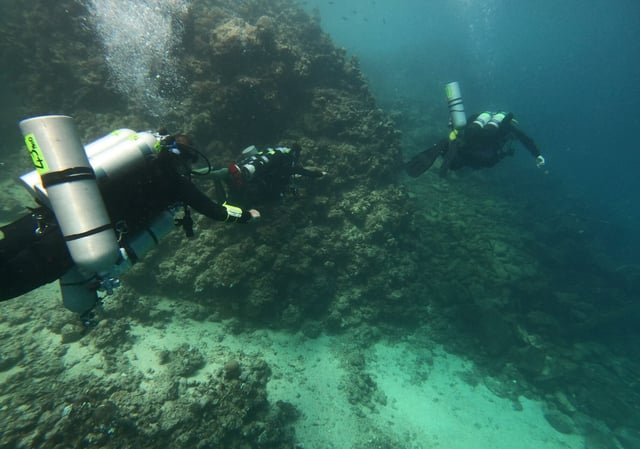
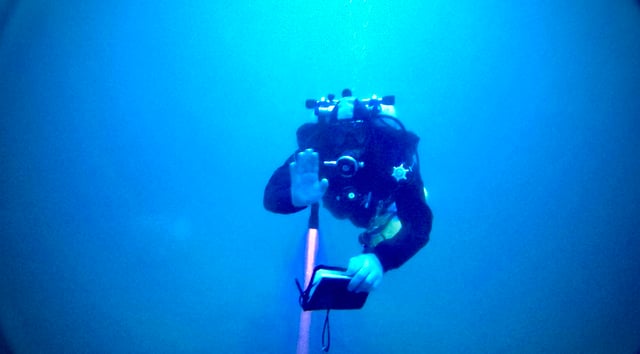
The open-water sessions involve four progressively complex training dives. You will practise multi-stop decompression ascents, controlled gas switches, and navigation tasks while maintaining precise trim and positioning at depth. Each dive reinforces planning accuracy—using two decompression gases—and focuses on coordinated execution with your team. Past 40 metres, gas consumption, narcosis awareness, and redundancy procedures become essential, and you will learn how to manage these intentionally and efficiently.
Emergency training forms a core part of the programme. You’ll practise malfunction responses, lost-gas scenarios, cylinder failures, and procedures requiring decisive action. By the end of the course, you will be able to conduct extended-range dives to 50 metres using multiple decompression gases and will be prepared for future progression, including full Trimix training.
Initial preparation takes place in controlled-water sites that allow you to rehearse gas-switch protocols, buoyancy adjustments, and cylinder handling without external interference. These sessions ensure you are fully comfortable with equipment placement, hose routing, and emergency drills before moving into deeper training environments.
The open-water dives are carried out at sites with suitable depth, stable visibility, and room for multi-stop decompression ascents. These locations provide predictable topography, allowing you to perform gas switches, staging procedures, and extended ascents safely and consistently. Facilities at the site support pre-dive planning, gas analysis, and structured briefings.
You must be certified as a Tec 45 diver or equivalent and have completed recent CPR and First Aid training. A minimum of 100 logged dives or 75 dive hours is required, demonstrating sustained experience and familiarity with deep-water environments. A medical form signed by a doctor within the last 12 months is also mandatory.
Divers should arrive comfortable with decompression procedures, buoyancy stability, and equipment redundancy. Completing all e-learning before in-water sessions ensures you are fully prepared for the planning and decision-making required at this level.
Training is delivered by instructors with extensive experience in extended-range and multi-gas technical diving. Their structured approach reinforces safe practices, precise planning, and methodical skill progression. Each task is introduced in a clear sequence, allowing divers to build confidence and autonomy at depth.
The environment prioritises professional standards, well-maintained equipment, and supportive team-based learning. You’ll gain the competence needed for deeper, more demanding environments while developing the mindset required for advanced technical pathways. This course represents a significant step toward full Trimix diving and expedition-level dive planning.
Tec 50 is an advanced technical diving programme that trains divers to complete extended-range decompression dives to a maximum depth of 50 metres. It involves planning and executing multi-stop ascents using two decompression gases and advanced equipment configurations.
The course also strengthens emergency management, equipment redundancy handling, and high-level decision-making, preparing divers for deeper dives and future Trimix pathways.
Training takes place over three days, with four structured sessions. Each session lasts around three to four hours and includes equipment rigging, briefings, open-water dives, and post-dive reviews.
The full commitment is approximately nine hours of instructor-led training, though divers often spend additional time on self-study and e-learning components beforehand.
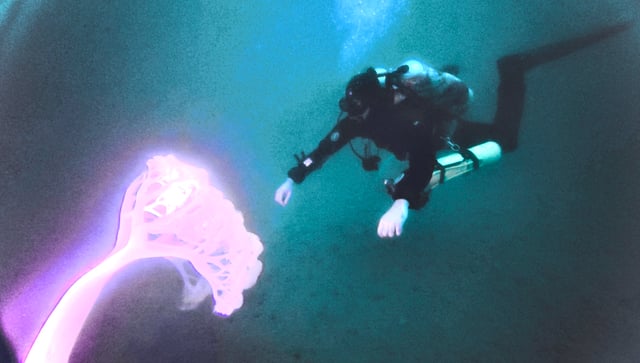
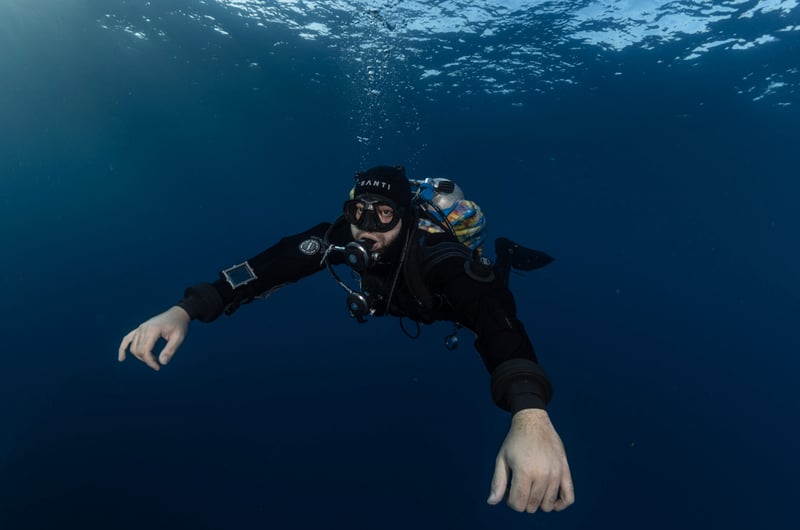
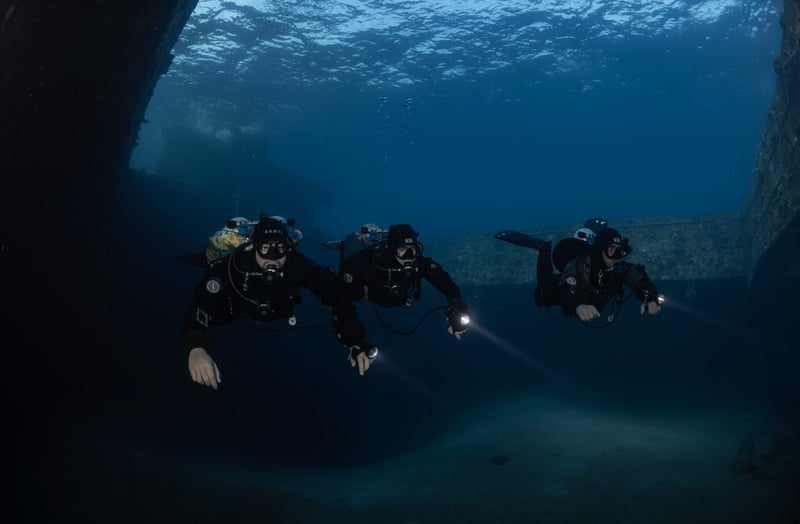
You will dive using a twin-cylinder configuration with an isolation manifold, multiple stage cylinders for decompression gases, long-hose regulators, and a wing-style BCD. This setup supports redundancy, efficiency, and stability during extended-range dives.
Your instructor will guide you through gas analysis, proper labelling, cylinder staging, regulator routing, and equipment checks to ensure safe and consistent operation.
The maximum depth for the course is 50 metres. At this depth, divers begin to encounter increased narcosis potential, elevated gas consumption, and more complex decompression obligations, all of which are addressed in training.
The dives focus on planning accuracy, team coordination, and maintaining stable positioning during long or multiple decompression stops.
You must be certified as a Tec 45 diver or equivalent. Rescue Diver certification is also required, along with recent CPR and First Aid training. A minimum of 100 logged dives or 75 total dive hours ensures you have sufficient experience to handle the task load.
A medical evaluation signed by a doctor within the last 12 months is mandatory due to the physical and psychological demands of extended-range diving.
You will learn multi-gas decompression planning, advanced bailout strategies, emergency response procedures, and ascent control with multiple stops. Training includes precise gas-switch execution, malfunction management, and high-awareness team diving.
You will also improve technical trim, propulsion, and buoyancy skills, ensuring stable and controlled positioning even during complex tasks.
No. Tec 50 certifies you to conduct extended-range decompression dives to 50 metres using two decompression gases. Diving beyond this range requires Trimix training or other higher-level technical courses designed for deeper exposures.
Tec 50 is, however, the final step before entering full Trimix programmes, making it a key bridge between mid-range and deep technical training.
Yes. A Trimix upgrade is available once you complete additional e-learning modules, knowledge reviews, and Trimix-specific gas analysis practice. Planning using Trimix is integrated into the later stages of the practical applications.
Two of your Tec 50 dives may be conducted using Trimix once all upgrade requirements are met.
The course includes five knowledge development sections covering advanced decompression models, gas physiology, exposure limits, deep dive planning, and problem-solving strategies. Completing these modules in advance ensures you are prepared for the practical demands of the programme.
Your instructor will reinforce key concepts during briefings and dive planning exercises to help you apply theory effectively underwater.
You should bring swimwear, dry clothing, a towel, and any personal diving accessories you use regularly. Hydration and sun protection are useful during surface intervals.
All technical equipment, including stage cylinders and regulators, will be provided. If you prefer to use your own mask, fins, or computer, you may bring them for comfort and familiarity.
About the centre
The Palm Jumeirah, Dubai
Operated by Nemo Diving Center, a partner of adventuro.
Thiladhunmathi Uthuruburi (Haa Alifu), Maldives
From €2255
Fujairah, United Arab Emirates
From Dhs256.63