We partner with Rewilding Britain to help protect our natural spaces for future adventures.
All centres are vetted for safety and quality. Your adventure is in good hands with adventuro.
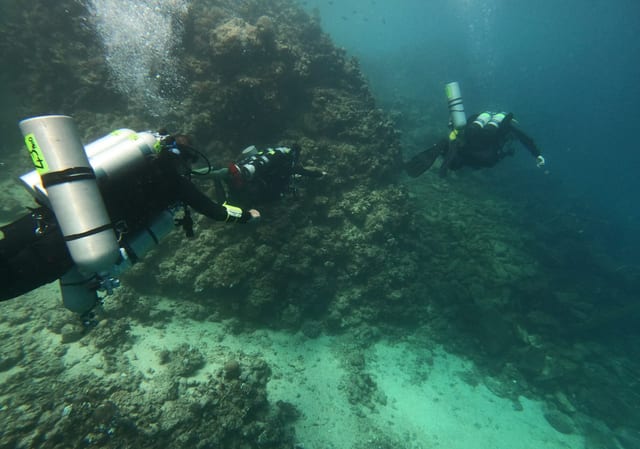
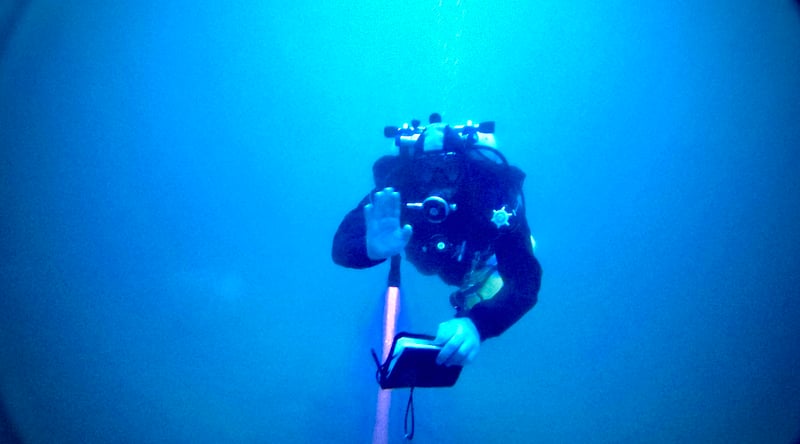
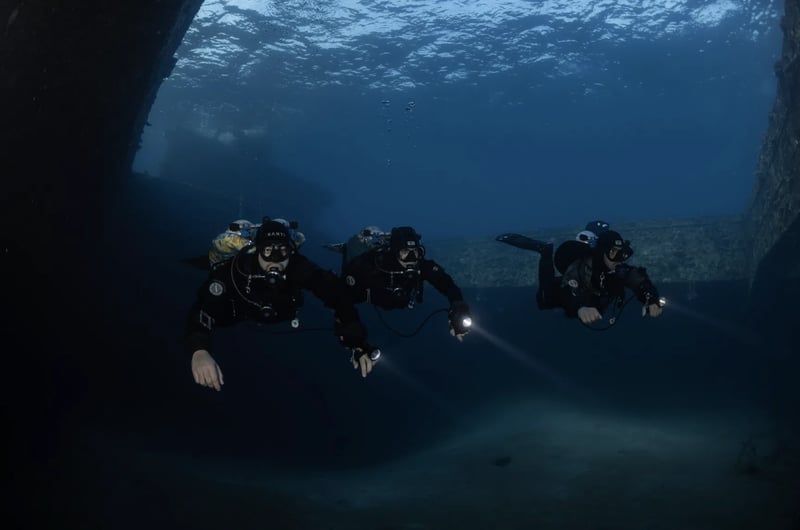
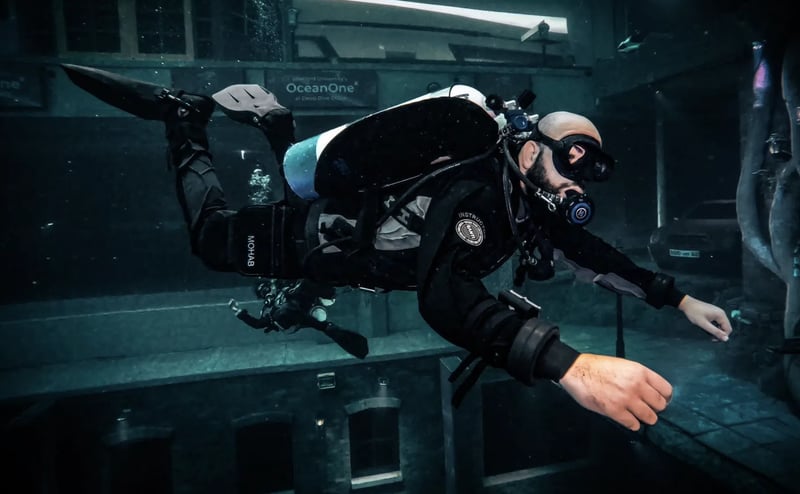
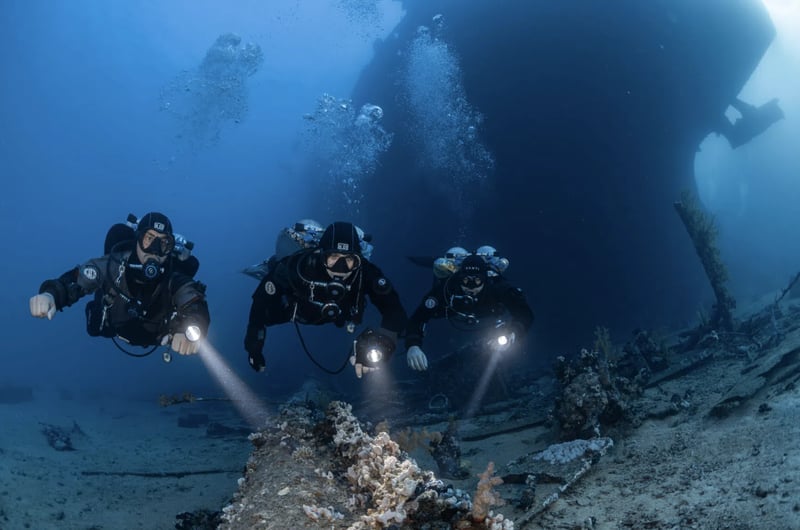
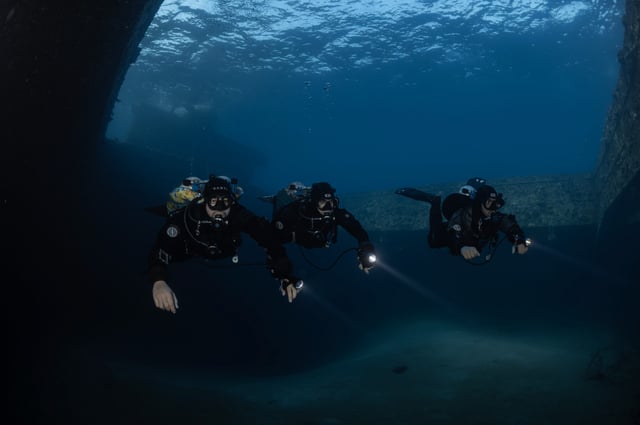
This advanced technical diving programme trains divers to safely use Trimix for deep exploration to a maximum depth of 65 metres. It focuses on complex decompression planning, multi-gas management, deep exposure considerations, and the redundancy required for dives well beyond recreational limits.
Training begins with extensive theory, covering gas physics, helium considerations, narcosis management, and deep exposure physiology. You will review how to select and analyse Trimix blends according to depth, decompression requirements, and contingency plans. These knowledge development sessions provide the basis for the practical components, including gas analysis, equipment configuration, bailout planning, and advanced emergency procedures.
Open-water sessions involve 6–8 deep technical dives where you will apply multi-gas switching, deep descent protocols, extended decompression stops, and advanced ascent management. You will use multiple decompression gases and may employ Argon inflation systems for drysuit use, depending on your equipment. Each dive reinforces planning discipline, controlled team movement, redundancy checks, and awareness during long-duration decompression.
The course culminates in a final evaluation dive at depth, assessing your ability to perform controlled descents, stable gas switches, precise decompression stops, and confident emergency handling under realistic task loads. Upon completion, divers are qualified to conduct Trimix dives to 65 metres using multiple decompression gases.
Preparation and equipment workshops occur in controlled-water environments, giving you space to configure cylinders, practise gas-switch protocols, and rehearse emergency drills without environmental distractions. These sessions focus heavily on equipment precision, correct staging of cylinders, and maintaining stability while handling multiple gas sources.
Deep dives take place at sites with reliable depth profiles and suitable water conditions for extended-range Trimix training. These locations allow you to carry out long ascents with multiple decompression stops while maintaining predictable navigation and controlled exposure. Surface facilities support gas analysis, Trimix blending, debriefing, and equipment preparation for each dive.
Divers must hold a Tec 50 certification or an equivalent rating that verifies safe performance at 50 metres with decompression gases. A minimum of 100 logged dives ensures sufficient experience handling depth, task loading, and equipment redundancy. A medical clearance signed by a doctor within the last year is required due to the significant physiological demands of deep Trimix diving.
Participants should arrive with strong decompression planning skills, stable buoyancy control, and experience conducting emergency drills at technical depths. Completing all theory sections and knowledge reviews before in-water sessions ensures you’re ready for high-level problem-solving and precise execution.
You will train with instructors experienced in deep Trimix operations and extended-range technical exploration. Their approach emphasises methodical skill progression, strict adherence to procedures, and clear communication, ensuring divers understand the reasoning behind every protocol and gas choice.
The training environment is structured, supportive, and safety-focused, with well-maintained technical equipment and detailed oversight during all deep exposures. This programme represents a significant milestone in technical diving progression, giving divers the competence and confidence to explore deeper environments with disciplined planning and professional-level execution.
This programme trains divers to safely conduct deep Trimix dives to a maximum depth of 65 metres using helium-based gas mixtures. It focuses on managing narcosis, improving deep-water clarity, and maintaining safe ascent strategies with multiple decompression gases.
You will learn advanced planning, multi-gas switching, equipment configuration, and emergency response techniques required for extended-range technical environments.
The course consists of 6–8 dives, depending on scheduling, performance, and environmental conditions. Each dive increases in complexity, building toward a final evaluation that tests your ability to plan and execute multi-gas decompression dives with confidence.
These dives include use of multiple decompression cylinders, Trimix planning, deep descents, and long decompression sequences.
Trimix reduces narcosis and oxygen exposure risks by blending helium with oxygen and nitrogen. This creates a clearer, safer breathing mixture for deep exposures, allowing divers to maintain awareness and control at extreme depths.
It also reduces gas density, making breathing easier at depth and improving overall safety during deep technical dives.
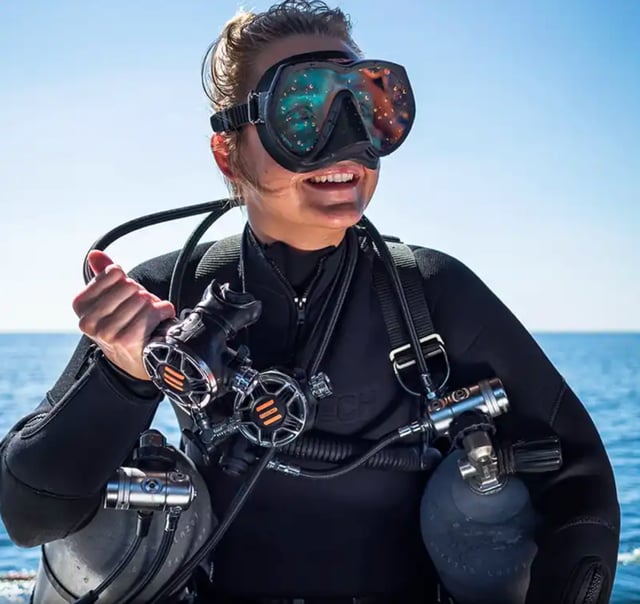
You will use a full technical configuration including twin cylinders, multiple stage cylinders, long-hose regulators, a wing-style BCD, isolation manifold, and depending on exposure protection, an Argon inflation system. These setups provide redundancy and stability for deep diving.
Your instructor will guide you through configuration, cylinder staging, gas-switch procedures, and equipment checks before every dive.
Training dives progress toward a maximum depth of 65 metres. At these depths, divers experience increased gas consumption, elevated narcosis potential, and longer decompression obligations, all of which are addressed through detailed planning.
The dive environment is carefully selected to enable safe ascent profiles with multiple decompression stops.
You must be a certified Tec 50 diver or equivalent, with at least 100 logged dives. This ensures you already possess strong decompression skills and deep-water experience. A medical form signed by a doctor within the past 12 months is mandatory due to the increased physiological risk.
Divers must also be comfortable handling multiple cylinders, executing controlled ascents, and responding to equipment malfunctions at depth.
The theory is extensive and includes Trimix selection, helium-based gas management, decompression modelling, deep exposure physiology, emergency protocols, and multi-gas switch planning. You will complete knowledge reviews and a final exam to validate your understanding.
Your instructor will help apply these concepts during dive planning sessions, ensuring theory and practice align.
No, this qualification is limited to 65 metres using Trimix. Deeper dives require further training such as advanced Trimix or expedition-level technical programmes. Tec 65 is, however, a major step toward those advanced pathways.
The skills gained—especially in planning, emergency handling, and gas management—are essential prerequisites for deeper training.
All deep technical diving carries inherent risk, but proper training, correct equipment, and disciplined execution significantly reduce these risks. Trimix actually mitigates several hazards by reducing narcosis and managing oxygen exposure at depth.
Training places strong emphasis on redundancy, team protocols, and precise ascent management to maintain safety at all stages.
Bring exposure protection suited to long decompression durations, swimwear, dry clothing, and personal equipment such as mask, fins, or computer if preferred. Hydration, snacks, and sun protection can help during surface intervals and long planning sessions.
Technical equipment needed for the course is provided, but divers with personal stage cylinders or computers may bring them subject to instructor approval.
Fujairah, United Arab Emirates
From Dhs256.63
About the centre
The Palm Jumeirah, Dubai
Operated by Nemo Diving Center, a partner of adventuro.