We partner with Rewilding Britain to help protect our natural spaces for future adventures.
All centres are vetted for safety and quality. Your adventure is in good hands with adventuro.
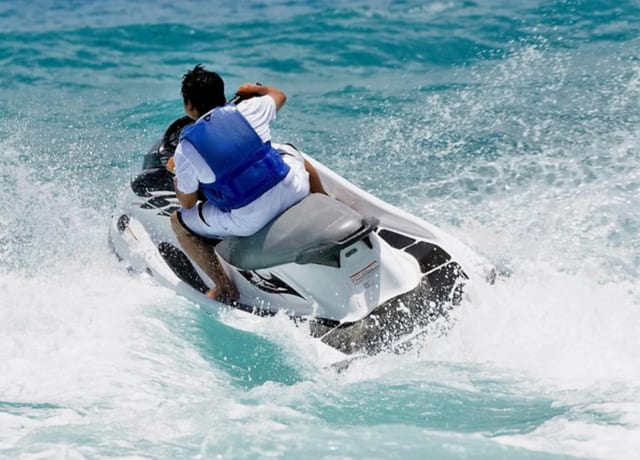
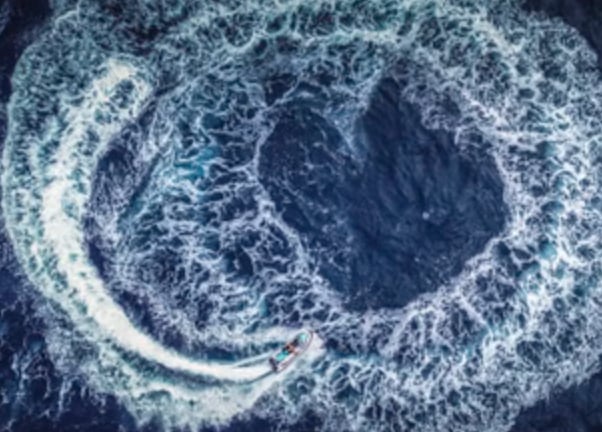
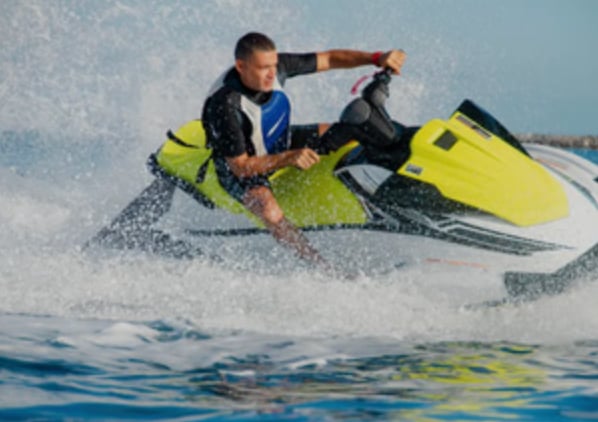
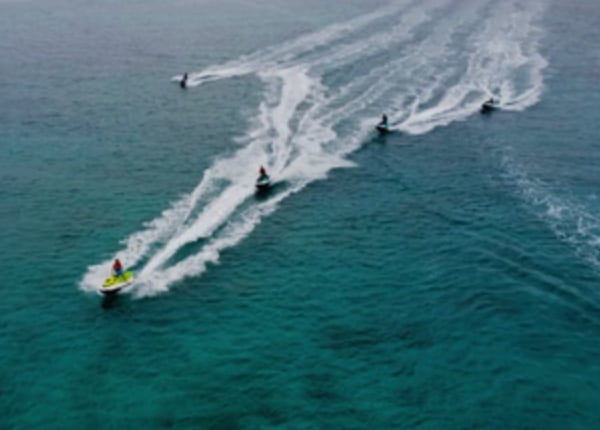
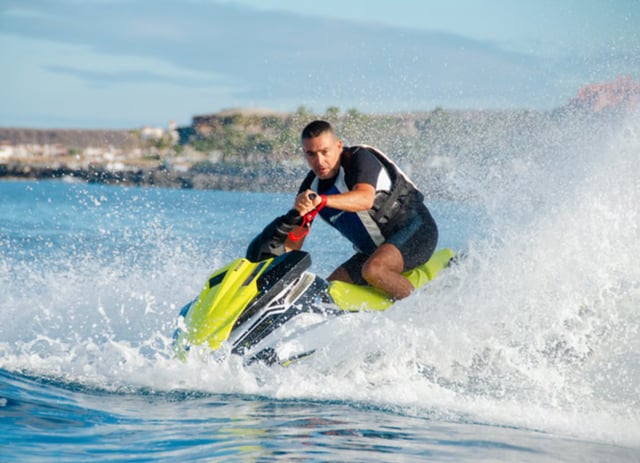
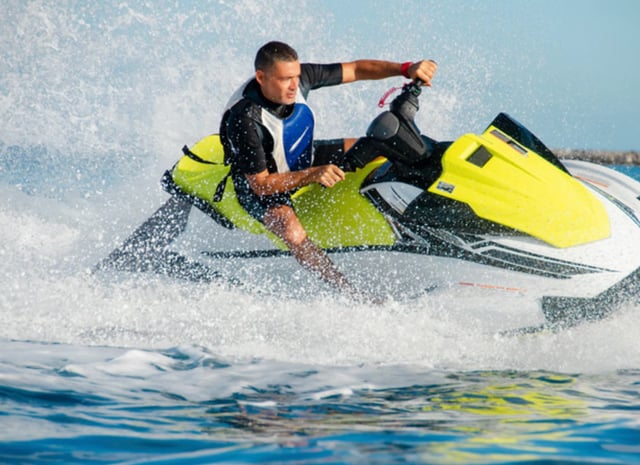
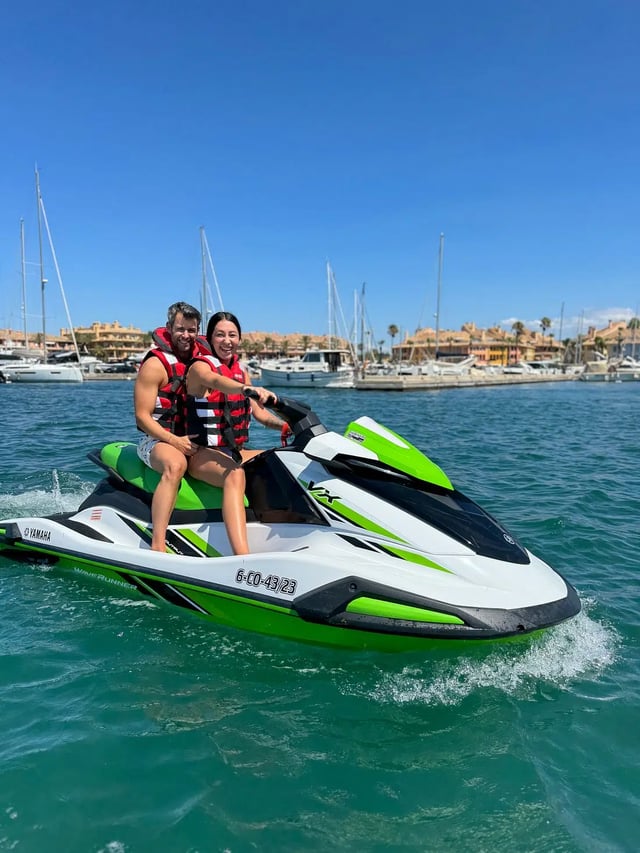
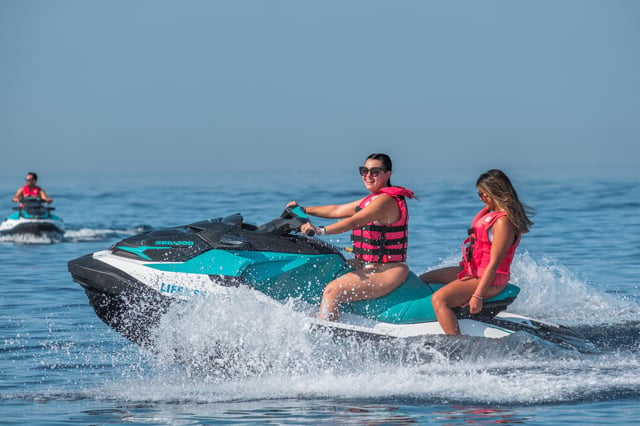
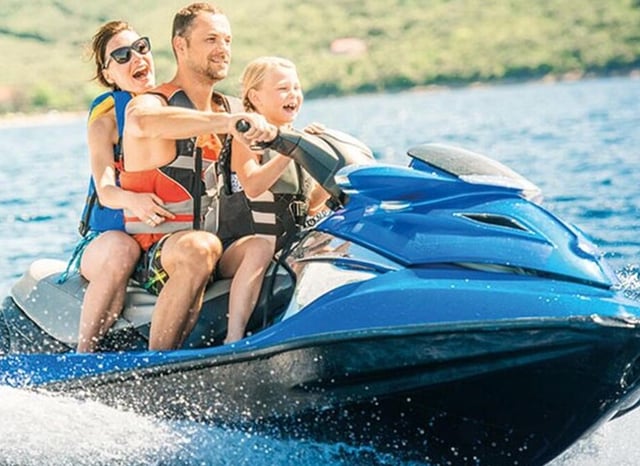
Experience high-powered jet ski riding in the heart of St Julian’s, with the choice of a solo ski or a shared ski for two people. This self-drive session gives you focused time on the water in St George’s Bay, with safety cover on hand and a clear riding zone so you can enjoy the speed and spray with confidence.
When you arrive at the jetty behind the Verdi St George’s Bay Marina Hotel in St Julian’s, you’ll check in at the watersports base, present your ID, and complete the indemnity form. If you are booking a one-hour rental, you will also leave a €100 cash security deposit per jet ski. The team will then kit you out with a life jacket and introduce you to your craft, whether you have chosen a single ski (driver only) or a shared ski with a passenger riding behind you.
Before you touch the throttle, an experienced instructor runs through a clear safety and operation briefing. You will learn how the controls work, how jet propulsion behaves at low and high speeds, safe stopping distances, and the rules of the riding area, including distance from shore, other skis, and swimmers. The staff also explain the boundaries of the designated zone; you must remain inside this zone for the entire session. This makes it easier to concentrate on handling, line choice, and speed without worrying about navigation.
Once you are set, you move off at low speed, getting used to the throttle response and steering. As your confidence builds, you can open the throttle within the limits of the area and conditions, weaving gentle turns and straight-line runs while keeping a safe gap to other users. A safety boat remains on station throughout, ready to assist if you fall in, drift towards the boundary, or need help remounting the ski. At the end of your session you return to the jetty at low speed, hand the ski back to the team, and reclaim your deposit if everything is in order. Expect to finish wet, energised, and with a much better understanding of how a modern jet ski behaves in real sea conditions.
The base is located on the shoreline of St George’s Bay, one of St Julian’s key coastal areas. To find it, head to 8, Ix-Xatt Ta’ San Ġorġ, next to the entrance for the hotel’s underground car park. Look for the black iron gate, go through it, follow the ramp down, turn left, and walk along the yellow line painted on the ground. This leads you directly to the jetty where the jet skis and safety boat are moored. It is a short walk from many hotels and cafés in St Julian’s, so you can easily combine a session with time on the beach or in town.
Riding takes place in a clearly defined zone within and just outside St George’s Bay. This keeps you separated from swim areas, anchored craft, and the busiest boat lanes, while still giving enough space for meaningful riding. The bay’s natural shape provides good visual reference points and usually some shelter from open swell, which is useful when you are learning to control acceleration, deceleration, and carving turns at speed. You are not permitted to range along the wider coastline; the focus is on controlled practice and high-quality ride time in a managed environment.
To drive any jet ski on this activity, you must be at least 18 years old and present a valid, legally binding photo identification document such as a passport or national ID card. This is checked on arrival; if you cannot present a suitable ID, you will not be allowed to operate a ski and no refund is issued. For shared skis, passengers must be at least 5 years old, and the combined weight of driver and passenger must not exceed 130 kg. Solo riders on single skis must also be under 130 kg.
You should be comfortable in deep water wearing a buoyancy aid and able to assist with climbing back onto the ski from the sea if you fall off. This activity is not suitable for pregnant guests, people with back or neck problems, those with heart conditions, or anyone who is very prone to motion sickness. It is also not recommended for most travellers over 65 unless they are in excellent health. You may not ride if you are under the influence of alcohol, recreational drugs, or any medication that impairs judgement or balance; staff can refuse access if they are concerned about your fitness to operate the ski.
This combined single-and-shared jet ski setup is ideal if your group has different preferences: solo riders can take a ski each, while others can share a ski and alternate driving and passenger roles. The controlled riding area, on-site briefing, and active safety boat cover give you the freedom to enjoy the acceleration and spray without worrying about open-water navigation or traffic. Because the focus is on riding time rather than a long-distance tour, you make the most of each minute on the throttle.
The St Julian’s location makes it easy to drop in for a session between other plans, with first-come, first-served slots available throughout the day. Operating procedures are clear and structured: ID checks, indemnity forms, a firm rule against dangerous manoeuvres, and the requirement to leave phones and valuables off the ski all exist to keep the experience safe and focused. For confident swimmers who want a high-energy watersports session in one of Malta’s most recognisable bays, it is a practical and well-managed choice.
With a single jet ski rental, you ride alone as the driver, which means you control the machine and weight distribution without needing to coordinate with a passenger. This is ideal if you prefer maximum responsiveness, are confident in the water, and want to focus fully on your own riding. The same safety rules apply as for shared skis: you must stay within the designated area, follow the briefing, and respect all on-water instructions.
The shared option is designed for two people on one ski: one driver and one passenger seated behind. This is great for couples or friends who want to share the experience and alternate roles, provided the combined weight does not exceed 130 kg. The handling feels slightly different with a passenger, especially in turns and over chop, so the driver needs to be smooth with throttle and steering to keep the ride comfortable and controlled.
You do not need any previous jet ski experience. Before you go anywhere near the throttle, a professional instructor will give you a clear, structured briefing on controls, balance, safe speeds, and how to handle the ski if you fall off. They also explain local maritime rules, the boundaries of the riding zone, and how to communicate if you need help. This is your chance to ask questions so you feel comfortable before you leave the jetty.
Once on the water, you are expected to apply that briefing. You will start slowly, get used to how the ski responds, and only increase speed when you feel in control. The safety boat and shore team watch the session and will intervene if anyone is riding in an unsafe way or drifting towards the edge of the designated area. The activity is suitable for first-timers with good general water confidence.
Every driver must bring a valid, legally recognised photo ID such as a passport or national identity card. This is checked on site, and if you cannot present it you will not be allowed to operate a ski and no refund is given. There is no separate boating licence requirement, but the ID check is non-negotiable. For shared skis, only the driver needs to show ID, but the operator may also confirm age for younger-looking passengers.
For one-hour rentals, you must also bring €100 in cash per jet ski as a refundable security deposit. Card payments are not accepted for this deposit, so arriving without enough cash will mean you cannot take the longer session. The deposit is held against potential damage and is returned once the ski has been checked back in and confirmed to be in the same condition as at the start.
Riding a jet ski is physically demanding: you will be working your legs and core to stabilise yourself, bracing over small waves, and sometimes remounting from the water. You should be comfortable in deep water wearing a buoyancy aid and able to move around a floating craft without assistance. If you have any concerns about your fitness level or joint health, it is worth discussing them with a medical professional before you book.
This activity is not suitable for people with back problems, neck issues, or heart conditions, and it is not allowed for pregnant guests. It is also not recommended for most travellers over 65 unless they are in very good physical condition and used to active sports. Anyone who is significantly prone to motion sickness, dizziness, or balance problems is likely to find the experience uncomfortable and potentially unsafe.
The main safety rules are straightforward: stay within the marked riding area, maintain safe spacing from other skis, never aim at wake jumping near other craft, and avoid sudden changes of direction close to others. Racing, deliberate close passes, and any form of showboating are not allowed. Before the session starts, you will read and sign an indemnity form confirming that you understand these rules and agree to follow them.
Staff monitor the water from both the jetty and the safety boat. If someone repeatedly ignores instructions, rides in a way that endangers themselves or others, or leaves the designated area, the operator has the right to end their session immediately and confiscate the ski. In that case there is no refund. The priority is to keep the environment controlled so that everyone can enjoy their riding time safely.
You are not allowed to carry personal belongings such as mobile phones or cameras while operating the jet ski. This is partly for safety—loose items can distract you, become projectiles in a fall, or be lost in the sea—and partly because you need both hands and your full attention on the controls and environment. The briefing will make it clear that you should not ride with anything that can fall or tangle.
Most guests leave their valuables, towels, and spare clothes at the base before heading to the jetty. If you want photos, it is usually better to ask someone onshore to take them from a safe distance, or to take pictures before and after the session rather than during it. Packing light and keeping only essentials on your person (such as ID in a secure pocket until check-in) makes the whole process smoother.
You should assume you will get fully wet during the session. Swimwear or quick-drying sports clothing works best, combined with secure footwear that will not slip off easily—avoid flip-flops and any loose shoes. The water and speed will generate spray even on calm days, and you may also end up in the sea if you fall or practise remounting.
Bring a towel and a dry change of clothes to leave at the base so you can get comfortable after the ride. In sunny conditions, apply high-factor sunscreen in advance and consider a rash vest or T-shirt to protect your shoulders and back. In cooler weather, a thin neoprene top or windproof layer helps reduce chill from wind and spray, especially once you slow down or step off the ski.
The operator defines a specific section of water where jet ski use is allowed. This zone is chosen to avoid swim areas, main boat traffic lanes, and shallow or hazardous spots. During the briefing, the team will show you exactly where you can ride, using visible landmarks on shore and clear reference lines. Staying inside this zone is a condition of the rental.
You are not permitted to use the ski as a long-distance touring craft or head off along the wider coastline towards other bays. The aim is to give you enough room to experience acceleration, turning, and control, while keeping supervision and rescue coverage straightforward. Leaving the designated area, even briefly, is a serious breach of the rules and can result in your session being ended without refund.
Jet ski sessions always depend on sea and wind conditions. In choppy water or strong winds, staff may decide to reduce operating hours, limit the area further, or temporarily pause rentals. If the conditions are clearly unsuitable or unsafe, the provider may cancel sessions for the day and offer you the choice to reschedule or receive a full refund for that booking.
If the weather changes while you are already on the water, the safety boat and shore team will instruct you to reduce speed or end the session early if necessary. You should always follow their directions promptly, as they have a better overview of the wider area and any developing risks. The goal is to give you as much ride time as possible while keeping a clear safety margin.
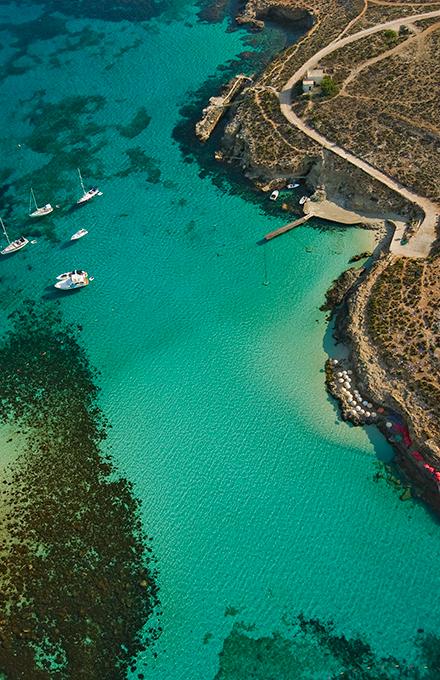
About the centre
St Julian's, Malta
Operated by Robert Arrigo & Sons, a partner of adventuro.
St Paul’s Bay & Bugibba, Malta
From €30
St Paul’s Bay & Bugibba, Malta
From €350

Valletta & Three Cities, Malta
From €350
Marsaxlokk & Delimara, Malta
From €350



Eastern Scotland, United Kingdom
From £80