We partner with Rewilding Britain to help protect our natural spaces for future adventures.
All centres are vetted for safety and quality. Your adventure is in good hands with adventuro.
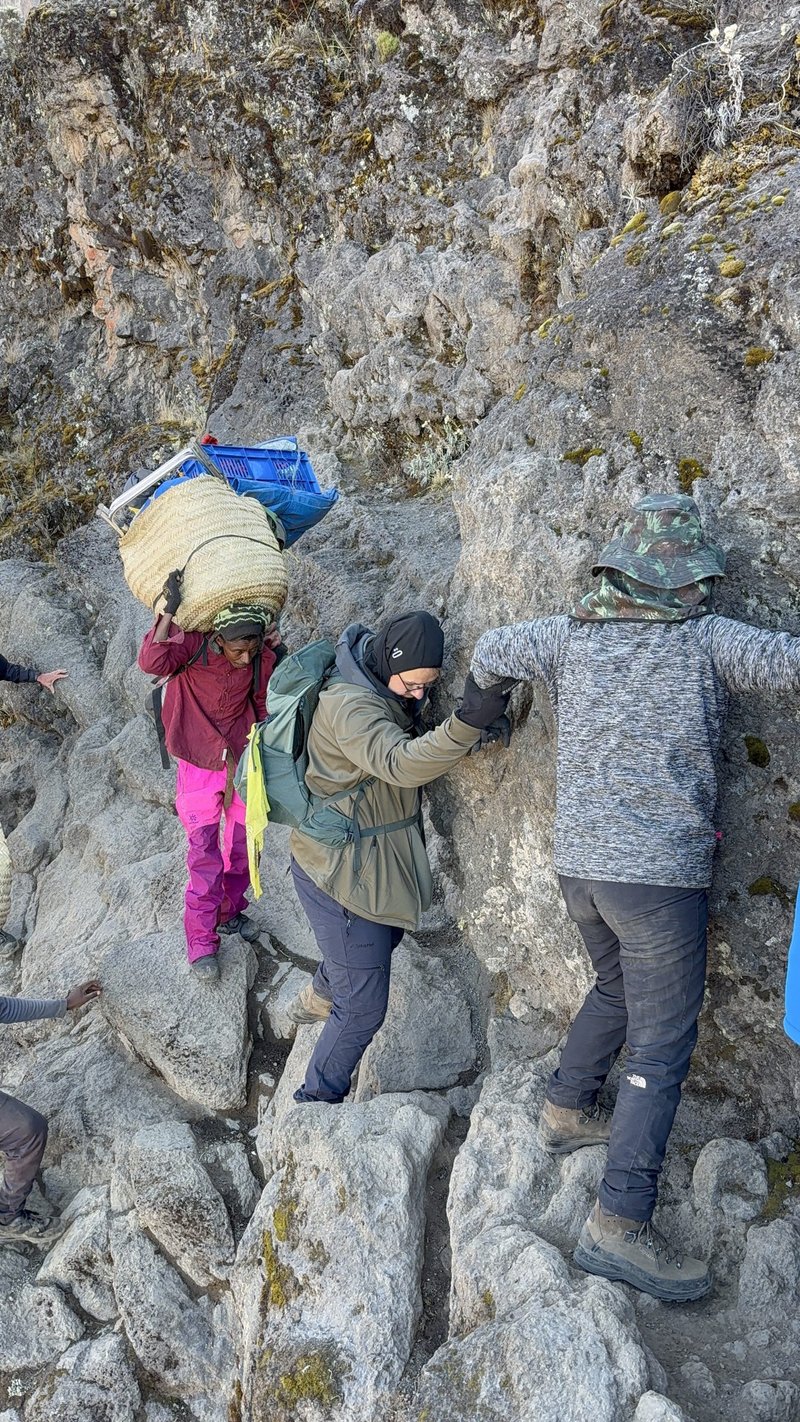
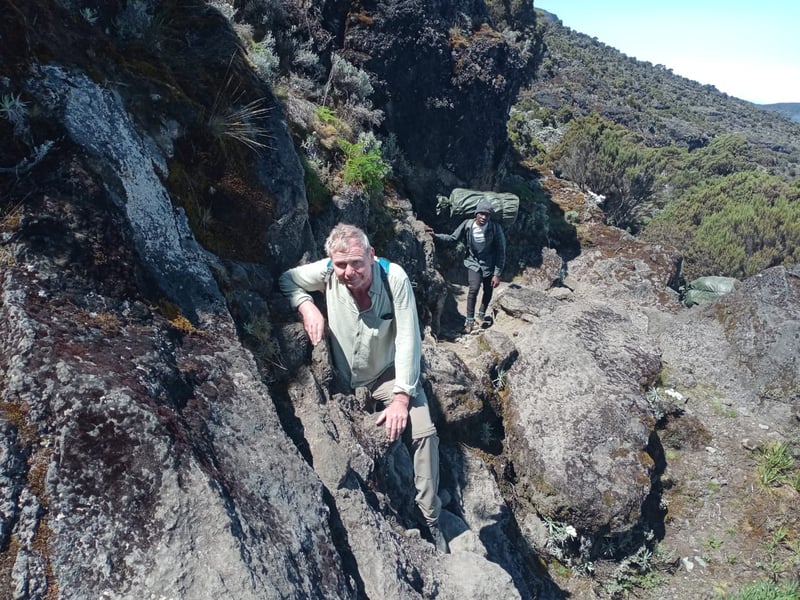
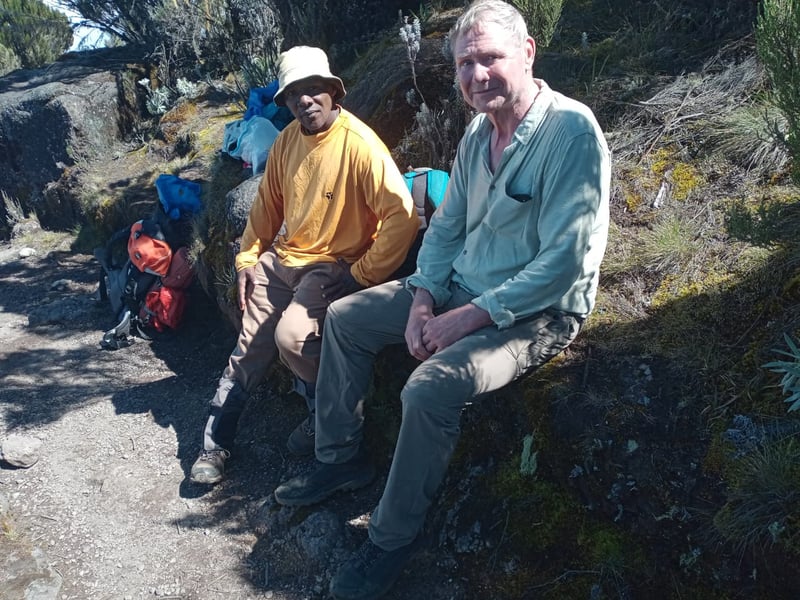
Reach Uhuru Peak on a focused five-day Marangu hut trek along Kilimanjaro's only dormitory route. You climb through rainforest and moorland, sleep in wooden huts, and make a midnight summit push from Kibo before descending to Moshi with your certificate in hand.
Each trekking day starts after breakfast in hut mess halls while porters move ahead with shared gear. Summit night from Kibo is the story you will retell for years, and the day-by-day hut stages in the itinerary below show how the five days unfold from Marangu Gate to the roof of Africa.
Our Marangu teams know this route intimately, from rainforest birdlife near Mandara to thin air on Kibo's scree slopes. Briefings are honest about fitness expectations on a five-day schedule, and we keep group sizes manageable so you always know who is looking out for you on the trail.
From gate registration to tipping ceremonies at the end, communication stays clear in English and Swahili. We want you to feel supported, not rushed, even on a shorter Marangu package aimed at guests with limited holiday time.
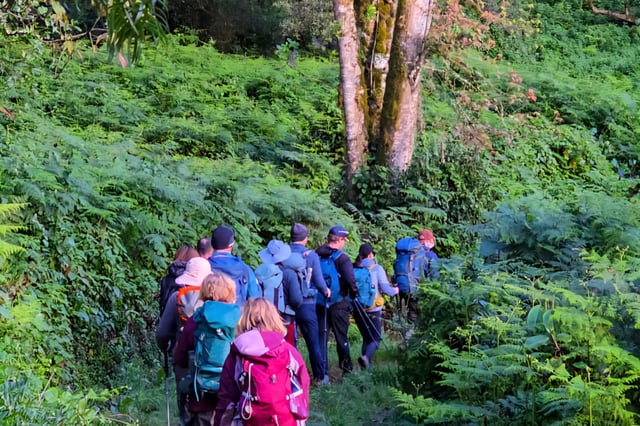
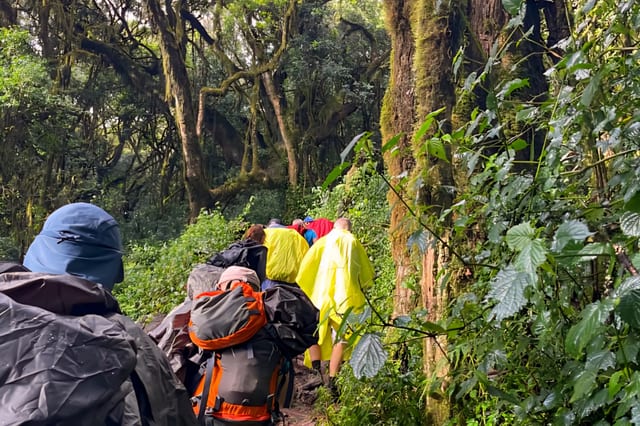
Leave Moshi early for Marangu Gate and complete park registration before entering montane rainforest. The trail climbs steadily through bird-filled forest to Mandara Hut, where you have dinner and your first night in the iconic A-frame cabins.
This opening day eases you into Kilimanjaro footing without extreme altitude, though the humidity and roots underfoot remind you that fitness still matters from step one.
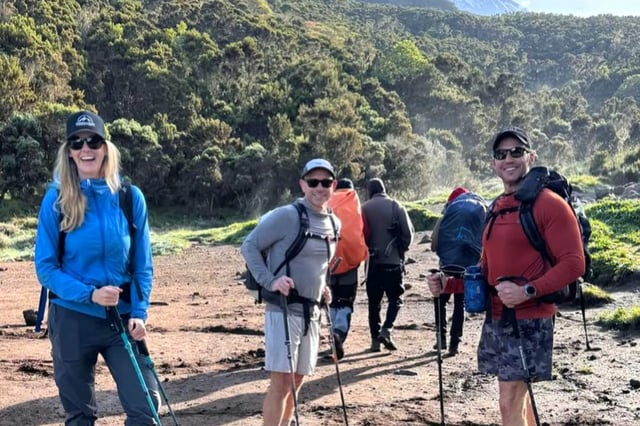
Break out of the forest into heather and moorland, passing giant groundsels with widening views of Mawenzi and Kibo. The path undulates across open hills before reaching busy Horombo Hut village, your acclimatisation base in the alpine zone.
Extra layers come out as temperatures drop in the afternoon, and guides remind you to hydrate as you sleep above 3,700 metres for the first time.
Cross the stark Saddle between Mawenzi and Kibo on a long, slow walk through alpine desert. Vegetation disappears and the air thins as you approach Kibo Hut at the foot of the crater wall.
Dinner is early and sleep comes quickly because summit wake-up is only a few hours away. Guides check headlamps, water, and warm layers before lights out.
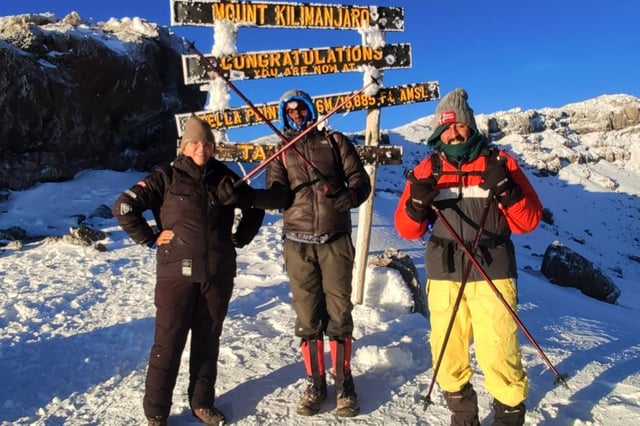
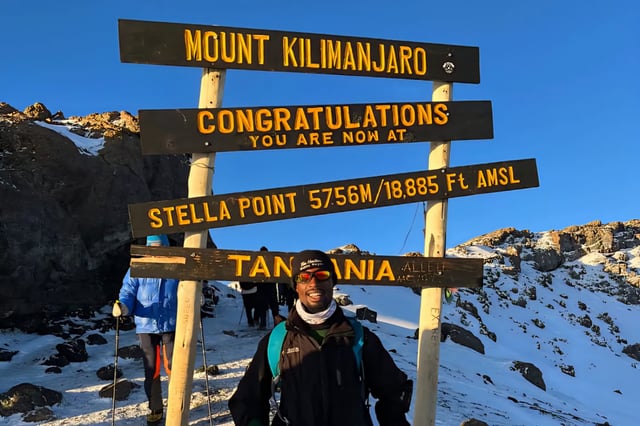
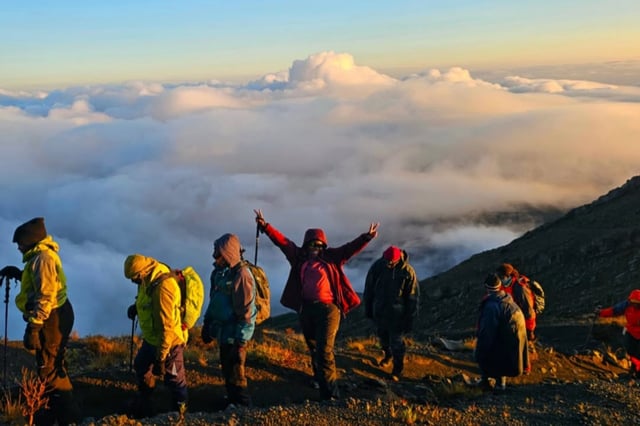
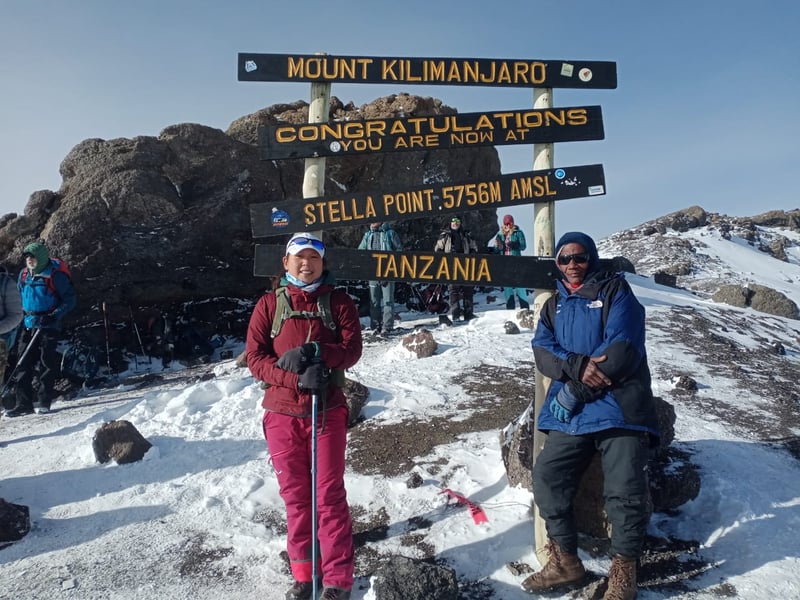
Start around midnight for the steep scree ascent toward Gilman's Point on the crater rim, then continue along the rim to Uhuru Peak as the sun rises. Photos and celebrations are brief because altitude and cold demand a careful descent.
You drop back to Kibo for rest, then continue down to Horombo Hut for a full night's sleep after the longest day on the mountain.
Descend through moorland and rainforest to Marangu Gate, where you receive summit certificates and thank your crew at the tipping ceremony. A vehicle returns you to Moshi in time for a hot shower and a well-earned meal.
Knees feel the downhill, so trekking poles help on muddy forest sections. Most guests sleep deeply that night back at hotel level.
Fly into Kilimanjaro International Airport (JRO), about an hour's drive from Moshi, and plan at least one night in town before the climb so you arrive at the gate rested and properly hydrated. Moshi is our base for gear checks and last-minute shopping, and it's the easiest place to hire or buy any missing trekking kit before you set off.
On day one we collect you from your Moshi hotel and drive around an hour east to Marangu Gate, passing through Marangu village and the green farmland on the mountain's lower slopes. After registration at the park office you start walking straight from the gate. At the end of the trek we meet you back at Marangu Gate and drive you to Moshi for a hot shower and a well-earned meal.
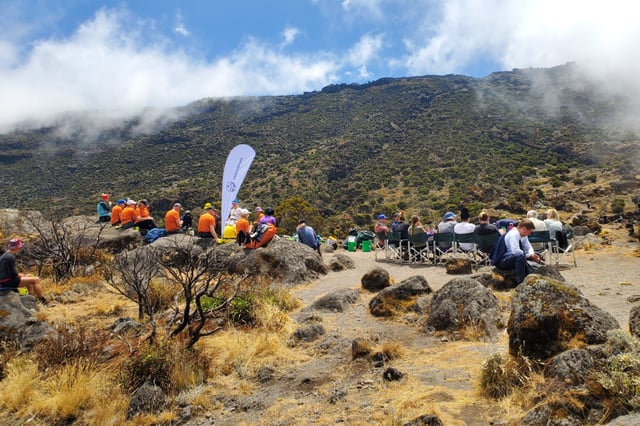
Marangu is the only Kilimanjaro route with wooden A-frame huts and dormitory-style beds rather than tents. You sleep at Mandara Hut in the rainforest zone, Horombo Hut on the moorland, and Kibo Hut below the crater wall, with communal dining in hut mess halls at each stop.
Mattresses are provided in shared cabins, but you need your own sleeping bag because temperatures drop sharply above Horombo even indoors. Hut villages can be busy during peak season, so a headtorch and earplugs help on early summit mornings when other groups are moving in the corridors.
Pack for rainforest humidity, cold moorland nights, and freezing summit hours above 5,000 metres. Broken-in waterproof hiking boots, a sleeping bag rated to about -10C, thermal base layers, fleece, down jacket, waterproof shell, hat, gloves, and a headlamp with spare batteries are essential for Marangu hut nights and the midnight push from Kibo.
Wear moisture-wicking clothing you can layer up and down as you move from forest to alpine desert. Pack a small dry bag inside your daypack for summit night, and bring USD cash for park fees at the gate plus earplugs if you are sensitive to noise in shared huts.
Yes for fit trekkers who accept a faster schedule than the classic six-day Marangu itinerary. The route itself is non-technical walking, but summit day is demanding and altitude remains the main challenge.
Guides pace the group slowly and monitor symptoms daily. If you prefer more acclimatisation time, consider our six-day Marangu hut trek instead.
No ropes or rock climbing are involved on Marangu. You need stamina for long walking days and the ability to hike uphill with a light daypack while porters carry the main luggage.
Previous high-altitude experience helps but is not mandatory if you arrive fit and follow guide advice on hydration and pacing.
Marangu is the only Kilimanjaro route with shared wooden huts rather than tents. Beds are dormitory style with mattresses, and dining is communal in hut mess areas.
You still need your own sleeping bag rated to around -10C because nights get cold above Horombo. Earplugs are useful in busy huts.
Conservation, hut, and rescue fees are paid at Marangu Gate according to current Tanzania National Parks tariffs.
Your crew assists with gate paperwork so registration is straightforward on your first morning.
You wake near midnight at Kibo Hut for hot drinks before climbing steep scree in the dark toward Gilman's Point. From the rim you continue to Uhuru Peak, usually reaching the summit around sunrise.
The round trip to the peak and back to Horombo can take twelve to fifteen hours, making it the toughest day physically even though the walking is not technical.
Plan regular cardio and hill walking for at least two months before you travel. A five-day schedule leaves less margin for slow acclimatisation than longer routes, so good baseline fitness matters.
If you can hike for six hours on consecutive days with a pack, you are in the right ballpark. Discuss injuries or health conditions with us before you travel.
Waterproof boots, thermal base layers, fleece, down jacket, waterproof shell, hat, gloves, and a quality sleeping bag are essential. A headlamp with spare batteries is mandatory for summit night.
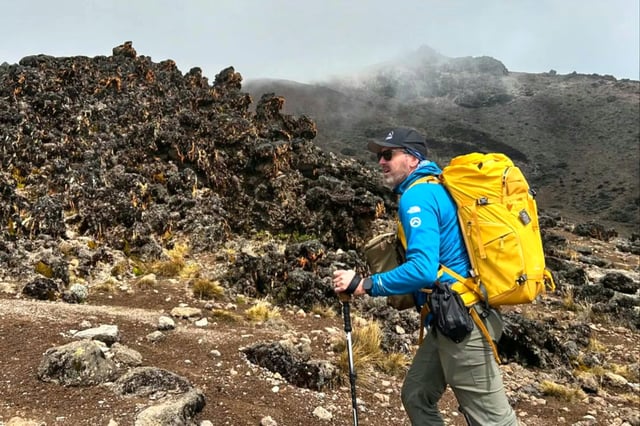
Sunscreen and sunglasses protect you in the alpine desert, while trekking poles ease pressure on knees during long descents.
We strongly recommend insurance that covers high-altitude trekking up to 6,000 metres and medical evacuation. Hospital care and helicopter rescue are costly without cover.
Purchase a policy that matches your trek altitude and activities before you fly to Tanzania, and keep emergency contact details accessible on the mountain.
Tipping guides, cooks, and porters is customary at the end of the trek. Your lead guide explains suggested amounts during the pre-climb briefing.
Many guests pool contributions in USD or Tanzanian shillings at the gate ceremony on the final descent day.
Yes, minimum group size is one and you can join open departures or request a private climb. Solo travellers still share hut space with other groups on busy Marangu nights.
Private climbs offer flexibility on dates and pacing if you prefer not to wait for a group departure.
About the centre
Moshi
From the foothills of Africa's highest peak, we guide walkers and climbers on carefully paced routes up Mount Kilimanjaro and into the rainforest zones around Moshi. Whether you are aiming for Uhuru Peak on a multi-day trek or want a single-day taste of the mountain on the Marangu trail, our local guides focus on steady acclimatisation, clear briefing, and the kind of practical support that keeps you safe and comfortable on the trail.
We work with small groups and private parties, drawing on years of experience on Machame, Lemosho, Marangu, Rongai, Umbwe, and the Northern Circuit. You'll meet us in Moshi for transfers, equipment checks, and honest advice on fitness and packing before you set foot in Kilimanjaro National Park.
Operated by Kilimanjaro Umoja Tours, a partner of adventuro.