We partner with Rewilding Britain to help protect our natural spaces for future adventures.
All centres are vetted for safety and quality. Your adventure is in good hands with adventuro.
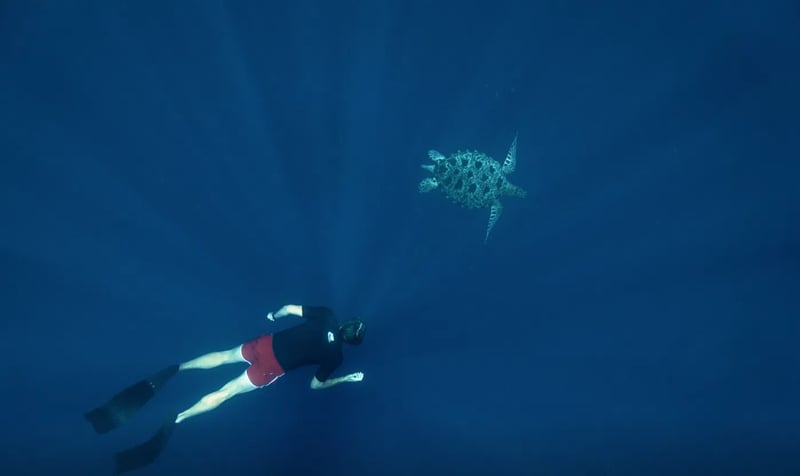
Designed for advanced freedivers looking to master deep-diving techniques and step into supervisory or professional roles, this course offers a technical and structured approach. You’ll gain a high level of confidence in breath-hold diving, equalisation, rigging, and diver support through detailed theory and practical sessions.
Classroom-based theory sessions dive deep into the science of freediving. Topics include gas laws like Boyle’s, Dalton’s and Henry’s, and how these apply to pressure effects, lung function, and decompression. You’ll study the mammalian dive response, barotrauma prevention, and blackout risks, while also exploring nutrition, training cycles, and dry preparation techniques. Packing, reverse packing, and breathing muscle stretches are all introduced in dry workshops before they’re applied in the water.
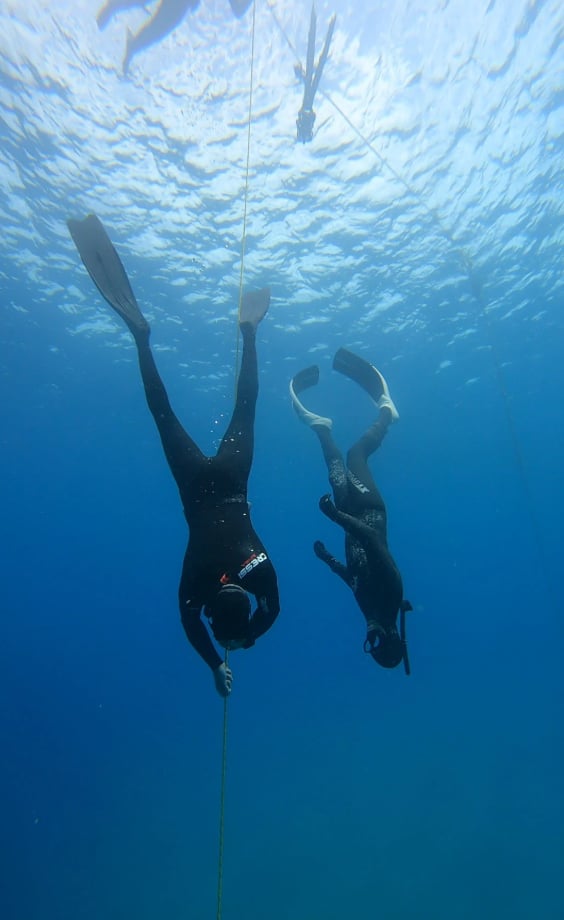
In the open water, sessions focus on advanced techniques like constant weight dives past 30 metres, mouth-fill equalisation, FRC diving, and effective use of lanyards, bottom weights, and safety tools. You’ll also learn how to set up a training line, prepare dive rigs, and run warm-up sessions for other divers. Sites used include deeper channels, drop-offs, and protected reefs that allow safe and progressive depth training with minimal current and consistently warm water.
You’ll also spend time shadowing or assisting other course levels where appropriate, developing leadership skills and learning how to manage groups. This includes safety management, surface supervision, and leading warm-ups. The course is not just about going deeper—it’s about understanding every element of the dive and building a framework for future instruction or technical progression.
Training takes place in North Sulawesi, starting at a coastal base that provides pool access for confined water work and quick boat access to open water sites. The surrounding region offers a huge variety of topography, from calm black sand slopes and coral reefs to vertical walls and deeper offshore pinnacles.
Dive sites are selected based on your progress, with access to protected areas across Manado Bay, Bunaken Marine Park, Bangka Island, and Lembeh Strait. These locations combine consistent visibility, easy surface conditions, and sufficient depth—making them ideal for mastering the complex techniques introduced at this level.
Participants must be 18 or older and already certified as an AIDA Level 3 freediver. In addition, you must hold a current First Aid and CPR certificate dated within the past two years.
You’ll also need strong overall freediving fitness and comfort underwater. It’s recommended that you’re already confident with the fundamentals of Frenzel equalisation and depth adaptation, as this course builds directly on those foundations.
The course is led by highly experienced AIDA instructors with national and international freediving achievements. Training is structured but flexible—sessions are tailored to your specific challenges and progression goals, whether that's developing a more efficient free-fall or refining your rigging skills for deeper dives.
All facilities and logistics are designed around freediving. From long ladders and dive-line set-ups on the boats to dedicated briefing areas and debriefing support, everything is in place to help you train safely and effectively. The team’s supportive attitude and expert-level coaching make this an ideal course for divers aiming to reach peak recreational depth or move toward professional instruction.
AIDA Level 4 is the most advanced recreational freediving certification offered by AIDA and is designed for those who want to push their depth, safety awareness, and technical understanding to a professional standard. Unlike previous levels, this course introduces FRC (Functional Residual Capacity) diving, mouth-fill equalisation, and packing techniques, all of which are used by elite-level freedivers.
It’s also the first course where you are trained in assisting others, managing dive sessions, and supervising groups. The theoretical depth is greater, with more time spent understanding the physics and physiology of freediving, including gas laws, blackout scenarios, decompression risks, and performance training.
To complete AIDA Level 4, you will need to perform a constant weight dive to a depth of at least 32 metres, a dynamic swim of 70 metres in the pool, and hold your breath for 3 minutes 30 seconds during a static apnea. These are challenging but achievable targets for experienced freedivers who have built up their skills over time.
The course provides time to gradually increase depth and comfort. Depths beyond 32 metres can be explored during training if conditions allow and your progress supports it. However, instructors always prioritise safety and correct technique over hitting maximum depth.
Yes. One of the key goals of AIDA Level 4 is to prepare you for a leadership role in the freediving environment. While you won’t be certified to teach, you will be trained to support instructors, lead warm-up sessions, and supervise less experienced divers in confined or open water under appropriate conditions.
You’ll also learn how to evaluate risk, maintain safety at the surface, communicate effectively during training sessions, and manage common issues. These skills are essential if you’re planning to continue toward AIDA Instructor status or want to mentor others during club training or trips.
Safety is central to every element of AIDA Level 4. You’ll be diving under the supervision of experienced instructors and safety divers who monitor you closely both at depth and on the surface. Courses are structured to build confidence, avoid overexertion, and allow proper recovery time between dives.
Rescue scenarios and response drills are included in the course to ensure you’re not only diving safely yourself but also capable of responding to incidents involving others. From understanding shallow water blackout to handling lanyards and dive lines, safety techniques are embedded in every session.
All required freediving equipment is included in the course fee, including fins, masks, snorkels, wetsuits, weights, lanyards, and dive line gear. This ensures all equipment is suitable for deep diving and maintained to high safety standards.
However, if you have your own gear and prefer to use it, you’re welcome to do so—provided it meets safety and performance criteria for deep dives. Instructors will inspect any personal gear before use to confirm it is appropriate for the course.
Theory at Level 4 goes well beyond the basics. Topics include the physics of gases under pressure (Boyle’s, Dalton’s and Henry’s Laws), lung volume changes, decompression sickness, nitrogen narcosis, shallow water blackout, barotrauma, and more. You’ll also look at how to optimise your training through periodisation, diet, and physical conditioning.
Much of the content also focuses on risk management and planning: how to rig dive lines safely, supervise multiple divers, and manage open water logistics. The goal is to make sure you not only dive effectively but understand the systems behind a safe and productive session.
It’s best to have completed an AIDA Level 3 course recently, and ideally you should be actively freediving or training in the lead-up to this course. The physical and mental demands of Level 4 are significantly higher than previous levels, so being well-prepared helps ensure you enjoy the experience.
If you’ve had a long break, we recommend a refresher or coaching session before the course starts. This will allow you to reconnect with your technique and comfort underwater so you can hit the ground running when the course begins.
FRC stands for Functional Residual Capacity diving, a technique where the diver begins the descent on a partial breath. This allows for a faster descent and can help with equalisation but requires a solid understanding of how pressure affects your lungs and buoyancy.
It’s introduced at Level 4 because it carries more risk than standard diving, and it’s only safe when a diver has full control over their technique, equalisation, and safety procedures. You’ll practise FRC dives under close supervision in a controlled environment before using it in open water.
Accommodation is not included in the course fee, but there are convenient options available nearby. Many participants choose to stay at the Manado or Bangka centres, both of which offer comfortable rooms, on-site dining, and easy access to the training facilities.
These resorts are well-suited for freedivers, with access to house reefs, gear storage, and flexible scheduling to align with your course sessions. If you’re staying at one of these resorts, the freediving team can coordinate directly with your schedule to ensure a smooth experience.
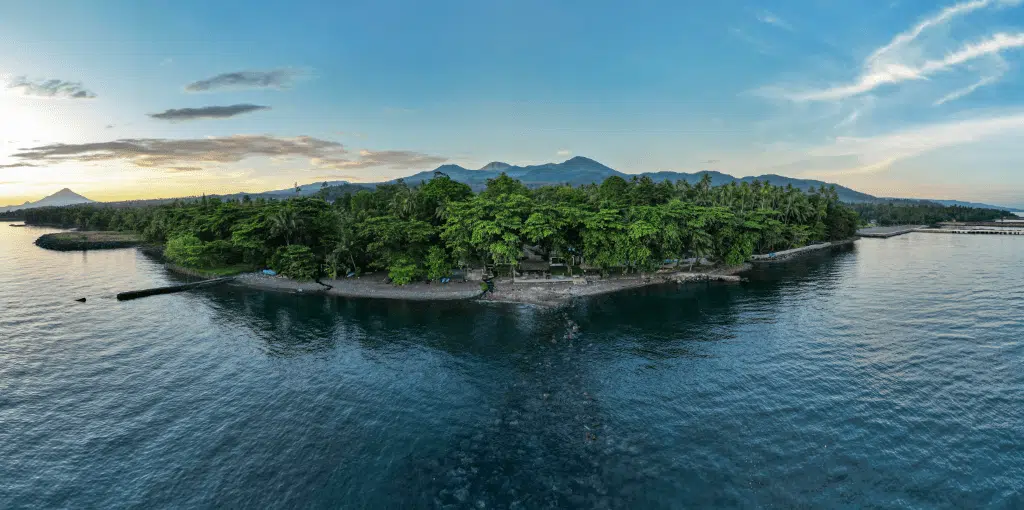
About the centre
Minahasa Regency, North Sulawesi
Operated by Murex Resorts, a partner of adventuro.


North Yorkshire, United Kingdom
From £640



North Sulawesi, Indonesia
From $3794