
Ready to find a course or session?
AIDA 4 Master Freediver is the top recreational rung on the AIDA ladder before instructor training, taking you to thirty-eight metres maximum training depth with demanding static, dynamic and constant weight targets. You need AIDA 3 Advanced Freediver or AIDA 3 crossover equivalence, plus current first aid with CPR within two years. Students arriving from PADI Advanced Freediver or SSI Advanced ratings must still prove AIDA 3 skills via crossover before enrolling.
The course spans at least four days with six water sessions, four open water over at least two days, plus classroom and dry work. Performance requirements include three minutes thirty seconds static apnea, seventy metres dynamic with bifins and thirty-two metres constant weight with bifins, with theory exam at seventy-five percent pass. You study FRC diving, mouth-fill equalisation, packing, warm-ups, stretching, training concepts, diet, and open water equipment rigging including knots. Optional variable weight training may appear where centres and conditions allow.
AIDA 4 also prepares successful candidates for Assistant Instructor roles and deeper personal progression with eyes open to risk. Mouth-fill coaching feels awkward on land before it clicks underwater. That is normal. Leave a comment when you book with your first aid expiry date and recent depth log so the centre can confirm prerequisites early.
AIDA 4 is assessed through written theory and high-level confined and open water performances under instructor supervision.
Quick answers about this qualification. For anything else, use live chat or browse bookable activities below.
Find activitiesIt is AIDA's highest recreational freediver certification, targeting thirty-eight metres maximum training depth with advanced static, dynamic and constant weight performances. It bridges serious personal progression and Assistant Instructor preparation.
It sits above AIDA 3 and below professional AIDA Instructor training.
AIDA 3 Advanced Freediver or AIDA 3 crossover equivalence, plus current first aid with CPR within two years, minimum age eighteen.
Leave a comment when you book with first aid certificate dates and recent depth experience for prerequisite checks.
Three minutes thirty seconds static apnea, seventy metres dynamic with bifins, thirty-two metres constant weight with bifins, rescue competence and seventy-five percent theory pass.
Your instructor progresses you conservatively toward these numbers across multiple sessions rather than on a single lucky day.
At least four days with six water sessions, four open water over at least two days, plus classroom, dry training and exam time.
Many centres run five or six days for adequate rest between deep attempts. Ask about the local schedule before booking travel.
Mouth-fill is an advanced equalisation method using a stored air volume for deeper dives. AIDA 4 introduces it with dry drills first, then supervised in-water trials when your instructor agrees you are ready.
It is not mandatory fun for everyone. Abort rules stay strict throughout coaching.
Yes. AIDA 4 prepares successful candidates for Assistant Instructor roles and is part of the pathway toward AIDA Instructor Course entry alongside other requirements set by AIDA Instructor Trainers.
Not every AIDA 4 student wants to teach. The course still benefits dedicated recreational divers pursuing depth with structured risk management.
Agency master-level courses differ in depth targets, session counts and exam content. PADI Advanced Freediver is several rungs below AIDA 4 in the AIDA system.
Cross-agency recognition does not replace AIDA 4 assessments. Plan crossover evaluation if you are switching pathways mid-ladder.
Well-fitting personal freediving kit is strongly recommended at this level: low-volume mask, long fins, wetsuit and snorkel you trust.
Leave a comment when you book about line lanyards, nose clips and rigging tools the centre expects you to own versus rent.
AIDA 4 emphasises team protocols, conservative progression, rescue competence and understanding barotrauma and hypoxia risks. Sessions use lines, buoys and trained buddies.
Depth always carries risk. Your instructor's job is to keep training controlled while you learn to manage yours responsibly.
Extra pool, dry equalisation or open water days are common at master level. Many students certify over extended calendars rather than minimum day counts.
Partial skill sign-offs with a retake plan beat rushing depth on a bad equalisation day. That is the point of structured standards.
adventuro lists AIDA 4 at established depth venues with proper line infrastructure. Compare boat support, assistant instructor opportunities and kit policies.
Leave a comment when you book with prerequisite cards, first aid expiry and a honest summary of your last season's depths.
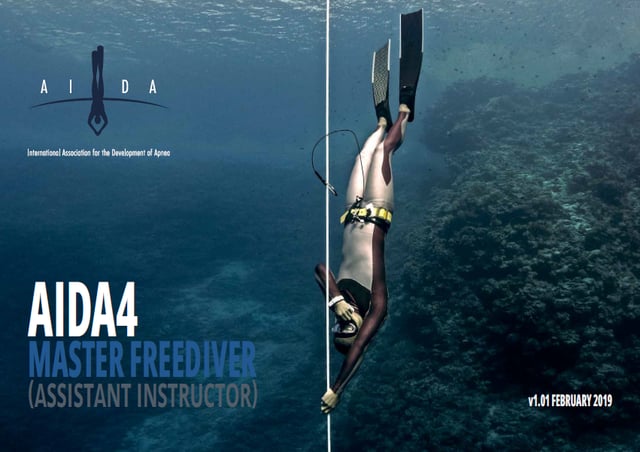
Join our AIDA Master Freediver Course: £470, 4 days, advanced techniques, 32m depth, online theory, practical sessions in London & Wraysbury. Book now!
From £ 470
Master advanced freediving techniques over 4-5 days including packing and equipment management in North Sulawesi waters. $703.
From $ 703