We partner with Rewilding Britain to help protect our natural spaces for future adventures.
All centres are vetted for safety and quality. Your adventure is in good hands with adventuro.
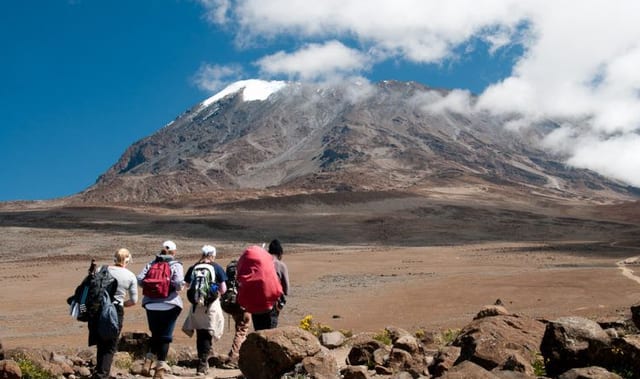
The Londorossi approach onto the Shira Plateau and Northern Circuit is chosen for quieter trails and a longer acclimatisation profile. Guides, porters, and cooks travel with you, meals and camp are organised on the mountain, and the extra days circling north are there to give you a steadier chance at Uhuru Peak. You'll start at the western gate, not the busy southern ones.
After the northern traverse, summit night and the Mweka descent follow the same high-rim finish as other long routes. We'll keep the daily rhythm slow and the camps remote. Arusha nights frame the trek.
Kilimanjaro itineraries come from a locally owned Arusha company that specialises in tailor-made climbs and safaris. The mountain team is trained for altitude, and you can ask questions of the people who actually run the trek before you book.
The Londorossi approach onto the Shira Plateau and Northern Circuit is chosen for quieter trails and a longer acclimatisation profile. Guides, porters, and cooks travel with you, meals and camp are organised on the mountain, and the extra days circling north are there to give you a steadier chance at Uhuru Peak.
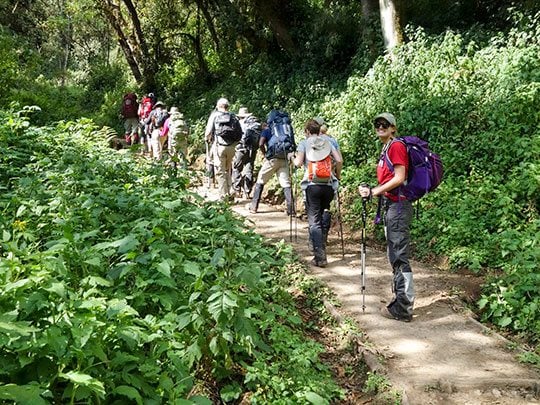
After an early start, drive from Arusha towards Londorossi Gate for registration and permits. From here, continue along a forest track in a 4x4 vehicle, often passing through dense woodland before reaching the starting point of the trek. The walk begins on a steady trail through forest and gradually opens out as you climb onto the Shira Plateau.
As the vegetation changes, the landscape becomes more open with wide views across the plateau. The trek continues for several hours at a comfortable pace before reaching Shira 2 Camp, where you settle in for your first night on the mountain at altitude.
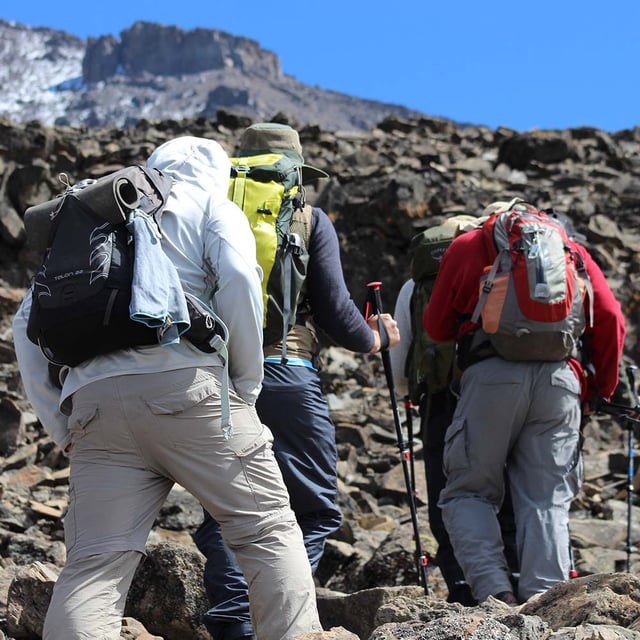
Leaving camp, the trail gradually climbs across the plateau and into moorland. The terrain becomes more exposed, with volcanic rock formations and open ridges. You pass near Lava Tower, an important acclimatisation point, where the increase in altitude becomes more noticeable.
After spending time at this higher elevation, the route continues towards Moir Hut, slightly descending to sleep at a lower altitude. This “climb high, sleep low” approach helps your body adjust while giving you time to settle into the rhythm of the trek.
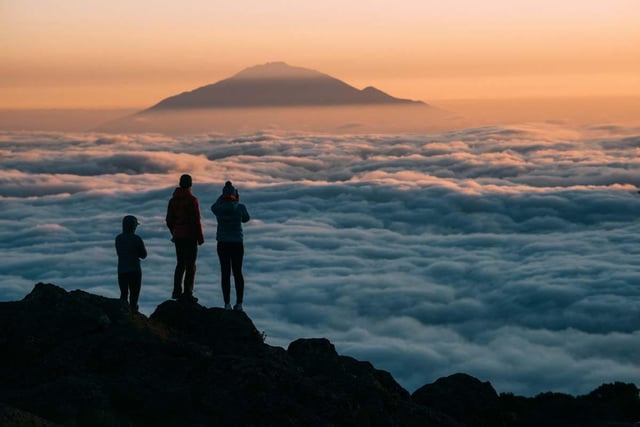
The route now leaves the more travelled paths and joins the Northern Circuit, one of the quieter sections of Kilimanjaro. The trail climbs steadily along ridgelines with long, open views stretching out towards Kenya.
This day involves several hours of trekking across remote terrain, with fewer groups around and a real sense of space. Campsite arrival at Pofu offers a chance to rest and take in the surroundings, with the mountain’s northern slopes feeling far removed from busier routes.
Continuing along the Northern Circuit, the path moves through a series of valleys and gentle ridges. The pace remains steady to support acclimatisation, with regular breaks built into the day.
The terrain alternates between rocky sections and more open ground, with the landscape becoming increasingly dry and sparse. By the time you reach Third Caves Camp, you will have spent several days at altitude, helping your body adapt ahead of the summit push.
This stage begins with a gradual descent before crossing towards the southern side of the mountain. As you approach Kibo, the environment becomes more barren, with loose volcanic rock and wide, open slopes.
Arriving at Kibo Camp in the afternoon, you have time to rest, organise your gear, and prepare for the summit attempt. An early dinner is followed by a few hours of sleep before the overnight climb begins.
Around midnight, you begin the summit push under headtorch light. The climb is steady but demanding, following steep switchbacks through loose scree and volcanic rock. Progress is slow and deliberate, with regular stops to manage breathing and conserve energy.
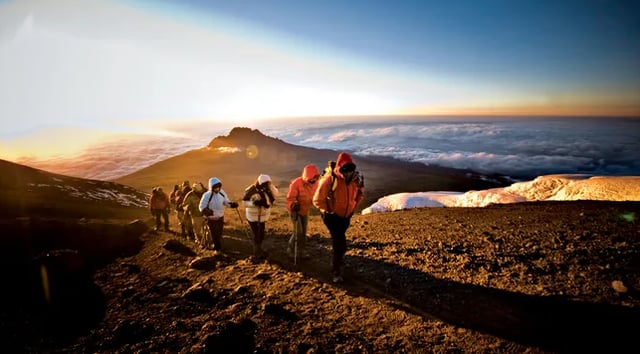
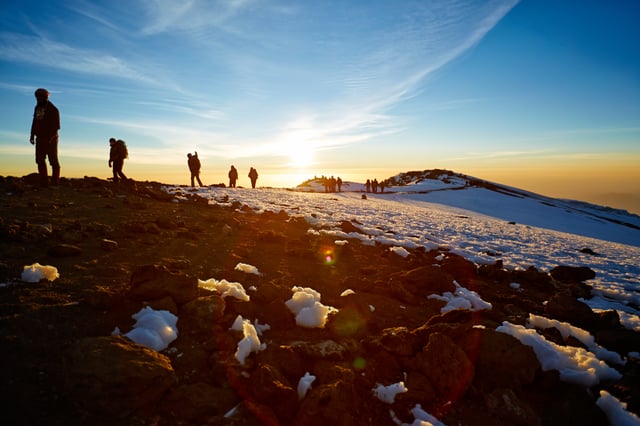
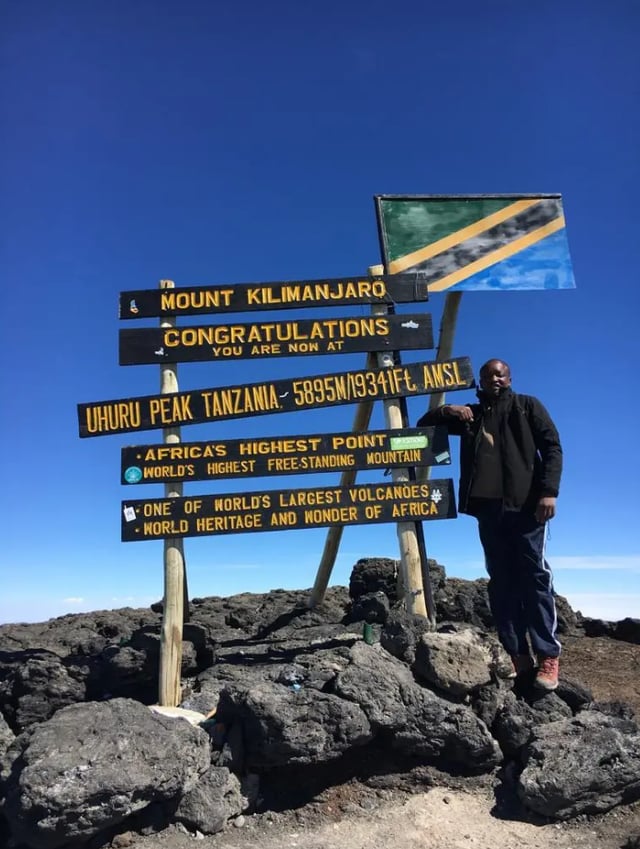
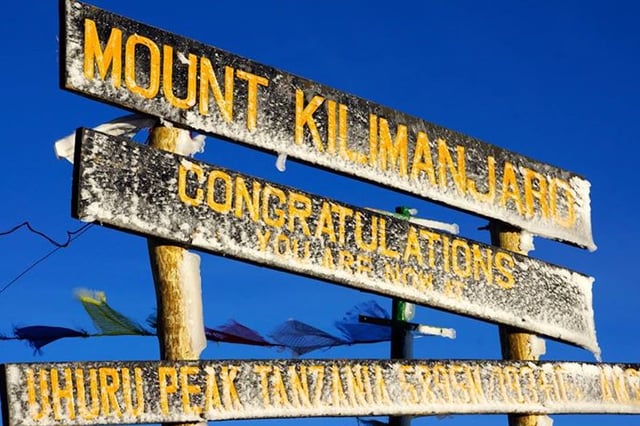
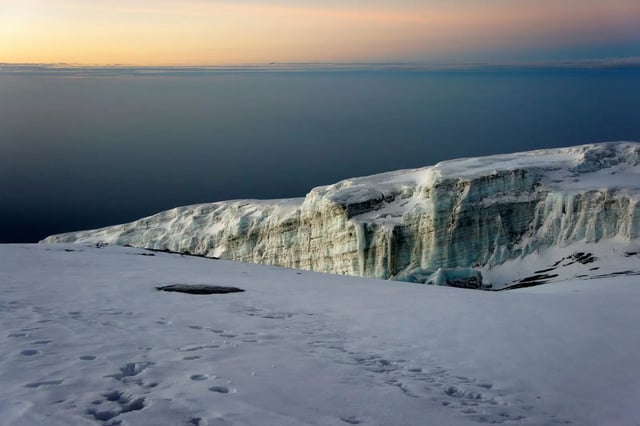
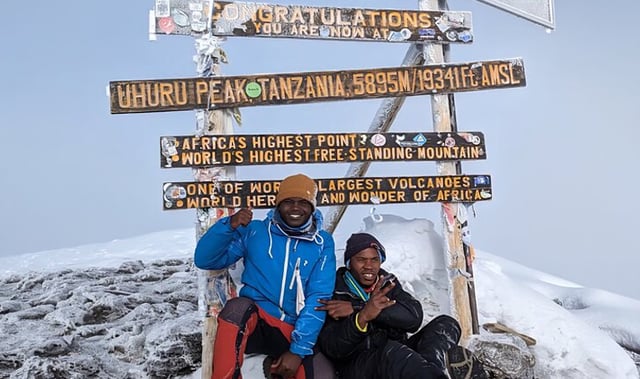
Reaching Gilman’s Point at the crater rim marks a major milestone. From here, the final stretch to Uhuru Peak follows the rim, with changing conditions depending on the season. After reaching the summit and taking in the views, you begin the descent, returning past Kibo Camp before continuing down to Millennium Camp for the night.
The descent continues through changing vegetation zones, moving from alpine terrain back into forest. The path becomes easier underfoot as you lose altitude, and the air grows warmer.
At Mweka Gate, you complete the trek and receive your summit certificate. From here, transfer back to Arusha for a comfortable evening and time to recover after the climb.
Accommodation on the mountain is in tents at designated campsites, with all camping equipment provided and managed by the support team. Each campsite is set up in advance, allowing you to arrive and rest without needing to organise your own setup.
Before and after the climb, you will stay in accommodation in Arusha, offering a more comfortable environment to prepare for the trek and recover afterwards.
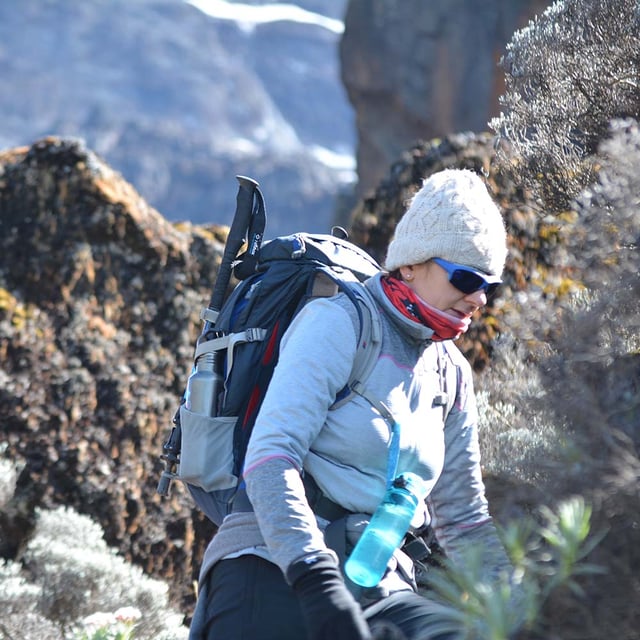
You will need layered clothing suitable for both warm and cold conditions, as temperatures vary significantly with altitude. Insulated jackets, waterproof layers, gloves, and hats are essential, particularly for summit night.
Comfortable, well-worn hiking boots are key, along with a suitable sleeping bag for cold conditions. A head torch, trekking poles, and a daypack for daily essentials will also help make the climb more manageable.
This route is physically demanding due to altitude and duration, but not technically difficult. The longer itinerary helps your body adapt gradually, making it more manageable than shorter climbs.
A good level of fitness and preparation will make a significant difference to your experience.
It is quieter than many other Kilimanjaro routes and offers a longer acclimatisation period. The Northern Circuit section also provides more varied scenery and fewer crowds.
This makes it a strong option for those wanting a more remote and steady climb.
Summit day is the longest and most challenging part of the climb, often taking 10–14 hours including the ascent and descent to the next camp.
It requires determination, but guides manage the pace carefully to support the group.
A full support team accompanies the group, including guides, porters, and cooks. They handle logistics, carry equipment, and prepare meals.
Guides also monitor your health and adjust the pace as needed throughout the trek.
Guides are trained to recognise altitude symptoms and will adjust the pace or recommend descent if necessary. Safety is always the priority.
The longer route helps reduce the risk, but it is still important to listen to your body.
Meals are prepared fresh by a cook travelling with the group. You will receive regular meals designed to provide energy for trekking at altitude.
Dietary requirements can usually be accommodated if arranged in advance.
It is suitable for first-time climbers with good fitness levels. No technical climbing skills are required, but preparation is important.
Training beforehand will help you handle the physical demands of the trek.

About the centre
Kilimanjaro
Operated by Nature Bound Africa, a partner of adventuro.
Kilimanjaro & Arusha, Tanzania
From $2600
Kilimanjaro & Arusha, Tanzania
From $5460