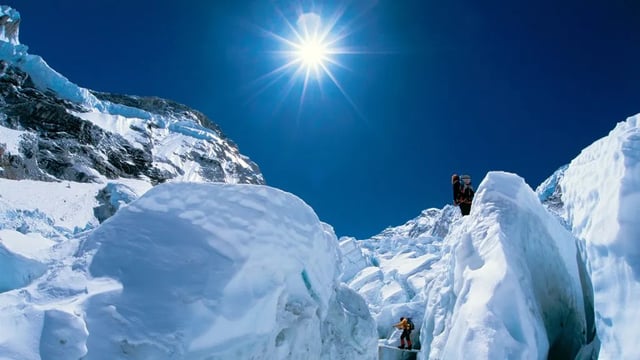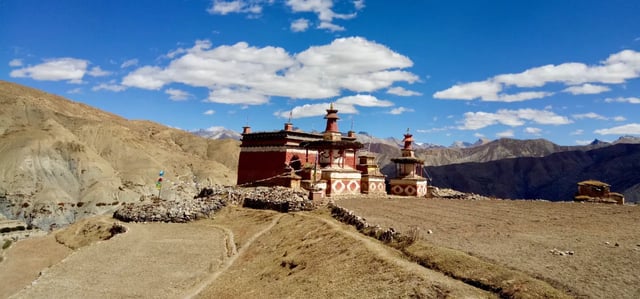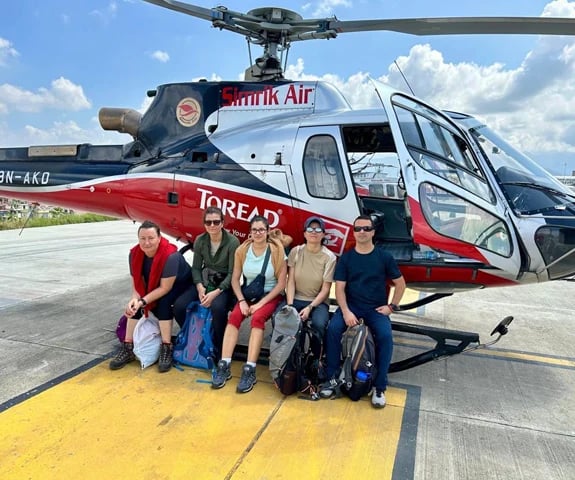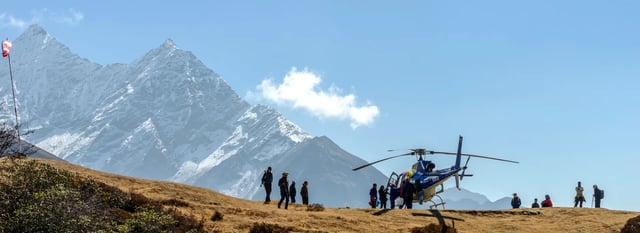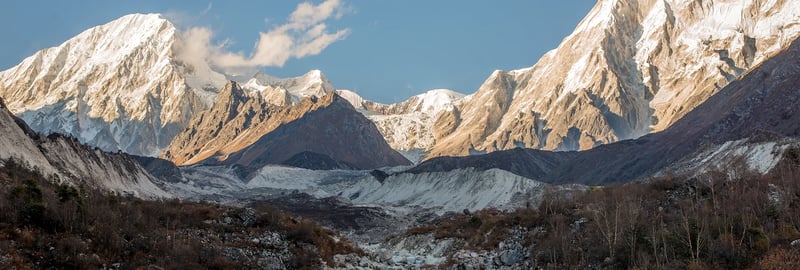
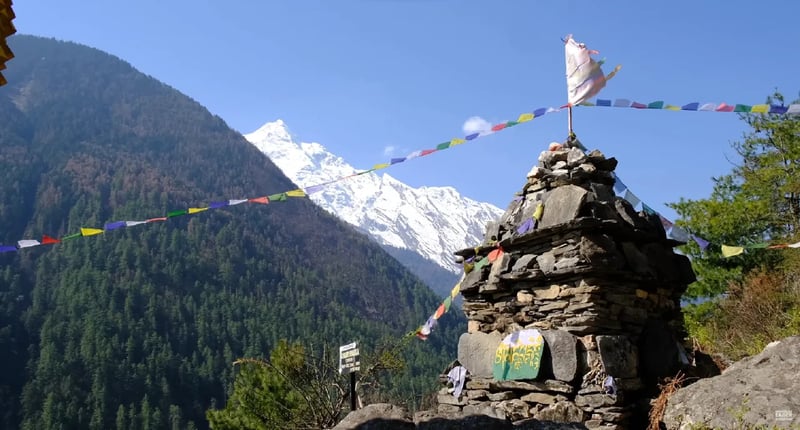
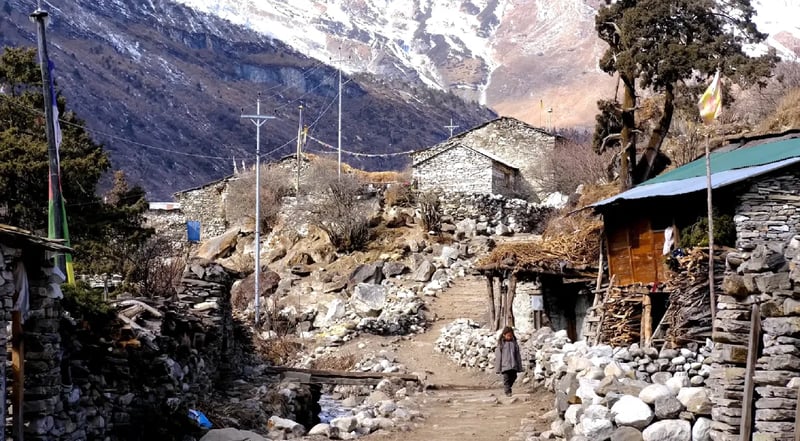
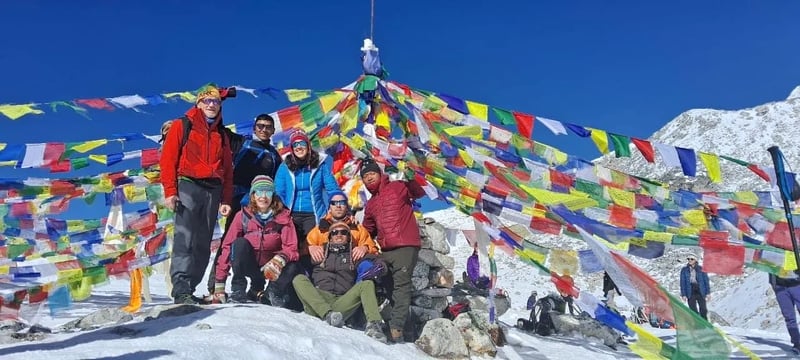
The full Manaslu to Tsum circuit gives more days in both valleys: Chhekampar, Mu Gompa, Samagaon, Samdo, and Larkya La on one permit set. You have time for monastery festivals and acclimatisation hikes toward Manaslu Base Camp. Extra days mean Chhekampar, Mu Gompa, Samdo, and a hike toward Manaslu Base Camp before Larkya La.
Long river days, Tibetan border villages, and a serious pass morning define the trip. Jeep ends at Arughat or Dharapani after the circuit closes. Arughat or Dharapani is the jeep finish after the river days and the Tibetan border villages.
Twenty-four days give both valleys time: Chhekampar and Mu Gompa first, then Samagaon, Samdo, and Larkya La on the same permit set. We'll jeep you to Machha Khola, handle restricted Tsum and Manaslu paperwork from Kathmandu, and collect you at Dharapani after the pass. Extra nights leave room for a monastery festival or an acclimatisation walk toward Manaslu Base Camp.
Bhagwat started as a porter in 1998 and still leads groups when he can; your sirdar is licensed through MOCTCA and chosen for patience on long restricted-area weeks. Porters carry lodge loads at one per two guests, insured and paid fairly. The office team trains in adventure tourism and keeps lodge phone lists current so Dharamsala before the pass is booked, not hoped for.
Welcome to the exotic capital of Kathmandu. Once you leave the Kathmandu Airport, you will find our assigned correspondent holding a sign with your name.
He will assist you with your transfer to your hotel. After you get comfortable, we encourage you to take some time to know the unknown Kathmandu.
Meanwhile, we will be waiting for all participants of our Manaslu Tsum Valley circuit trek to arrive during this period. In the evening, our guide will introduce himself and assemble everyone to brief us about our planned travel program.
Today is intensive sightseeing, getting to know what is unknown and new. We will walk you to the Swayambhunath temple complex, the largest of which is called the Monkey Temple.
Then, there is Boudhanath stupa as well where countless prayer wheels, monasteries, and color intensity will confuse your senses. Then, you will go to Pashupatinath Temple Complex which is again another oldest Hindu religious place in Nepal.
After we walk you through the historic streets of Kathmandu Durbar Square, our guide will assist you in acquiring or renting any necessary equipment. Please sleep early as you will have a lengthy road journey tomorrow.
In the early morning hours, we will set off on a mountain adventure. Ahead of us is a long journey through Nepalese bumps and roads that will lead us to our overnight location called Machha Khola. After managing the heavy traffic of Kalanki and Thankot, we will finally be able to leave Kathmandu and join the Trishuli Highway beside the river of the same name.
We will drive along the well-maintained road towards Dhading. Our real off-road adventure now begins as we take on the side trail that leads us to Dhading Besi.
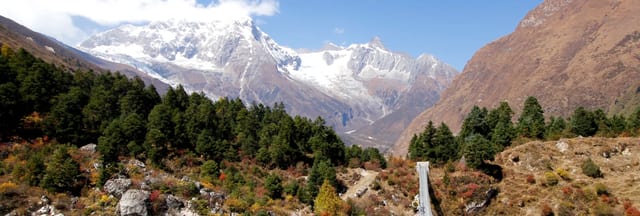
From today, we will start our walking adventure, which will direct us through the bamboo forests and steep slopes of deep gorges of traditional Nepali villages. After Machha Khola, we will walk across our first hanging bridge over the Buddhi Gandaki River with Ganesh Himal gazing at us all the time.
Then, walking a few km, we will reach the tiny settlement of Khorla Besi. The progressive trail will then take us to the characteristic village of Tatopani from where we will begin climbing consistently till we meet another hanging metal bridge extending over Dobhan Khola.
As we reach the end of the main street of Jagat, we will stop at the army checkpoint of Manaslu Restricted Conservation Area to verify our documents. Now, we will resume our travel on the open road beside the sandy shore of the Budhi Gandaki River and shortly arrive at Salleri. With Shringi Peak constantly shadowing us, we will walk among countless waterfalls and make it to Sridibas Village.
Then, crossing the Tibetan bridge, we will reach the sunny Gurung Village of Philim. Here, a new large waterfall will cool our tired legs preparing us for the next stretch of gentle climbing to Ekle Bhatti.
From today onwards, we will be entering into different scenery, cultures, and people. We will be in the territory where the ancient Tibetan culture of the Tsumbas dominates.
Encountering several stupas, chortens, and Mani wheels, we will be progressing alongside the Siyar Khola. The route will unhurriedly climb to the majestic Sardi Khola ridge.
We have now ventured deep into the land of Tsum. We will walk down from the ridge which may take us around half an hour and we will find ourselves by the shore of the Lungwa Khola.
The Tsum Valley opens up more as we progress in our today's journey. We will meet several very authentic villages en route decorated with many Mani walls, prayer rollers, gompas, and stupas.
Walking beside the amazing Siyar Khola, we will steadily take the ascending trail along the northern slope and arrive at 2460 m high Dumje Village. The forking road presents two options: one that leads to Ganesh Base Camp and the other that we will follow leads to Chekampar ( also called Chokhangparo).
Following this trail, we will come across the Serpu Khola. After crossing this marvelous small river, we will reach Gho and the high grassland of Chauri Kharka.
We will continue our journey of crossing some more authentic villages in the Tsum Valley. After Chakampar, we will walk through the appealing settlements of Phurbe, Chhule, and Pangdun. Along the way, we can take a glimpse at the Piren Phu, the beautiful cave of Milarepa perched on the hill.
The trail will continue to rise, becoming increasingly steep till we arrive at the extraordinary entrance of the Nile Village. Our evening will be spent admiring the amazing profiles of Nadi Chuli, Himal Chuli, Manaslu, Naike Peak, Pangbuche Himal, Simnang Himal, Saula Himal, Shringi Himal, and Ganesh Himal.
An important section of our Tsum Valley trekking has arrived when we will be traversing the last inhabited village of the Tsum Valley, the Mu Gumba. From the Nile, we will begin to climb the left path beside the Siyar Khola which can get steeper and will continue for about 3 to 4 hours culminating at the hill where Mu Gumba is perched.
Dramatically encircled by the Baudha, Shringi, Himalchuli, and Ganesh Peaks, this monastery is related to the Kagyupa tradition and is linked to the Kapan Monastery of Kathmandu.
It's time to bring an end to tour Tsum Valley trekking and begin our exploration around the Manaslu Himal for which we will have to walk back to Chekampar, also called Chhokang Paro. The journey will be quite easy and simple as mostly we will have to follow the downhill path as we pass through the familiar villages of Pungdun, Chhuley, Phurbey, Lamagaon, Lar, Bursi, Nga, and Ngakyu before reaching Chhokang Paro.
Along the way, we will take a moment to visit the Milarepa Cave, where the saint is believed to have engaged in deep meditation for several years.
We will now follow the route that runs parallel with the enchanting land filled with pines and blooming rhododendrons. We will travel back through Gho and Sarpu Khola once more and observe rural Nepal in the settlements of Kowo, Yarchyo, and Tanju before we arrive at Chumling.
Once more, we will walk through Gumlung and tackle the up-and-down terrain of the Sardi Khola Danda before we reach Lokpa for the night.
From Lokpa, we will journey to reach the Budhi Gandaki valley once more. As we keep on walking, we will come to the path that meets the trail coming from Philim. We will now direct ourselves to the right and then move on to walk across the bridge over the glistening Budhi Gandaki River, which will take us to Ekle Bhatti.
We will move through the lush bamboo thickets and arrive at Nupri. Prepare to cross the narrow canyon to reach Deng which again gives us the impression of Tibetan Buddhism.
From Deng, we will start walking beside the eastern shore of the vast Budhi Gandaki River. Our journey will lead us steadily upward to Rana Bridge, then we will progress to Bihi Phedi. The Om Mane Padme Hum carved Mani walls will be our solace en route as we keep on moving along some sharp climbs and descents which will end only after we reach Ghap village.
The trail will be relieving now as we once again walk through the magical jungle of fir and rhododendron trees towards Namrung. This historically significant village is where we can see many intricate carvings in the locals' houses.
Resuming our walk along the enriching Mani Walls, we will soon traverse the jungle track again which will take us to 2900 m high Lihi Village. The track will softly begin to rise as we walk for about 50 minutes and arrive at Sho Hamlet (2950 m). The path ahead will become more inviting as we start to see the glowing peaks of Manaslu and Manaslu North.
Shyala village will arrive soon that rest happily in the Nubri Valley, where you can see a 360-degree view of the Manaslu Ranges. The deeply rich Tibetan Buddhism can be profoundly seen as we set forth on a short detour to the Ribum Gumba.
After Lho, we will engage in a progressive climb till we reach Shayala Village (3575 m). This larger village is an exquisite location to admire the outline of the Manaslu, Naike, Shringi, and Saula Himal.
As we proceed further, we will meet a small fresh stream and yaks grazing around it. Ribum Gomba will be seen again, which offers the bewitching panorama of Peak 29 and Himalchuli.
An hour hike further, and we will be at Sama Gaun, the largest village in the valley. After some rest, we can set out to observe the artistry of the Kagyu Chholing Monastery, which hosts the magnificent statue of Guru Rinpoche, the figure who introduced Buddhism to Tibet.
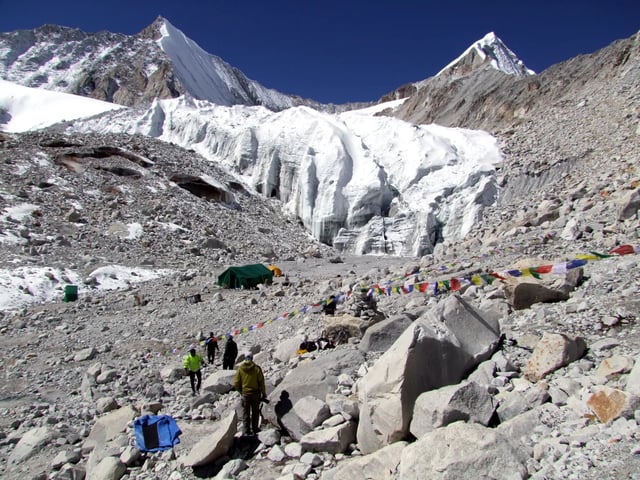
We will have a pretty physically challenging day today as we prepare to climb the Manaslu Base Camp. The trip will acclimatize us well before we set on to tackle the Larke La Pass. Progressively ascending the same path as taken by many climbers who have set their sights on the summit of Manaslu, we will be at the base camp within 3 to 4 hours.
The preeminent glacier of Manaslu and the Manaslu peak itself can be seen from very close up here. After some time, we will return to eat and sleep at Sama Gaon.
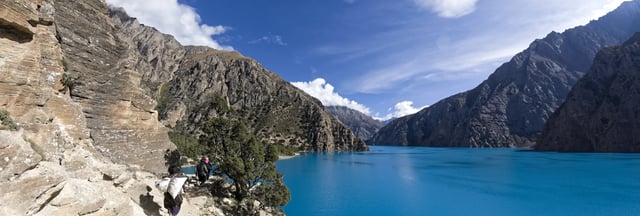
We will have a day of intense calm as we extend our hike for about 30 minutes to approach Lake Birendra (3450 m)- named after the late beloved King of Nepal. The glistening Manaslu will again greet us here as we sit by the shore and just immerse ourselves in its calmness. We will then climb the hill where the Pung Gyen Gumba has been resting for a long time.
Here, you will also have the incredible chance to interact with the residing monks and gain some life perspective from their ancient knowledge. Sama Gaun will be our home for the night again.
After Sama Gaun, we will leave the cool embrace of the tree lines and walk up to the more open area of yak pastures at Kermo Kharka. The Budhi Gandaki River will be flowing by us as we traverse its torrential current over a wooden bridge. Now, the further trail softly climbs towards the White Kani gate indicating we have reached the charming land of Samdo.
After some relaxation, we can extend our route further to explore the exquisite monasteries of this village where some furniture is said to be transported directly from Tibet. The 5177 m high Sado Ri is a couple of meters away which we can choose to climb if we like to further acclimatize ourselves before surpassing the Larke pass.
Samdo is just a few km away from the Tibet border and it is the largest village that we will encounter if we choose to approach the Tibetan border. This is precisely what we will do today as we make our way to Rui La Pass.
From Samdo, we will turn north, cross the Athahra Saya Khola, and begin to ascend. We will continue following the northern path which will slowly keep on elevating.
After some three hours of upward climb, we will turn west and climb a slope. It will be two hours additional climb further before we make it to the top of the Rui la pass.
After Samdo, our trail will widen and become more beautiful adorned with Mani Walls side by side. After walking a little further, we will encounter two small mountain streams probably originating from the black glacier of Larkya which will soon be in front of us.
Now, we will walk beside the Salka Khola and climb leisurely to reach Dharmasala. Sometimes known as Refugee Camp, it is more known by the name of Larke Phedi in Manaslu.
It is regarded as the base camp before we approach the behemoth Larke Pass. Manaslu, Naike, and Larke peaks along with the Syacha Glacier can be seen as impressive from here.
We have a very long, exhausting, and most demanding stage of the Manaslu and Tsum Valley trekking journey today so we will begin as soon as the dawn breaks in. We will first surge the ridge and traverse the lateral edge of the Larke Glacier.
Then, we will surpass the rocky scree and walk across slowly several frozen alpine lakes. En route, Cheo Danda spectacle will be very delightful.
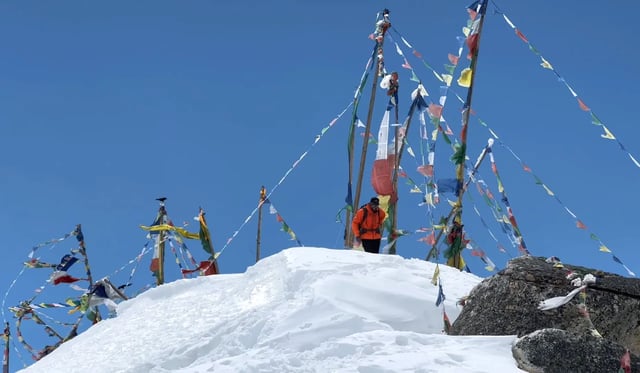
As we reach the final 100 m stretch to the pass, we may have to use the crampons for a more stable climb. After around 3 to 5 hours, we will finally be at the top of the giant Pass where we can enjoy the resplendent peaks of Kanguru, Nimjung, Himlung, Cheo Himal, Annapurna, Ratna Chuli and many more.
That’s it! We have reached the end of our grand Manaslu Tsum Valley trekking itinerary. From Bhimthang, we will walk downward towards Sangure Kharka and reach Dudh Khola which we will cross of course through the beautiful hanging bridge.
Then, we will walk through the enchanting territories of Hambuk, Puktu, Phute, and then Gho (2560 m). There are small wooden cabins here where we can pass some time for relaxation. Then, resuming our downhill walk, we will traverse the dense forest and climb sharply the Karche Pass (2700 m).
After finishing coming down from the pass, we will come to the gentle section that will lead us to Tilje.
From Dharapani, we will take public transport and drive over the challenging dirt roads that pass through the villages of Tal, Chamje, Jagat, Syange, Bhulbhule, and Khudi, until we arrive at Besishahar. From there, the road is very pleasant as the Prithvi Highway will be our companion taking us back to Kathmandu.
To give a wonderful closing to our Manaslu and Tsum Valley trekking adventure, we will enjoy a vibrant evening with all our team members over a pleasant Nepali dinner.
All great adventure has an ending and so does our Manaslu Tsum Valley circuit trek.
After Breakfast it's time to go to the airport to take the flight back home.
Fly into Tribhuvan International Airport in Kathmandu unless the itinerary uses another regional hub. Airport or hotel pickup can be arranged when you share arrival details ahead of travel.
Briefings cover road or domestic travel to the trailhead. Build buffer time before onward international flights in case mountain weather shifts the schedule.
Twin or double rooms in a comfortable Kathmandu hotel cover your first nights and your return from the trail, with breakfast on those city stays when included in the package. Briefings happen at the hotel, and airport collection from Tribhuvan is available when flight times are shared in advance.
Family-run teahouses or lodges line the route with twin beds and a shared dining room. Rooms get simpler and colder as you climb, with shared bathrooms common at higher villages. Hot water, Wi-Fi, and charging are paid at the lodge when offered.
Spring from March to May and autumn from September to November usually bring the clearest views and stable walking conditions on this route. Winter is quieter but colder at altitude, while monsoon months bring cloud and wet trails at lower elevations.
Shoulder weeks need an honest weather call before high passes or dawn viewpoints. Monsoon cloud sits lower on the hills while winter brings ice on steps above village level.
You should be comfortable walking several hours a day on uneven paths with a daypack, including steady uphill sections as you gain height. Hill training and longer weekend walks in the months before travel help your legs and lungs on uphill trail days.
Hill training, stair climbing, and longer weekend hikes in the months before travel help your legs and lungs, even when acclimatisation days are built into the route. Break in boots before you fly and carry a light daypack on practice walks.
Guided trekking with licensed leaders, lodge nights on the trail, meals as described for walking days, and permits for the regions crossed are included when they are part of this trip. Domestic flights, porters, and airport transfers apply only when they are part of this trip.
Domestic flights, road transfers, porter support, and airport transfers apply only when they are part of this trip. Permits for the regions you cross are arranged in Kathmandu or Pokhara when included.
International flights to Nepal, visa fees, compulsory travel insurance, personal trekking clothing, snacks and drinks outside included meals, and tips for crew are not covered. Hot showers, Wi-Fi, and battery charging in lodges are usually paid locally when offered.
Charges for hot showers, Wi-Fi, or battery charging in lodges are paid locally when offered unless your trip notes say otherwise. International flights, visa fees, and personal insurance stay outside the trek package.
Pickup can be arranged from Tribhuvan International Airport or your hotel in Thamel when you share flight times ahead of travel. The pre-trek briefing is usually held at the hotel before the Lukla flight or helicopter sector.
Allow buffer days after the trek in case mountain flights move. Thamel hotels are the usual meet point; drivers need flight numbers to meet you at the international terminal.
Guides set a steady pace and watch for headache, nausea, or dizziness as you gain height. Weather can shift daily plans, so your guide keeps a steady pace with regular breaks.
Tell your guide early if symptoms appear so tomorrow's stage can shorten or descent can start before conditions worsen. Trail conditions are checked each morning before the group moves.
Jeep or bus days to the remote trailhead are arranged when they are part of your package. Your guide confirms departure times at briefing.
Motion sickness medicine helps on winding mountain roads. Your crew would rather wait for a safe window than rush marginal weather.
National park or restricted-area permits apply depending on the valleys you cross. The team arranges paperwork in Kathmandu or Pokhara when you provide passport copies and trek dates.
Keep copies in your daypack for checkpoint stops. Allow a little extra time after the trek before international flights home in case mountain roads or flights move.
Families join when children can manage the daily hours and terrain on this specific route. Pace and daily hours can be adjusted on private departures, though that may extend the calendar.
Ask our Kathmandu team if you are planning with younger walkers. Private departures can shorten daily hours, though that may add a day or two to the calendar.
Comprehensive travel insurance that covers trekking to the highest altitude on your itinerary, medical evacuation, and helicopter rescue when applicable is essential. Many standard policies exclude high altitude by name.
Read the wording before you travel so you can adjust cover if trekking above 5,000 metres is not named. Many standard policies exclude high altitude by name, so read the wording before you fly.
We partner with Rewilding Britain to help protect our natural spaces for future adventures.
All centres are vetted for safety and quality. Your adventure is in good hands with adventuro.
About the centre
Kathmandu
You'll travel with a Kathmandu-based team that plans treks, peak climbs, helicopter flights, motorbike journeys, and cultural trips across Nepal, Tibet, and Bhutan. Routes range from classic teahouse walks and high passes to luxury lodge itineraries and longer expedition-style climbs, with departures shaped around how you want to pace the mountains.
Licensed guides and office staff train regularly on mountain safety and guest care. Porters are insured, fairly paid, and equipped for the trail, with sensible load limits on lodge routes. We work with remote communities through sustainable tourism, including support for education in village areas, so your booking helps local people as well as your own adventure.
Operated by Himalayan Adventure Treks & Tours, a partner of adventuro.