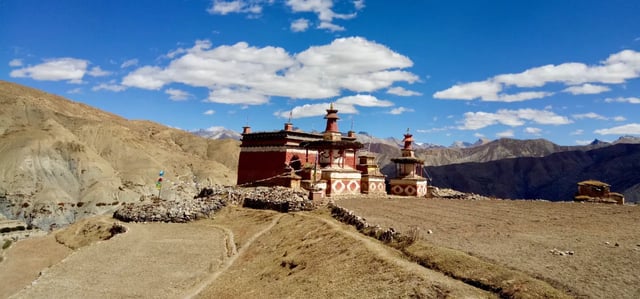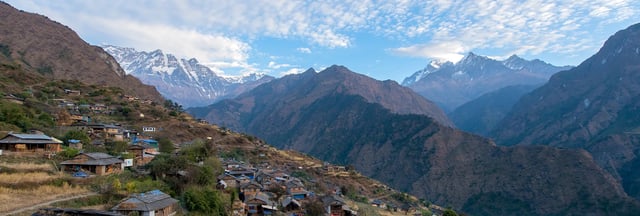
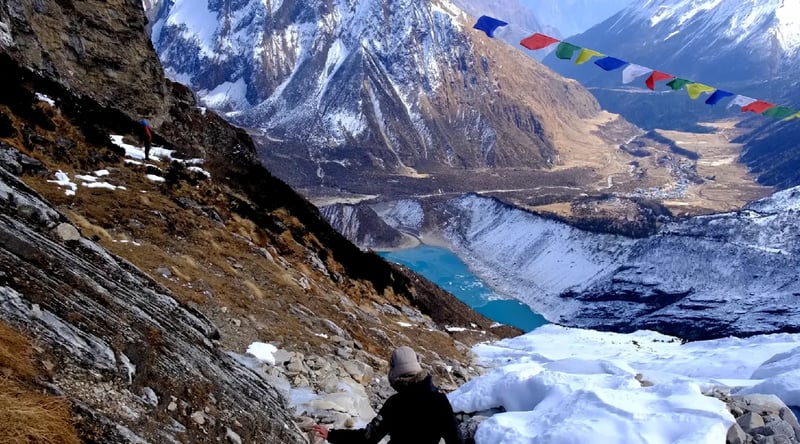
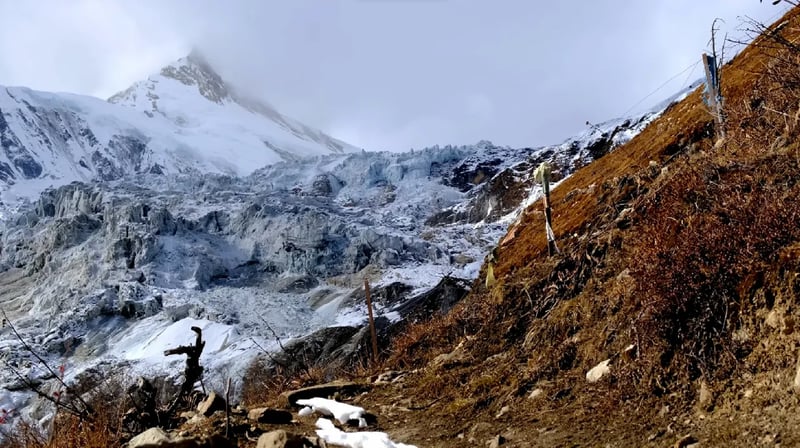
Fourteen days on the Manaslu Circuit start with a jeep toward Soti Khola or Machha Khola and walk the Budhi Gandaki through Jagat, Deng, and Namrung to Samagaon. You rest under Manaslu before Phedi and the Larkya La. Samagaon’s monastery, a hike toward Manaslu Base Camp, and Larkya La are the heart of the circuit.
The descent toward Bimthang and Dharapani closes the loop. Restricted-area permits, monastery visits in Samagaon, and a long, cold pass morning are the core of the trip. The Budhi Gandaki gorge and Bimthang’s meadow on the far side are the walking days people remember.
We are licensed with Nepal's Ministry of Culture, Tourism and Civil Aviation and the Nepal Tourism Board, so the restricted Manaslu permit, MCAP, and ACAP sit with one Kathmandu desk. You'll jeep to Machha Khola and walk the Budhi Gandaki through Jagat, Deng, and Namrung to Samagaon. Your guide keeps the Samagaon rest real before Samdo and the Larkya La morning.
The long, cold crossing to Bimthang and the jeep from Dharapani close the loop with the same licensed crew. Porters are insured and paid fairly, with one porter for two guests and lodge loads around 25 to 30 kg. Arrival briefings name evacuation options because some nights above Samdo have thin phone signal.
Namaste! Get ready to free yourself from the routine and immerse yourself in a different and unfamiliar land. Our dedicated representative will cordially receive you at the exit gate of the TIA.
He will ride you to your accommodation in the capital where you can settle in to rest and recover. In the evening, you can take a walk around the surrounding area and get to understand Kathmandu and its people.
Start your day being surrounded by the mountains! Soon after, our trip guide will meet you at the hotel for an introduction and briefing of the Manaslu circuit trek itinerary.
Now, get ready to see briefly what Kathmandu has to offer. Swayambhunath and the Boudhanath to two of the oldest Buddhist Stupas and Pashupatinath to the ancient Hindu shrine of Lord Shiva will take you to a different spiritual realm while Kathmandu Durbar Square will take you on a journey back to the medieval period.
After the sightseeing, our guide will help you review your gear and assist in renting or purchasing any necessary items from local shops. Don’t forget to get to bed early, as we have an exciting road trip planned for tomorrow.
We have quite a long drive awaiting us today as we leave Kathmandu and depart in a private jeep towards Machha Khola, the starting location of our Manaslu circuit trek. After we leave the capital in the early morning hours, we will travel through Kalanki and Thankot towards Trishuli.
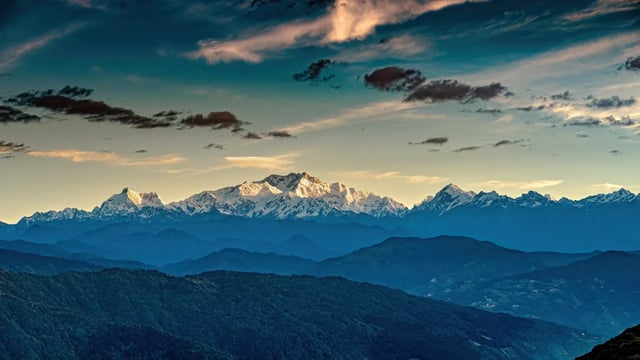
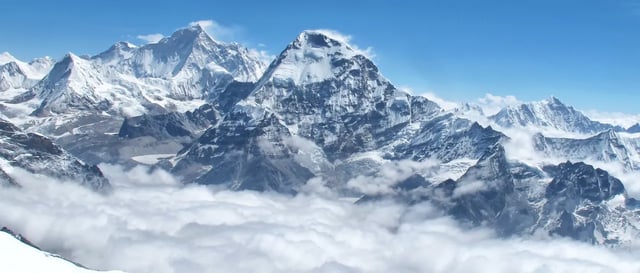
The long wide asphalted road will then take us to Dhading where the road ends and the small route will lead us towards Dhading Besi. As we journey toward Arughat Market, the Himalayan mountain ranges of Manaslu (8163 m), Ganesh Himal (7422 m), and the Annapurna will be fascinating to watch.
Tie on your hiking boots as we begin our long walk from today. Following the winding up and down path along the Budhi Gandaki River, and stopping from time to time to glimpse at Shringi (7155 m), Manaslu, and Ganesh, we will arrive at Khorla Bensi.
After about an hour's walk, our trail will take us to Tatopani (Hot Water Spring). The track now constitutes a scree and steep climb till we cross the suspended bridge over the Dobhan Khola.
The slender forest track now leads us over Yaru Khola through the 92 km long metal bridge. Soon, Jagat will arrive but not before we traverse Thulo Dhunga.
Begin a beautiful day with Shringi Himal up front. Now, we will walk along the mountain paths along the ridge to reach Salleri from where it descends to Sirdibas. Now crossing the Tibetan bridge, we will reach the beautiful sunny village of Philim.
Here almost all residents are Gurungs. Now, for some time, the trail will move downward towards the river until we arrive at Lokwa and 1600 m Ekle Bhatti Village. Now a deep bamboo forest will lead us up to the narrow canyon and walking through Nyak Phedi and Peva Villages, we will ultimately reach Deng.
The large Kani (Gates) and Mani Walls are clearly visible here indicating the reign of Tibetan Buddhism in peoples’ hearts.
The torrential waters of the Budhi Gandaki River will keep following us today. After we exit Deng, we will cross this river and move ahead to Bihi Phedi.
Here, the Serang Khola, the small tributary of Budhi Gandaki will have to be crossed before we go past the canyon. Then tackling the steep slope, we will reach Ghap from where the serpentine road traversing the thick bamboo jungle will lead us to Prok village.
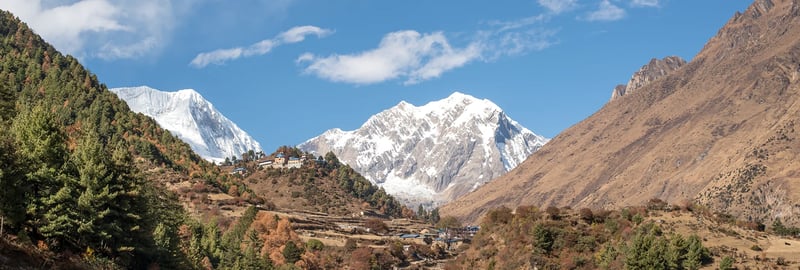
As we keep pushing ourselves, we will find ourselves gazing at the beautiful Lidana Glacier. Shortly, we will be resting at one of the lodges of the Namrung Village observing the delight of Saula Himal (6235 m), Pang Phuchin (6335 m), and Manaslu itself.
Starting from Namrung, we will trek via the thick forest for a while. Now the forest terrain ends and the path opens more. It will take us around 2 hours before we reach the settlement of Lihi (2910 m).
There are two trails here passing left and right. The left one will take us to the Himalchuli base Camp while the right one will go to Manaslu and Larkya La Pass. Taking the right turn, and glancing at Himalchuli (7893 m), we will soon arrive at Sho (2880 m) and Lho Village (2950 m).
Manaslu and Ribang Gompa are the particular highlights of this village.
On this day of acclimatization, we will move actively so our bodies can well adapt to the Manaslu air. We have the availability of two routes to take: one is quite strenuous and leads to Manaslu Base Camp (4800 m) which contains a steep and long climb and the other is simpler which will go to Lake Birendra at (3460 m).
Which route to choose depends entirely on your will, strength, and of course the instruction of our guide. Whichever destination you choose, both will offer the impressive spectacle of Manalsu, ice falls, and surrounding glaciers.
We have a gentle and short walk today as we aim to reach Samdo. First, we will walk through the vast grassy meadow of Kermo Kharka and then walk down to cross the Budhi Gandaki.
Now a steep 150 m climb will take us to the beautiful white gates of Samdo Village. After taking some moments of relaxation, we may choose to walk around a little or even try our luck climbing the 5220 m Samdo Ri.
We have a short distance to cover today however we will be ascending to greater heights today. So we need to take our time, walk slowly, and hydrate ourselves. Moving along the grassy meadows, we will soon come across the impressive Larke Glacier.
Then walking side by side with the Salke Khola, the upward track will eventually lead us to Dharmasala aka Larke Phedi, the base camp of the notorious Larkya La Pass. Locally known by the people as Duwang, this site is also referred to as Refugee Camp which had served as the protective shelter to ancient Tibetan refugees.
The most demanding phase of our Manaslu circuit trek is here. We will start early before dawn so we can overcome the pass before the cloud starts to gather.
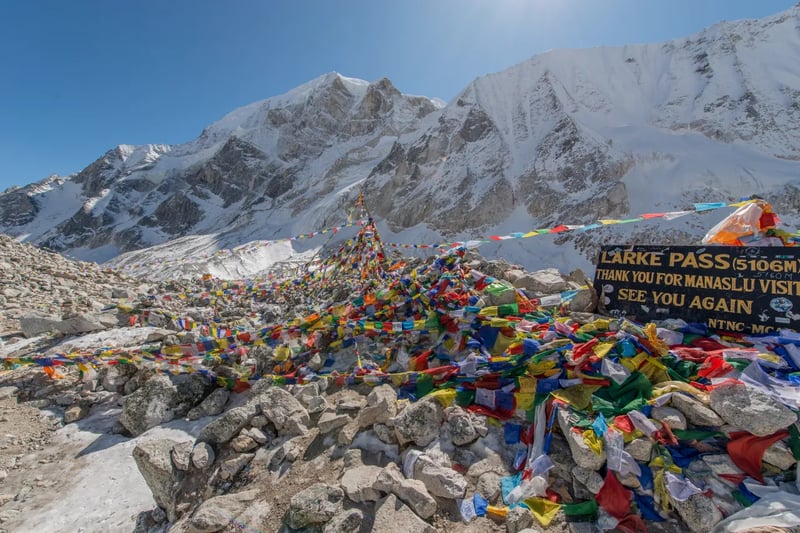
Walking along the eastern slope of Larke Glacier, we will rise gradually along the rocky and sometimes snowy terrain. The climb is non-technical and moderate but it may take us around 4 to 5 hours to reach the Larkya La Pass.
The final challenge of vertical 100 m ascent may take some time and careful footing. However, this monotonous and challenging ascent will be rewarded with the panorama of the Himlung Himal, Kanguru, Cheo Himal, Annapurna II, Gyaji Kang, and Nimjung Peak.
We have a pleasant but a little sad day today as the final day of our trekking days in Manaslu has come to an end. Walking through the pathway of eternal glaciers and beautiful banana and palm trees, we will soon enter a forest fed by the Dudh Khola.
Of course, we will cross the Dudh Khola and walk down through the warm climate of Hambuk, Puktu, and Phute before reaching Gho (2560 m). Phungi Himal (6,524 m) and Manaslu will not leave our sight as we progress down.
A vertical climb will however test our strength one more time as we make it to the top of Karche Pass. Now an easy descent will direct us to Tilje.
It's time to conclude our Manaslu circuit trek and head back to the lively civilization of Kathmandu. From Dharapani, a local jeep will transport us to Besisahar from where our private Scorpio jeep will now drive us back to Kathmandu.
We will enjoy a hot shower, WiFi, and a final dinner with our team of Himalayan Adventure.
After breakfast, you may have some free time to visit Kathmandu shops for some gifts until it's time to go to the airport so you can take the flight back home.
Fly into Tribhuvan International Airport in Kathmandu unless the itinerary uses another regional hub. Airport or hotel pickup can be arranged when you share arrival details ahead of travel.
Briefings cover road or domestic travel to the trailhead. Build buffer time before onward international flights in case mountain weather shifts the schedule.
Twin or double rooms in a comfortable Kathmandu hotel cover your first nights and your return from the trail, with breakfast on those city stays when included in the package. Briefings happen at the hotel, and airport collection from Tribhuvan is available when flight times are shared in advance.
Family-run teahouses or lodges line the route with twin beds and a shared dining room. Rooms get simpler and colder as you climb, with shared bathrooms common at higher villages. Hot water, Wi-Fi, and charging are paid at the lodge when offered.
Spring from March to May and autumn from September to November usually bring the clearest views and stable walking conditions on this route. Winter is quieter but colder at altitude, while monsoon months bring cloud and wet trails at lower elevations.
Shoulder weeks need an honest weather call before high passes or dawn viewpoints. Monsoon cloud sits lower on the hills while winter brings ice on steps above village level.
You should be comfortable walking several hours a day on uneven paths with a daypack, including steady uphill sections as you gain height. Hill training and longer weekend walks in the months before travel help your legs and lungs on uphill trail days.
Hill training, stair climbing, and longer weekend hikes in the months before travel help your legs and lungs, even when acclimatisation days are built into the route. Break in boots before you fly and carry a light daypack on practice walks.
Guided trekking with licensed leaders, lodge nights on the trail, meals as described for walking days, and permits for the regions crossed are included when they are part of this trip. Domestic flights, porters, and airport transfers apply only when they are part of this trip.
Domestic flights, road transfers, porter support, and airport transfers apply only when they are part of this trip. Permits for the regions you cross are arranged in Kathmandu or Pokhara when included.
International flights to Nepal, visa fees, compulsory travel insurance, personal trekking clothing, snacks and drinks outside included meals, and tips for crew are not covered. Hot showers, Wi-Fi, and battery charging in lodges are usually paid locally when offered.
Charges for hot showers, Wi-Fi, or battery charging in lodges are paid locally when offered unless your trip notes say otherwise. International flights, visa fees, and personal insurance stay outside the trek package.
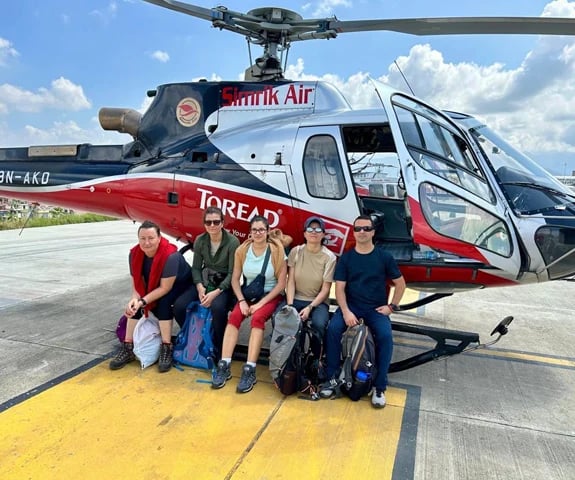
Pickup can be arranged from Tribhuvan International Airport or your hotel in Thamel when you share flight times ahead of travel. The pre-trek briefing is usually held at the hotel before the Lukla flight or helicopter sector.
Allow buffer days after the trek in case mountain flights move. Thamel hotels are the usual meet point; drivers need flight numbers to meet you at the international terminal.
Guides set a steady pace and watch for headache, nausea, or dizziness as you gain height. Weather can shift daily plans, so your guide keeps a steady pace with regular breaks.
Tell your guide early if symptoms appear so tomorrow's stage can shorten or descent can start before conditions worsen. Trail conditions are checked each morning before the group moves.
Jeep or bus days to the remote trailhead are arranged when they are part of your package. Your guide confirms departure times at briefing.
Motion sickness medicine helps on winding mountain roads. Your crew would rather wait for a safe window than rush marginal weather.
National park or restricted-area permits apply depending on the valleys you cross. The team arranges paperwork in Kathmandu or Pokhara when you provide passport copies and trek dates.
Keep copies in your daypack for checkpoint stops. Allow a little extra time after the trek before international flights home in case mountain roads or flights move.
Families join when children can manage the daily hours and terrain on this specific route. Pace and daily hours can be adjusted on private departures, though that may extend the calendar.
Ask our Kathmandu team if you are planning with younger walkers. Private departures can shorten daily hours, though that may add a day or two to the calendar.
Comprehensive travel insurance that covers trekking to the highest altitude on your itinerary, medical evacuation, and helicopter rescue when applicable is essential. Many standard policies exclude high altitude by name.
Read the wording before you travel so you can adjust cover if trekking above 5,000 metres is not named. Many standard policies exclude high altitude by name, so read the wording before you fly.
We partner with Rewilding Britain to help protect our natural spaces for future adventures.
All centres are vetted for safety and quality. Your adventure is in good hands with adventuro.
About the centre
Kathmandu
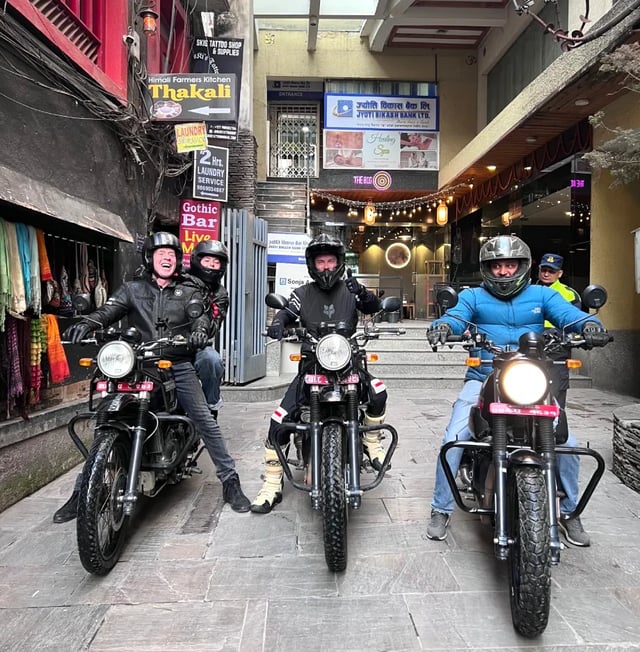
You'll travel with a Kathmandu-based team that plans treks, peak climbs, helicopter flights, motorbike journeys, and cultural trips across Nepal, Tibet, and Bhutan. Routes range from classic teahouse walks and high passes to luxury lodge itineraries and longer expedition-style climbs, with departures shaped around how you want to pace the mountains.
Licensed guides and office staff train regularly on mountain safety and guest care. Porters are insured, fairly paid, and equipped for the trail, with sensible load limits on lodge routes. We work with remote communities through sustainable tourism, including support for education in village areas, so your booking helps local people as well as your own adventure.
Operated by Himalayan Adventure Treks & Tours, a partner of adventuro.
Bagmati Province, Nepal
From $7000