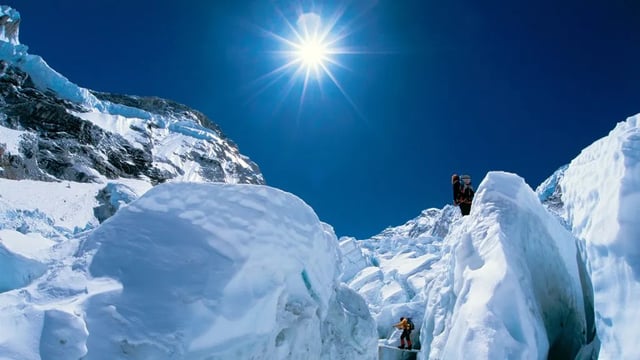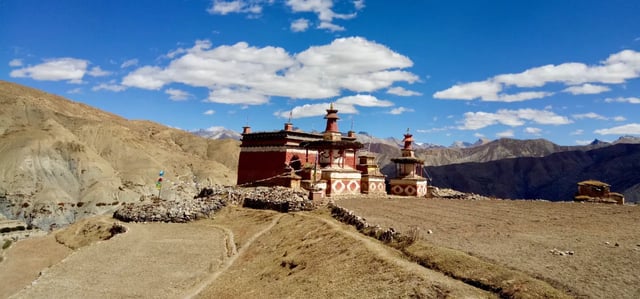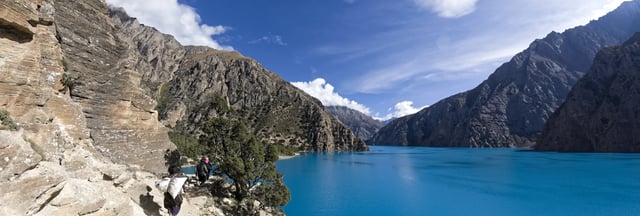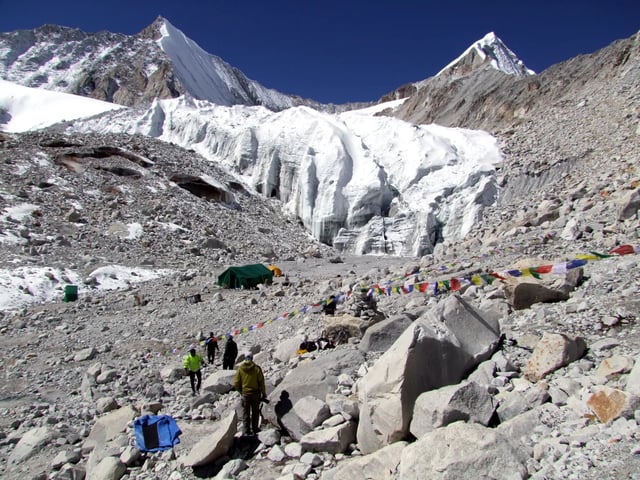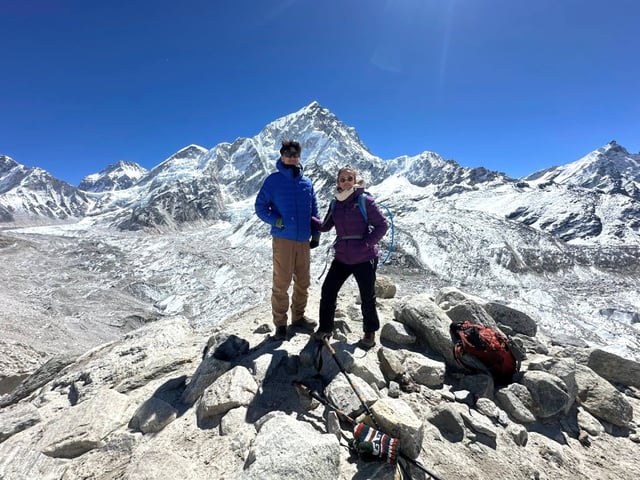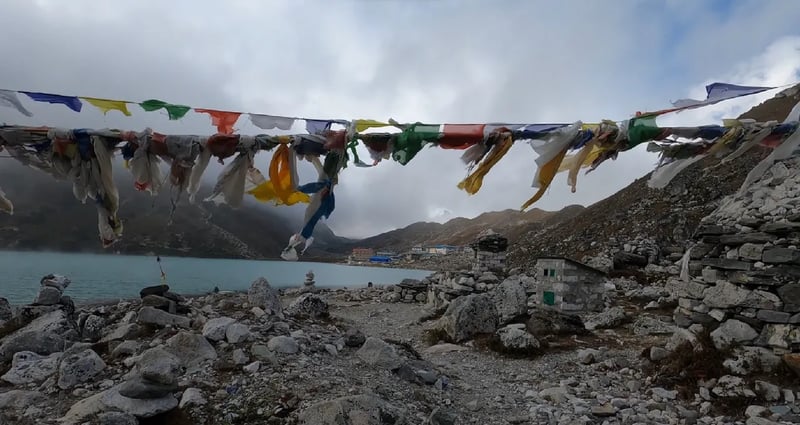
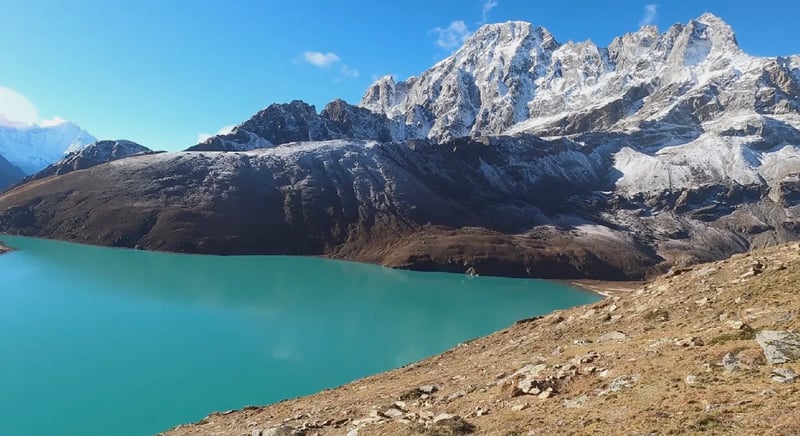
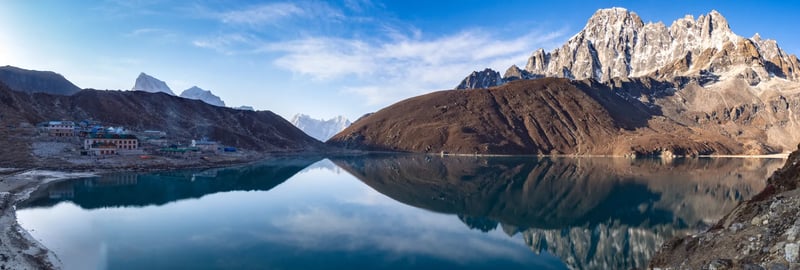
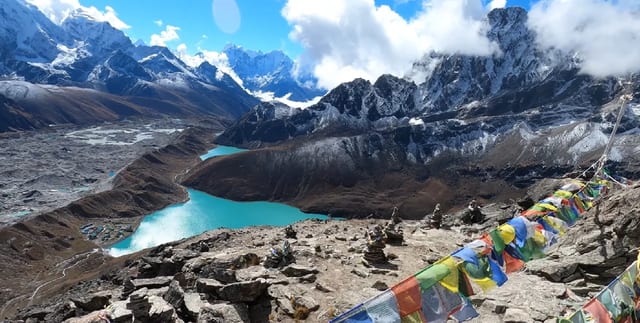
From Lukla you follow the Dudh Koshi toward Namche, then branch toward the Gokyo valley and its chain of turquoise lakes under Cho Oyu. Teahouse nights sit beside the water as you approach the Ngozumpa Glacier. Machhermo, the Ngozumpa ice, and the chain of lakes make Gokyo feel like a different Khumbu than the Base Camp highway.
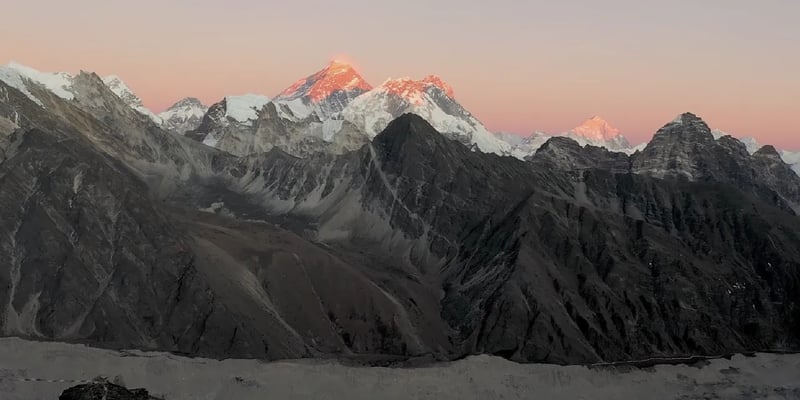
The high point is Gokyo Ri at dawn for Everest, Lhotse, Makalu, and Cho Oyu in one sweep. You descend the same valley to Lukla with time for bakery stops in Namche on the way out. Sunrise from Gokyo Ri, with four 8,000 m peaks in one turn, is the photograph this valley is famous for.
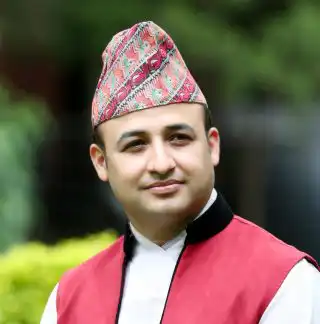
We try to match a guide who is local to the Gokyo side of the Khumbu, licensed through MOCTCA and NATHM, and able to talk through Himalayan culture, history, and religion as you leave Namche for Dole, Machhermo, and the lakes under Cho Oyu. Your guide watches altitude toward Gokyo Ri and the Ngozumpa Glacier.
This calendar stays with the turquoise lakes and does not cross Cho La. A share of our profits supports village school students in remote Nepal, and you'll see those schoolyards on the Dudh Koshi walk before you branch into this valley and fly home from Lukla.
Welcome to our lovely nation, Nepal. This is going to be your 1st day of the Everest Gokyo Lake Trek route itinerary. We will send our team to the international terminal to receive you. They will be waiting at the terminal, carrying our company signpost in their hands.
As soon as you spot them, they will show you cordial hospitality, helping with your luggage. Afterward, they will transfer you to your three-star lodging accommodation in the Thamel area of Kathmandu. Thamel is mostly the best spot to lodge in Kathmandu city, offering a vibrant nightlife. You will reach the hotel in about 30 to 40 minutes depending upon the city’s traffic.
Our team would drop you off at your accommodation and show you your room. Then, you can look into your room and unwind for few hours in the hotel. We will arrange a time to meet in the afternoon so that we can fill you in on the required information about the Everest Gokyo Lake Trek Nepal 13-day itinerary. Afterward, you can explore restaurants and eat nice dinners to end your 1st day in Thamel.
In the morning, we have to catch a flight to Tenzing Hillary Airport from Tribhuvan International Airport. Our company’s automobile would be waiting in the hotel hallway to take us to the airport. The flight will take an estimated 30 minutes to reach Lukla. We will have breakfast in Lukla, where we will meet our other team members and the porter.
On this second day of the Gokyo Lake Trek route, we will begin our hike to Phakding village, which lies at an altitude of 2610 meters. The trek would be relatively gentler than the other days. You will see the first glimpse of truly mind-boggling peak views in the Khumbu region. On the path to Phakding hamlet, we would go along the Dudh Koshi River and cross the Thado Khola River.
Along the trip, we'll have a panoramic view of Mount Kusum Kangaru. After traveling for 3 to 4 hours, we will arrive at the settlement where we will spend the night on our Everest Gokyo Lake Trek Nepal excursion.
The third day of our Gokyo Lake Trek Nepal itinerary takes us towards the Namche Bazaar. We will start our walk following a hearty first meal of the day in Phakding Village. We will hike through rhododendrons and pine forests, succeeding the Dudh Koshi Khola River, along with crossing many hanging bridges. We will arrive at Monjo after hiking for a few hours.
We will now enter Sagarmatha National Park. The officials will examine our permissions, and once verified, we will be able to continue our journey. While wandering, you may notice unique flora and animals in the park, which will attract you. We will then trek uphill and eventually reach Jorsale hamlet before arriving at Namche Town.
Following six to seven hours of hiking, we will arrive at this town, which is also known as the Sherpa Capital in the Everest region. You could explore the remaining of the day on this Gokyo Lake Trek route journey.
This is a very important day of our Gokyo Lake Trek Nepal journey. We are acclimatizing in Namche Bazaar so that we don’t have problems like altitude sickness when we trek higher in the upcoming days of the itinerary. This day will also allow our bodies to adjust to the surroundings of the high-altitude areas, where the oxygen air is thinner.
Namche Bazaar offers opportunities for exploration and relaxation. However, the best method to acclimate on this day is to go on a short hike. We will go to Khumjung Village, which is also an old Sherpa village.
Khumjung Monastery, where monks meditate in solitude, is visible from here. After that, we will go to see the world’s highest hotel, the Everest View Hotel, which is an excellent location to see the extensive vistas of beautiful landscapes and snow-clad Himalayas. After soaking in the beauty of the scenery, we will head back to Namche Bazaar and visit the Sherpa Culture Museum and Everest Photo Gallery to learn the history of this region.
On this fifth day of the Gokyo Lake Trek route, we continue to Dole from Namche Bazaar. After eating a delicious breakfast prepared with love by the locals, we will depart this town. We will then walk steeply downhill into the valley before reaching the river at Phunki Tenga. On the way to Phunki Tenga Village, we will wander through lovely jungles of juniper, pine, and rhododendron, which provide a soothing atmosphere.
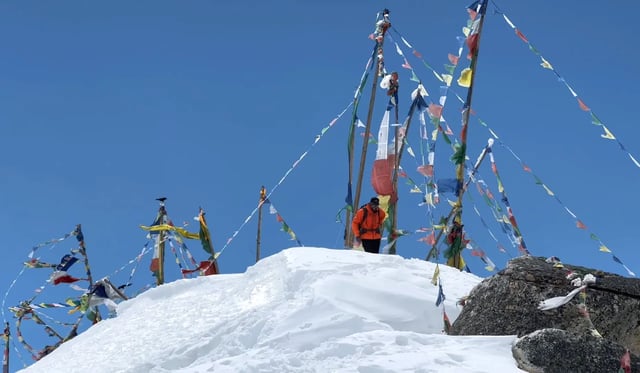
Similarly, you will see many prayer wheels and Buddhist prayer flags on the route, making your journey more enjoyable. After a few hours' walk, you will arrive and have Lunch at the Phunki Tenga village. Phunki Thenga is a small settlement in the Everest region at an elevation of 3250 meters. It's the perfect location to chill and take in the peace and quiet of the region.
After Lunch we continue our journey to Dole village. Only a few modest teahouses are available for overnight stays, so don't anticipate any extra amenities on this Gokyo Lake Trek Nepal tour.
After spending a peaceful night in Dole Village on this Gokyo Lake Trek route journey, today’s stop will be at Machhermo Village, a serene village located at a height of 4,470 meters with some basic tea house lodging for hikers. We will walk in a steady ascent at first. Then, we will stroll through the trails leading us to verdant jungles and small, charming Sherpa hamlets, showered with the beautiful vistas of snow-clad mountain scenery.
As we are today reaching above 4400 meters, it is necessary that we hydrate ourselves from time to time while trekking with some breaks for a healthy journey. We eventually reach the Machhermo village following 6 to 7 hours of hiking. You can feel thinner air here compared to other destinations we've been to before in this Khumbu region.
Here, you could look up at the landscape of the village and take in this beautiful moment. Tonight, we will spend our night in a basic teahouse on this Gokyo Lake Trek Nepal excursion of 13 days.
Today, we are finally heading to Gokyo, where you can explore the six captivating Gokyo Lakes. We will depart from Machhermo Village after having an early breakfast. We first ascend towards the ridge, where you can see the vistas of the Kangtega and Cho Oyu peaks before you.
Prior to Gokyo Lakes, we first arrive at the Ngozumpa Glacier. The largest glacier in Nepal, it is encircled by mountains and scenery. After five to six hours of hiking, we continue our journey and reach Gokyo.
The lakes are Longpongo Lake (first), Taboche Tsho (second), Dudh Pokhari (third and most well-known), Ngozumpa Tsho (fourth), Gyazumpa Cho (fifth), and Thonak Cho (sixth and largest). These lakes are culturally and spiritually significant for Nepalese and Khumbu residents. You can explore and take images and movies of these landscapes on your smartphone, which you can appreciate whenever you see them again.
On this eighth day of the Gokyo Lake Trek in Nepal, we will start early in the morning before sunrise to watch it from the Gokyo Ri, which stands at 5,357 meters, or 17,575 feet, above sea level. This would take 3 to 4 hours to arrive at the Gokyo Ri. The trek will be challenging due to the steep ascents, but it is absolutely worth it.
After reaching the Gokyo Ri viewpoint, you can take in the beauty of the sunrise gleaming over the gigantic ice-clad peaks like Cho Oyu, Lhotse, Mt. Everest, Gokyo Peak, and Thamserku, and many other awe-inspiring Himalayas, which will be one of the highlights of your Gokyo Lake Trek Nepal journey. Then, we will visit Gokyo 5th Lake, also known as Ngozumpa Tse, which is a high-altitude lake located at about 5,000 meters (16,400 feet) in the Gokyo Valley of the Everest region.
Gokyo 5th Lake is one of the highest freshwater lakes in the world. It lies north of Gokyo Village and offers views of Mount Everest, Lhotse, Makalu, and Cho Oyu.
The trek from Gokyo Lake to Dole is a beautiful descent through the heart of the Everest region, retracing part of the Gokyo Valley trail. Starting from Gokyo (4,790 meters / 15,715 feet), trekkers follow the trail along the eastern edge of Dudh Pokhari (Gokyo Lake), descending gently with spectacular views of Cho Oyu and surrounding peaks. The first part of the trail crosses rocky moraine paths and passes by grazing areas used by yaks in summer.
As you descend, the landscape shifts from alpine terrain to more greenery, with shrubs and juniper bushes beginning to reappear. After about 1.5 to 2 hours, you reach Machhermo (4,470 meters / 14,665 feet), a small settlement known for its medical post and panoramic views. It’s a great spot to rest and have tea or lunch.
Continuing downward, the trail passes through several small villages like Lhabarma and Luza, offering glimpses into the Sherpa lifestyle and traditional stone houses. Along the way, trekkers enjoy views of Thamserku, Kangtega, and the deep Dudh Koshi River valley.
The trek from Dole (4,040 meters / 13,255 feet) to Namche Bazaar (3,440 meters / 11,286 feet) is a scenic downhill journey that takes about 5 to 6 hours, depending on your pace. As you leave Dole, the trail descends gradually through alpine meadows, dotted with rhododendron and juniper trees, especially vibrant in the spring. You pass through charming Sherpa villages like Phortse Thanga and Tenga, where you can take a short rest and enjoy views of Taboche, Thamserku, and the deep Dudh Koshi gorge below. The trail continues downward to a suspension bridge over the Dudh Koshi River and then begins a steep climb to Mong La (3,975 meters / 13,041 feet), a small ridge with a few teahouses and an excellent viewpoint.
After Mong La, the path descends again through lush forests filled with moss and birch trees, creating a refreshing contrast to the high alpine landscapes of earlier days. You may spot Himalayan monals, musk deer, or mountain goats along the trail. Eventually, the trail merges with the main Everest Base Camp route, becoming busier as you approach Namche Bazaar. After a final short climb and several prayer flags and mani walls along the way, you reach Namche Bazaar, the lively Sherpa capital of the Khumbu region.
Here, you can enjoy hot showers, bakeries, Wi-Fi, and even souvenir shopping after many days in the high mountains. This part of the trek is both culturally rich and naturally beautiful, offering a rewarding return to a lower altitude.
Finally, we are heading back to Lukla, where this will be the last night in the Khumbu region on this Gokyo Lake Trek route. We will depart as soon as we finish our breakfast and walk downhill through the alpine jungles.
You would watch the perfect vista of the Kusum Kanguru mountain (6,367 m) on this Gokyo Lake trek. We will walk along the Dudh Koshi Khola River, which will lead to Jorsale, where we will exit from Sagarmatha National Park.
Afterward, we will traverse several settlements like Monjo, Bengkar, and Chumoa, as well as monasteries, prayer flags, and chortens. After reaching Phakding, we will go downhill to reach Lukla, where we will stay for the night on this Gokyo Lake Trek Nepal.
On day 12 of the Gokyo Lake Trek route journey, we are leaving the Everest region behind and flying to the vibrant city of Nepal, Kathmandu. We will board an early flight to avoid Everest Base Camp weather that could be worse if late. Just take in the scenery for the last time while flying for thirty-five minutes.
After landing at the airport, we will take you to your 3-star standard hotel, where you can rest and relax for the whole day. If you want to travel to Kathmandu city, you could stroll at your own speed. You can go to Basantapur, the Garden of Dreams.
Boudhanath Stupa, Patan Durbar Square, and other major attractions to spend your remaining day. Later in the evening, we will throw you a farewell dinner party and provide you with the certificate of completion of the Everest base camp with the Gokyo Lake trek adventure as a token of love and memory. Tonight, you will spend the last night in Kathmandu city.
Today marks the last chapter of your adventure on the Gokyo Lake Trek route. To avoid delays or problems, we suggest you get ready early and reach the airport 2 to 3 hours before your return pane trip to your home country. Also, get ready in time so we can move immediately after our private vehicle arrives in the hotel lobby.
We'll give you a final farewell drive to the airport. We are glad that you have picked and trusted us with this amazing, daring 13-day adventure. We hope you arrive home without incident.
In the future, we want to have you visit Nepal again and share more treasured memories.
Most guests fly into Tribhuvan International Airport in Kathmandu. Share your arrival time ahead of travel so a Thamel hotel transfer can be arranged, or make your own way to the meeting hotel.
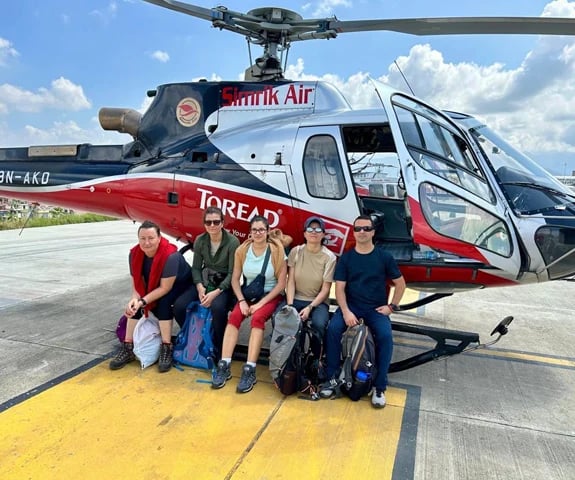
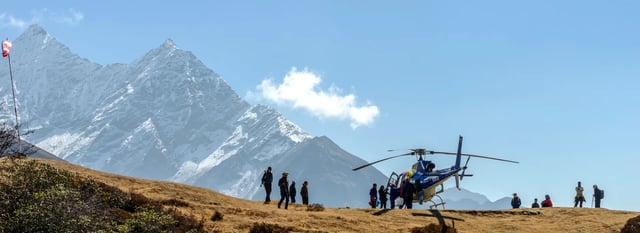
Pre-trek briefings usually take place in Kathmandu before the Lukla flight or helicopter sector. Allow extra days after the trek in case mountain flights are postponed by weather.
Twin or double rooms in a comfortable Kathmandu hotel cover your first nights and your return from the trail, with breakfast on those city stays when included in the package. Briefings happen at the hotel, and airport collection from Tribhuvan is available when flight times are shared in advance.
Family-run teahouses or lodges line the route with twin beds and a shared dining room. Rooms get simpler and colder as you climb, with shared bathrooms common at higher villages. Hot water, Wi-Fi, and charging are paid at the lodge when offered.
March to May rhododendron bloom and October to November crisp air are peak windows for this itinerary. July and August mean leeches and cloud on lower slopes; December to February can ice steps above village level.
Your guide reads the forecast before long cols or sunrise hikes. Shoulder weeks need an honest weather call before high passes or dawn viewpoints.
You should be comfortable walking several hours a day on uneven paths with a daypack, including steady uphill sections as you gain height. Hill training and longer weekend walks in the months before travel help your legs and lungs on uphill trail days.
Hill training, stair climbing, and longer weekend hikes in the months before travel help your legs and lungs, even when acclimatisation days are built into the route. Break in boots before you fly and carry a light daypack on practice walks.
Guided trekking with licensed leaders, lodge nights on the trail, meals as described for walking days, and permits for the regions crossed are included when they are part of this trip. Domestic flights, porters, and airport transfers apply only when they are part of this trip.
Domestic flights, road transfers, porter support, and airport transfers apply only when they are part of this trip. Permits for the regions you cross are arranged in Kathmandu or Pokhara when included.
International flights to Nepal, visa fees, compulsory travel insurance, personal trekking clothing, snacks and drinks outside included meals, and tips for crew are not covered. Hot showers, Wi-Fi, and battery charging in lodges are usually paid locally when offered.
Charges for hot showers, Wi-Fi, or battery charging in lodges are paid locally when offered unless your trip notes say otherwise. International flights, visa fees, and personal insurance stay outside the trek package.
Share your Tribhuvan arrival time ahead of travel for a Thamel hotel transfer, or make your own way to the meeting hotel in the capital. Thamel hotels are the usual meet point; drivers need flight numbers to meet you at the international terminal.
Briefings cover Lukla bag weight, porter duffle limits, and what to wear on the mountain flight. Weather can shift daily plans, so your guide keeps a steady pace with regular breaks.
The itinerary builds rest days and climb-high, sleep-low hikes where the route requires them. Your crew would rather wait for a safe window than rush marginal weather.
Tell your guide early if symptoms appear so tomorrow's stage can shorten or descent can start before conditions worsen. Trail conditions are checked each morning before the group moves.
Mountain weather can delay or postpone Lukla flights even in peak season, and Ramechhap diversions happen when the airstrip is congested. Allow a little extra time after the trek before international flights home in case mountain roads or flights move.
Build buffer days after the trek for international connections, and follow crew advice if schedules change or flights shift to Ramechhap. Monsoon cloud sits lower on the hills while winter brings ice on steps above village level.
Sagarmatha National Park and Khumbu municipality permits apply in the Everest region. The team arranges paperwork in Kathmandu or Pokhara when you provide passport copies and trek dates.
Keep copies in your daypack for checkpoint stops. Your crew would rather wait for a safe window than rush marginal weather.
Families join when children can manage the daily hours and terrain on this specific route. Pace and daily hours can be adjusted on private departures, though that may extend the calendar.
Ask our Kathmandu team if you are planning with younger walkers. Private departures can shorten daily hours, though that may add a day or two to the calendar.
Comprehensive travel insurance that covers trekking to the highest altitude on your itinerary, medical evacuation, and helicopter rescue when applicable is essential. Many standard policies exclude high altitude by name.
Read the wording before you travel so you can adjust cover if trekking above 5,000 metres is not named. Many standard policies exclude high altitude by name, so read the wording before you fly.
We partner with Rewilding Britain to help protect our natural spaces for future adventures.
All centres are vetted for safety and quality. Your adventure is in good hands with adventuro.
About the centre
Kathmandu
You'll travel with a Kathmandu-based team that plans treks, peak climbs, helicopter flights, motorbike journeys, and cultural trips across Nepal, Tibet, and Bhutan. Routes range from classic teahouse walks and high passes to luxury lodge itineraries and longer expedition-style climbs, with departures shaped around how you want to pace the mountains.
Licensed guides and office staff train regularly on mountain safety and guest care. Porters are insured, fairly paid, and equipped for the trail, with sensible load limits on lodge routes. We work with remote communities through sustainable tourism, including support for education in village areas, so your booking helps local people as well as your own adventure.
Operated by Himalayan Adventure Treks & Tours, a partner of adventuro.