We partner with Rewilding Britain to help protect our natural spaces for future adventures.
All centres are vetted for safety and quality. Your adventure is in good hands with adventuro.
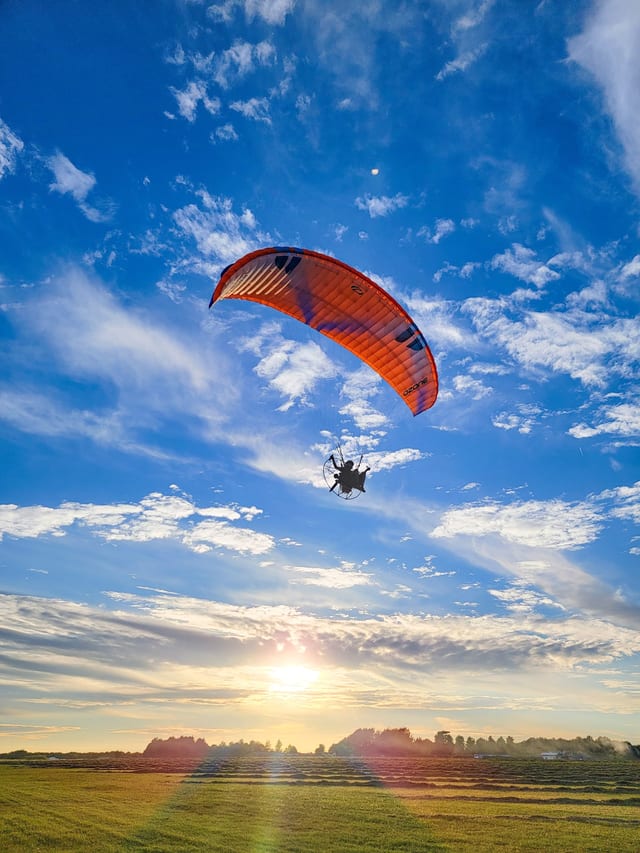
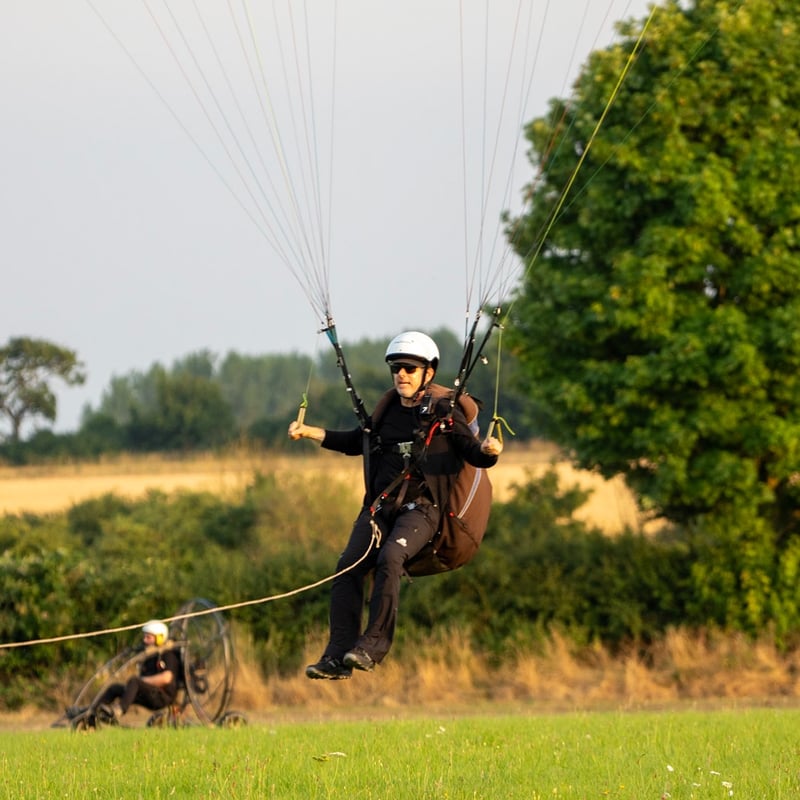
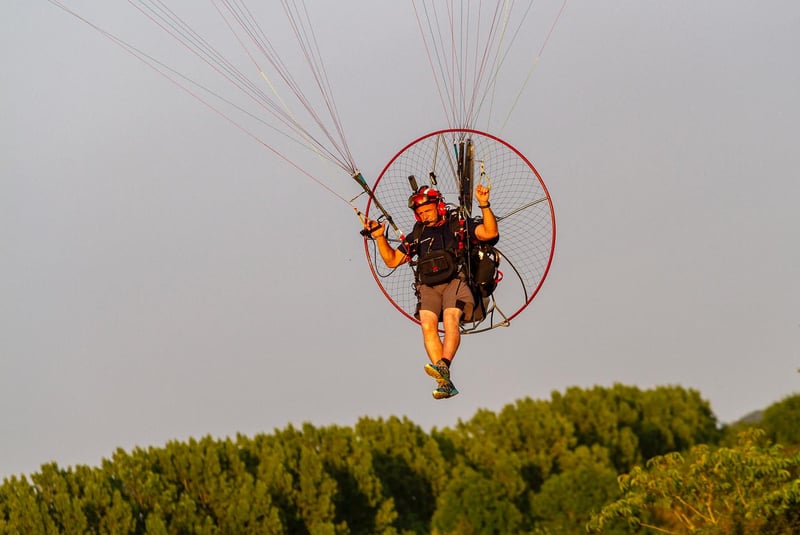
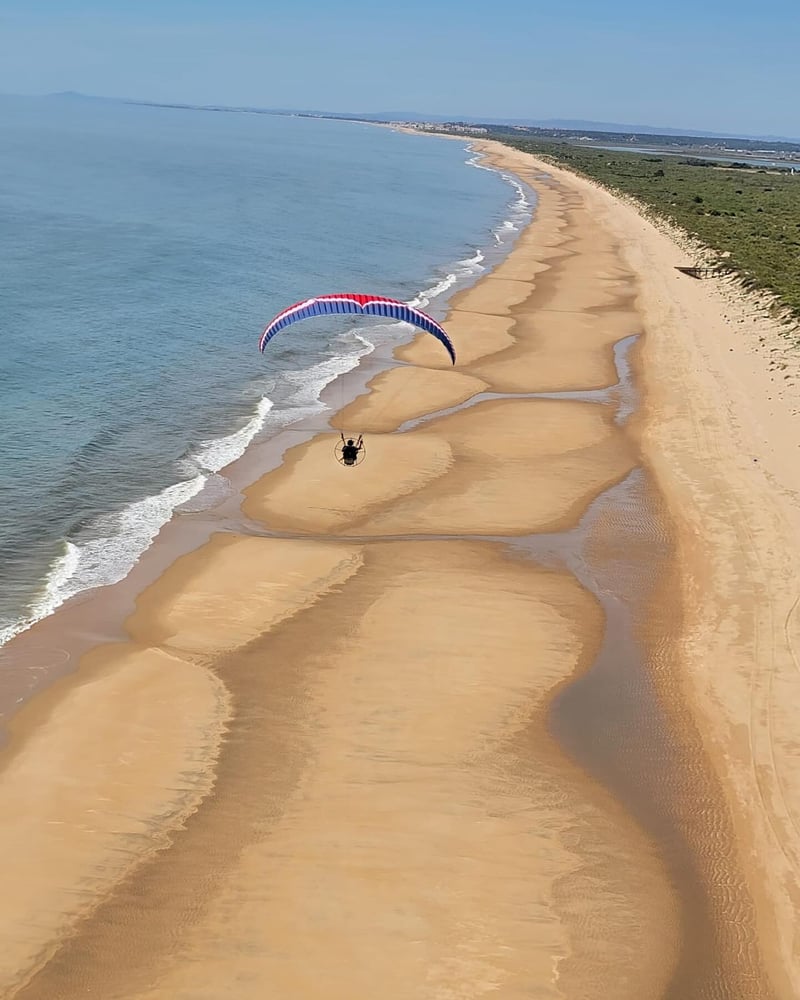
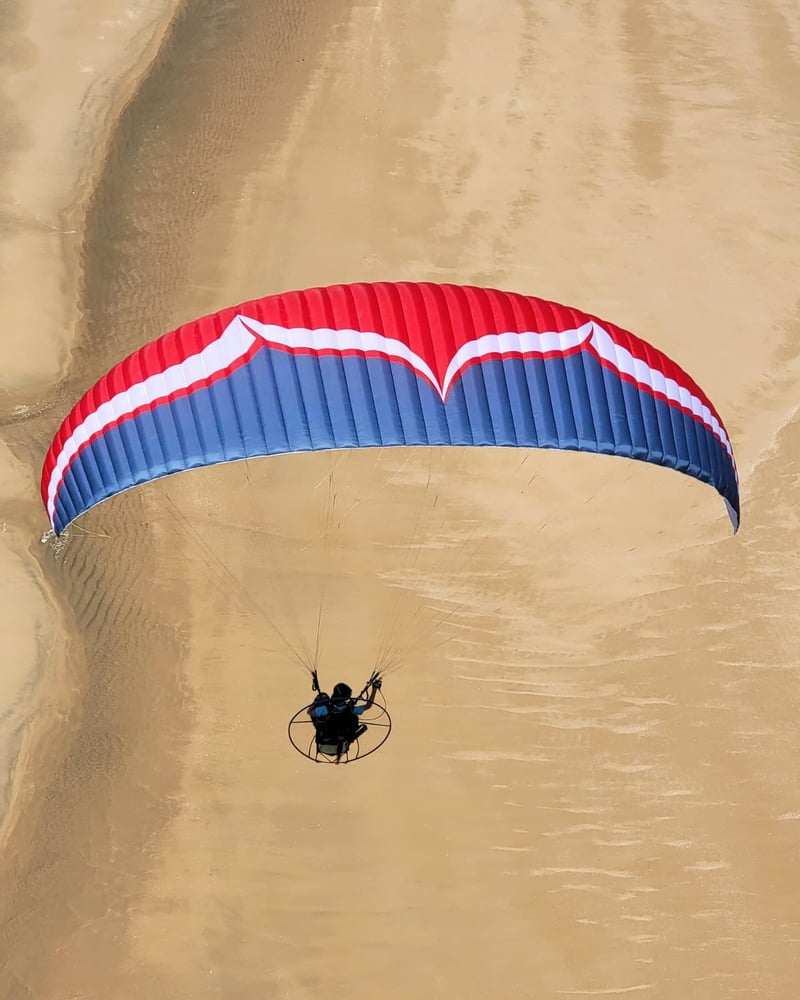
The 12-day paramotor course is the complete training programme for those looking to become a fully qualified APPI PPG Pilot. Combining the 6-day beginner and 6-day intermediate courses, this course is designed for complete beginners and paraglider pilots with fewer than 20 hours of experience.
The goal is to develop the skills needed to fly solo confidently, log a minimum of 15 flights, accumulate at least 3 hours of airtime, and pass the APPI PPG Pilot Exam. Once qualified, pilots can fly independently and take out AXA insurance, allowing them to fly in various locations worldwide. Training takes place over two consecutive weeks in Spain.
Designed for complete beginners, this phase focuses on developing ground handling skills, understanding motor operation, and achieving a first solo flight.
Training includes:
Designed for those who have already completed at least one solo flight, this phase builds on the skills learned in the beginner course. The focus is on improving technique, gaining confidence, and qualifying as an APPI PPG Pilot.
Training includes:
One of the most popular paramotoring destinations in Europe, Lake Bornos offers:
The nearest airports are Jerez, Seville, Gibraltar, and Malaga. Students are encouraged to hire a car for easy transport and freedom to explore the region.
Students stay in single rooms in shared, self-catered bungalows with air conditioning at a campsite on the edge of Lake Bornos. The accommodation is simple but affordable and encourages team unity.
With over 20 years of experience, this centre is one of the most established paramotoring schools in Europe.
This 12-day course offers:
This course is the most comprehensive way to learn paramotoring, gain confidence as a pilot, and work towards an independent flying future.
Anyone can learn to paramotor! Students come from all over the world, with most from the UK, Europe, and the Middle East. Ages range from 16 to 70, and more women have taken up the sport in recent years. While instruction is primarily in English, some instructors also speak Spanish, Portuguese, Turkish, and French.
Bring outdoor clothing for both warm and cold weather, including ankle-supporting boots, gloves, long sleeves, jackets, and trousers—avoid jeans as they restrict movement. Also bring lightweight outdoor clothing, a jacket and long sleeves for cooler temperatures at altitude. Suncream is essential.
There’s no fixed weight limit, but different equipment is needed for different body weights. Training is available for students up to 130kg; those over this weight may require custom equipment or a ParaTrike course, which can accommodate pilots up to 150kg.
Yes, paramotoring is generally safer than paragliding when done with proper training and equipment. Paramotor pilots typically fly in calm conditions, reducing the risk of turbulence-related incidents that can occur in paragliding.
The world record for the longest paramotor flight is 1,130km, but typical flights last 3-4 hours on a 17-litre fuel tank. Depending on conditions, pilots can cover several hundred kilometres, especially with an efficient wing and downwind flight.
The risk depends on the pilot’s training and approach. While the paramotor itself can be hazardous if handled incorrectly, professional instruction, adherence to safety rules, and proper weather awareness make the sport as safe as possible.
No licence is required in the UK, as paramotors are deregulated under the Air Navigation Order. However, pilots must follow air law regulations, covered in the training course. Completing the APPI PPG Pilot course is recommended for safety and for flying legally in some other countries.
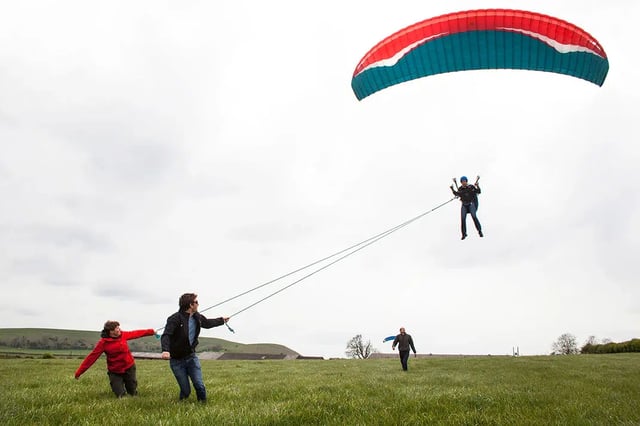
No, prior paragliding experience is not required. The training system includes hand towing to help beginners develop take-off, steering, and landing skills in a controlled environment. In some cases, paragliders may need to adjust their technique when transitioning to paramotoring.
In the UK, courses start at 9am on Saturdays at Hinton Airfield. In Europe, they start at 9am on Mondays, with the meeting location confirmed via email or WhatsApp beforehand.
Self-teaching is strongly discouraged. Without proper instruction, pilots may not be aware of crucial safety risks, making structured training with experienced instructors essential.
Most beginners need 4-6 days of ground training before their first solo flight. Achieving the APPI PPG Pilot licence typically takes around 12 days, requiring multiple solo flights, set tasks, and a theory exam.
No, attempting to fly without training is highly dangerous. While paramotoring is one of the safest forms of powered flight, the risks increase significantly without proper instruction.
Training takes place at Lake Bornos, about 1 hour south of Seville and 2 hours west of Malaga. We also fly from Conil de la Frontera on the coast, located 1 hour west of Gibraltar, near the famous Cape Trafalgar.
Students should arrive and depart on Sundays, flying into either Malaga or Seville Airport. The course begins at 9am on Monday and finishes around 18:00 on Saturday. Sunday is a rest day for the team.
Most students choose to hire a car and share costs, coordinating travel plans through a WhatsApp group set up before the course. This makes transport more affordable and convenient.
About the centre
Bornos, Cádiz
Operated by Sky School UK, a partner of adventuro.

Leicestershire, Rutland and Northamptonshire, United Kingdom
From £1095
Leicestershire, Rutland and Northamptonshire, United Kingdom
From £350