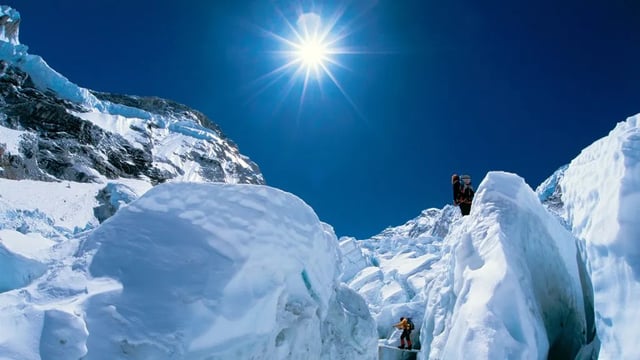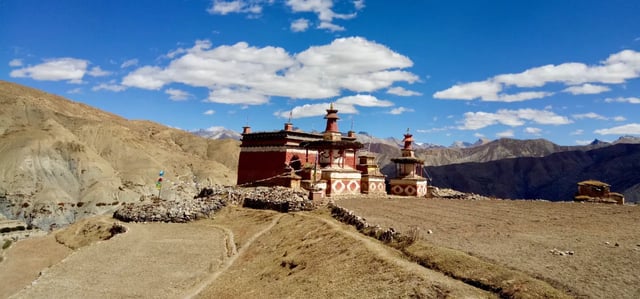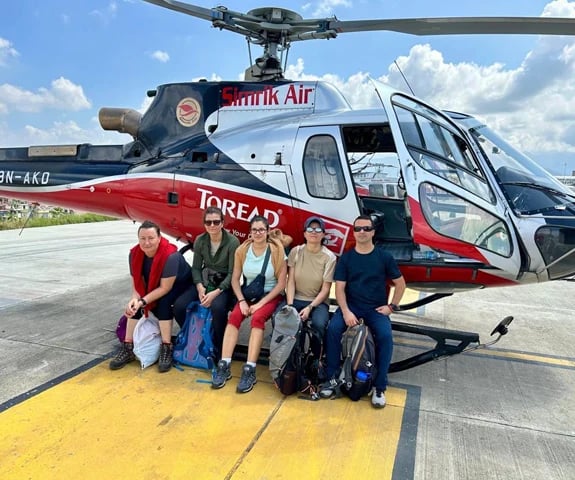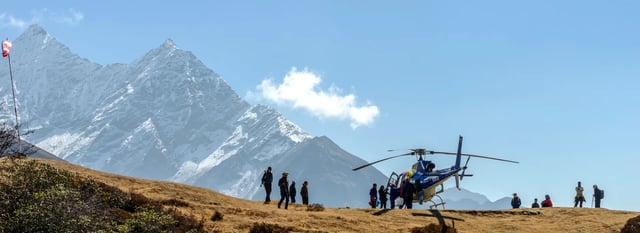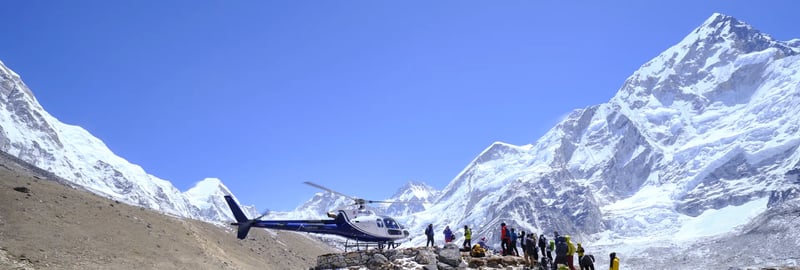
A helicopter sector lifts you into the Khumbu so you spend more of the calendar on the trail to Everest Base Camp and less time on the long Lukla walk-in. You still sleep in teahouses through Namche and the higher villages, with time at the icefall and Kala Patthar when the itinerary allows. You still get Namche, the monastery ridge, and a night near Gorak Shep; the flight simply buys you more time at the high points.
Guides watch altitude as you gain height quickly after the flight. Return to Kathmandu is by helicopter or a mixed trail-and-flight finish as set out in your day-by-day plan. Standing at the icefall and looking back down the Khumbu is the moment this itinerary is built around.
Our office staff completed adventure-tourism training and keep taking outdoor and business courses, which shows in how we brief a helicopter lift into the Khumbu before you walk to Everest Base Camp. You'll gain height quickly after the flight, so your guide, licensed through MOCTCA and NATHM and trained on altitude illness, keeps Namche nights honest before the icefall and Kala Patthar.
We try to match a guide who is local to this valley and who can talk through Sherpa culture, history, and religion as you move through the higher villages. We'll explain weight limits and abort calls before you board, and the return to Kathmandu stays by helicopter or a mixed trail-and-flight finish as your day-by-day plan sets out.
You will be greeted by a member of our team on reaching the Tribhuvan International Airport and will be transported to your hotel. The capital of Nepal, Kathmandu is a colorful and lively city and the daily life is a blend of history, culture and the beautiful old architecture. Boudhanath Stupa and Pashupatinath Temple are some of the religious places in Kathmandu.
Once you have checked into your hotel, you will have free time to relax and recover from your long flight. In the evening, you will be going through a briefing of the trek, during which your guide will clarify the trekking plan and address any concerns. It is also an opportune moment to check your trekking equipment as well as ensure that everything is in order before the adventure starts.
Another thing to do is to walk around Thamel, a tourist commercial centre which has shops, cafes, and restaurants. Here, you have an opportunity to taste the traditional Nepali food such as dal bhat and a warm cup of local tea. Because there is no trekking today, the emphasis will be on rest, preparation, and familiarizing with the environment before going into the mountains.
The day starts with the Helicopter flight from Kathmandu to Lukla airport, which takes about 45 minutes. The flight will provide you with some spectacular panoramas of the Himalayan mountains. The Tenzing-Hillary Airport is a well-known airport in Lukla at 2,860 m (9,383 ft). After landing, you will start your first trek towards Phakding.
The trail is generally easy and downhill, which is approximately between 7.5 and 8 kilometers, and requires approximately three hours. You will pass through the serene pine woods and trail the lovely Dudh Koshi river. You will also pass by a number of suspension bridges along the path, an enjoyable aspect of the hike. The trail is moderate and ideal for familiarizing oneself with walking in the mountains.
There will be small villages as well, and you will observe local life in the Khumbu region. In the afternoon, you will arrive at Phakding, a small village at 2,610 m (8,563 ft).
You will start your trek towards Namche Bazaar after having breakfast. It is a more difficult and lengthy day, with an approximate distance of 10.8 kilometers and a duration of approximately 6 to 7 hours. The path is along the Dudh Koshi River and also consists of a few suspension bridges.
You will walk through pine tree forests and little villages. Once you arrive at Monjo, you will enter the Sagarmatha National Park, which is a conservation zone of natural beauty and wildlife. From here, the trail becomes steeper.
The last section of the walk is a gradual climb to the upslope, which may be a little difficult, but the struggle is made up for with your first far sights of Mount Everest. As you arrive at Namche Bazaar (3,440 m / 11,286 ft), you will find that it is a bustling town located amid a hillside. It is referred to as the entrance to Everest and the heart of Sherpa culture.
This is the rest and acclimatization day at Namche Bazaar. To allow your body to get used to the elevated altitude, acclimatization is essential. You will not just sit, but will give yourself a little walk to elevated places and come back.
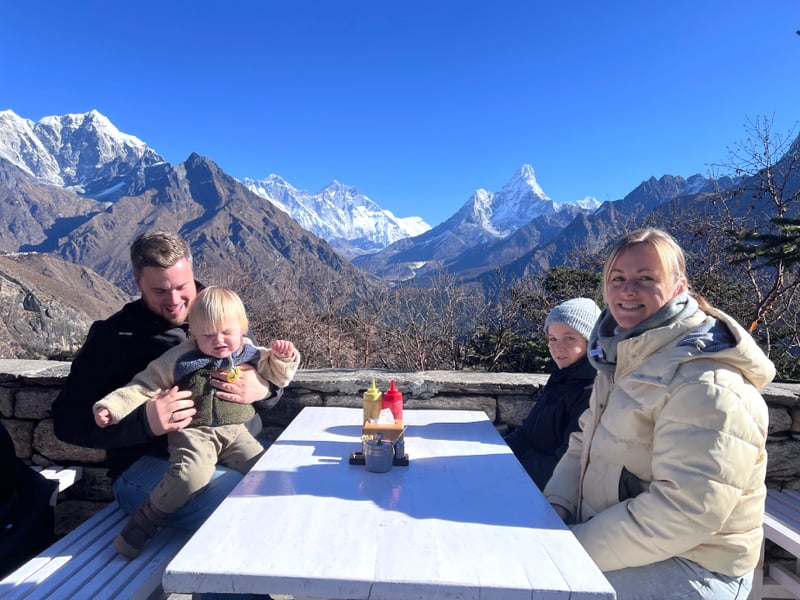
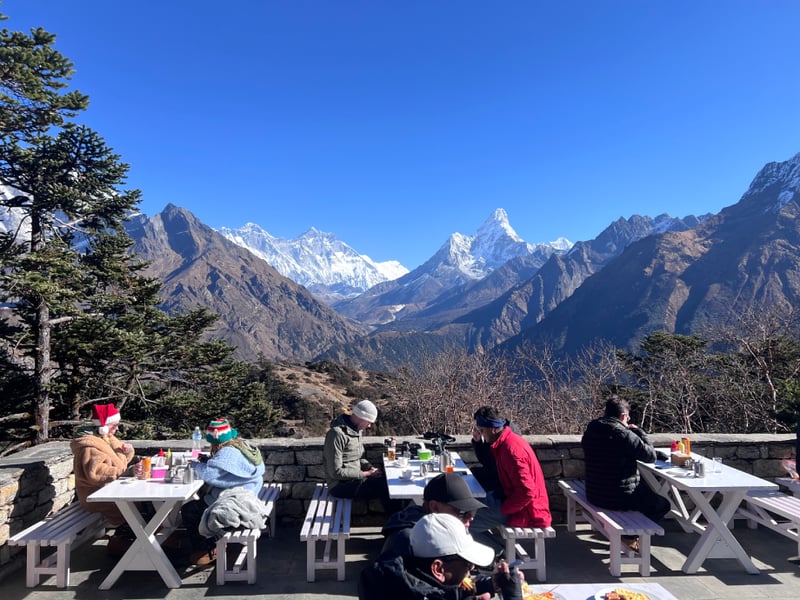
In the morning, you will go to the Everest View Hotel (3,880 m / 12,730 ft), which is one of the best places to see in the area. It is a great spot to see the beautiful scenery of Mount Everest, Lhotse, and other mountains. You will proceed to hike to Khumjung village (3,790 m / 12,434 ft) after taking in the view.
In Khumjung, there is a local monastery and the Hillary School that was constructed to help the local population. This will provide an opportunity to know more about the culture and lifestyle of Sherpas.
You will start trekking after having had breakfast and start heading out of Namche Bazaar to Deboche (3700 m/ 12139 ft). It travels a distance of approximately 11 kilometers in a time of 6-7 hours. The path begins with a moderate ascent, leaving Namche with a moderate descent.
Beautiful rhododendron forests will be on your way as you pass by, and you will have the surrounding mountains in view. Clear views of Mount Everest will be achieved at 3,800 m (12,467 ft) near Syangboche. Then the trail proceeds with a combination of both uphill and downhill.
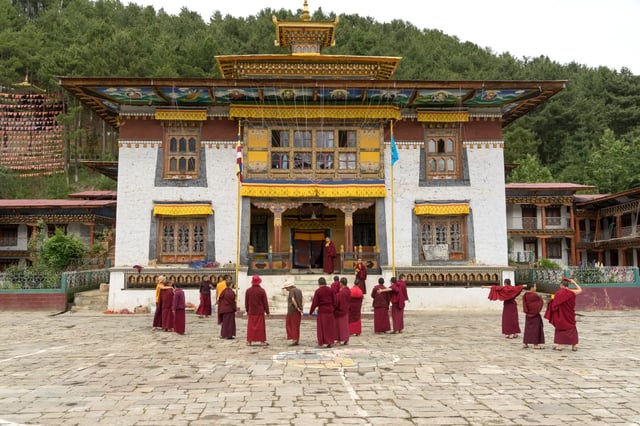
In the afternoon, you will reach Tengboche (3,860 m / 12,664 ft), a serene village with its renowned monastery. Tengboche Monastery is the biggest monastery in that area and provides a view of Everest.
You start today at Diboche and walk to Dingboche. It is about 10-11 km distance and about 7 hours. This day starts with a downward journey through the forest to a village called Deboche.
The trail slowly ascends again after passing a suspension bridge. You travel through the village of Pangboche (4,010 m / 13,156 ft), with one of the oldest settlements in the area. Here, the landscape is more open with fewer trees and larger views.
The path further descends into a peaceful valley, providing some of the most beautiful scenery of Ama Dablam, which is one of the most beautiful mountains in the Himalayas. The air gets thinner as you increase in altitude, and therefore, you should walk slowly.
It is another acclimatisation day at Dingboche today. Your body will need to adapt to the altitude, so you will have an optional hike to a higher elevation and then come back. One option is to hike to Nangkartsang Peak of 5,083 m (16,676 ft), or Nagarjun of 5,000 m (16,404 ft).
This hike will require roughly 3 to 4 hours. It is a challenging climb, though worthwhile, with 360-degree views of the surrounding mountains, including Makalu, Ama Dablam, Lhotse, and Cho Oyu. After reaching the viewpoint, you will go down to Dingboche.
This high, low technique of climbing helps your body to adjust to high altitude.
Today we are leaving Dingboche and going to Lobuche. The trial is approximately 8.8 kilometers and takes 5-6 hours. The trail starts with a gradual stroll, and then it gets steeper as you ascend.
You will pass the village of Dughla and reach a memorial site where there are stone monuments of the climbers who lost their lives on Everest. It is a significant and silent spot on the way. In this case, the trail is up the gravelly rocks and glacier moraine.
Terrain is drier and rougher; there are fewer signs of plants. It is important to walk slowly as the air is much thinner.
Today is the most interesting and satisfying day of the trek. It will cover a distance of 11.5 kilometers, which will require approximately 8-9 hours. The trip starts with a slow ascent from Lobuche to Gorakshep (5,190 m / 17,028 ft), where you will have a brief rest.
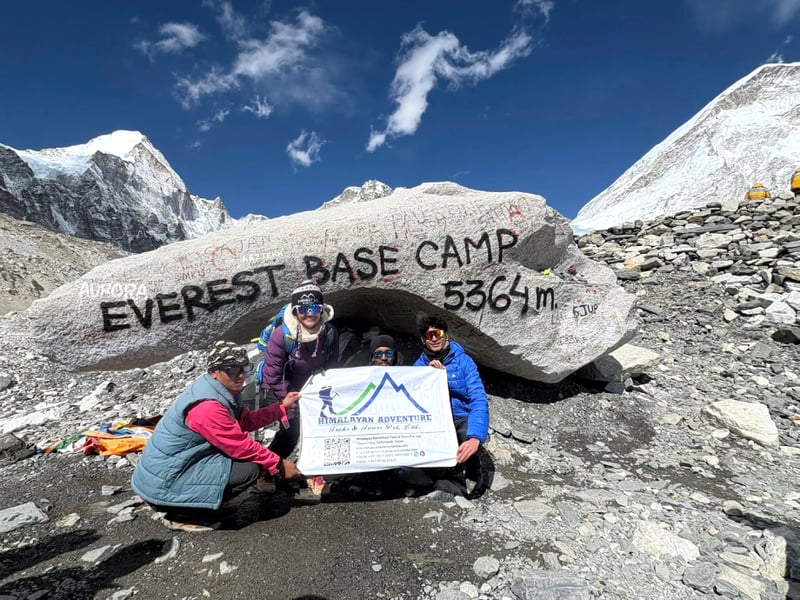
You will leave your bags at Gorakshep, after which you will move towards Everest Base Camp. The track is a glacier moraine and rocky. About 2 kilometers later, you reach the Everest Base Camp (5,360 m / 17,585 ft).
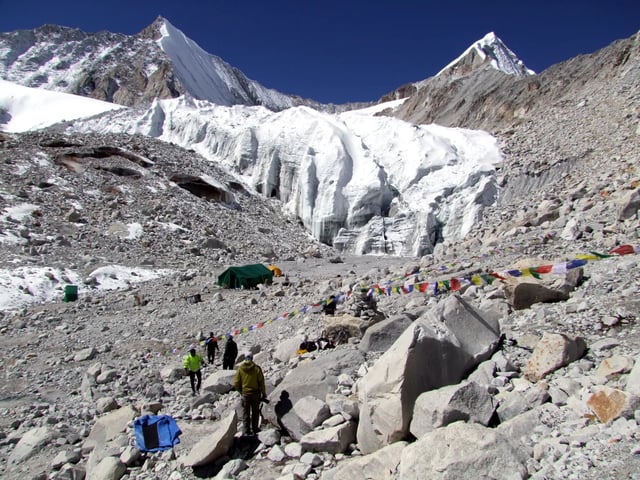
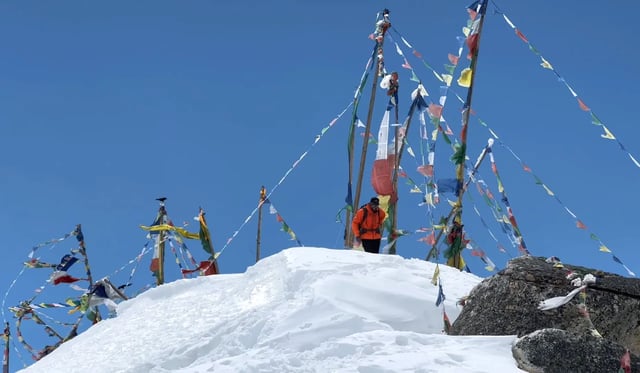
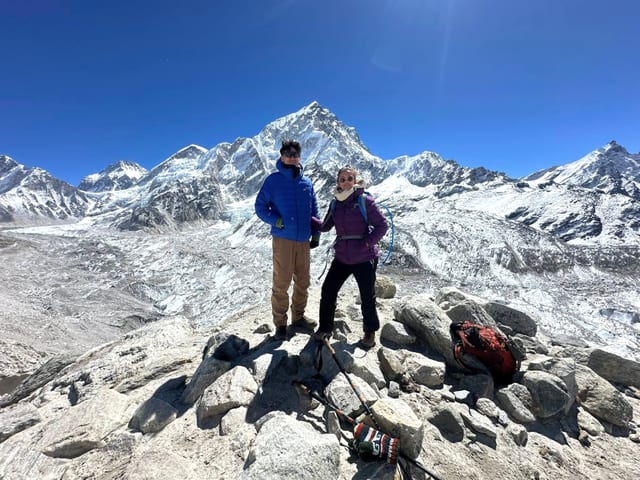
It is a unique experience to be at the foot of Mount Everest. There will be prayer flags and, in climbing season, colorful expedition tents. It is also possible to see the Khumbu Icefall.
It is the last and one of the most memorable days of your journey. On this day, in the early morning before the sun rises, you will start a short yet steep walk out of Gorakshep to Kala Patthar at 5,545 m (18,192 ft). The distance is approximately 3 kilometers, and the climb increases by approximately 500 meters in height. The trail is quite difficult, which is a result of the altitude and steepness, but the view from the top is truly memorable.
Kala Patthar will provide you with one of the most amazing views of the sunrise above Mount Everest. The south face of Everest is facing the golden light, which forms a view. This perspective is one of the best and nearest panoramic viewpoints of Everest and the other peaks, and is a highlight of the whole trek. You will then have time to savor the scenery and have a photo session, after which you will head back to Gorakshep to have breakfast.
In the afternoon, you will fly by a helicopter to Kathmandu and enjoy a scenic flight which takes about 30 to 40 minutes. This is the last flight that will show you the aerial views of the Himalayas.
Today is your departure day after your adventure to Everest. Your morning will begin with breakfast at your Kathmandu hotel. Depending on your flight schedule, you may have some free time to relax or explore the city one last time.
Time permitting, you can do some last-minute shopping in Thamel, which has some souvenirs, handicrafts, and local products that you can carry home. You can also take a trip to the local cultural places or just take a walk through the streets of Kathmandu. It is time to look back at your trip through the Everest region, the small mountain villages, the high landscapes, and the amazing views of the Himalayas.
The time spent in Everest Base Camp and Kala Patthar will be an experience that will be remembered.
Most guests fly into Tribhuvan International Airport in Kathmandu. Share your arrival time ahead of travel so a Thamel hotel transfer can be arranged, or make your own way to the meeting hotel.
Pre-trek briefings usually take place in Kathmandu before the Lukla flight or helicopter sector. Allow extra days after the trek in case mountain flights are postponed by weather.
Twin or double rooms in a comfortable Kathmandu hotel cover your first nights and your return from the trail, with breakfast on those city stays when included in the package. Briefings happen at the hotel, and airport collection from Tribhuvan is available when flight times are shared in advance.
Family-run teahouses or lodges line the route with twin beds and a shared dining room. Rooms get simpler and colder as you climb, with shared bathrooms common at higher villages. Hot water, Wi-Fi, and charging are paid at the lodge when offered.
Spring from March to May and autumn from September to November usually bring the clearest views and stable walking conditions on this route. Winter is quieter but colder at altitude, while monsoon months bring cloud and wet trails at lower elevations.
Shoulder weeks need an honest weather call before high passes or dawn viewpoints. Monsoon cloud sits lower on the hills while winter brings ice on steps above village level.
You should be comfortable walking several hours a day on uneven paths with a daypack, including steady uphill sections as you gain height. Hill training and longer weekend walks in the months before travel help your legs and lungs on uphill trail days.
Hill training, stair climbing, and longer weekend hikes in the months before travel help your legs and lungs, even when acclimatisation days are built into the route. Break in boots before you fly and carry a light daypack on practice walks.
Guided trekking with licensed leaders, lodge nights on the trail, meals as described for walking days, and permits for the regions crossed are included when they are part of this trip. Domestic flights, porters, and airport transfers apply only when they are part of this trip.
Helicopter sectors, domestic flights, and airport transfers apply only when they are listed on the trip; porter support follows the ratio arranged in Kathmandu. Permits for the regions you cross are arranged in Kathmandu or Pokhara when included.
International flights to Nepal, visa fees, compulsory travel insurance, personal trekking clothing, snacks and drinks outside included meals, and tips for crew are not covered. Hot showers, Wi-Fi, and battery charging in lodges are usually paid locally when offered.
Charges for hot showers, Wi-Fi, or battery charging in lodges are paid locally when offered unless your trip notes say otherwise. International flights, visa fees, and personal insurance stay outside the trek package.
Pickup can be arranged from Tribhuvan International Airport or your hotel in Thamel when you share flight times ahead of travel. The pre-trek briefing is usually held at the hotel before the Lukla flight or helicopter sector.
Allow buffer days after the trek in case mountain flights move. Thamel hotels are the usual meet point; drivers need flight numbers to meet you at the international terminal.
The itinerary builds rest days and climb-high, sleep-low hikes where the route requires them. Your crew would rather wait for a safe window than rush marginal weather.
Tell your guide early if symptoms appear so tomorrow's stage can shorten or descent can start before conditions worsen. Trail conditions are checked each morning before the group moves.
Helicopter legs are scheduled around lodge checkout when transport is part of the trip. Weight limits and weather holds apply, and the crew may shift timing to the next clear window.
Dress warmly for open-door loading zones and keep passport and permits in your daypack. Buffer days in Kathmandu after the trek reduce stress if the flight moves.
Sagarmatha National Park and Khumbu municipality permits apply in the Everest region. The team arranges paperwork in Kathmandu or Pokhara when you provide passport copies and trek dates.
Keep copies in your daypack for checkpoint stops. Weather can shift daily plans, so your guide keeps a steady pace with regular breaks.
Families join when children can manage the daily hours and terrain on this specific route. Pace and daily hours can be adjusted on private departures, though that may extend the calendar.
Ask our Kathmandu team if you are planning with younger walkers. Private departures can shorten daily hours, though that may add a day or two to the calendar.
Comprehensive travel insurance that covers trekking to the highest altitude on your itinerary, medical evacuation, and helicopter rescue when applicable is essential. Many standard policies exclude high altitude by name.
Read the wording before you travel so you can adjust cover if trekking above 5,000 metres is not named. Many standard policies exclude high altitude by name, so read the wording before you fly.
We partner with Rewilding Britain to help protect our natural spaces for future adventures.
All centres are vetted for safety and quality. Your adventure is in good hands with adventuro.
About the centre
Kathmandu
You'll travel with a Kathmandu-based team that plans treks, peak climbs, helicopter flights, motorbike journeys, and cultural trips across Nepal, Tibet, and Bhutan. Routes range from classic teahouse walks and high passes to luxury lodge itineraries and longer expedition-style climbs, with departures shaped around how you want to pace the mountains.
Licensed guides and office staff train regularly on mountain safety and guest care. Porters are insured, fairly paid, and equipped for the trail, with sensible load limits on lodge routes. We work with remote communities through sustainable tourism, including support for education in village areas, so your booking helps local people as well as your own adventure.
Operated by Himalayan Adventure Treks & Tours, a partner of adventuro.