A ten-day Bhutan itinerary mixes valley temples and a lodge-or-camp trek toward high lakes and ridgelines, still under national guide and permit rules. You have time in a dzong town as well as nights out of the road network. A dzong-town morning and a farmhouse meal sit before the first high-lake camp.
Himalayan views, festival dress if dates align, and a regulated finish back to the airport close the trip. Buffer a day for mountain flights on either side of the border. Tent nights toward the lakes keep the later days on high ground after the valley temples.
Licensed Bhutanese guides are required on this itinerary, and our Kathmandu office files the visa and the ten-day permit before you fly into Paro. You'll have four hotel nights in the valleys and five nights under canvas on the Dagala ridge, with kitchen staff, dining tents, and pack ponies for the camp moves. We prefer a guide who already walks Genekha, Gur, Labatama, and Panka rather than a city escort learning the lakes as you go.
Culture days in Paro and Thimphu, including the hike to Tiger's Nest, sit around the camping circuit so you are not rushing dzongs after a pass day. Our office shares the daily plan so a buffer day can absorb weather on the 4,300-metre lakes. Client funds are backed by a security deposit at Nepal's Ministry of Tourism, and itineraries can be tightened or eased around the hotel and camp blocks.
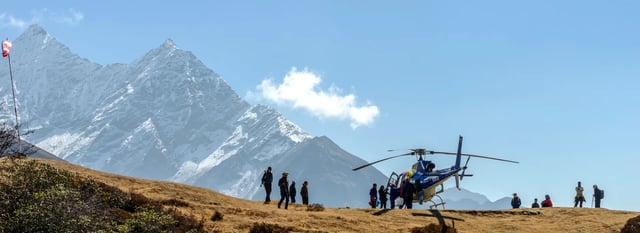
To begin your incredible Bhutan trek, today, you will take a spectacular flight that will bring you to Paro. Prepare to inhale the invigorating mountain air from the Himalayas of Jichu Drake, Jomolhari, and Tsrim Khang.
At the airport, you will find our friendly Bhutanese guide waiting to welcome you. After the formalities, you will take a short drive to your hotel.
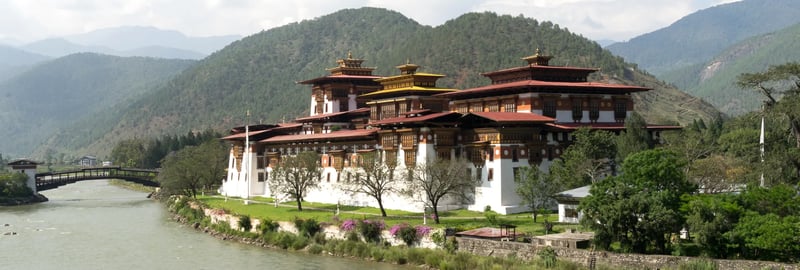
If you happen to arrive early, we may visit one or two sights in Paro Valley. We may go to see the Rinpung Dzong, more popularly known as Paro Dzong.
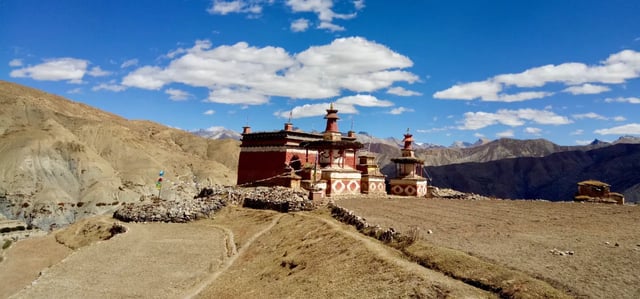
Today, we are in for a real treat on our Bhutan trek. We will be hiking to the most renowned pilgrimage destination of Bhutan, the Tiger’s Nest Monastery.
Its name comes from the legend that speaks about the visit of Guru Padmasambhava, the foremost tantric master of Tibetan Buddhism. Legend says that he came flying across the sky on the back of a tigress in the 8th century, landing in the monastery location.
After resting in Paro, we are now all set to continue our Bhutan trek. Today, we will be driving to Genekha from where our real hiking expedition will begin amid the pristine terrain of Bhutan.
But first, we will drive from Paro along the vast Thimphu Highway for a while. The road will now bifurcate to a mountain dirt road that passes through two little, quaint towns of Bama and Chizhi.
A little further, we will see the signboard of the Genekha Primary School. This is the point where we will leave our vehicle and start to descend to the riverbank.
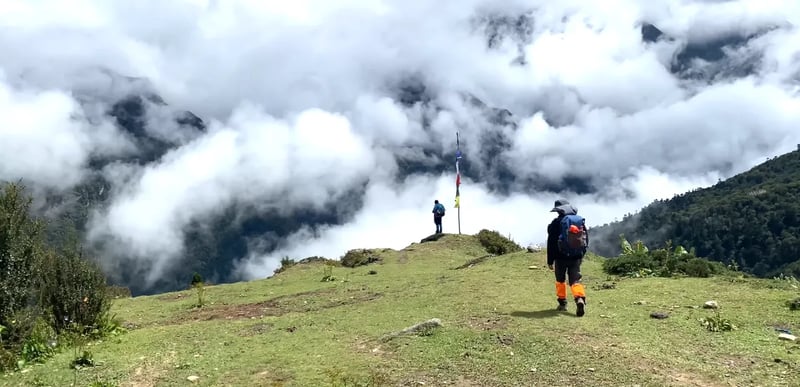
Early in the morning, loading our animals with our luggage, we will set forth to reach the Thousand Lakes of Bhutan. Gradually ascending through the oak forest, we will arrive at Tsochekha, one of the secluded rural Bhutan mountain villages.
We will now cross a new hanging bridge over the river and head west for a while. Then, the trail will bend south from where we will hike beside the eastern shore of the Genetsang Chu River towards the Dolung Chu tributary.
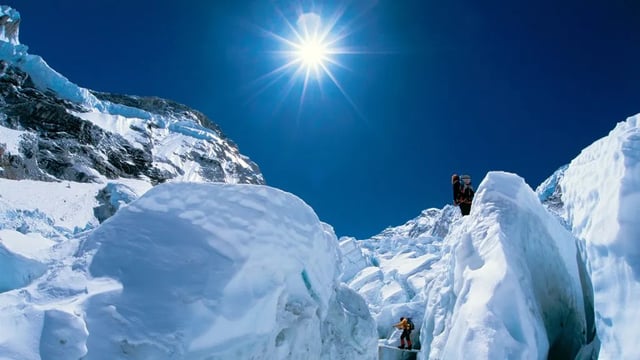
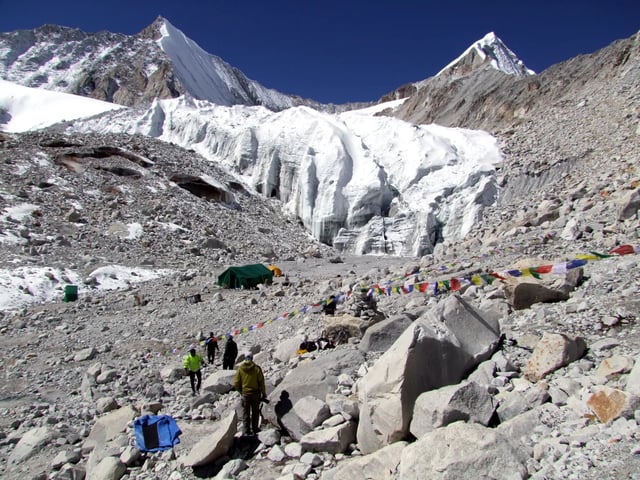
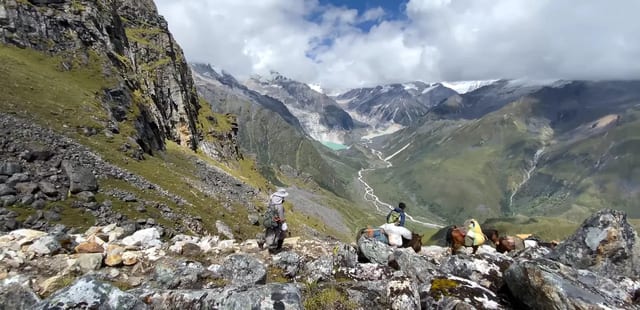
Today, our 10 days Bhutan trek will lead us to an altitude exceeding 4000 m amidst the secluded lakes of western Bhutan. After breakfast in our camp, we will hike through the dense moss-covered forest. After a few moments, we will be slowly ascending the 4250 m high slope of the impressive Pagalaptsha Pass of Watasachen.
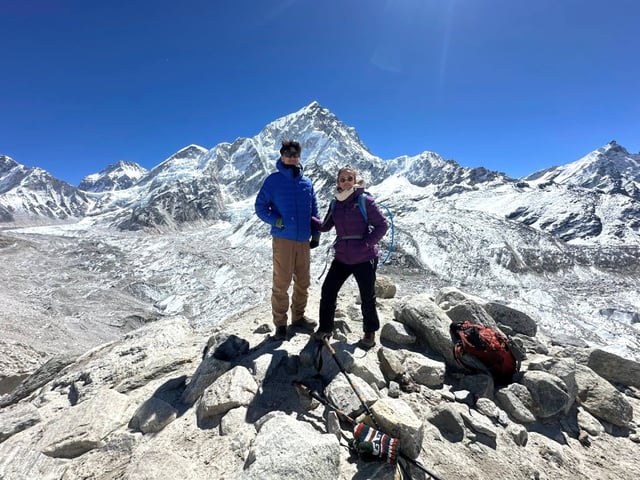
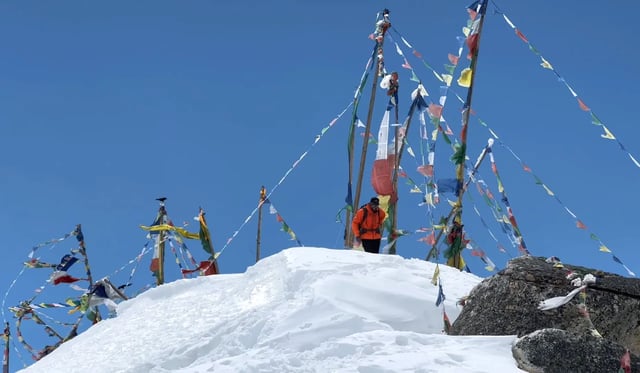
On the pass summit, we will see four stone stupas standing between the massive eternal frames of Jichu Drakey, Mount Everest, Mt. Tshering Gang, Mount Kanchenjunga, and Jomolhari.
Since we are now over 4000 m, it makes sense that we stay an extra night to acclimatize to the height. Thus, we have an entire day at Labatama, which we will use to explore its phenomenal surroundings. We will slowly hike up to some nearby mountain lakes.
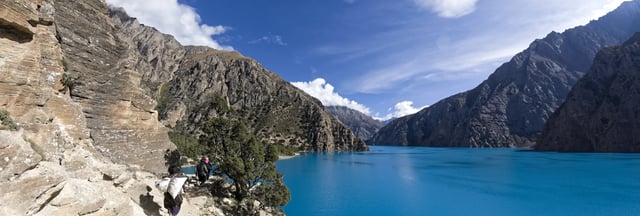
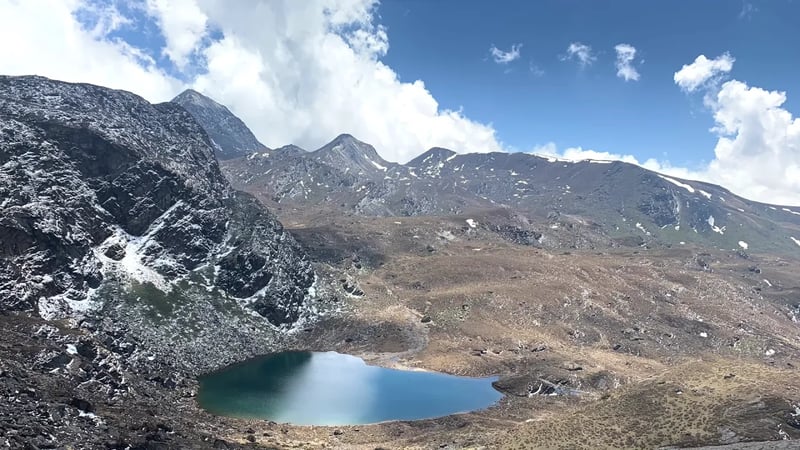
Very close to our campsite, we can visit several lakes that led to the name Dagala Thousand Lakes trek. There aren’t literally thousands of lakes, but there are certainly many between 4200 and 4400 m elevations.
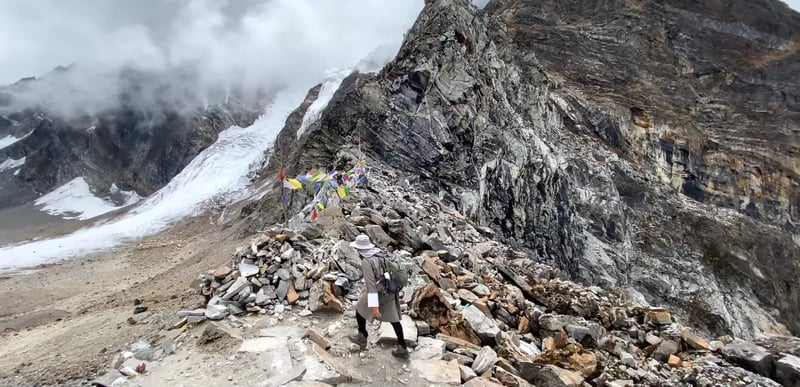
Early in the morning, we will begin an exhilarating ascent along the western ridge (4355 m) high above the Dala Tsho Lake. Then, our route will continue over the 4500 altitude of the Labajong Pass, which also stands as the highest point of our Bhutan trek.
For an additional exceptional view, we will ascend for around thirty more minutes and gain around 100 m.
Today marks the final day of trekking in our Bhutan trek. The trail from Panka will turn north and run through the dense, rich forest for a while.
We will then be ascending the steep slope of the 4100 m tall Chole La Pass. The trail beyond the pass will then descend us to Kiwi Chowa Camp (4030 m) located on a hillside surrounded by stone houses of yak herders.
Next, we will again be climbing a small pass measuring 3960 m, where we can see several trails meeting one another. Our trail will walk us down along an ancient riverbed, covered in scree, until we reach yet another high-altitude trail.
Thimphu is one of the most exceptional and youthful capitals in the world, which is positioned right next to the Wang Chu River. Today, we will see the most exquisite monuments of this city before driving to the starting location of our Bhutan trek.
First, we will see the Clocktower and also visit the archery stadium, which are very near our accommodation. Then, we will also get our personalized stamps at the Nepal Post Office.
Today, you will say goodbye to our support team as you set off on your journey to your next destination or back home. Our guide and driver will again transfer you to Paro Airport to catch a flight.
You will have countless moments of our Bhutan trek. Tashi Delek, and have a very safe journey.
Fly into Tribhuvan International Airport in Kathmandu unless the itinerary uses another regional hub. Airport or hotel pickup can be arranged when you share arrival details ahead of travel.
Briefings cover road or domestic travel to the trailhead. Build buffer time before onward international flights in case mountain weather shifts the schedule.
Twin or double rooms in a comfortable Kathmandu hotel cover your first nights and your return from the trail, with breakfast on those city stays when included in the package. Briefings happen at the hotel, and airport collection from Tribhuvan is available when flight times are shared in advance.
Family-run teahouses or lodges line the route with twin beds and a shared dining room. Rooms get simpler and colder as you climb, with shared bathrooms common at higher villages. Hot water, Wi-Fi, and charging are paid at the lodge when offered.
Spring from March to May and autumn from September to November usually bring the clearest views and stable walking conditions on this route. Winter is quieter but colder at altitude, while monsoon months bring cloud and wet trails at lower elevations.
Shoulder weeks need an honest weather call before high passes or dawn viewpoints. Monsoon cloud sits lower on the hills while winter brings ice on steps above village level.
You should be comfortable walking several hours a day on uneven paths with a daypack, including steady uphill sections as you gain height. Hill training and longer weekend walks in the months before travel help your legs and lungs on uphill trail days.
Hill training, stair climbing, and longer weekend hikes in the months before travel help your legs and lungs, even when acclimatisation days are built into the route. Break in boots before you fly and carry a light daypack on practice walks.
Guided trekking with licensed leaders, lodge nights on the trail, meals as described for walking days, and permits for the regions crossed are included when they are part of this trip. Domestic flights, porters, and airport transfers apply only when they are part of this trip.
Domestic flights, road transfers, porter support, and airport transfers apply only when they are part of this trip. Permits for the regions you cross are arranged in Kathmandu or Pokhara when included.
International flights to Nepal, visa fees, compulsory travel insurance, personal trekking clothing, snacks and drinks outside included meals, and tips for crew are not covered. Hot showers, Wi-Fi, and battery charging in lodges are usually paid locally when offered.
Charges for hot showers, Wi-Fi, or battery charging in lodges are paid locally when offered unless your trip notes say otherwise. International flights, visa fees, and personal insurance stay outside the trek package.
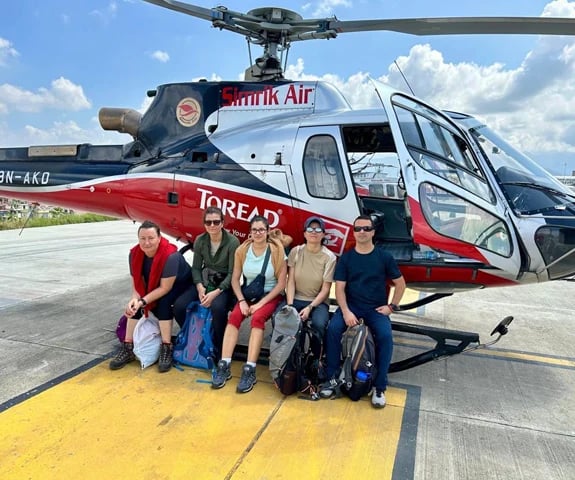
Pickup can be arranged from Tribhuvan International Airport or your hotel in Thamel when you share flight times ahead of travel. The pre-trek briefing is usually held at the hotel before the Lukla flight or helicopter sector.
Allow buffer days after the trek in case mountain flights move. Thamel hotels are the usual meet point; drivers need flight numbers to meet you at the international terminal.
Guides set a steady pace and watch for headache, nausea, or dizziness as you gain height. Weather can shift daily plans, so your guide keeps a steady pace with regular breaks.
Tell your guide early if symptoms appear so tomorrow's stage can shorten or descent can start before conditions worsen. Trail conditions are checked each morning before the group moves.
Jeep or bus days to the remote trailhead are arranged when they are part of your package. Your guide confirms departure times at briefing.
Motion sickness medicine helps on winding mountain roads. Your crew would rather wait for a safe window than rush marginal weather.
National park or restricted-area permits apply depending on the valleys you cross. The team arranges paperwork in Kathmandu or Pokhara when you provide passport copies and trek dates.
Keep copies in your daypack for checkpoint stops. Allow a little extra time after the trek before international flights home in case mountain roads or flights move.
Families join when children can manage the daily hours and terrain on this specific route. Pace and daily hours can be adjusted on private departures, though that may extend the calendar.
Ask our Kathmandu team if you are planning with younger walkers. Private departures can shorten daily hours, though that may add a day or two to the calendar.
Comprehensive travel insurance that covers trekking to the highest altitude on your itinerary, medical evacuation, and helicopter rescue when applicable is essential. Many standard policies exclude high altitude by name.
Read the wording before you travel so you can adjust cover if trekking above 5,000 metres is not named. Many standard policies exclude high altitude by name, so read the wording before you fly.
We partner with Rewilding Britain to help protect our natural spaces for future adventures.
All centres are vetted for safety and quality. Your adventure is in good hands with adventuro.
About the centre
Kathmandu
You'll travel with a Kathmandu-based team that plans treks, peak climbs, helicopter flights, motorbike journeys, and cultural trips across Nepal, Tibet, and Bhutan. Routes range from classic teahouse walks and high passes to luxury lodge itineraries and longer expedition-style climbs, with departures shaped around how you want to pace the mountains.
Licensed guides and office staff train regularly on mountain safety and guest care. Porters are insured, fairly paid, and equipped for the trail, with sensible load limits on lodge routes. We work with remote communities through sustainable tourism, including support for education in village areas, so your booking helps local people as well as your own adventure.
Operated by Himalayan Adventure Treks & Tours, a partner of adventuro.