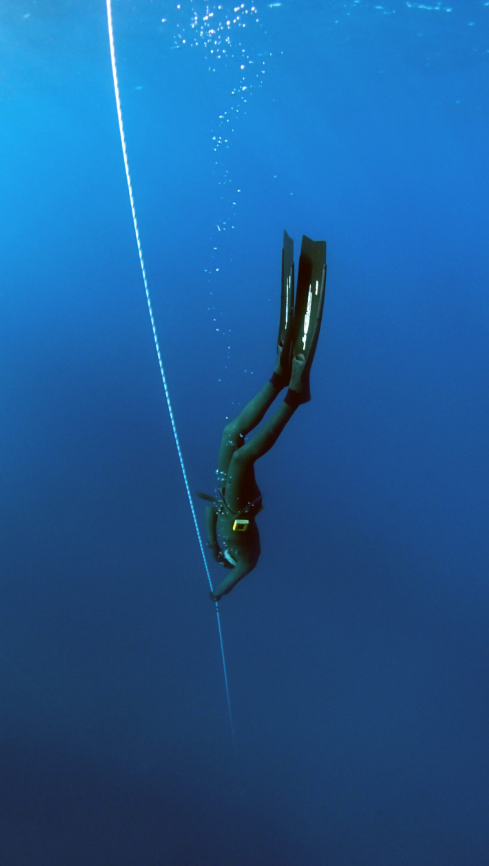
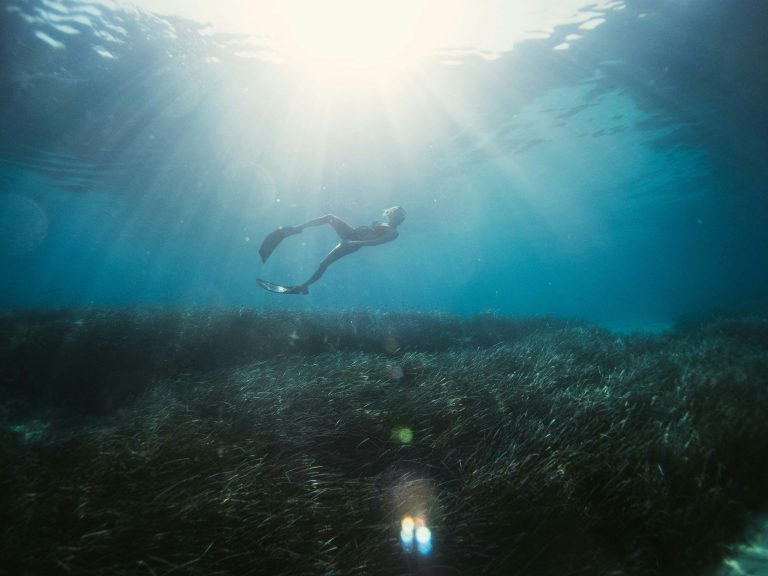
L’Advanced Freediver est le moment où l’apnée devient maîtrisée plutôt que fondée sur l’espoir. Vous connaissez déjà les bases : la relaxation, une ligne et un binôme qui surveille chacune de vos plongées. Vous allez maintenant perfectionner votre équilibrage, prolonger votre apnée et mettre ces compétences en pratique en eau libre sous étroite supervision, avec un masque, des palmes et une ceinture de lest en lesquels vous avez confiance.
PADI Advanced Freediver ne consiste pas à courir après un chiffre sur un profondimètre pour Instagram. Il s’agit de comprendre les réactions de votre corps sous pression, de gérer l’aspect mental des descentes plus profondes et de maintenir des procédures de sécurité rigoureuses lorsque la fatigue s’installe pendant la remontée.
La plupart des centres commencent par l’e-learning, généralement cinq à dix heures, puis proposent deux à quatre jours combinant travail en piscine et séances en eau libre. Les objectifs de performance passent à environ deux minutes et demie d’apnée statique pour les adultes, 50 mètres en dynamique et des plongées plus profondes le long d’une ligne, en mer ou en carrière. Votre moniteur vous fera faire demi-tour bien avant que vous ne vous mettiez vous-même en difficulté. Faire demi-tour tôt pendant une plongée est une compétence, pas un échec.