We partner with Rewilding Britain to help protect our natural spaces for future adventures.
All centres are vetted for safety and quality. Your adventure is in good hands with adventuro.
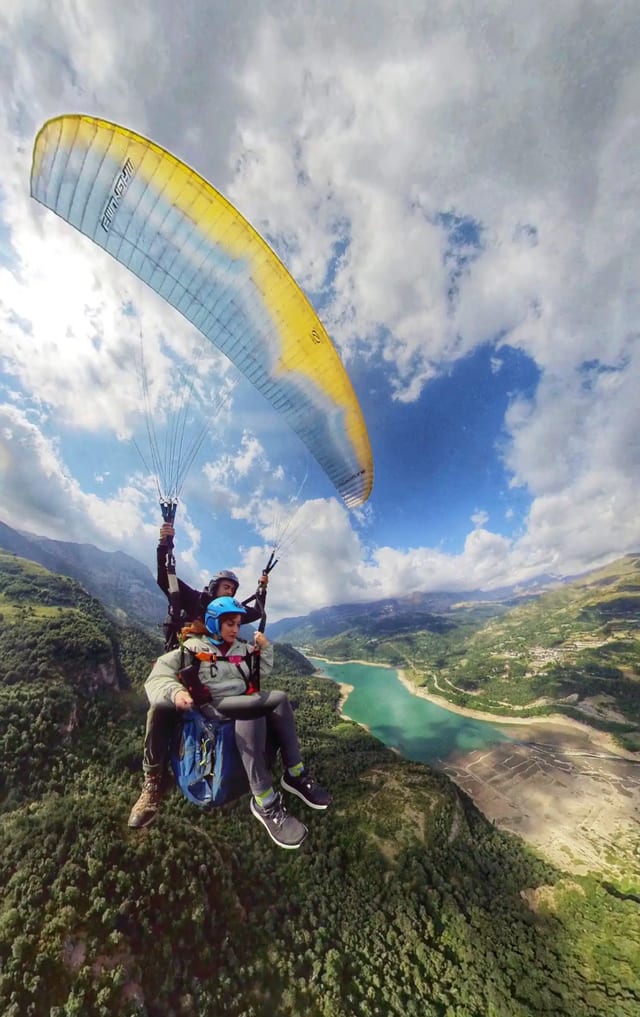
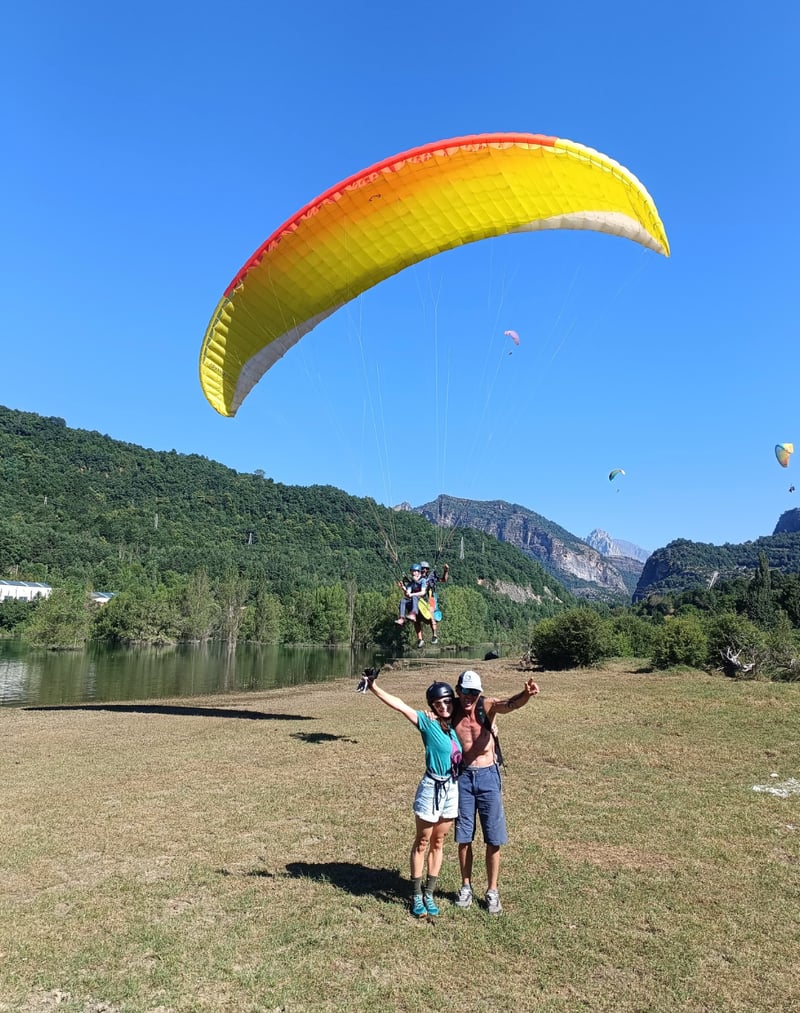
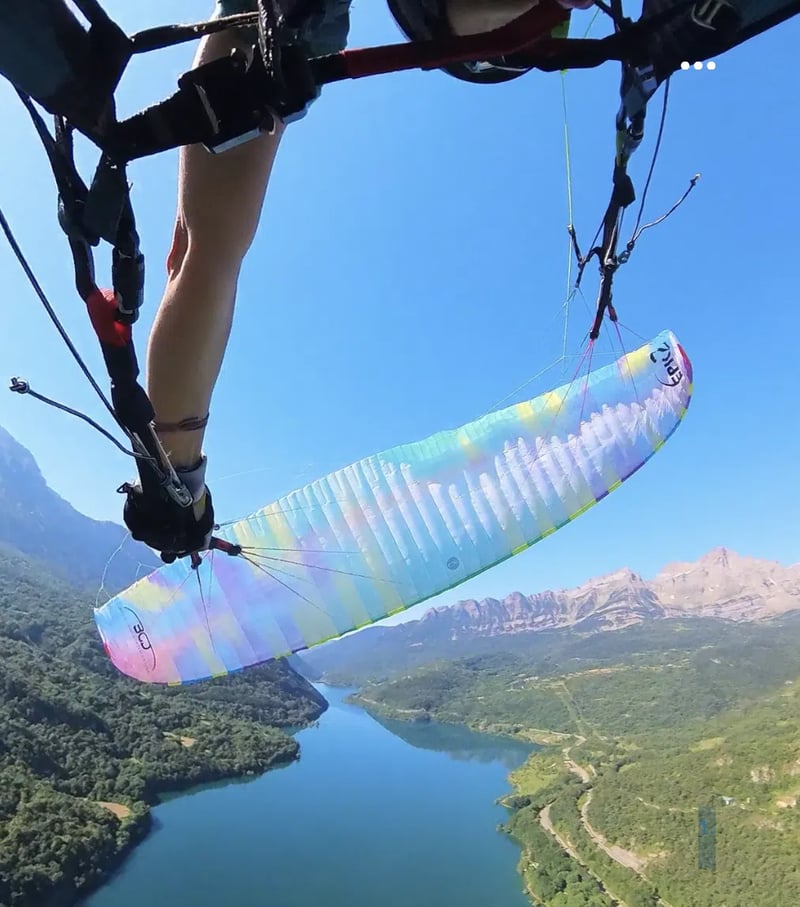
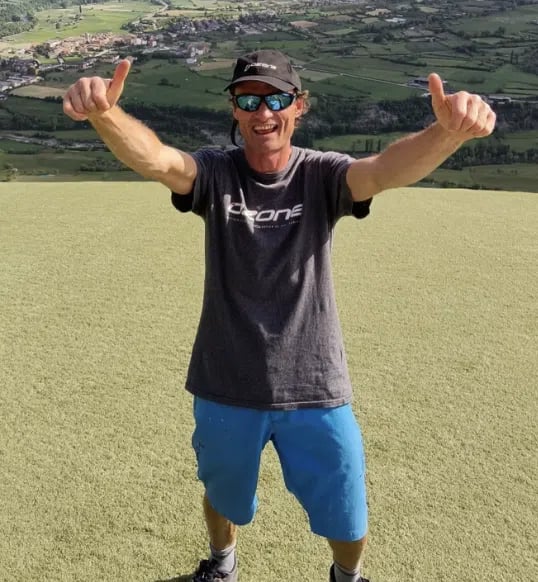
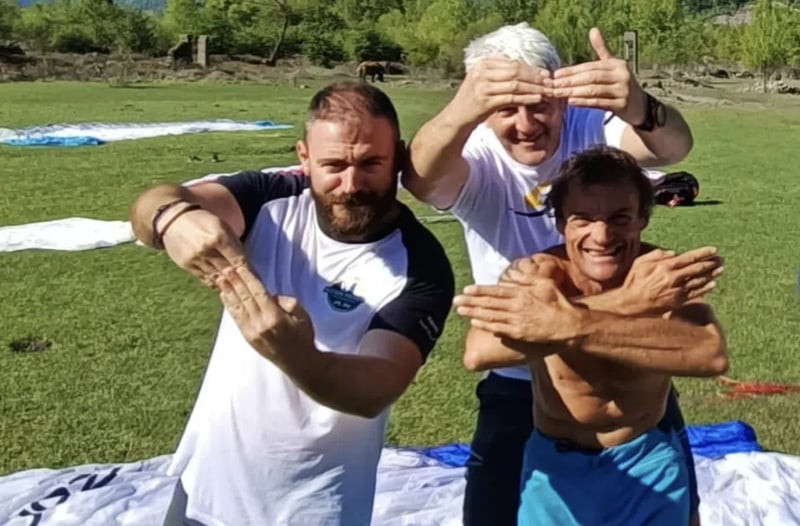
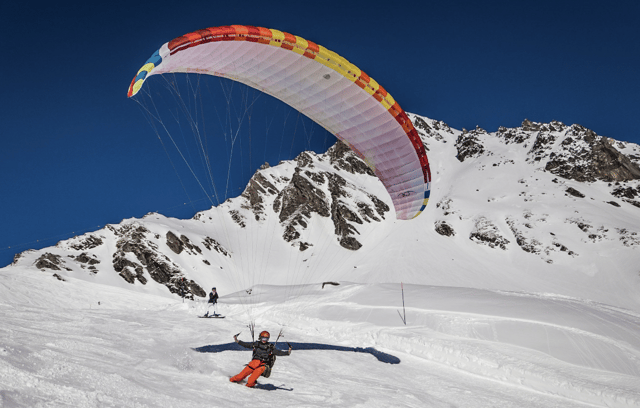
This SIV course is designed for pilots who want to improve control, confidence and safety in real flight conditions. With training led by world-renowned acro pioneer Raúl Rodríguez, you will work through essential manoeuvres, understand the true behaviour of your wing, and strengthen your reactions in critical situations. Groups are limited to six participants to ensure personalised instruction on every flight.
This professional SIV programme provides a controlled environment to understand the behaviour of your wing far beyond what normal flights allow. You will complete six flights over the lake at Panticosa, each guided via radio with constant supervision. Manoeuvres are introduced progressively, starting from basic collapses and pitch control and advancing toward more complex exercises depending on your level and confidence.
A rescue boat remains active on the water at all times to ensure safety during every descent. After each training block, your manoeuvres are reviewed using GoPro video analysis, allowing you to understand small adjustments in technique, timing and input. Raúl’s instruction combines clear explanations with practical demonstrations, ensuring pilots at different stages of progression can develop safely.
Classroom theory covers aerodynamic concepts, equipment safety, emergency parachute deployment, incident analysis and decision-making. Simulator sessions on the ground help you prepare for wing reactions before attempting them in the air.
Training takes place in the Tena Valley, with take-offs selected to provide reliable altitude and clean air entry. The SIV flights launch from 800 metres above lake level, giving enough height for clear manoeuvre execution, video analysis and safe recovery.
The valley’s layout provides predictable thermic behaviour and stable aerology during the SIV season. Lakeside recovery support and well-positioned landing zones make this an ideal environment for controlled progression with constant supervision.
Participants must have a minimum of 30 hours of autonomous flight experience and be able to launch and land confidently. A wing in good technical condition is essential. The emergency parachute must have been inspected within the last 12 months.
Pilots should bring:
Raúl Rodríguez is a global reference in acrobatic paragliding and one of the pioneers of modern acro technique. With over 30 years of experience, he brings a combination of expert skill, structured progression and a teaching approach grounded in clarity, safety and real-world analysis.
Small groups allow for precise individual feedback, while the combination of theory, simulator sessions, guided flights and video briefings ensures a complete and efficient learning progression. Safety is supported through radio supervision, retrieval by rescue boat and carefully selected training manoeuvres adapted to each pilot’s level.
Pilots need at least 30 hours of autonomous flight experience and must be able to launch, control and land their wing safely. This ensures you can focus on manoeuvre execution rather than basic piloting skills.
If you are unsure whether you meet the requirements, contact us for an assessment before booking.
The course includes six SIV flights, each launching from approximately 800 metres above lake level. This altitude allows enough space for manoeuvres, corrections, stabilisation and controlled descent.
Each flight is guided via radio and supported by a rescue boat.
The manoeuvres vary according to pilot level but may include asymmetric collapses, front collapses, pitch control, negative exercises, spiral and spin management, B-stalls, stalls, twisted flight and optional emergency parachute use.
All exercises are introduced progressively and adapted to personal skill and comfort.
A suitable wing in good condition, a harness with back protection, an emergency parachute inspected within the last 12 months and a 2-metre radio. A GoPro or similar camera with knee mount is essential for video analysis.
Snow or mountain clothing is not necessary, but comfortable outdoor clothing is recommended.
Video analysis is a core part of the course. Reviewing your manoeuvres allows you to identify body position, timing and brake input more clearly than from memory alone. This accelerates learning and helps integrate new reactions.
Daily reviews are part of the structured programme.
The course runs from Thursday to Sunday. Day 4 serves as a reserve day in case weather conditions require flight rescheduling or repetition of specific manoeuvres.
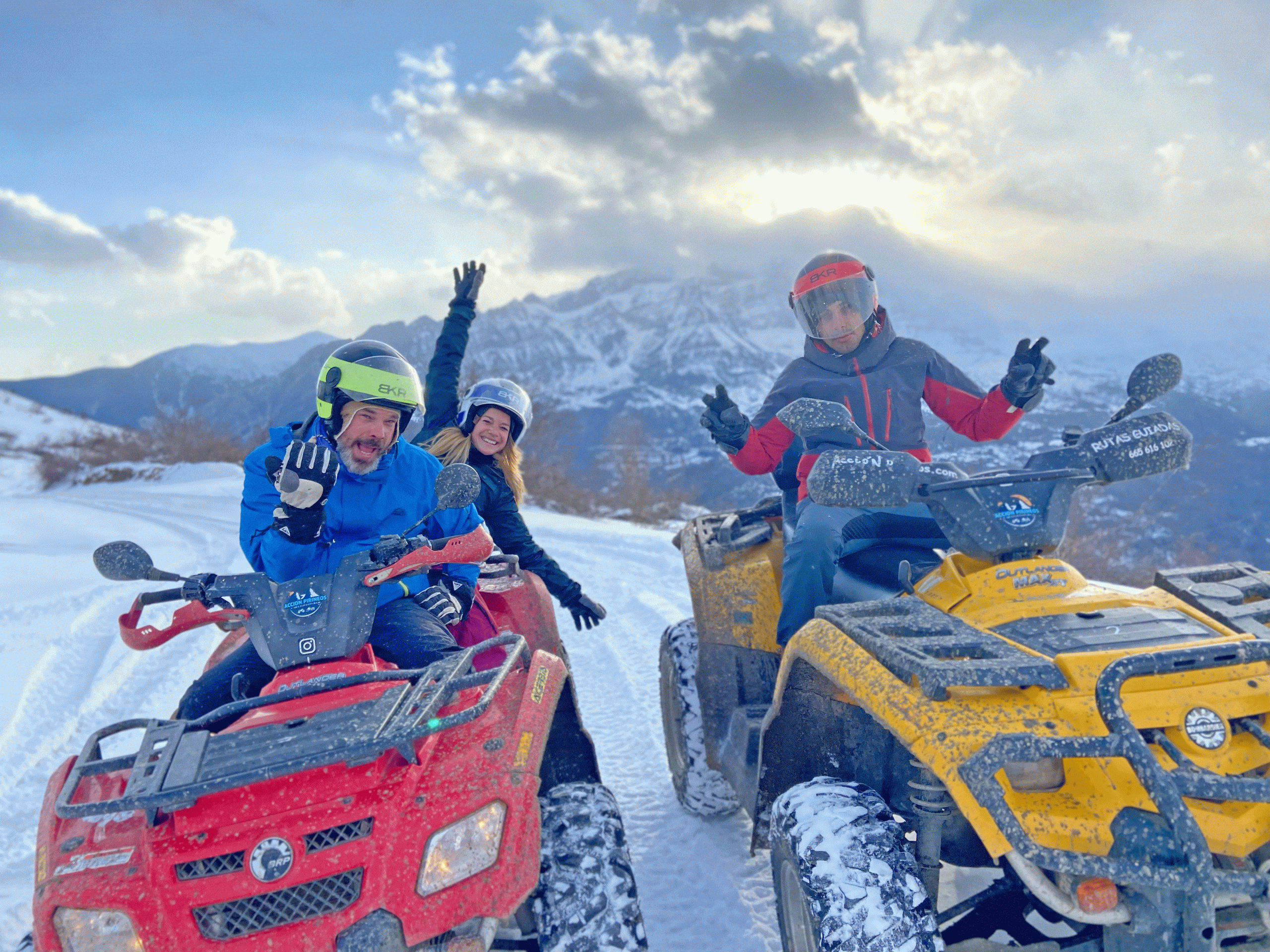
About the centre
Tena Valley
Operated by Acción Pirineos, a partner of adventuro.