We partner with Rewilding Britain to help protect our natural spaces for future adventures.
All centres are vetted for safety and quality. Your adventure is in good hands with adventuro.
Faites passer votre pratique de la plongée sous-marine au niveau professionnel avec la formation PADI Divemaster. Que vous souhaitiez guider des plongeurs certifiés ou assister des instructeurs, cette formation constitue votre entrée dans l’industrie de la plongée et la première étape professionnelle dans le système PADI. Grâce à de vraies responsabilités, à une formation au leadership et à une expérience pratique, vous progresserez à la fois comme plongeur et comme mentor.
En tant que candidat Divemaster, vous vous entraînerez étroitement avec votre instructeur PADI grâce à des cours théoriques, des ateliers pratiques et des séances dans l’eau. Les sections consacrées à l’acquisition des connaissances comprennent la physique de la plongée, la physiologie, la théorie de l’équipement, les modèles de décompression et l’environnement de plongée, en approfondissant votre formation précédente pour vous apporter une compréhension plus poussée et une application professionnelle. L’eLearning facultatif via Dive Theory Online peut accélérer le processus et compter pour vos examens finaux.
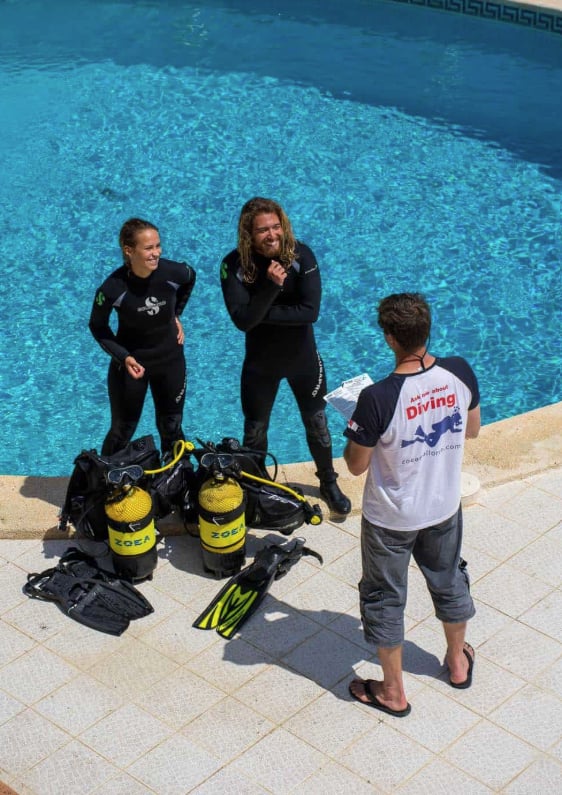
Vos sessions pratiques comprennent l’entraînement aux démonstrations de compétences, les évaluations en milieu protégé, l’encadrement de plongeurs certifiés et l’assistance lors de véritables formations de plongée. Vous réaliserez également des exercices tels que la conduite de briefings, la supervision de plongées, l’organisation de scénarios de recherche et récupération et la réaction face aux urgences de plongée. Les tâches supplémentaires comprennent le dessin de cartes sous-marines, l’évaluation de la flottabilité et la conduite de séances de randonnée palmée et de Discover Local Diving. Votre instructeur pourra également intégrer PADI Deep Diver et Search & Recovery à votre formation afin d’élargir votre expérience.
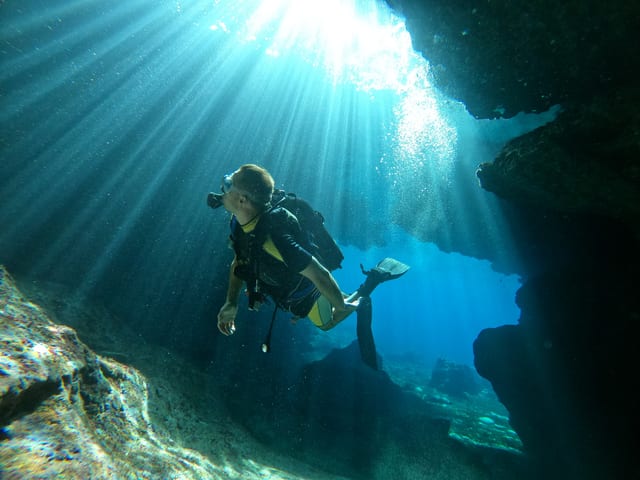
La formation se déroule dans la région de Cala Barca, à Sa Barca Trencada, Majorque, une base parfaitement adaptée aux sessions théoriques comme aux pratiques variées en pleine eau. Le site offre des points d’entrée abrités, des reliefs sous-marins variés et une profondeur suffisamment diversifiée pour tout type d’activité, de l’entraînement en faible profondeur à la plongée profonde et aux scénarios de navigation.
Ce lieu offre le juste équilibre entre des conditions d’entraînement sûres et l’accès à des défis réalistes. Ses baies abritées et ses sites de plongée côtiers sont idéaux pour la gestion de groupes, les briefings environnementaux et le développement des compétences de leadership sous-marin nécessaires à la plongée professionnelle.
Vous devez être un PADI Rescue Diver certifié (ou détenir une qualification équivalente délivrée par une agence de formation reconnue) et avoir au moins 18 ans. Avant de commencer la formation, vous devez fournir la preuve de 40 plongées enregistrées, dont des plongées de nuit, profondes et de navigation sous-marine. Vous devrez également disposer d’une certification EFR (Primary and Secondary Care) valide, obtenue au cours des 24 derniers mois.
Un certificat médical signé par un médecin attestant votre aptitude à plonger est également obligatoire. Celui-ci doit être daté de moins de 12 mois au début de la formation. S’il vous manque certains prérequis, votre instructeur pourra vous conseiller sur la manière de les remplir avant de commencer votre formation.
Cette formation est encadrée par des professionnels expérimentés qui ont accompagné des centaines de plongeurs vers des carrières réussies dans des rôles Divemaster. Dès le premier jour, vous serez traité comme un membre de l’équipe et encouragé à prendre les devants, à résoudre les problèmes et à penser comme un professionnel. Grâce à des options théoriques flexibles, notamment Dive Theory Online, et à l’accès à un équipement de plongée de niveau professionnel, vous développerez des compétences directement transférables au monde du travail.
Le lieu, l’équipe et la diversité des conditions de plongée offrent un cadre idéal pour affiner votre jugement, votre assurance et votre capacité à guider les autres. Que vous souhaitiez travailler localement ou parcourir le monde, cette formation pose les bases de votre carrière dans la plongée.
La formation Divemaster est le premier niveau de formation professionnelle en plongée sous-marine dans le système PADI. Elle est conçue pour les plongeurs expérimentés qui souhaitent guider des plongeurs certifiés, assister les instructeurs pendant les formations et assumer des rôles de direction dans des environnements de plongée.
Vous aborderez la théorie, les démonstrations de compétences et des scénarios réalistes, tout en acquérant une expérience encadrée. Elle vous prépare également à assumer des responsabilités telles que les briefings de plongée, la gestion des sites, les projets de cartographie et la supervision des élèves plongeurs pendant leur formation.
Pour vous inscrire, vous devez avoir au moins 18 ans, être un PADI Rescue Diver certifié et avoir suivi une formation Emergency First Response (CPR and First Aid) au cours des 24 derniers mois. Un minimum de 40 plongées enregistrées est requis pour commencer la formation.
Avant de pouvoir obtenir votre certification, vous devrez avoir effectué au moins 60 plongées enregistrées, dont des plongées profondes, de navigation et de nuit. Vous devez également fournir un certificat médical valide signé par un médecin au cours des 12 derniers mois, confirmant votre aptitude à plonger.
La durée varie selon vos disponibilités, votre expérience en plongée et l’intensité de la formation. Certains candidats terminent la formation en 3–4 semaines, tandis que d’autres prennent davantage de temps pour suivre un emploi du temps à temps partiel ou intégrer des plongées de spécialité supplémentaires.
Vous consacrerez du temps aux sessions théoriques comme aux ateliers pratiques. La formation est basée sur vos performances : vous progressez lorsque vous avez démontré toutes les compétences et connaissances nécessaires, et non après un nombre fixe de jours.
Vous étudierez la physique de la plongée, la physiologie, la théorie de la décompression, l’équipement, la planification des plongées et l’environnement. Le volet théorique est approfondi et va au-delà des connaissances de niveau loisir.
Les sessions pratiques comprennent des démonstrations de compétences, l’assistance aux instructeurs, la réalisation de briefings, la cartographie de sites de plongée, la supervision des plongeurs et la gestion de scénarios d’urgence. Vous aborderez également la gestion des risques et la manière d’accompagner des PADI programmes tels que Discover Scuba Diving.
Oui, en tant que plongeur professionnel, vous devez disposer d’un équipement personnel complet de plongée, notamment d’un ordinateur de plongée, d’une boussole, de dispositifs de signalisation en surface et d’une protection thermique adaptée.
Lors de certaines évaluations pratiques, vous aurez également besoin d’outils tels que des parachutes de relevage, ardoises et boussoles sous-marines, ainsi que de bouées de signalisation de surface. Votre instructeur pourra mettre certains équipements à votre disposition, mais il est préférable de posséder un matériel que vous connaissez et sur lequel vous pouvez compter.
En tant que PADI Divemaster certifié, vous pourrez superviser des plongeurs certifiés lors de plongées guidées, assister les instructeurs pendant la formation des élèves en milieu protégé et en pleine eau, réaliser des révisions de compétences en plongée (ReActivate) et encadrer des activités de randonnée palmée.
Vous serez également autorisé à organiser des expériences Discover Local Diving et à soutenir les opérations de plongée. Ces responsabilités constituent la base de nombreux postes dans les centres de plongée, que vous travailliez localement ou à l’étranger.
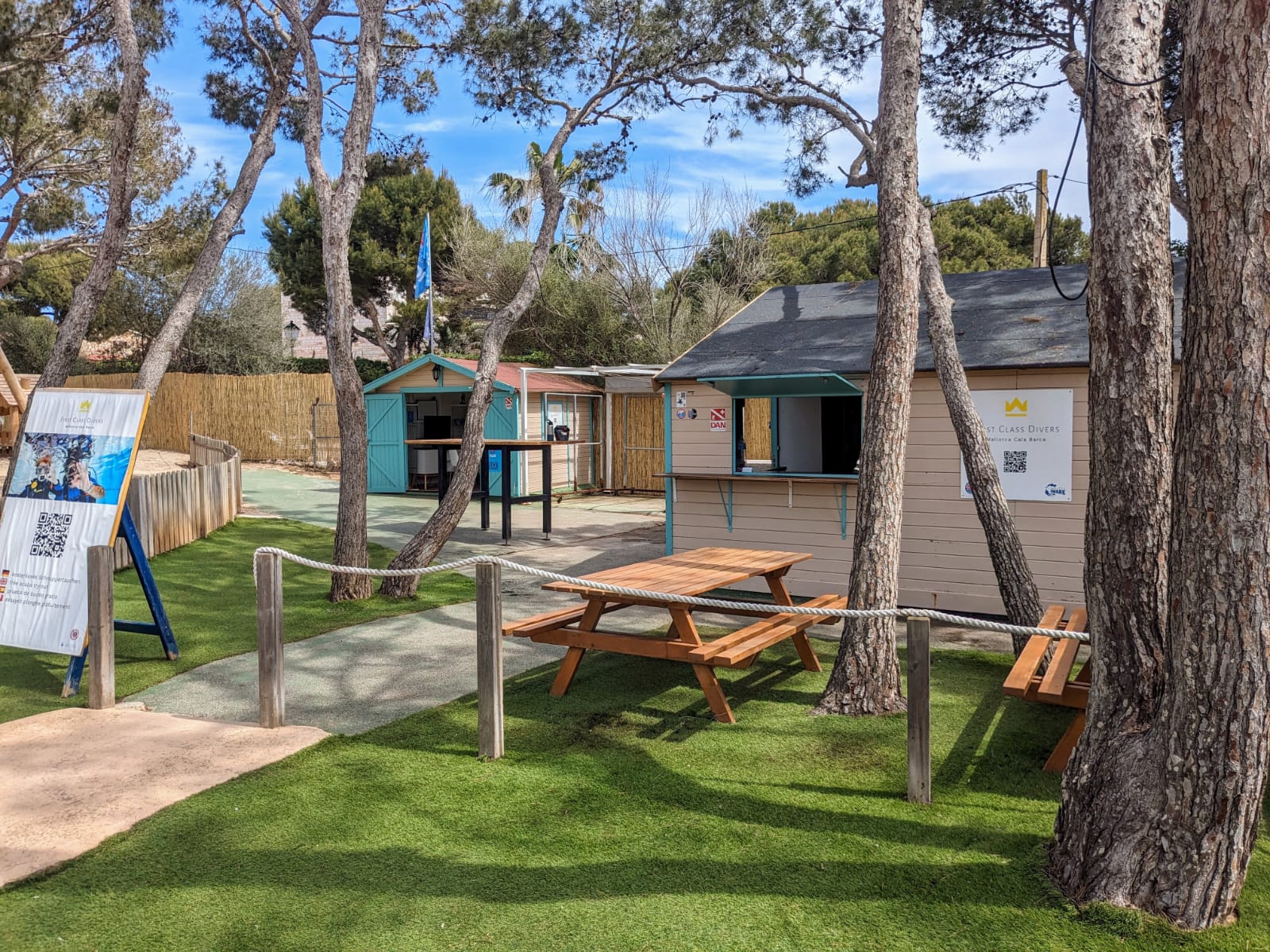
À propos du centre
Porto Petro
Géré par First Class Divers Mallorca, partenaire de adventuro.

Surrey, East and West Sussex, United Kingdom
À partir de £900


Surrey, East and West Sussex, United Kingdom
À partir de £615