We partner with Rewilding Britain to help protect our natural spaces for future adventures.
All centres are vetted for safety and quality. Your adventure is in good hands with adventuro.
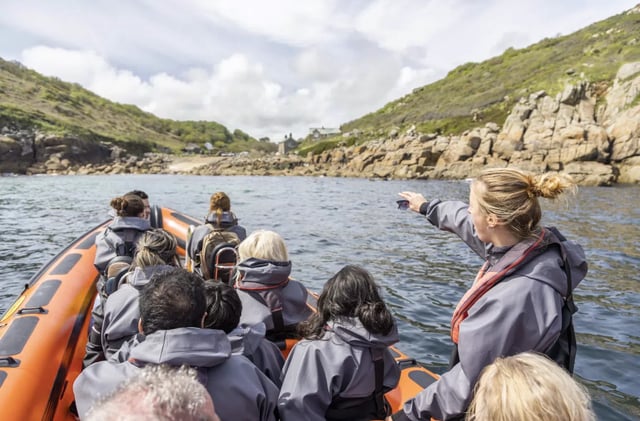
Head out along Cornwall’s north coast on a fast-paced boat trip combining wildlife, local history, and some of the county’s most impressive coastal scenery. Departing from Hayle, this experience follows remote cliffs, hidden coves, mining landmarks, and offshore wildlife areas that are difficult to appreciate fully from land alone.
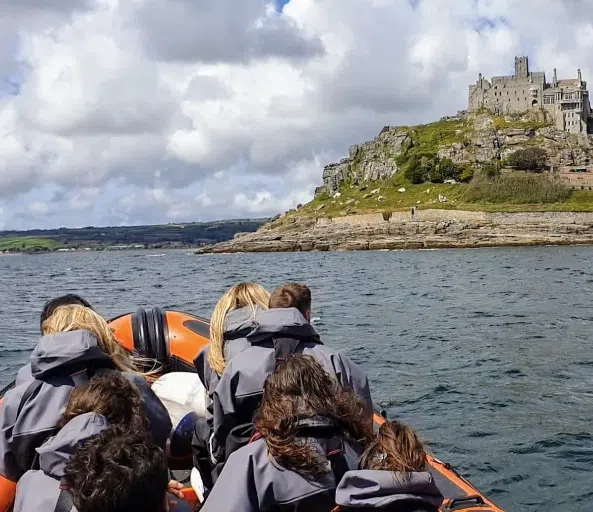
Beginning in the Hayle Estuary, the trip starts by weaving through tidal sandbanks while guides share stories about the area’s industrial and maritime past. Once clear of the estuary, the route opens onto a wide stretch of Atlantic coastline backed by long sandy beaches and steep slate cliffs shaped over centuries by wind and sea. Travelling by offshore RIB allows you to get close to sections of coastline that feel completely untouched from the water.
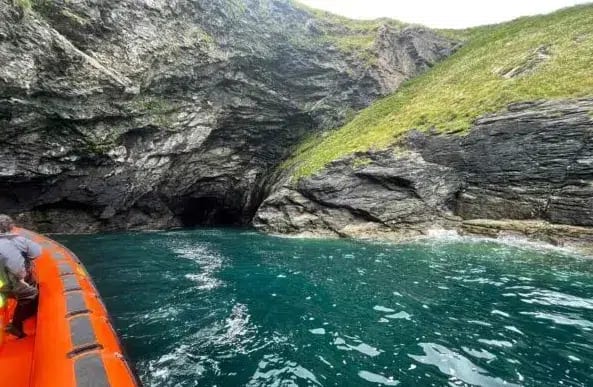
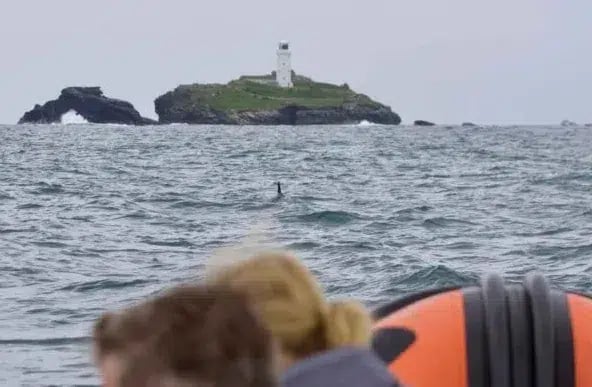
One of the first major landmarks along the journey is Godrevy Lighthouse, standing offshore against the Atlantic swells. Nearby, the cliffs and rocks around Mutton Cove are home to a well-known grey seal colony, with seals regularly spotted resting on the rocks or swimming near the boat. From there, the coastline becomes increasingly rugged as the route continues past caves, narrow coves, and dramatic cliff formations including Hell’s Mouth, Giver Cove, and Ralph’s Cupboard.
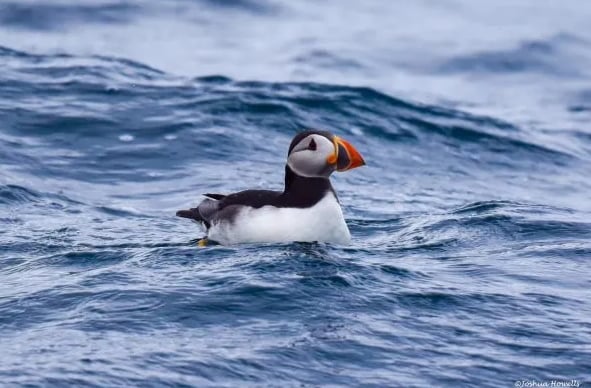
Further along the north coast, the trip passes bays including Chapel Porth and Porthtowan before reaching the historic Wheal Coates engine house near St Agnes Head. Seeing this former mining site from the sea gives a completely different perspective on Cornwall’s industrial history and the scale of the cliffs surrounding it. Offshore sections of the route also offer excellent opportunities for wildlife encounters, with dolphins, porpoises, seabirds, tuna, and occasionally whales or sunfish spotted in these Atlantic waters throughout the year.
Departures take place from Hayle on Cornwall’s north coast, an area known for wide beaches, Atlantic surf, and historic mining landscapes. The harbour and estuary provide direct access to long stretches of coastline that remain difficult to reach by road, making boat travel one of the best ways to experience the area properly.
Beyond the harbour, the surrounding coastline forms part of a protected Site of Special Scientific Interest, recognised for both its wildlife and geological importance. From seal colonies and nesting seabirds to abandoned mining structures sitting above the cliffs, the area combines natural scenery with strong connections to Cornwall’s maritime and industrial past.
Passengers should be comfortable travelling on an open boat in changing sea conditions, as Atlantic swells can occasionally create a lively ride depending on weather and tides. Warm clothing is recommended throughout the year, and waterproofs are available before departure.
Guests with underlying health conditions, serious back or neck problems, mobility concerns, or severe seasickness should contact the team before booking. Children are welcome but should be comfortable around fast-moving boats and open-water conditions.
Run by a family team with a strong connection to Cornwall’s coastline, these trips are designed to combine adventure with a genuine understanding of the local environment. Guides bring backgrounds in marine and environmental subjects, helping guests learn more about the wildlife, history, and ecosystems surrounding them during the journey.
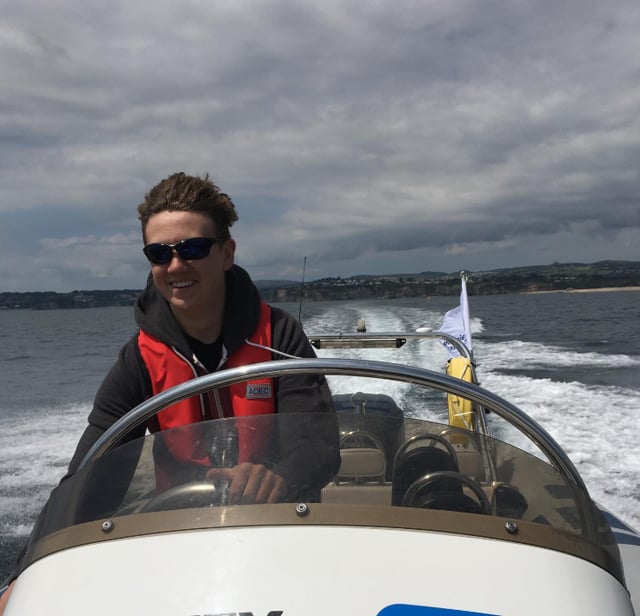
Every trip operates aboard a professionally equipped Humber offshore RIB purpose-built for demanding sea conditions. Experienced skippers carefully monitor tides and weather throughout the day, ensuring passengers enjoy a safe, informative, and memorable experience on the Atlantic coast.
Cornwall’s north coast is far more exposed to the Atlantic Ocean, creating larger swells, dramatic cliffs, and powerful coastal scenery. The geology along this route also gives the coastline a completely different appearance, with slate cliffs, caves, and mining landmarks dominating the landscape.
Wildlife encounters can also feel very different here due to the offshore conditions and deeper water nearby. Dolphins, porpoises, seals, and seabirds are regularly spotted throughout the route.
Grey seals are seen very regularly around Mutton Cove and the rocks near Godrevy Lighthouse, making this one of the best seal-watching areas along the route. During calmer conditions, seals are often spotted hauled out on the rocks in groups.
As with all wildlife experiences, sightings can never be guaranteed, but the local crew monitor activity closely and know the areas where seals are most commonly found throughout the season.
The trip combines both slower sightseeing sections and faster stretches across open water. Certain areas are explored at a more relaxed pace to allow guests time to enjoy the scenery, wildlife, and commentary from the guides.
When conditions allow, the offshore RIB is also capable of covering larger distances quickly, adding an exciting element to the experience without feeling overly extreme.
Offshore areas along the north coast regularly attract dolphins and porpoises, particularly near underwater features where fish activity increases. Seabirds are also very active throughout the route, especially around cliffs and tidal areas.
Depending on the season and conditions, larger marine species such as tuna, sunfish, sharks, and occasionally whales may also be spotted further offshore.
Passengers do not need a high fitness level, although guests should be comfortable boarding an open boat and remaining seated during faster sections of the journey. Sea conditions can occasionally become rougher depending on Atlantic swell and tides.
Anyone with serious injuries, mobility concerns, or medical conditions should contact the crew before travelling so suitable advice can be given beforehand.
Warm outdoor clothing and secure footwear are recommended throughout the year. Even during sunny weather, offshore conditions can feel cooler due to wind exposure and sea spray once the boat reaches open water.
Waterproof clothing is available before departure, helping passengers stay comfortable if conditions become wetter during parts of the journey.
Yes, Atlantic conditions can shift quickly around Cornwall’s coastline, so flexibility is important. The skipper may adapt sections of the route or adjust offshore areas depending on tides, swell direction, visibility, and weather conditions.
These changes help ensure passengers still enjoy the best possible experience while maintaining safe operating conditions throughout the trip.
The Humber offshore RIB used for these trips is specifically designed for demanding marine environments and is similar to vessels used by rescue and professional maritime organisations.
Safety equipment, navigation systems, and experienced crew are onboard throughout the journey. The boat is built to handle offshore conditions while still offering a comfortable and secure experience for passengers.
Guests should arrive 30 minutes before departure to allow time for waterproof clothing, safety briefings, and check-in with the crew before boarding begins.
Meeting staff will be waiting near the branded truck and flags at the harbour location, helping guide passengers through the process before heading onto the boat.
Absolutely. The north coast provides a huge variety of scenery within a relatively short distance, including lighthouses, cliffs, caves, mining landmarks, and open Atlantic views.
Wildlife encounters and changing sea conditions also create excellent opportunities for photography throughout the trip. Waterproof phone cases or camera protection are recommended due to occasional sea spray onboard.

Cornwall and Isles of Scilly, United Kingdom
From £30


Cornwall and Isles of Scilly, United Kingdom
From £45
Cornwall and Isles of Scilly, United Kingdom
From £30

About the centre
Hayle
Operated by Coast Boat Trips, a partner of adventuro.
Cornwall and Isles of Scilly, United Kingdom
From £25
Cornwall and Isles of Scilly, United Kingdom
From £25
Cornwall and Isles of Scilly, United Kingdom
From £47.50
Cornwall and Isles of Scilly, United Kingdom
From £65
Cornwall and Isles of Scilly, United Kingdom
From £60.50