We partner with Rewilding Britain to help protect our natural spaces for future adventures.
All centres are vetted for safety and quality. Your adventure is in good hands with adventuro.
Machame es una de las rutas de senderismo más pintorescas del Kilimanjaro, a veces llamada la ruta Whiskey: asciende por la selva tropical hasta la meseta de Shira antes de continuar por los senderos del sur y afrontar un ascenso a medianoche hasta Uhuru Peak. Este plan de siete días añade una noche en Karanga para que llegues al campamento alto menos agotado que en la versión de seis días; por eso se prefiere cuando tus fechas lo permiten.
Los primeros días avanzan desde el bosque embarrado hasta el páramo y la meseta de Shira, con la Brecha Occidental a menudo a la vista. Más adelante subes hasta Lava Tower, bajas a Barranco, trepas por la Pared de Barranco y luego descansas en Karanga antes de Barafu y la noche de cumbre. Las noches de hotel en Arusha o Moshi se sitúan a ambos lados del trekking. Si lo solicitas, se puede organizar una opción de hotel VIP de categoría superior.
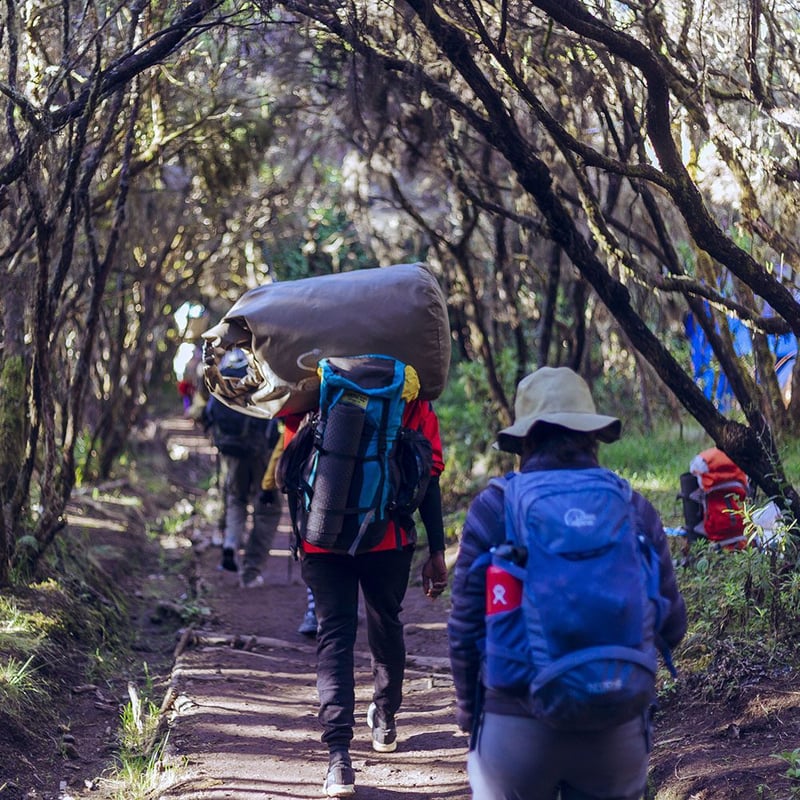
Los guías mantienen un ritmo lento para que el grupo pueda adaptarse a la altitud. Los porteadores se adelantan con el campamento y la comida, mientras tú caminas con una mochila de día. A continuación se detalla el itinerario día a día, con las puertas, los campamentos y los tiempos de caminata.
Machame Gate se encuentra en el lado suroeste de la montaña y se alcanza desde Arusha o Moshi después de la recogida en el hotel. El sendero comienza en el bosque montano y termina por el camino de Mweka, en las laderas meridionales, por lo que la ascensión no es de ida y vuelta.
Arusha y Moshi son las bases más prácticas, con hoteles, alquiler de equipo y un traslado corto desde el Aeropuerto Internacional de Kilimanjaro. Los certificados de descenso se entregan en Mweka Gate antes de volver en coche a la ciudad.
No se requieren conocimientos de escalada. Sí necesitas una buena condición física general y capacidad para caminar varias horas al día por senderos irregulares y a veces embarrados, incluida una trepada en la Pared de Barranco.
Es recomendable hacerse una revisión médica si tienes problemas cardíacos, pulmonares o de presión arterial. La edad mínima es 16 años.
La noche adicional en Karanga es el objetivo de este itinerario. Divide el tramo de Barranco a Barafu, de modo que la noche de cumbre comienza con un grupo ligeramente menos cansado que en el programa de seis días.
Los guías de montaña autorizados, un equipo completo de porteadores y cocineros, el oxígeno y la cobertura de AMREF forman parte del viaje. Las noches de hotel y los traslados desde el aeropuerto se sitúan a ambos lados del trekking.
Un conductor te recibirá en el Aeropuerto Internacional del Kilimanjaro y te llevará al hotel. Esa tarde, tu guía repasará los días siguientes, revisará tus botas y capas, y anotará cualquier cosa que aún necesite alquilarse antes de salir por la mañana.
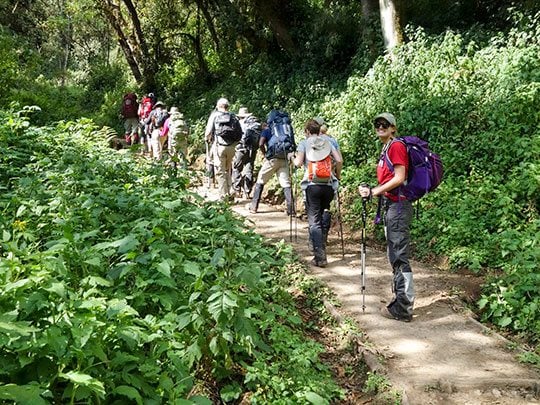
Después del desayuno, conduces hasta Machame Village y continúas hasta Machame Gate, a 1,490 metros. Tras el registro, realizas una larga caminata forestal de unas siete horas y 18 kilómetros hasta Machame Camp, a 2,980 metros. La lluvia puede hacer que el sendero esté embarrado y resbaladizo. Las tiendas están montadas antes de tu llegada y las noches aquí ya pueden bajar hasta cero.
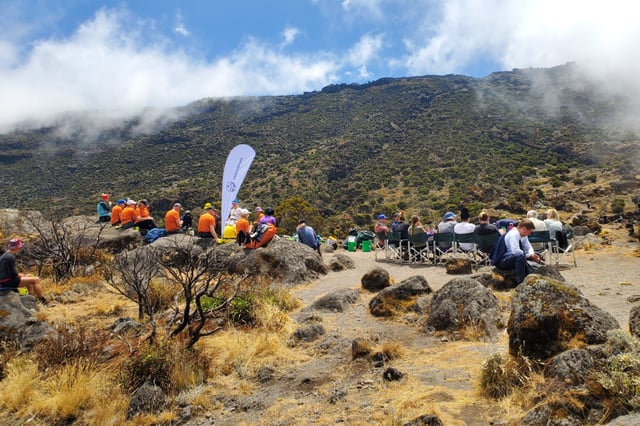
Dejas atrás los árboles para entrar en el brezal y el páramo, cruzando arroyos y una cresta rocosa hasta la meseta de Shira. Unas seis horas y nueve kilómetros te llevan a Shira Camp, a 3,840 metros, junto a un arroyo con vistas a la Brecha Occidental. Las temperaturas bajan de cero después de anochecer.
Cinco horas hacia el este por un paisaje semidesértico te llevan a Lava Tower, a 4,630 metros, para almorzar. Es normal notar la altitud aquí. Después bajas a Barranco Camp, a 3,950 metros; esta pérdida de altura ayuda al cuerpo a adaptarse, mientras la Pared de Barranco se alza sobre el campamento al atardecer.
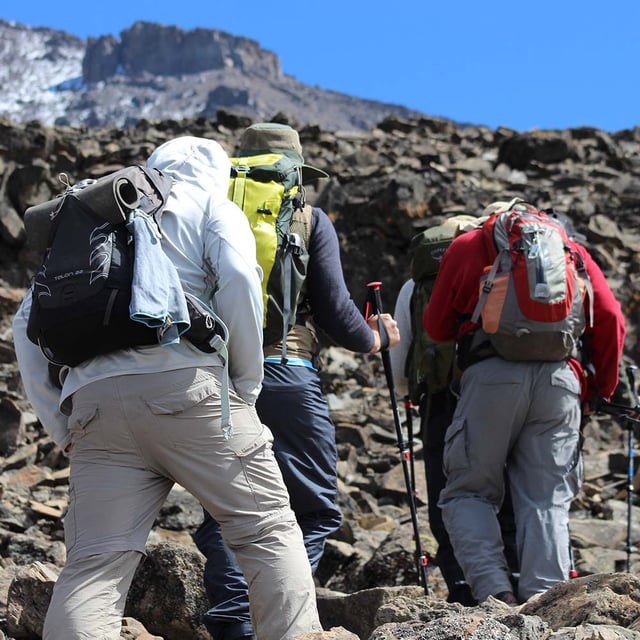
La mañana está dedicada a la Pared de Barranco, una trepada empinada que a la mayoría le resulta más fácil sobre la roca de lo que parece desde abajo. El sendero continúa después por el valle de Karanga hasta Karanga Camp; es una jornada más corta, de cuatro a cinco horas, pensada para la aclimatación y todavía en un desierto alpino.
Una subida corta de dos a tres horas lleva hasta Barafu Camp, en una cresta rocosa y ventosa. Aquí no hay agua, así que los porteadores se abastecen en Karanga. La tarde se dedica a descansar, cenar temprano y preparar el frontal, las capas de abrigo y los tentempiés. Intenta dormir a las 19:00.
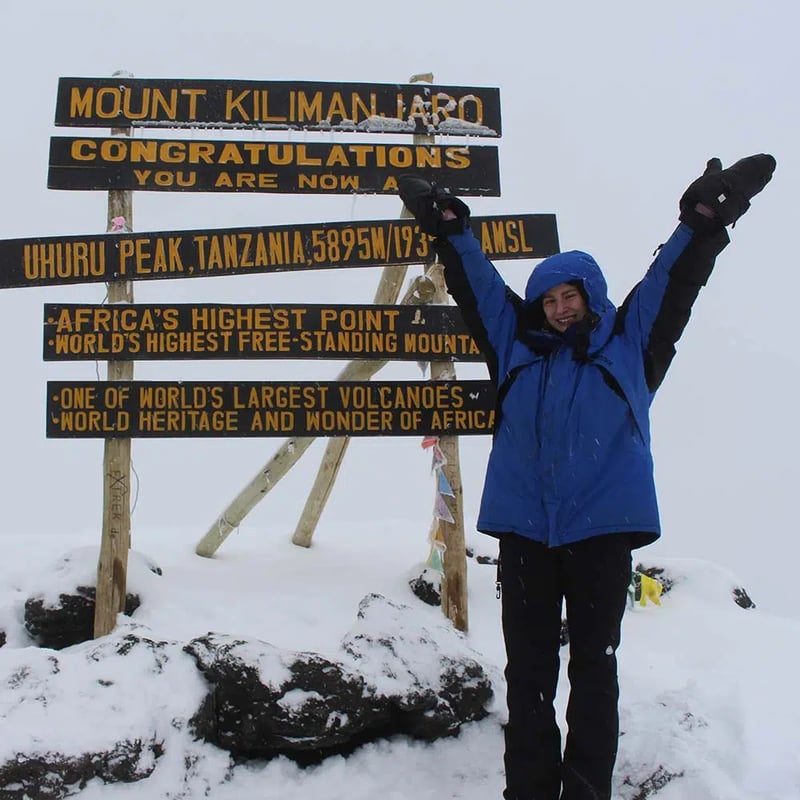
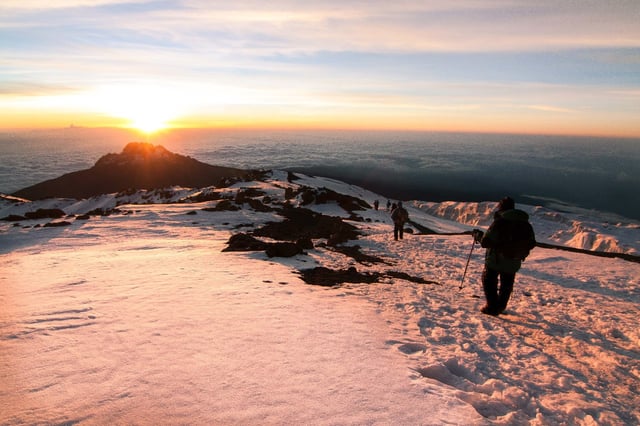
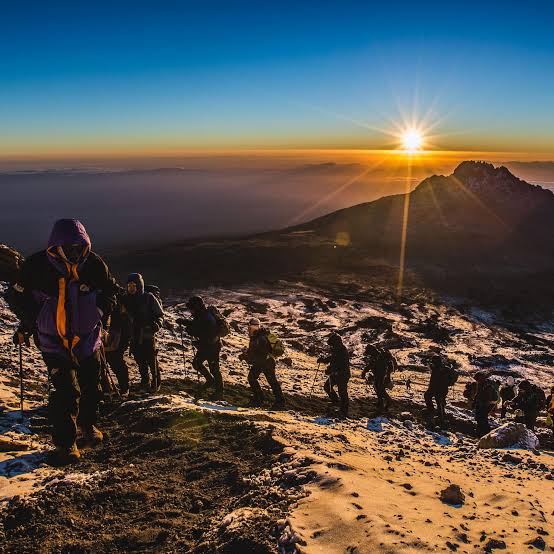
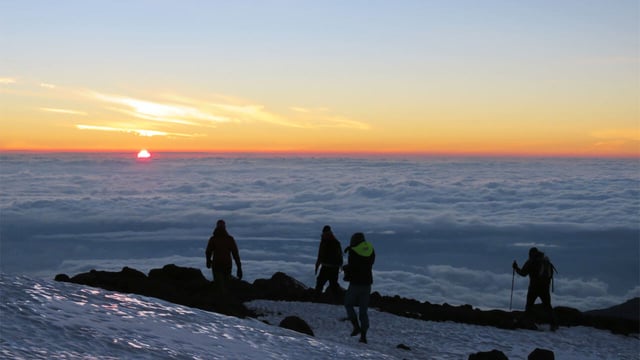
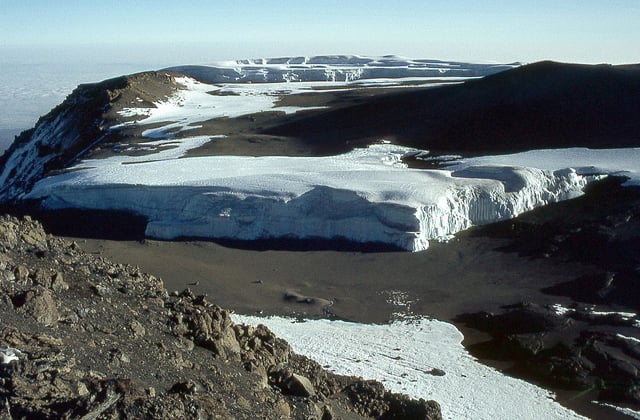
Te despiertan alrededor de las 23:30 para tomar té; después subes por el pedregal en la oscuridad hasta Stella Point, en el borde del cráter, y continúas hasta Uhuru Peak, a 5,895 metros. Tras pasar un breve tiempo en la cima, desciendes a Barafu para almorzar y luego continúas hasta Mweka Camp, a 3,100 metros. Es un día muy largo.
Después de celebrarlo en el campamento, caminas unas tres horas por el bosque hasta Mweka Gate, registras tu salida y recoges un certificado. Los certificados verdes son para Stella Point; los dorados, para Uhuru Peak. Después vuelves en vehículo al hotel de Moshi o Arusha.
Los traslados al Aeropuerto Internacional de Kilimanjaro o a la estación de autobuses están incluidos si sales de Tanzania. Las extensiones de safari se organizan por separado si quieres prolongar tu estancia.
Te recibimos en el Aeropuerto Internacional de Kilimanjaro y te llevamos a tu hotel en Arusha o Moshi. A la mañana siguiente, el equipo te recoge en ese hotel para llevarte a Machame Village y Machame Gate.
Si el camino forestal está demasiado embarrado, los últimos tres kilómetros hasta la puerta pueden hacerse a pie. No necesitas organizar por tu cuenta el transporte hasta el inicio del sendero.
No se requieren cuerdas ni titulación de escalada. Machame es una ruta de senderismo desde la puerta hasta la cumbre, con una trepada en la Pared de Barranco en la que se usan manos y pies sobre la roca.
Lo que sí necesitas es la condición física para caminar varias horas al día durante siete días seguidos, incluida una noche de cumbre muy larga. El senderismo por colinas en tu zona, con mochila, es el entrenamiento más útil.
La mayoría de los días son de cuatro a siete horas. El primer día desde Machame Gate es más largo: unas siete horas y aproximadamente 18 kilómetros por un bosque que suele estar embarrado.
La noche de cumbre es otra historia. Sales de Barafu alrededor de las 23:30, llegas a Uhuru Peak tras una larga subida por pedregal y luego desciendes hasta Mweka Camp el mismo día.
La edad mínima es 16 años. Cualquier persona con una afección cardíaca, pulmonar o de presión arterial debe consultar a un médico antes de reservar, porque la cumbre se encuentra a 5,895 metros.
Los guías revisan al grupo cada día. Los dolores de cabeza, las náuseas o el cansancio inusual deben comunicarse pronto para poder reducir el ritmo o dar la vuelta si es necesario.
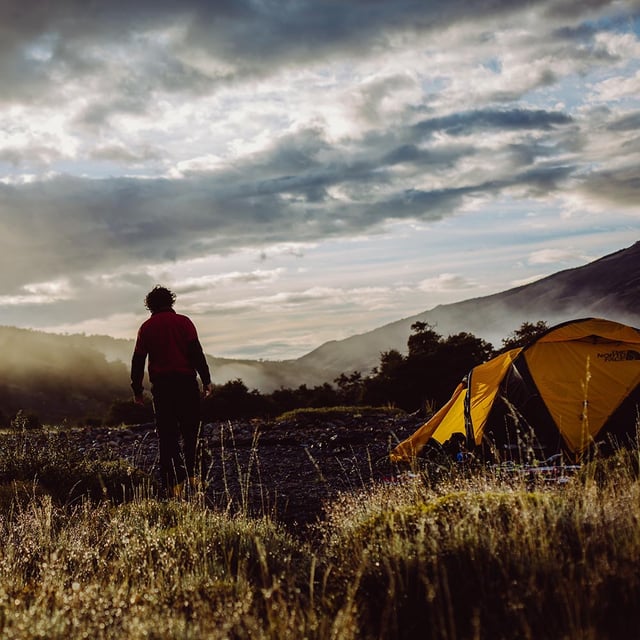
Las noches en la montaña se pasan en tiendas para dos personas instaladas por el equipo, con esterillas, una tienda comedor y una tienda de baño privada. Se incluye una noche de hotel antes de la ascensión y otra después, con desayuno incluido.
Shira y Barafu están expuestos y a menudo bajan de cero después de anochecer. Un saco de dormir de cuatro estaciones y varias capas de abrigo son imprescindibles, no extras opcionales.
Se incluyen los traslados desde el aeropuerto, las tasas del parque, las noches de hotel a ambos lados, las tiendas, las comidas en la montaña, los guías, los porteadores, los cocineros, el oxígeno, un botiquín, el agua purificada y la cobertura de AMREF.
Reserva un presupuesto aparte para los vuelos internacionales, el visado tanzano, un seguro que cubra trekking hasta 6,000 metros, la ropa y las botas personales, y las propinas para el equipo.
El plan de siete días sube hasta Lava Tower y después duerme más abajo, en Barranco, y divide el trayecto de Barranco a Barafu con una noche en Karanga. Ese campamento adicional es el principal motivo por el que se recomienda este itinerario en lugar del de seis días.
Camina despacio, bebe con frecuencia y avisa a tu guía si te encuentras mal. El equipo lleva oxígeno y un botiquín. Los síntomas graves implican descender, no seguir forzando.
Enero, febrero y septiembre suelen considerarse los meses más despejados. De junio a octubre es la principal estación seca; de diciembre a marzo hay una segunda ventana, más tranquila.
La ascensión se ofrece durante todo el año. De marzo a mayo y en noviembre hay más lluvia, barro en el bosque y más nubes alrededor del borde del cráter.
La tarde anterior al inicio se realiza una revisión del equipo en el hotel. Las capas, bolsas o bastones que falten normalmente se pueden alquilar en Arusha o Moshi en lugar de comprarlos nuevos.
Trae tus propias botas, ya domadas. El ajuste importa más en el calzado que en casi cualquier otro artículo de esta montaña.
Sí, si ya caminas con regularidad y llegas en buenas condiciones de salud. Machame no es una escalada técnica. El reto son los días consecutivos, los campamentos fríos y una larga noche de cumbre.
La versión de siete días es la que normalmente se prefiere para quienes hacen trekking de gran altitud por primera vez en esta ruta, porque la noche adicional antes de Barafu permite llegar con más energía.
Después de Mweka Gate vuelves al hotel para ducharte y dormir toda la noche. Los traslados de vuelta al Aeropuerto Internacional de Kilimanjaro están incluidos si vuelas a casa.
Las extensiones de safari o de costa se organizan por separado cuando sepas cómo te sientes después de la montaña.

Sobre el centro
Arusha, Tanzania
Operado por Nihapa Tours, un partner de adventuro.
Kilimanjaro & Arusha, Tanzania
Desde $60