We partner with Rewilding Britain to help protect our natural spaces for future adventures.
All centres are vetted for safety and quality. Your adventure is in good hands with adventuro.
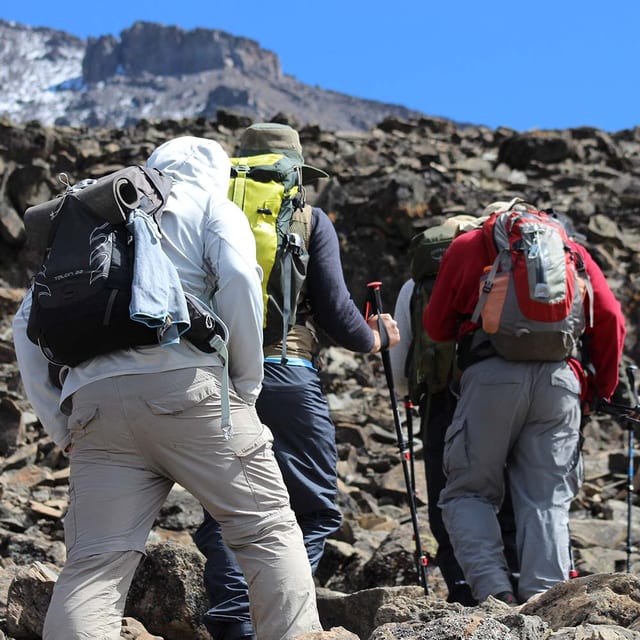
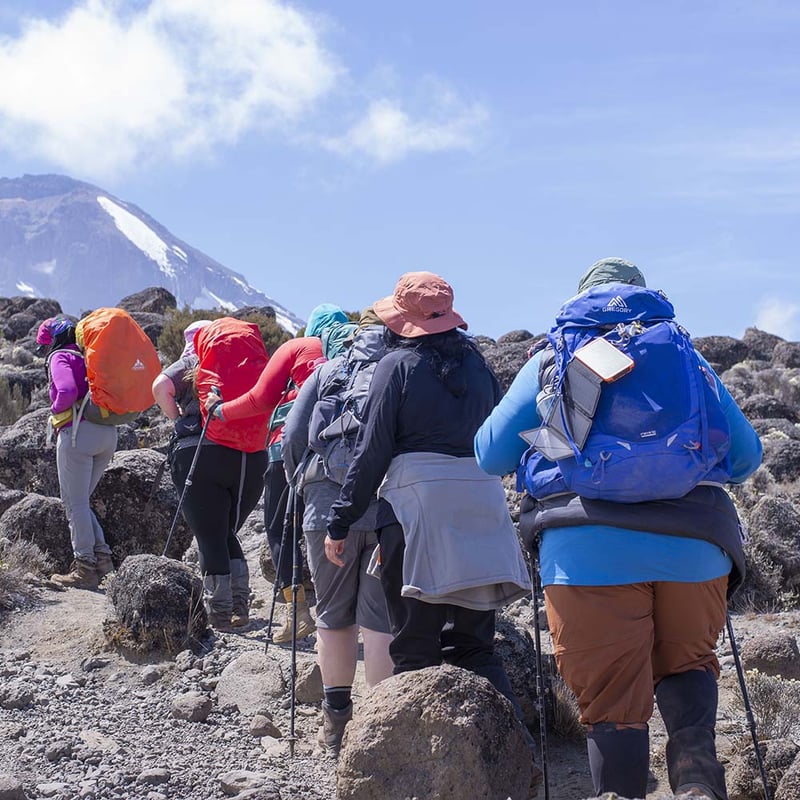
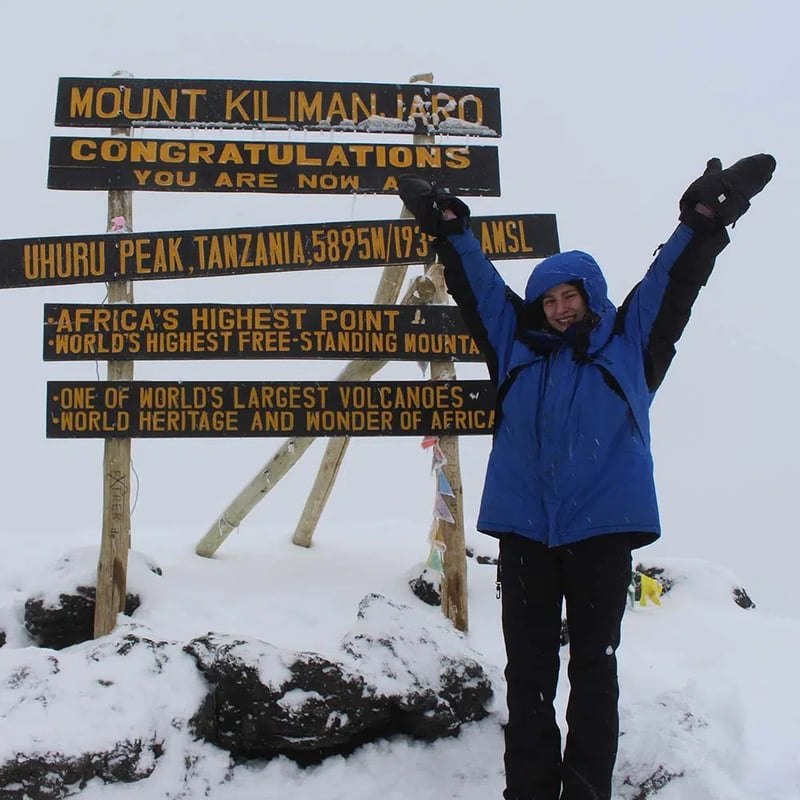
This seven-day climb starts on Kilimanjaro's quieter western slopes at Londorossi Gate, then joins the southern trail at Lava Tower. It is shorter than the eight-day Lemosho plan because you walk from forest camp to Shira 2 in one day rather than lingering on the plateau at Moir Hut. Eight days is the gentler western option if you can spare them; use this timetable when dates will not stretch.
Day one in the forest is short, with colobus monkeys often in the trees. The next day is the long pull onto Shira 2. From there the pattern matches the southern circuit: Lava Tower, Barranco Wall, Karanga, Barafu and a midnight summit attempt. Hotel nights sit either side of the trek. A higher VIP hotel option can be arranged on request if you want it.
Porters pitch camp ahead of you, and you walk with a day bag. Guides keep the pace slow so the group can adjust to the height. Full walking times and camp heights are in the itinerary below.
Londorossi Gate lies west of Arusha, reached through farmland and a rough forest road. The first camps sit in trees and on the Shira Plateau, with the Western Breach in view from Shira 2.
You descend the Mweka trail on the southern side, so the trip is not an out-and-back. Arusha remains the hotel base either side of the trek, with kit hire and a short transfer from Kilimanjaro International Airport.
You need hill fitness and the willingness to walk a longer plateau day than on eight-day Lemosho. No climbing qualification is required, but consecutive days on rough trails at height still ask a lot of your legs and lungs.
The minimum age is 16. Get medical advice if you have heart, lung or blood-pressure conditions.
Starting in the west still keeps the first camps quieter than Machame Gate, even on this shorter timetable. You still sleep at Karanga before Barafu; what you skip is the extra plateau camp at Moir Hut.
Licensed guides, oxygen and AMREF cover travel with the group. Airport transfers, hotel nights and an equipment check before you start are included, so the logistics are not left to you.
A driver meets you at Kilimanjaro International Airport and takes you to the hotel in Arusha. That evening your guide briefs the group, checks kit, and notes anything that still needs hiring.
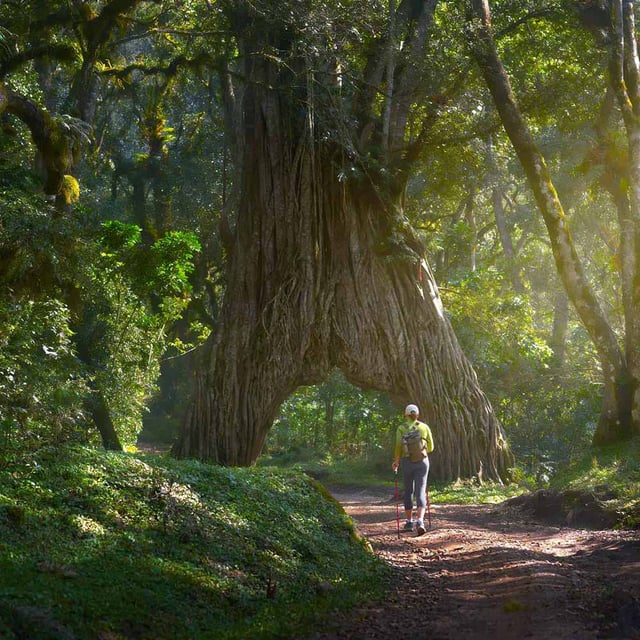
After breakfast you drive about two hours to Londorossi Gate at 2,100 metres, then a rough 4x4 track to the entrance. A three-hour forest walk, watching for colobus monkeys, reaches Mti Mkubwa (Big Tree) Camp at 2,750 metres. Tents are up, water is boiled, and nights can already freeze.
You leave the rainforest for heather and moorland and climb onto the plateau, arriving at Shira 2 Camp at 3,840 metres after about six and a half hours. The camp sits by a stream with views of the Western Breach. This is the compressed day that eight-day Lemosho splits across two camps.
Five hours east through rocky semi-desert reach Lava Tower at 4,630 metres for lunch. You then descend to Barranco Camp at 3,950 metres, a planned loss of height under the Barranco Wall. Headaches at the tower are common; the drop to camp is there to help.
A shorter acclimatisation day starts with the Barranco Wall scramble, then a rolling trail to Karanga Camp at 3,950 metres. About four to five hours and five kilometres, still in alpine desert, with Heim Glacier often in view from the top of the wall.
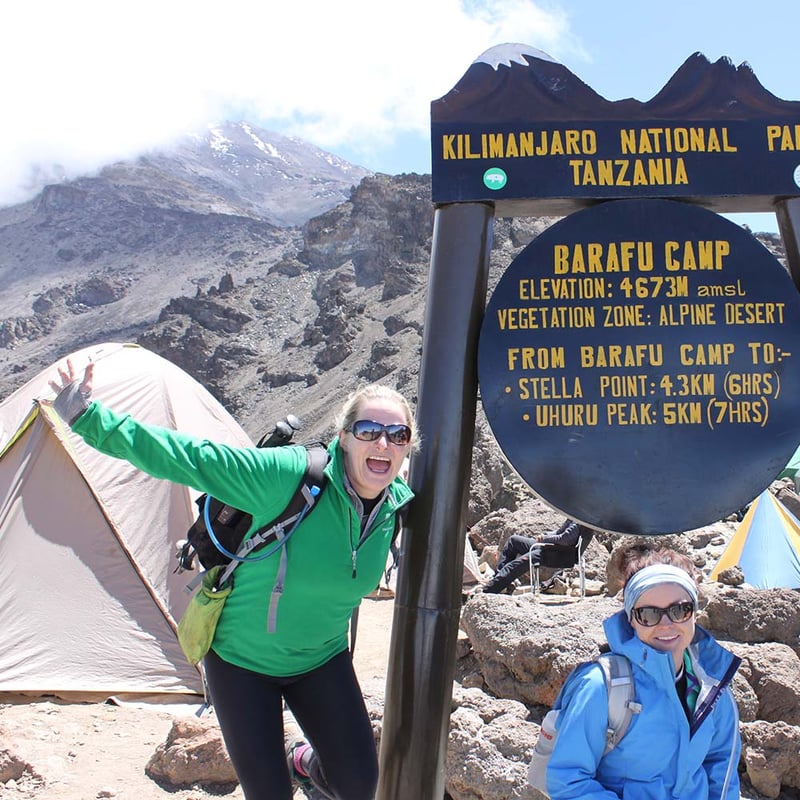
Two to three hours up the ridge bring you to Barafu Camp around 4,600 metres. Porters take water at Karanga because there is none at Barafu. Rest, eat early, lay out summit kit, and try to sleep by 19:00.
Woken around 23:30, you climb scree to Stella Point then Uhuru Peak at 5,895 metres. After photographs you descend to Barafu for lunch and on to Mweka Camp at 3,100 metres in the upper forest. Expect eight hours up and seven to eight hours down.
A forest walk of about three hours reaches Mweka Gate at 1,980 metres. You sign out, collect a certificate, and transfer to the hotel in Moshi or Arusha. Tips are usually given during the gate celebration.
After a night in a proper bed, transfers to Kilimanjaro International Airport or the bus station are included if you are leaving Tanzania. There is no extra mountain walking on this day.
If you want to stay on, safari or coast extensions are arranged separately rather than being part of this climb. Tell the team your onward plans at the hotel briefing so pickup times can be set.
You are met at Kilimanjaro International Airport and driven to your hotel in Arusha. The next morning the team collects you for a drive of about two hours to Londorossi Gate, then a bumpy forest track that needs a 4x4 for the last 45 minutes.
Packed lunch is issued near the village before the gate. You do not need to make your own way to the trailhead.
No. Lemosho is a walking route from Londorossi Gate to Uhuru Peak. The Barranco Wall is a scramble on rock, not a technical climb, and you do not need ropes or crampons for the standard itinerary.
Fitness for consecutive days on rough trails matters more than mountaineering skills. Train on hills with a rucksack if you can, and arrive with boots already worn in.
The first walking day is short, about three hours through forest to Mti Mkubwa. The next day is longer, around six and a half hours up onto Shira 2, which is where this plan saves a day compared with eight-day Lemosho.
Later days match the southern circuit: Lava Tower to Barranco, the Barranco Wall to Karanga, a short hop to Barafu, then a very long summit night and a forest walk out to Mweka Gate.
The minimum age is 16. Speak to a doctor before booking if you have heart, lung or blood-pressure issues, because the summit is 5,895 metres.
Guides watch the group each day. Report headache, nausea or unusual tiredness early. Turning around is part of a safe climb.
Mountain nights are in two-person tents with mats, a dining tent and a private toilet tent. One hotel night is included before the climb and one after, bed and breakfast.
Shira 2 and Barafu are exposed and often below freezing after dark. Pack a four-season sleeping bag and warm layers, or hire them in Arusha the night before you start.
Airport transfers, park fees, hotel nights, tents, meals, guides, porters, cooks, oxygen, a medical kit, purified water and AMREF cover are included.
You still pay for international flights, a Tanzanian visa, mountaineering insurance, personal kit and tips. Tips are usually pooled at Mweka Gate.
Seven-day Lemosho still uses climb-high, sleep-low at Lava Tower and Barranco, and it keeps the Karanga night before Barafu. What it drops is the extra plateau day via Moir Hut.
That is why eight days is preferred if your dates allow it. If you only have seven mountain days, walk slowly, drink often, and be honest with your guide about how you feel.
January, February and September are often named as the clearest months, with stable trails and a better chance of a view from the crater rim. June to October is the main dry season on the mountain.
The route is offered all year. March to May and November bring more rain, muddy forest paths and more cloud around Uhuru Peak, so those months ask more of your waterproofs.
Yes. An equipment check at the hotel the evening before means missing layers or poles can still be hired locally.
Bring your own boots if you can. Hire kit is useful for jackets and bags; footwear is the item that is hardest to get right at short notice.
Fit walkers with hill time behind them do complete this itinerary. It is not a beginner's shortest option; it is a compressed version of a longer western approach.
If you can choose, the eight-day Lemosho timetable gives an extra night on the plateau. Use this seven-day plan when your travel dates will not stretch.
You walk out to Mweka Gate, collect a certificate, and transfer to the hotel. Airport drop-off is included the next day if you are flying home.
Safari extensions are booked separately, once you know how much spare time you have after the mountain.

About the centre
Arusha, Tanzania
Operated by Nihapa Tours, a partner of adventuro.