We partner with Rewilding Britain to help protect our natural spaces for future adventures.
All centres are vetted for safety and quality. Your adventure is in good hands with adventuro.
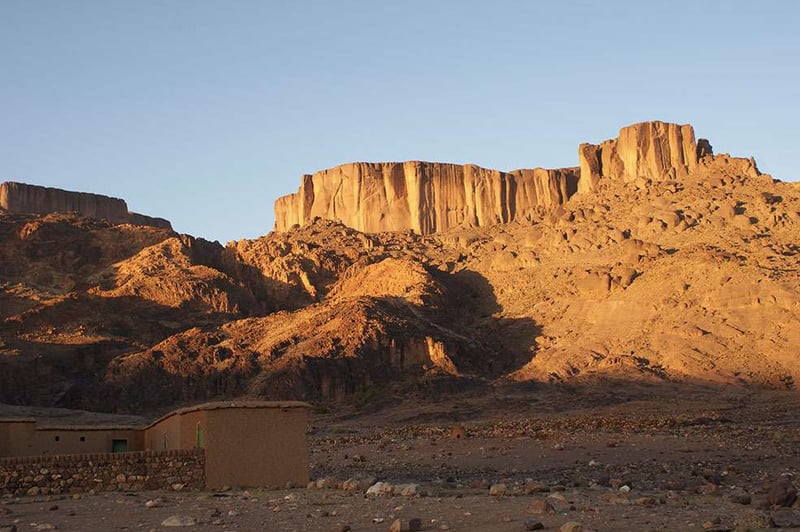
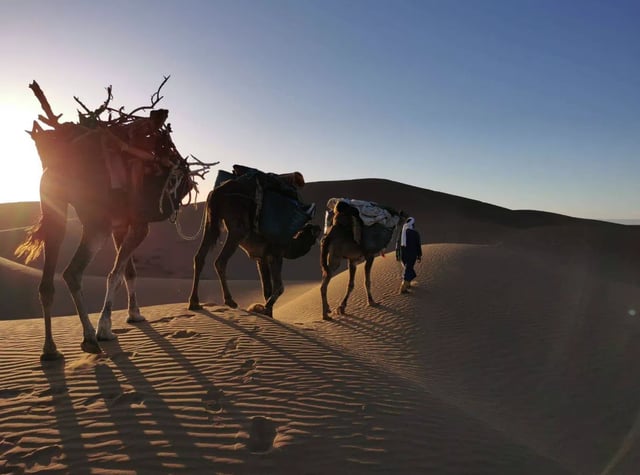
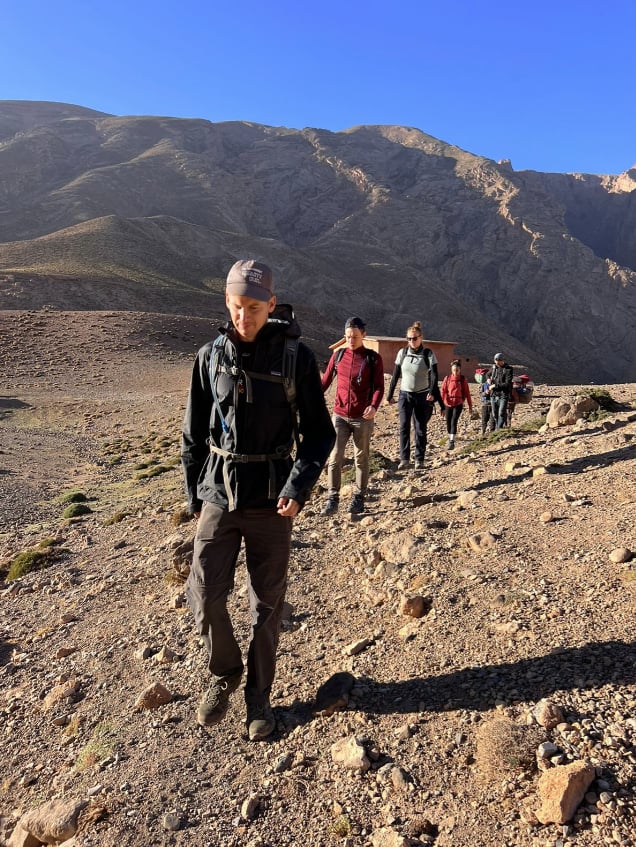
Venturing into one of Morocco's most distinctive mountain regions, this trek explores the volcanic landscapes of the Jbel Saghro Massif between the High Atlas and the Sahara. The route passes dramatic rock formations, deep valleys, isolated villages and traditional nomadic routes, offering a very different experience from the greener mountain areas further north.
Ideal for autumn, winter and spring departures, the trek follows quieter trails through the Anti-Atlas while introducing you to the culture of the Ait Atta people. Supported by experienced mountain guides, muleteers and camp staff, you'll enjoy several rewarding days of hiking through landscapes shaped by ancient volcanic activity.
Specialising in Morocco's lesser-known trekking destinations, our team has carefully selected a route that combines geological interest with genuine cultural experiences. Jbel Saghro is often overlooked in favour of the High Atlas, yet it offers remarkable scenery, excellent winter trekking conditions and a strong connection to traditional nomadic life.
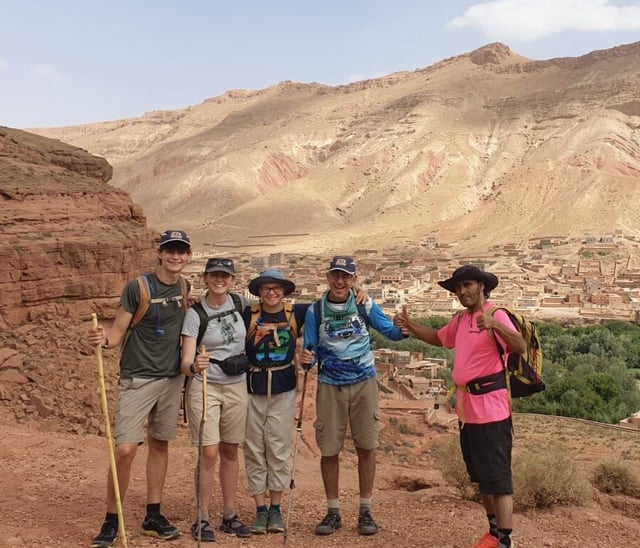
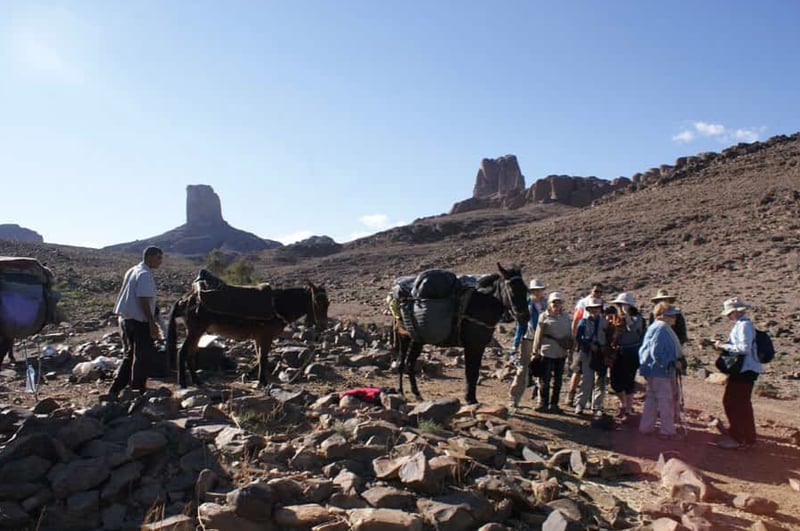
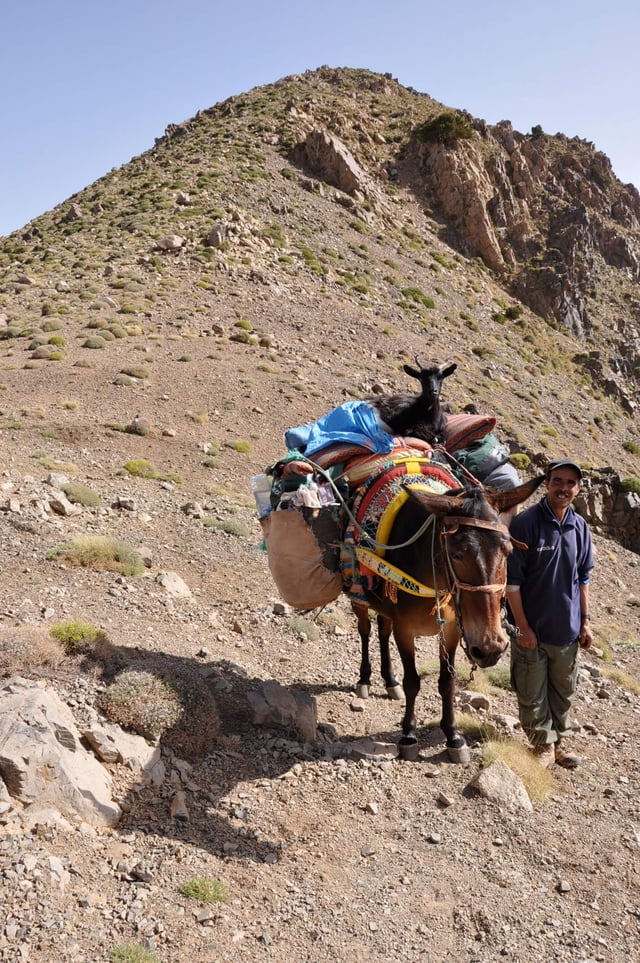
Accompanied by CFAMM-certified mountain guides, you'll benefit from local knowledge throughout the journey while your luggage is transported by mules between camps. This allows you to fully appreciate the varied terrain without carrying unnecessary weight.
Departing Marrakech in the morning, you'll travel across the High Atlas before entering the Draa Valley, home to Morocco's longest palm oasis. There will be opportunities to stop for photographs along the way, with lunch enjoyed either within the valley or in the village of Nkob.
During the afternoon you'll continue to Handour, where you'll meet the mule team before settling into your accommodation and preparing for the trekking adventure ahead.
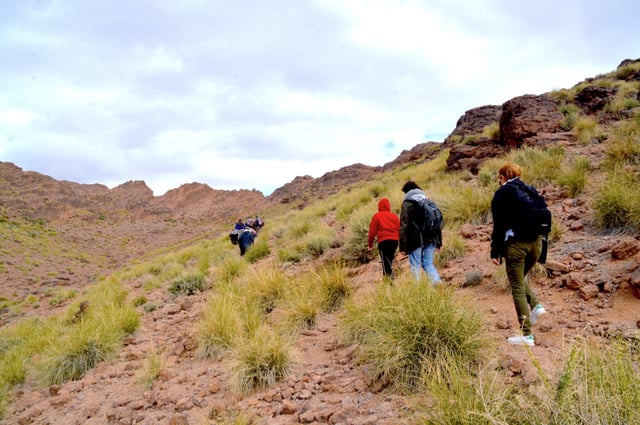
The trek begins with a gradual ascent through the Tifdassine Valley, where striking rocky ridges dominate the landscape. Climbing onto the Tin Ouayour Plateau reveals wide views across the surrounding volcanic formations before the trail descends through narrow gorges towards Irissi.
After approximately seven and a half hours of walking, camp is set close to the old ruins of Irissi, surrounded by terraces and almond trees.
Today's route descends through a rocky valley towards the almost abandoned village of Berkou, where traces of traditional nomadic life can still be seen. Continuing through the Win Telouine Valley, the trail follows a river that has carved its way through the surrounding rock over thousands of years.
After around six hours of walking, you'll reach the village of Ighazzoun N'Imlasen, where camp is prepared for the evening.
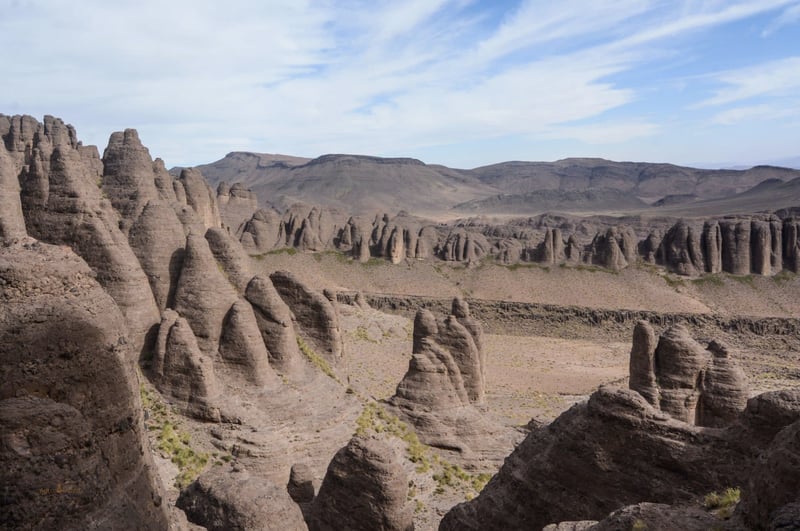
The trail continues through a remarkable landscape of unusual volcanic rock formations before reaching the Tadaout N'Tblah Plateau. Wide views extend across much of the Saghro Massif before the route descends through the Afourar Valley towards the village of Igli.
The evening is spent camping near the village after another rewarding day of mountain walking.
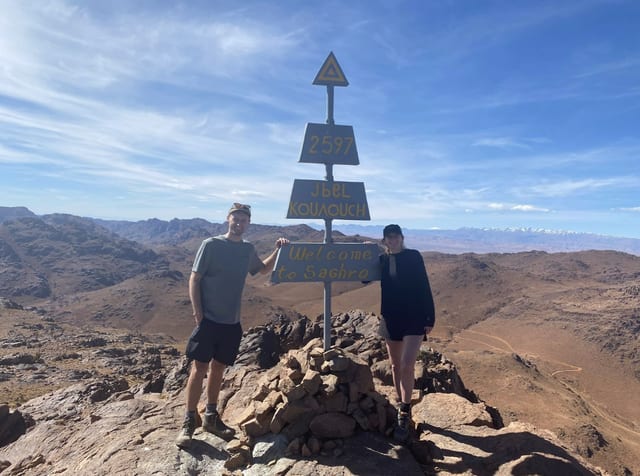
Today's hike climbs steadily through ancient lava flows and large volcanic rock formations towards Kouaouch at approximately 2,592 metres. The higher elevation provides exceptional views across the surrounding massif and highlights the dramatic geology that makes this region so distinctive.
Descending slightly, you'll reach the spring at Almou N'Ouarg, where camp is established for the final night in the mountains.
An early departure allows time to cross the Ouarg Pass before beginning the final descent towards the village of Tagdilt. Here the trekking section comes to an end and you'll board the vehicle for the return journey to Marrakech.
Lunch is enjoyed during the drive before arriving back at your hotel or riad during the evening.
Accommodation combines a mountain lodge with several nights of fully supported camping in remote locations across the massif. Shared two-person tents are provided together with foam mattresses, allowing comfortable overnight stays in peaceful mountain surroundings.
The accompanying support team transports all camping equipment, prepares meals and sets up camp each afternoon, leaving you free to relax after each day's walk and enjoy the atmosphere of the Anti-Atlas.
Yes. Jbel Saghro is widely regarded as one of Morocco's best mountain regions for winter trekking because its lower elevation and drier climate generally provide milder conditions than the High Atlas. This makes it an excellent alternative when snow affects higher mountain routes.
The cooler months also make the daily walking more comfortable, particularly across the exposed volcanic landscapes where summer temperatures can become very high.
Jbel Saghro has a completely different character to the High Atlas Mountains. Instead of alpine peaks and green valleys, you'll encounter volcanic rock formations, lava fields, dramatic ridges and wide open plateaus that create a unique landscape unlike anywhere else in Morocco.
The region is also closely linked with the Amazigh Ait Atta people, whose nomadic traditions continue to shape life across these mountains today.
The overall difficulty is considered moderate, although several days include six to seven hours of walking across uneven mountain terrain. There are steady climbs and descents throughout the itinerary, but no technical climbing or mountaineering experience is required.
A reasonable level of fitness and previous hiking experience will help you enjoy the route comfortably, particularly on the longer walking days.
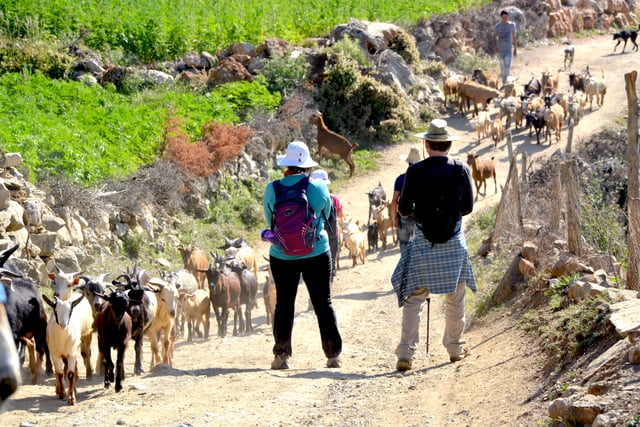
Yes. One of the highlights of this trek is the opportunity to encounter members of the Amazigh Ait Atta community, many of whom continue to move seasonally through the mountains with their livestock.
Your guide will explain their traditions, history and way of life, giving you a greater understanding of how people have adapted to this challenging mountain environment over many generations.
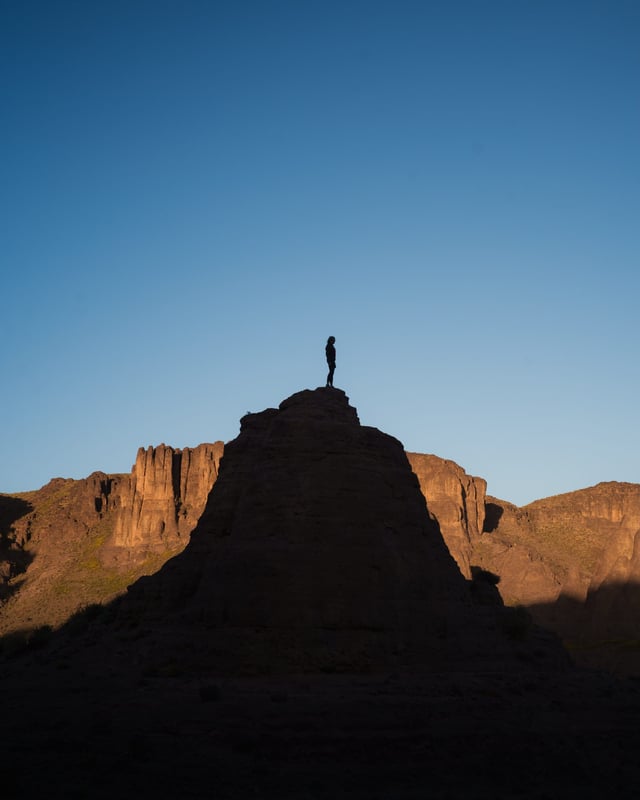
Bab N'Ali is one of the most recognisable natural landmarks within the Jbel Saghro Massif. The impressive volcanic rock formation rises dramatically above the surrounding landscape and has become one of the symbols of trekking in the Anti-Atlas.
Its unusual shape and striking setting make it one of the most photographed locations in the region and a memorable highlight of the journey.
Most nights are spent in shared two-person tents set up by the support team before your arrival. Foam mattresses are provided, while the accompanying cook prepares traditional meals each day using fresh ingredients wherever possible.
Although facilities remain simple due to the remote nature of the trek, the camps are chosen for their beautiful surroundings and provide an enjoyable opportunity to experience Morocco's mountain wilderness.


About the centre
Marrakech
Operated by Adrar Travel, a partner of adventuro.