We partner with Rewilding Britain to help protect our natural spaces for future adventures.
All centres are vetted for safety and quality. Your adventure is in good hands with adventuro.
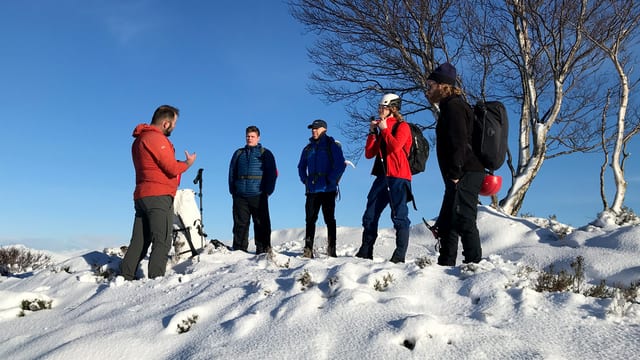
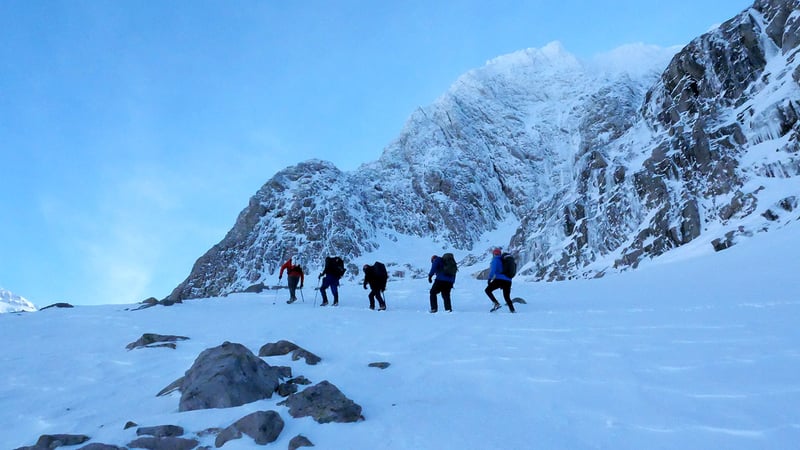
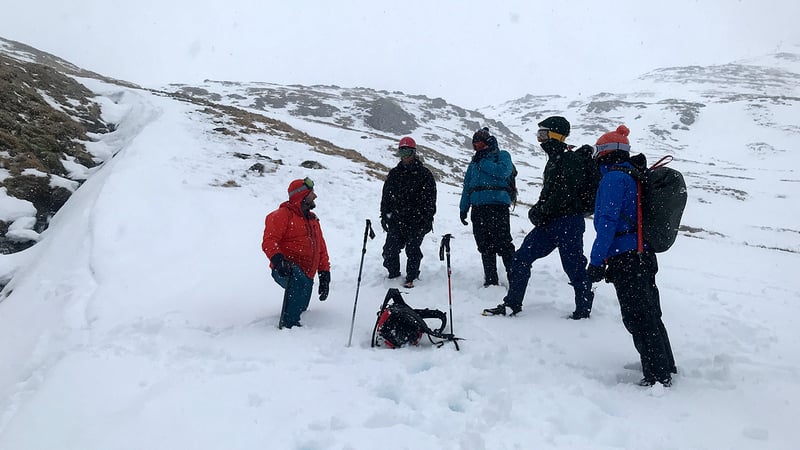
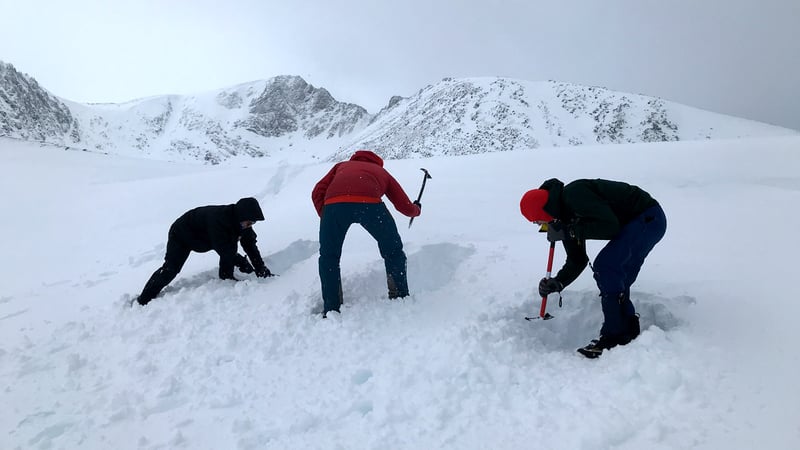
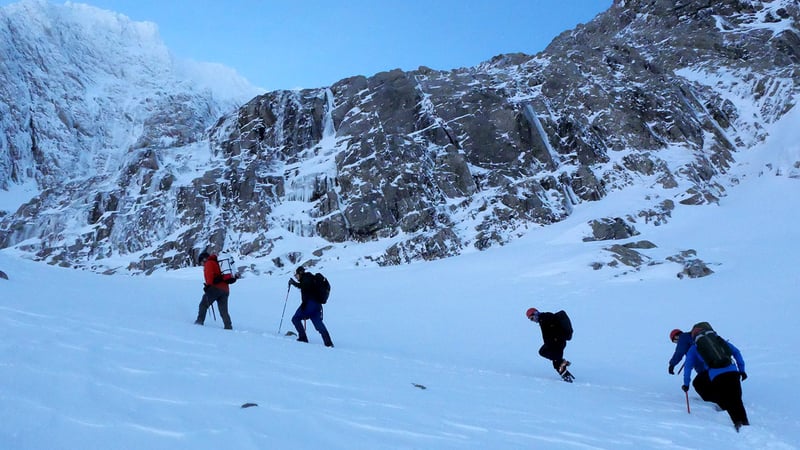
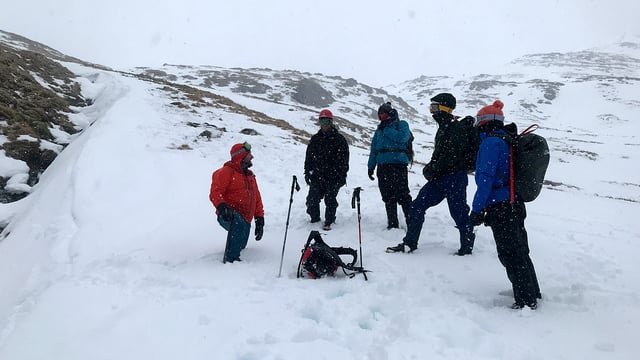
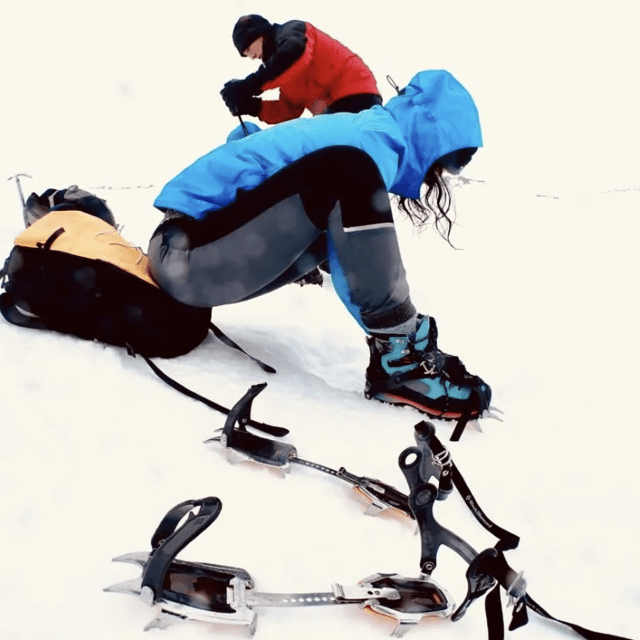
Day one builds foundations on accessible terrain: crampon fitting, efficient movement, arrest practice and how to pack for a winter day, with briefings that link weather forecasts to route choice. Day two integrates those skills on a longer mountain journey, applying navigation, route choice and avalanche awareness while your instructor coaches decision making in real conditions rather than in isolation.
Briefings each morning set the plan from weather and snowpack. You need local accommodation between the two days and your own transport to daily meeting points; joining instructions explain timing, parking and what to carry for consecutive hill days.
Spread across two full days on Scottish hills, this introduction turns classroom ideas into muscle memory on snow, ice and mixed ground with a qualified leader and just three to six people in the group. You repeat crampon work, ice axe arrest, winter navigation and avalanche awareness on real terrain so techniques start to feel familiar before you head home. It suits beginners and summer hillwalkers stepping into winter who want depth without committing to a full week on the hill.
Day one opens with weather and avalanche briefings, kit checks and foundation skills on accessible slopes: crampon fitting, efficient movement, axe carry and arrest practice with your instructor repeating drills until actions feel reliable. Afternoon work links winter navigation and route choice to the terrain you can see, closing with a debrief on packing and what the longer journey on day two will involve.
Day two is a fuller mountain journey that integrates movement, arrest refreshers and navigation while your guide coaches decision making in real conditions, including strategies for poor visibility where the terrain allows. The course finishes with an honest review of progress and clear suggestions if you want the five-day course, guided days, or further formal training.
Courses are based from Fort William beneath Ben Nevis or Aviemore on the edge of the Cairngorms National Park, with meeting points confirmed before your course and daily venues chosen to match conditions and group progression. Both areas offer classic Highland winter scenery and roadheads that suit progressive skill building across two consecutive days.
You should plan travel flexibly because snow, wind or avalanche conditions can shift the venue at short notice while keeping the syllabus on track. Stay locally overnight between the two days so early starts stay practical without long commutes after a tiring first day on the hill.
No prior winter mountaineering experience is required, though summer hillwalking helps you understand pacing, self-care and navigation on a long day out. You should have reasonable fitness for two consecutive full days carrying a rucksack on uneven, snowy terrain.
B2-rated boots with compatible crampons, full waterproofs and warm layers are essential. A detailed kit list is shared before the course, and local shops can hire winter boots if you do not own suitable footwear.
Small groups mean proper instruction time and honest feedback on technique throughout both days, not a rushed session where individuals barely repeat core skills. Both days are spent on the hill so learning links directly to the terrain you will use later in the season.
Instructors have delivered outdoor courses since 2005 across the South East and bring the same calm, safety-led approach used on professional television and film safety cover to winter training in Scotland.
Small groups mean proper instruction time and honest feedback on technique throughout both days, not a rushed tick-box session where individuals barely repeat core skills.
Both days are spent on the hill so learning links directly to the terrain you will use later in the season, building confidence for Scottish winter at a steady pace matched to the group.
Your guide confirms the exact meeting location before the course, based on whether the course runs from Fort William or Aviemore and on prevailing weather. Stay locally overnight between the two days so early starts are practical and you are not commuting long distances after a tiring first day.
You need your own transport to roadheads each morning. Plan travel and lodging with some flexibility until the course is confirmed as going ahead.
No. The course is designed for beginners as well as summer hillwalkers stepping into winter for the first time. Your instructor sets routes and pacing to match the group and keeps terrain appropriate for learning.
If you prefer a single guided day without a structured syllabus, the guided winter mountain walk offers a lighter introduction before committing to two full training days.
Courses run from Fort William or Aviemore depending on the scheduled date. The precise meeting point is confirmed ahead of your course once the venue for that date is set.
You need your own vehicle to reach the start point each morning and to access roadheads for the day's route. Stay locally overnight between the two days so early starts are practical.
A helmet and ice axe are supplied for both days. These are checked and fitted before you leave the roadhead so you know how to carry and use them safely on the hill.
You bring personal clothing, B2 boots, crampons, waterproofs, food, water and a rucksack. A full kit list is shared before the course, and local shops can hire winter boots if you do not own suitable footwear.
Transport and overnight stays are not included. Plan your own travel and stay near Fort William or Aviemore for the night between the two hill days.
Winter days can start early and finish in fading light, so many participants book flexible accommodation until the course is confirmed running.
Adverse conditions may lead to postponement or a change of venue. Decisions can be made up to 24 hours beforehand, or on the day once ground conditions are seen.
If the course cannot run safely, the activity is rescheduled when possible rather than pushing on in unsuitable conditions.
You should be comfortable walking for full days on hilly, uneven ground while carrying a day pack. Winter underfoot conditions add effort compared with summer paths, and you repeat skills on both days.
If you are unsure about suitability, contact the team in advance so they can advise honestly based on your recent hillwalking experience.
The two-day introduction covers core winter skills in depth across consecutive days. The five-day course repeats similar foundations early in the week before advancing into harder terrain and emergency rope work.
Many people complete the two-day course first, then return for the longer week when they want extended consolidation and advanced techniques.
Sessions run with small groups, typically three to six participants, so the instructor can keep everyone in sight and adapt coaching. This also keeps briefing and practice time meaningful for each person.
If minimum numbers are not met, dates may be rearranged so group size stays appropriate for safety and quality.
Yes. Avalanche awareness and snowpack observation are woven into briefings and route choice throughout both days, linking classroom concepts to what you see on the ground.
This is practical hill awareness for winter travel, not a standalone professional avalanche qualification, though it gives a solid base for further training if you want it.
Dates are offered from Fort William or Aviemore depending on the scheduled course. Your confirmation email states which base applies to your date.
Plan accommodation near the confirmed base so travel to morning meeting points stays straightforward on both days.
About the centre
Fort William
Operated by Hatt Adventures, a partner of adventuro.
Surrey, East and West Sussex, United Kingdom
From £425
Surrey, East and West Sussex, United Kingdom
From £65

Highlands & Islands, United Kingdom
From £310

Highlands & Islands, United Kingdom
From £250