
We partner with Rewilding Britain to help protect our natural spaces for future adventures.
All centres are vetted for safety and quality. Your adventure is in good hands with adventuro.
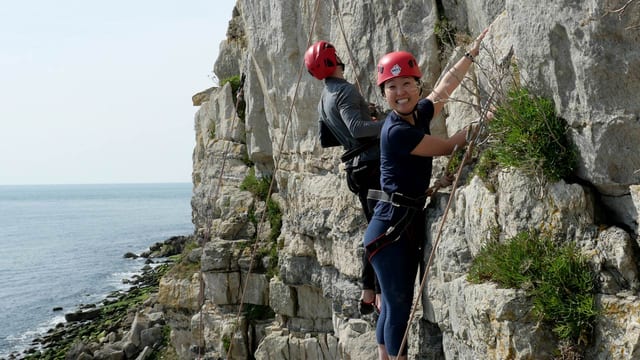
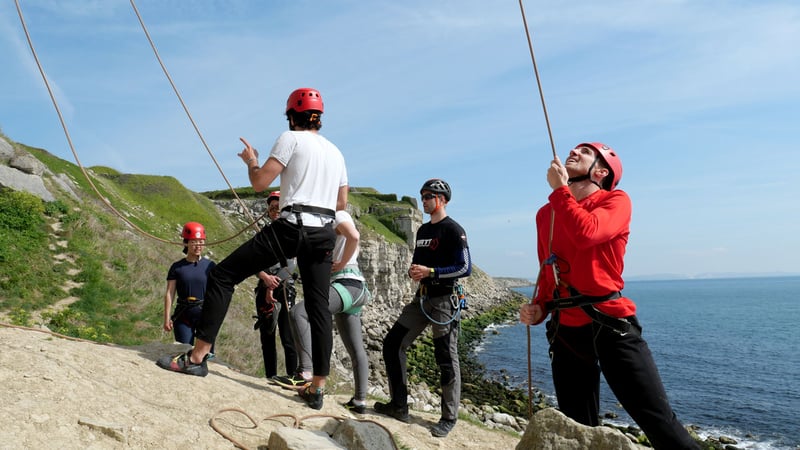
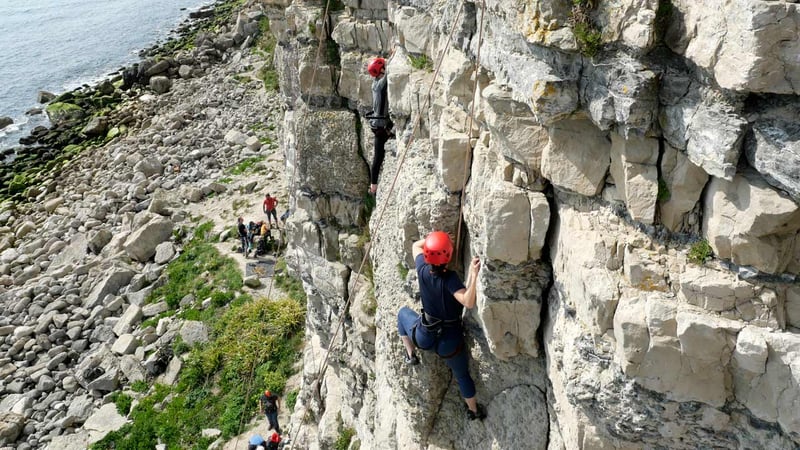
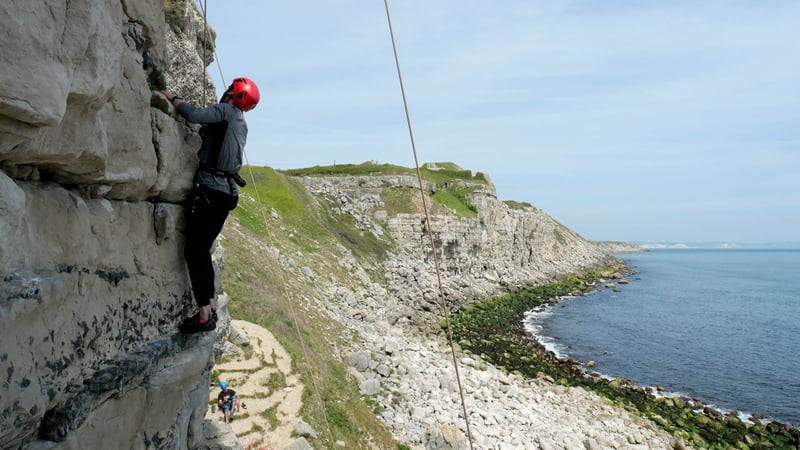
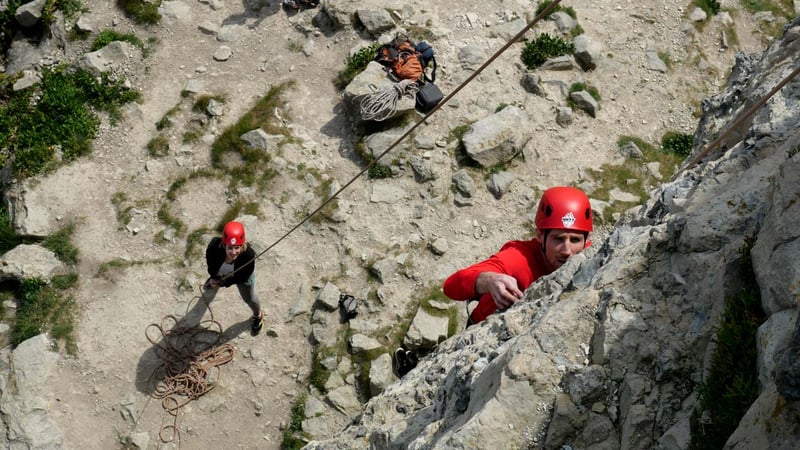
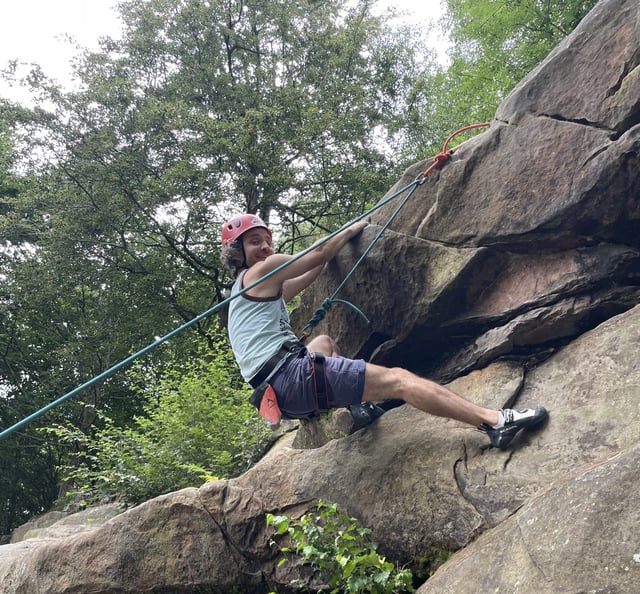
Limestone above the sea on the Isle of Portland gives you a dramatic first taste of outdoor climbing, with sharp footwork, sea air and routes chosen to match your ability as the day progresses. This full-day introduction takes complete beginners and indoor climbers through tying in, belaying a partner and climbing real rock with one-to-one coaching on movement and body position. You finish with a clearer sense of how outdoor climbing differs from a wall and what to practise next on Dorset limestone.
After introductions and warm-up bouldering near the approach, you fit harness and helmet and work through knots and belaying under close supervision before climbing your first outdoor routes on Portland limestone. Your instructor manages rope work, keeps the group clear of fall zones, and coaches footwork and balance on each climb at a steady pace so skills sink in before difficulty increases.
Afternoon routes may include slab, vertical and steeper faces up to roughly 40 to 60 feet where appropriate, always matched to the group rather than forced for tick-list reasons. Breaks for food and hydration are built in, and the day closes with technique feedback and clear advice on continuing outdoor climbing, indoor training or returning for another day on the island.
Sessions run on the Isle of Portland, Dorset, on limestone cliffs with sea views and crags chosen on the day for conditions and sunshine. Exact meeting point and crag are confirmed before your course, usually with a short walk from parking carrying your day pack.
Portland often offers sheltered options on different sides of the island, which helps when wind or showers affect one aspect of the coast, and your instructor explains crag choice as the session unfolds.
No outdoor climbing experience is required; indoor boulderers and complete beginners are welcome. Reasonable fitness helps on uneven coastal paths and while climbing, and you should be comfortable wearing a helmet throughout the session.
Maximum weight is 18 stone (115 kg). Soft-soled trainers are required; walking boots are not permitted on the rock because they damage limestone and are unsafe for climbing footwork.
Routes are selected to match ability so you progress steadily without being pushed onto unsuitable terrain on your first outdoor day, with instructors who explain decisions about crag choice and route grade as the session unfolds.
Instructors have taught outdoor climbing across the South East since 2005 and bring the same safety-first standards used on professional television and film safety work to small groups on the Jurassic Coast.
No. The course suits first-time outdoor climbers and anyone who has tried indoor climbing or bouldering but not tied in on real rock. Instruction starts from harness fit, knots and belaying safely before you climb your first routes on Portland limestone.
Your instructor adjusts route choice through the day so difficulty increases gradually as skills improve, and rest breaks are built in so fatigue does not push you onto climbs that feel too much too soon.
The syllabus matches the introduction at Harrison's Rocks but the rock type and setting differ. Portland is steep limestone with smaller, sharper holds and spectacular sea views on the Jurassic Coast rather than sandstone in the Weald.
Many climbers choose Portland for variety, weather resilience and the unique island crags, and because access is often via paths rather than abseil, which feels less intimidating for a first outdoor day.
Ropes, harness, helmet, climbing shoes, belay device and karabiners are supplied and checked by your instructor before use on each route. Personal harnesses or shoes may be used if in good condition and within manufacturer lifespan, subject to instructor approval on the day.
You bring suitable clothing, waterproofs, trainers, food, water and a rucksack for the walk-in. A full kit list is shared before the course so you know what to carry from the car park to the crag.
Portland is a public area and spectators are welcome, though coastal paths and cliff tops can be uneven and exposed. Visitors should dress sensibly and stay clear of the climbing fall zone and rope lines at all times.
Dogs cannot be accommodated on Portland courses because of crag access, livestock nearby and safety around ropes; contact the team before the day if you need advice on meeting points away from the climbing area.
Forecasts are monitored closely and crags are chosen for conditions on the day; severe weather may lead to postponement or a move to a more sheltered aspect on the island. Portland often offers options on different sides of the coast when wind or rain affects one face.
Your instructor explains any late changes as early as possible so you can adjust travel plans, and safety always takes priority over completing a particular route grade on the calendar.
Transport to the Isle of Portland is not included. You reach the island from Weymouth via the Chesil Beach causeway with parking near agreed meeting points, then walk to the crag carrying your day pack.
Share lifts with other participants if convenient, but instructor transport for customers is not provided for insurance reasons, and you should not expect to travel in the instructor vehicle from the car park.
Minimum age is 18. Maximum weight is 18 stone (115 kg) so harnesses and ropes function correctly within manufacturer limits and belay devices operate as designed.
Contact the team in advance if you need to discuss fitness or mobility on uneven coastal paths so the instructor can advise honestly about walk-in distance and standing time at the crag.
Wear comfortable layered clothing for the season, waterproof jacket and trousers, and soft-soled trainers rather than walking boots which damage rock and are not permitted. Helmets must be worn whenever you are in the climbing area.
Denim is not suitable because it restricts movement and is slow to dry if showers appear during the day; bring spare layers if you chill easily on exposed limestone.
Yes. After basics are established you climb several routes of increasing difficulty including slab, vertical and steeper limestone faces up to roughly 40 to 60 feet where appropriate for the group. Your instructor selects grades so you succeed often enough to stay motivated while still learning.
Breaks for snacks and hydration are built in so you can recover and review technique between climbs rather than queueing on a crowded crag all day without coaching time.
Your instructor confirms the crag and meeting point before the course based on conditions and group ability. Allow around seven to eight hours from arrival to finish, including walk-in, climbing and debrief.
Joining instructions include parking guidance and what to carry in your rucksack for the approach, including food, water and waterproofs even if the morning looks fine at sea level.

About the centre
Portland
Operated by Hatt Adventures, a partner of adventuro.
Surrey, East and West Sussex, United Kingdom
From £425
Surrey, East and West Sussex, United Kingdom
From £65
Surrey, East and West Sussex, United Kingdom
From £98