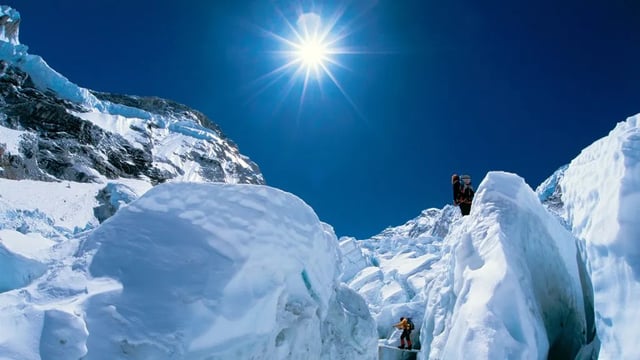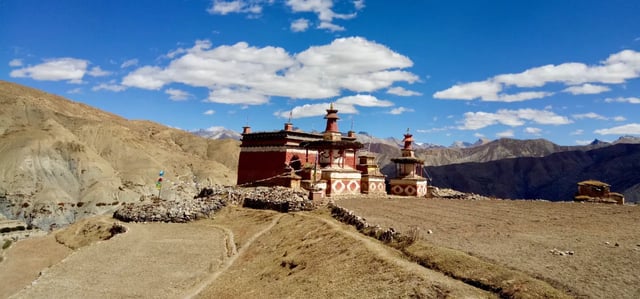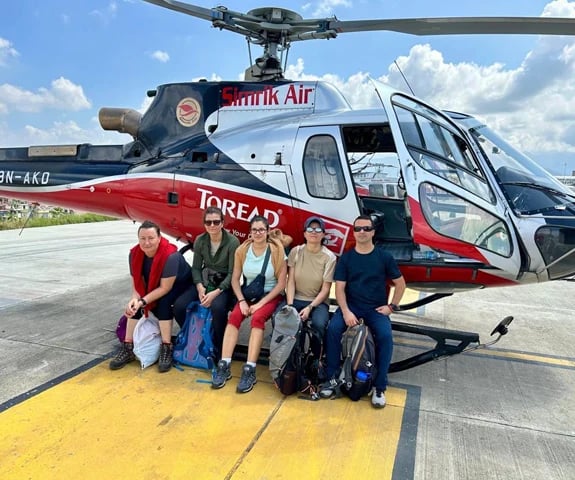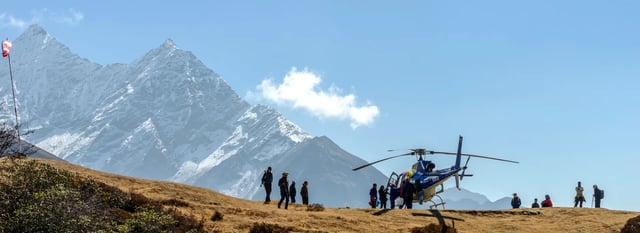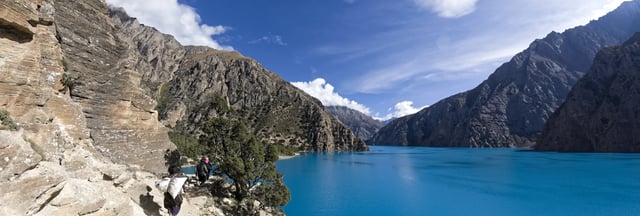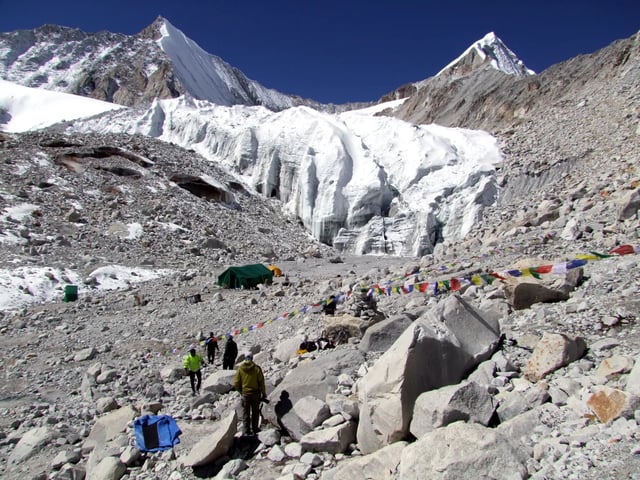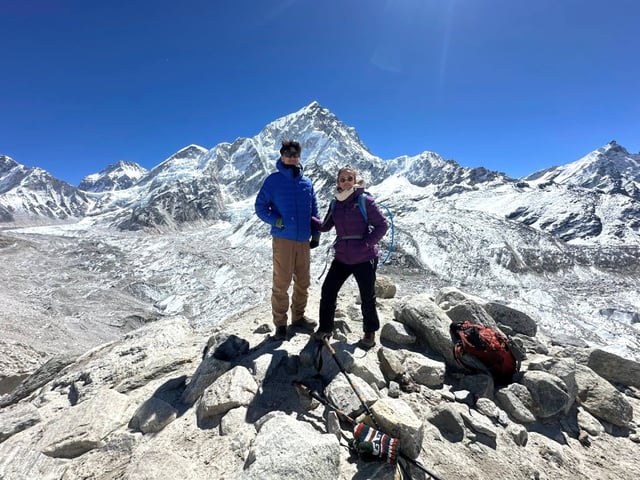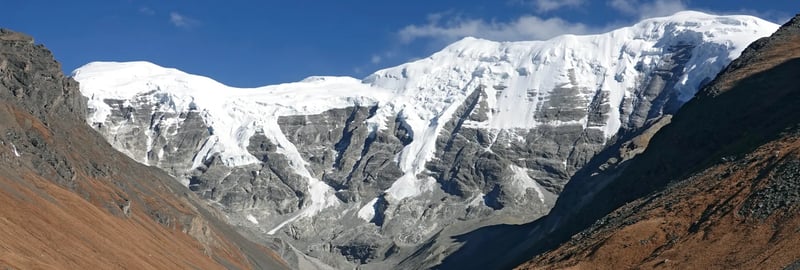
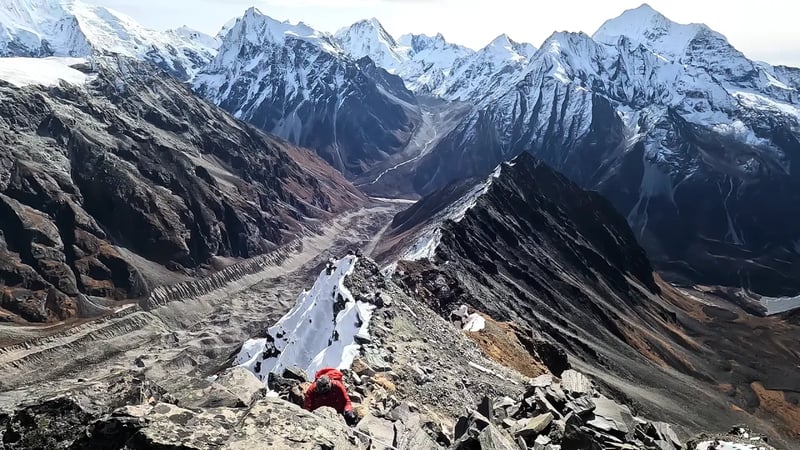
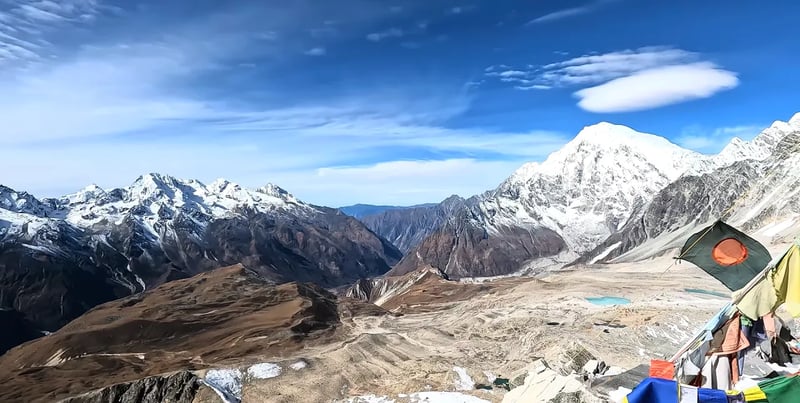
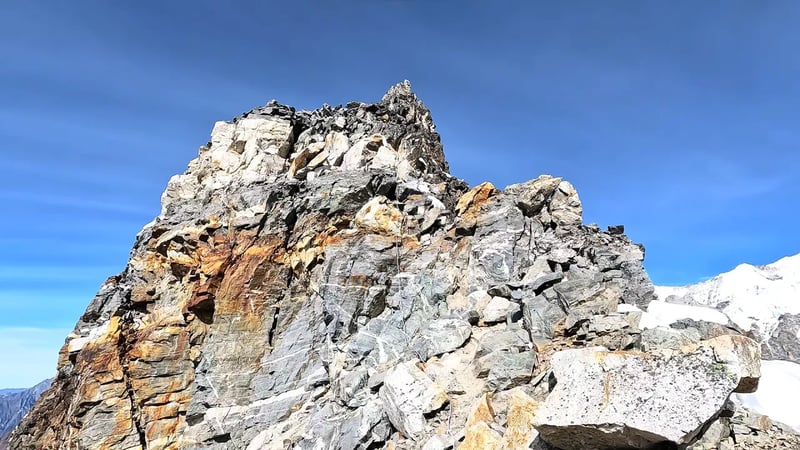
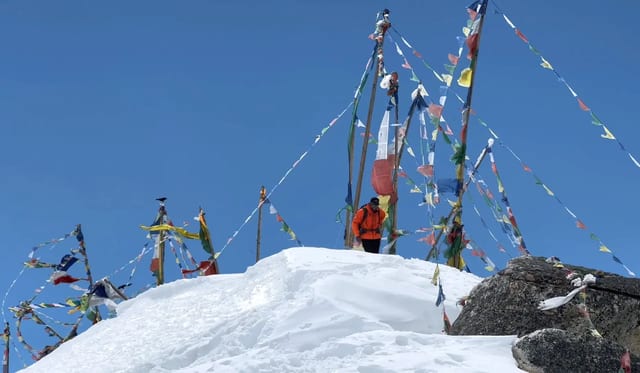
Yala Peak sits above Kyanjin in Langtang, a shorter 5,000 m climb after the valley walk from Syabrubesi. You sleep in Kyanjin lodges, then move to a high camp or alpine start on snow. Kyanjin lodges, a snow ridge, and Langtang Lirung across the glacier make Yala a compact 5,000 m climb.
Langtang Lirung and the glacier fill the view. You walk back down-valley to the road after the climb. You walk in from Syabrubesi and walk out the same valley after the summit morning.
Our office team is trained in adventure tourism, and they file Langtang National Park and Yala Peak permits before the Syabrubesi road day. You'll walk the Langtang Khola through Lama Hotel and Langtang village to Kyanjin Gompa, then hike Kyanjin Ri before camping at Yala Base Camp.
Climbing guides run skills at Kyanjin, then use fixed ropes on the 5,500 m snow ridge when ice appears. We'll share the next day's plan each evening so a landslide hold on the valley road or an early summit turn-around stays easy to follow. You drive back to Kathmandu from the same Syabrubesi roadhead.
Your Yala Peak Climbing expedition is about to begin. Our employee, with a sign of our company, will welcome you excitedly and then assist you with your baggage.
Then, he will drive you to the lodging we have carefully selected for your stay in Kathmandu. Till we wait for our climbers to arrive, you can explore the area around the hotel or walk through the narrow alleys of the capital and get surprised by the smells and colors of the many market vendors.
Later in the evening, you will meet our guide and receive a short briefing about our Yala Peak climbing 14 days journey. Then you can journey through the maze of Kathmandu street and taste your first Nepali dinner in one of the oldest cafes of the city.
You will start your morning with your first Nepali breakfast. Right after that, with our guide, you will set off for a full day sightseeing in the capital.
We will start with the Pashupatinath Temple and see the unique Hindu ritual of cremation at the edge of the Bagmati River. Then, we will go to the suburbs and visit the Buddhist temple of Boudhanath where we will meet the nuns and monks, ordinary local people praying, using prayer wheels or praying mantras.
Then, we will climb the nearby hill and admire the panorama of the capital from the area of the Monkey Temple to Swayambhunath. We will then walk around the central square of the old part of the city to Durbar Square with the temples and Royal Palace.
In the morning, we will leave hospitable Kathmandu and drive through the Thankot Pass elevated to almost 2000 m. Then, we will descend into the valley and continue west along the Trishuli River valley.
We will then pass by the enchanting old royal town of Nuwakot and Betrawati. The winding Pasang Lhamu Highway will then journey us upward eventually leading us to the Dhunche town.
Langtang, Manaslu, Ganesh, and Annapurna will show their amazing profile here. We will then go through the careful inspection of the army checkpoint of the National park of Langtang.
The enchanting trek to Yala Peak commences from today as we take a leave from Syabrubesi early in the morning. We will cross two magnificent air suspended bridges over the Bhote Koshi and walk gently to reach 1620 m high Dhomen Village.
The further beautiful trail through the deep forest will then lead us to Thulo Syabru from where the expansive Langtang Valley begins. One more time, we will traverse the metal bridge over the tributary of Bhote Koshi known as Langmoche Khola and reach 1980 m Bamboo Village.
The majestic Langtang Himal will show its magnetic profile more clearly here. We will then take the steep upstream path and keep moving for about two hours above the Langtang Khola to reach Rimche (2400 m).
We will start hiking along the relatively flat trail where there cam be some sections that rises steeply. Pay attention to the changing plant life as we move forward beside the gorgeous flow of Langtang khola.
A path running through the subtropical fauna will lead us to Ghuman Chowk. The landscape here transforms into a very beautiful semi alpine nature.
Walking through the sparse alpine shrubs, we will reach Chunama where the 7234 m Langtang Lirung will show its magical face. Then, an ascending path will slowly take us to the Horse stable known as Ghora Tabela in the local tongue.
After Langtang Village, we will walk along the winding path that will shortly lead us to Mundu rising to almost 3600 m altitude. We will take a short ten-minute walk from here to see the spellbinding panorama created by Tilman, Tsergo Ri, and Gangchempo Peak. The further path is not that suddenly steep but will slowly rise bordered by the sacred Mani Walls.
We will shortly be at the high alpine grassland of Singdum. As we progress, we will move downstream towards Yemphu where the route will take the sudden sharp plunge leading us to Kyanjin Gumba.
After a nice morning in Kyanjin Gumba, we will now set forth to ascend the attractive Kyanjin Ri today. The summit is quite jagged and the trail leading to it is also somewhat rugged and uneven but not technical and challenging howsoever. A 1 to 3 hour of upward climb will take us to its summit where we will be able to take in the magical sight of several Tibetan and Nepali peaks.
The first to steal our gaze will be the Yala Peak itself, our main goal. Lurking beside Yala will be the Mount Yubra, PangenDopku Peak, Langtang Lirung, Urkenmang, Sishapangma, Morimoto Peak, Dorje Lhakpa, Naya Kang Peak, Gangchempo, Kyunggari, Kinshung, and the Langtang Glacier.
After Kyanjin Gumba, we will resume our hiking and reach the small junction where we can see two routes meeting. The left one goes to the Yala Kharka which is our route of course and the right one passes toward Langshisha. Walking along the left trail, we will soon reach a channel that passes down from Tsergo Ri.
The wide view of Langtang Mountain, Ganja La, and Naya Kang will be clearly visible from here. Now steadily rising along the upward-moving trail, we will soon be tackling the steepening climb taking us through the barren rocky valley till we reach the channel that seems to be coming down from the Yala Peak itself.
Finally, the day of conquering the 5500 m high summit of Yala Peak has arrived. The day is going to be long and challenging but it will be most rewarding and fulfilling too. Waking in the early hours probably 2 or 3 AM, we will begin the journey to attack the summit early with the aim of reaching its top by sunrise.
First, a medium steep incline will take us forward toward the slope that lies beneath the summit. As we move forward, the terrain starts to become steep and steeper however, it is technically manageable though.
After disassembling our tents and the proper disposal of our waste at the base camp, we will now make our way back to Kyanjin Gumba, traversing the well-known rocky terrain we previously traveled.
Once we are in the warm shelter of the Kyanjin Gumba, we will celebrate the accomplishment of our Yala Peak Climbing expedition with our loyal team.
It is now time to revisit our path again and walk downstream through the similar faces of Yemphu, Singdum, Mundu, Chyamki, and Thangshyap to Ghora Tabela which may take 2 to 3 hours.
Once we are done with our lunch, we will again continue along a similar trail for about two hours more and reach Lama Hotel passing through Ghuman Chown one more.
Beginning the conclusion of our Yala Peak climbing 14 days journey, we will now set forth towards Rimche from Lama Hotel. Then we will head towards Thulo Syabru and traverse a narrow hillside path carefully for about half an hour.
We will then proceed to Dhomen and make an abrupt d escent for around 2 hours to arrive at Syabrubesi.
Once again you will have a scenic bus ride today through the twists and bends of the mountain road of Nepal. Once again you will travel through Dhunche, Trishuli, and make your way to the capital through Thankot.
In the evening, you will enjoy a nice farewell Nepali dinner in one of the enchanting cafes or restaurants and celebrate climbing Yala Peak and adding one important chapter to your journal.
You may have one last free time in Kathmandu based on your departure time.
Then, we will take you to the airport from where you will fly to your home.
Fly into Tribhuvan International Airport in Kathmandu unless the itinerary uses another regional hub. Airport or hotel pickup can be arranged when you share arrival details ahead of travel.
Briefings cover road or domestic travel to the trailhead. Build buffer time before onward international flights in case mountain weather shifts the schedule.
Twin or double rooms in a comfortable Kathmandu hotel cover your first nights and your return from the trail, with breakfast on those city stays when included in the package. Briefings happen at the hotel, and airport collection from Tribhuvan is available when flight times are shared in advance.
Family-run teahouses or lodges line the route with twin beds and a shared dining room. Rooms get simpler and colder as you climb, with shared bathrooms common at higher villages. Hot water, Wi-Fi, and charging are paid at the lodge when offered.
Stable trekking weather most often falls in pre-monsoon spring and post-monsoon autumn. Monsoon cloud sits lower on the hills while winter brings ice on steps above village level.
If your dates sit in winter or monsoon, pack rain and cold layers and accept that flight or pass days may move by a day when safety requires it. Weather can shift daily plans, so your guide keeps a steady pace with regular breaks.
You should be comfortable walking several hours a day on uneven paths with a daypack, including steady uphill sections as you gain height. Hill training and longer weekend walks in the months before travel help your legs and lungs on uphill trail days.
Hill training, stair climbing, and longer weekend hikes in the months before travel help your legs and lungs, even when acclimatisation days are built into the route. Break in boots before you fly and carry a light daypack on practice walks.
Guided trekking with licensed leaders, lodge nights on the trail, meals as described for walking days, and permits for the regions crossed are included when they are part of this trip. Domestic flights, porters, and airport transfers apply only when they are part of this trip.
Domestic flights, road transfers, porter support, and airport transfers apply only when they are part of this trip. Permits for the regions you cross are arranged in Kathmandu or Pokhara when included.
International flights to Nepal, visa fees, compulsory travel insurance, personal trekking clothing, snacks and drinks outside included meals, and tips for crew are not covered. Hot showers, Wi-Fi, and battery charging in lodges are usually paid locally when offered.
Charges for hot showers, Wi-Fi, or battery charging in lodges are paid locally when offered unless your trip notes say otherwise. International flights, visa fees, and personal insurance stay outside the trek package.
Hotel meet in Thamel is typical; send flight numbers so pickup can meet you at the international terminal. Allow a little extra time after the trek before international flights home in case mountain roads or flights move.
Rest day buffer after the trek helps if Lukla or helicopter sectors slip by a day. Trail conditions are checked each morning before the group moves.
Guides set a steady pace and watch for headache, nausea, or dizziness as you gain height. Your crew would rather wait for a safe window than rush marginal weather.
Tell your guide early if symptoms appear so tomorrow's stage can shorten or descent can start before conditions worsen. Thamel hotels are the usual meet point; drivers need flight numbers to meet you at the international terminal.
Jeep or bus days to the remote trailhead are arranged when they are part of your package. Your guide confirms departure times at briefing.
Motion sickness medicine helps on winding mountain roads. Shoulder weeks need an honest weather call before high passes or dawn viewpoints.
National park or restricted-area permits apply depending on the valleys you cross. The team arranges paperwork in Kathmandu or Pokhara when you provide passport copies and trek dates.
Keep copies in your daypack for checkpoint stops. Your crew would rather wait for a safe window than rush marginal weather.
Families join when children can manage the daily hours and terrain on this specific route. Pace and daily hours can be adjusted on private departures, though that may extend the calendar.
Ask our Kathmandu team if you are planning with younger walkers. Private departures can shorten daily hours, though that may add a day or two to the calendar.
Comprehensive travel insurance that covers trekking to the highest altitude on your itinerary, medical evacuation, and helicopter rescue when applicable is essential. Many standard policies exclude high altitude by name.
Read the wording before you travel so you can adjust cover if trekking above 5,000 metres is not named. Many standard policies exclude high altitude by name, so read the wording before you fly.
We partner with Rewilding Britain to help protect our natural spaces for future adventures.
All centres are vetted for safety and quality. Your adventure is in good hands with adventuro.
About the centre
Kathmandu
You'll travel with a Kathmandu-based team that plans treks, peak climbs, helicopter flights, motorbike journeys, and cultural trips across Nepal, Tibet, and Bhutan. Routes range from classic teahouse walks and high passes to luxury lodge itineraries and longer expedition-style climbs, with departures shaped around how you want to pace the mountains.
Licensed guides and office staff train regularly on mountain safety and guest care. Porters are insured, fairly paid, and equipped for the trail, with sensible load limits on lodge routes. We work with remote communities through sustainable tourism, including support for education in village areas, so your booking helps local people as well as your own adventure.
Operated by Himalayan Adventure Treks & Tours, a partner of adventuro.