
Ready to find a course or session?
Wreck Diving is how you learn to explore sunken ships and artificial reefs without treating every rusting hull like a playground. SSI teaches non-penetration wreck diving: swimming around the exterior, managing lines and reels, and staying out of overhead spaces you are not yet trained to enter. PADI's parallel is Wreck Diver; both require Open Water certification and focus on exterior exploration within recreational limits.
Six MySSI academic sessions cover planning, hazards, buoyancy and navigation around wrecks to 30 metres. Two open water training dives put those skills on a real structure under instructor supervision. Many UK quarries and coastal sites run wrecks shallow enough for training before you book a Truk Lagoon liveaboard.
Wrecks collect silt, fishing line and overconfident divers. Good wreck training makes you the buddy who fin-kicks gently and knows when to stay outside the hatch. Penetration is a separate step covered by Advanced Wreck Diver. Until then, admire the shadow line from the light zone and enjoy the fish life on the hull.
Wreck Diving is assessed through MySSI academics, a programme final exam and practical open water training with your instructor.
Quick answers about this qualification. For anything else, use live chat or browse bookable activities below.
Find activitiesIt is a specialty teaching safe non-penetration diving around wrecks and artificial reefs to 30 metres. You complete academics plus two open water training dives.
It does not qualify you to enter overhead environments inside the hull.
Not on this certification. Wreck Diving covers exterior exploration. Limited penetration requires Advanced Wreck Diver with additional prerequisites.
Staying outside is not a failure. It is the correct limit for this card.
Open Water Diver certification is the minimum. Comfortable buoyancy and basic navigation make training days smoother.
If you kick up silt on every fun dive, consider Perfect Buoyancy first.
Both teach non-penetration wreck skills with multiple open water dives. Agency-specific exam and session counts differ slightly.
Dive centres worldwide recognise both as recreational exterior wreck training.
Five to ten hours plus two wreck dives is typical. Weather and boat access may spread dives across a weekend.
Quarry wrecks allow more predictable scheduling than North Sea swell.
Reels, lights and cutting tools are common training items. Centres may provide or rent them.
Leave a comment when you book if you want to practise with your own reel before the course.
SSI requires a programme final exam in addition to MySSI knowledge development and open water sign-offs.
Your instructor clears weak topics before you head to the wreck site.
Ten years old with junior depth limits until 15. Deep or silty wrecks may prompt centres to set higher practical minimums.
Ask about supervision rules for teenage divers on training wrecks.
Log more exterior wreck dives, add Enriched Air Nitrox for repetitive wreck weekends, or progress to Advanced Wreck when you meet penetration prerequisites.
Technical overhead programmes are a separate path beyond recreational advanced wreck.
Inland quarries with sunken buses and boats are popular. Coastal centres use shallow sea wrecks when conditions allow.
adventuro lists SSI centres nationwide. Compare boat fees and whether quarry entry is included.
adventuro lists SSI Wreck Diving courses at quarries, coasts and holiday destinations. Compare site type, depth and whether training reels are supplied.
Leave a comment when you book if you need shallow sites for a confidence rebuild.

Add PADI specialty certifications such as Nitrox, Deep, Wreck or Night Diver with local training dives in Cabo de Palos. From €95 per specialty.
From € 95
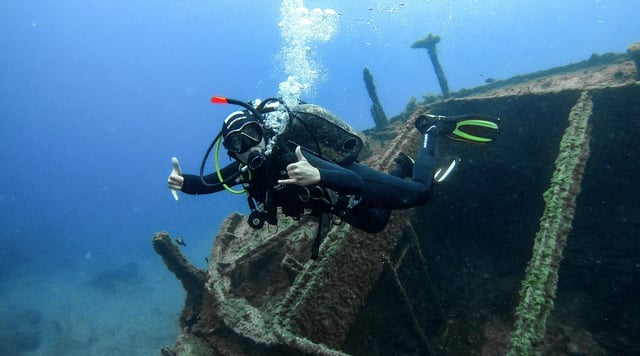
Earn your PADI Wreck Diver certification in Tenerife with four wreck dives, eLearning and practical training. Explore sunken structures safely from €345pp.
From € 345
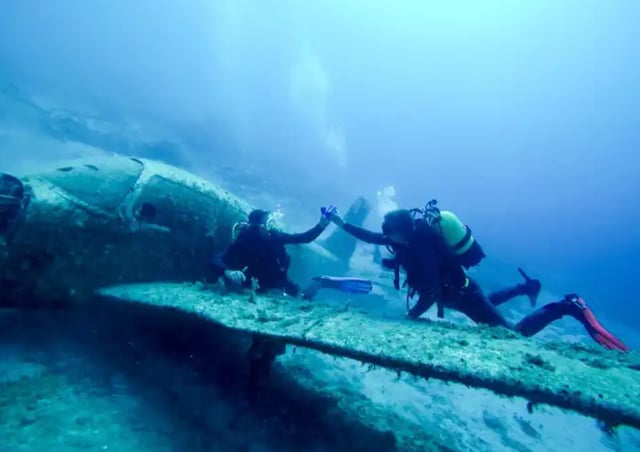
Learn safe wreck-diving techniques over two instructor-led dives. Practise navigation, surveying, and line-handling at regional wreck sites. From 1,150 AED.
From Dhs 1150
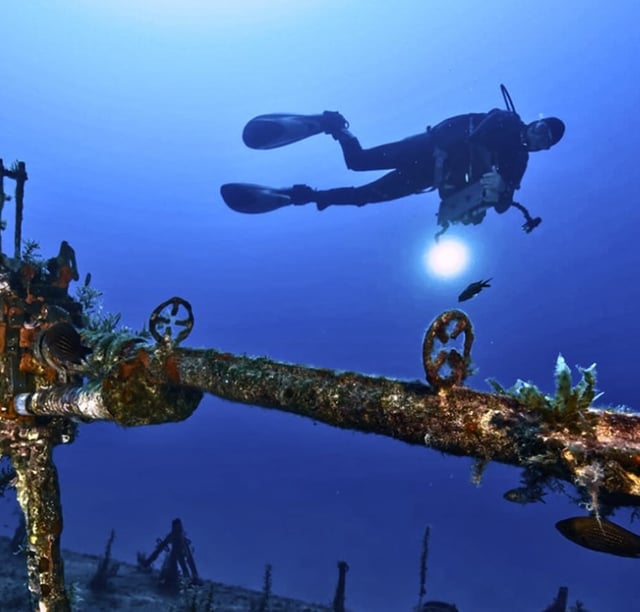
Advance your skills and explore sunken ships with the PADI Wreck Diver course at Littlehampton Marina, suitable for divers 15-99. £350.
From £ 350

Dive into history with our Wreck Diver courses in East England! Learn safe wreck exploration techniques and discover underwater mysteries
From £ 300