
Ready to find a course or session?
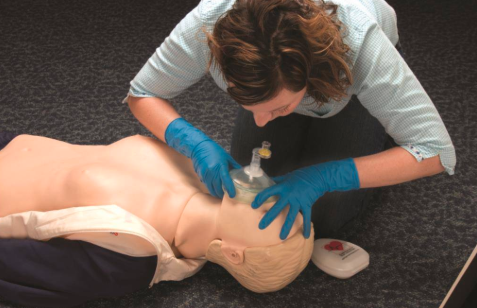
Emergency First Response Instructor turns competent first aiders into confident teachers. You learn to run EFR Primary and Secondary Care sessions for scuba divers and non-divers alike. That means structuring practice, coaching CPR on manikins, and keeping a classroom calm when scenarios feel stressful.
You do not need to be a dive instructor to take it. Every PADI Instructor candidate must hold this rating or earn it during IDC. Divemasters and club organisers take it too, often as steady income while they build logged dives toward instructor training. Outdoor leaders outside diving also value the credential for workplace and community first aid courses.
Most programmes run one or two full days with teaching presentations, skills practice and performance evaluations. Expect to stand at the front more than you sit in the back. Demonstrating compressions on a plastic torso for the fifth time gets old quickly, but that is the point. Your future students will watch you repeat the same skill until it looks effortless, so you might as well get comfortable with cheerful repetition now.
EFR Instructor is performance-based with teaching demonstrations and knowledge checks.
Quick answers about this qualification. For anything else, use live chat or browse bookable activities below.
Find activitiesA certified instructor qualified to teach Emergency First Response Primary and Secondary Care courses. You can certify students in CPR and first aid independently of scuba instruction, running classroom sessions with manikins, scenario practice and the paperwork EFR expects.
For dive professionals, it is also the standard prerequisite before entering the PADI Instructor Development Course. Many candidates complete it in the same month as their IDC so first aid teaching and scuba instructor training align on one timeline.
No. You need current EFR Primary and Secondary Care training within 24 months, not a scuba certification. The instructor course builds on participant-level skills you already hold.
Many non-diving outdoor leaders, fitness coaches and workplace trainers take EFR Instructor to teach first aid in their own sectors. Scuba experience helps you understand dive-centre context but is not required to qualify.
EFR Primary and Secondary Care (or equivalent) within the past 24 months, and minimum age 18. If your card has expired, book a refresher with the same centre before the instructor course starts.
Leave a comment when you book with your EFR completion date and whether you trained with PADI or another provider. Your Instructor Trainer may ask for proof of equivalency if your first aid came from a non-EFR course.
Usually one to two days. Larger groups or candidates who need refresher skills first may spread across a long weekend with extra practice time between teaching presentations.
IDC packages sometimes embed EFR Instructor in a longer professional training block. Standalone courses suit divemasters who want the rating before committing to a full instructor programme and its costs.
Yes, knowledge reviews on EFR content and instructional standards. They are typically open-book and focused on what you need to teach safely, not obscure trivia designed to trip you up.
The heavier assessment is standing up and delivering skills sessions to your Instructor Trainer. You demonstrate primary and secondary care at instructor standard and present portions of the curriculum as you would to real students.
Yes. You must be an EFR Instructor (or complete the rating during IDC) before you can become a PADI Open Water Scuba Instructor. PADI treats first aid teaching as core professional competence, not an optional extra.
Divemasters sometimes earn EFR Instructor early so first aid teaching income supports their IDC fund. Centres often bundle both in one professional training package if you book the full pathway together.
Centres usually include or sell the EFR Instructor start-up kit with guides, videos and administrative tools. Confirm on your booking page what is bundled and what you must buy before day one.
Budget for manikin access during teaching practice. Most training centres provide classroom equipment, but freelance instructors later need their own manikins or venue partnerships to run courses independently.
Yes. Certified EFR Instructors can run and certify EFR Primary and Secondary Care courses subject to EFR standards and insurance requirements in their jurisdiction. You register students through EFR systems and issue cards when performance requirements are met.
Dive centre employment may add local policies on pricing, scheduling and facility use. Freelance instructors need their own insurance and venue arrangements in many countries.
Common. The course is designed to build teaching confidence in small steps, with feedback from your Instructor Trainer between presentations rather than one high-stakes performance on day one.
Leave a comment when you book if presentation anxiety is a concern. Trainers can pace coaching without putting you on the spot unnecessarily, and practising on fellow candidates is less intimidating than it sounds.
Teach standalone first aid, support Rescue Diver programmes and progress toward Divemaster or IDC if you are not already on that path. Many dive centres want staff who can deliver EFR without sending students elsewhere.
Care for Children and CPR/AED instructor ratings may be available as extensions through EFR. Ask your Instructor Trainer what additional specialties you can add once you hold the core instructor rating.
adventuro lists PADI Course Directors and EFR Instructor Trainers running standalone EFR Instructor courses and IDC bundles across the UK and abroad. Compare whether refresher training, materials and IDC crossover fees are included before you pay.
Leave a comment when you book if you need EFR Instructor bundled with an upcoming IDC start date. Centres often reserve places for professional candidates on a fixed instructor pathway.
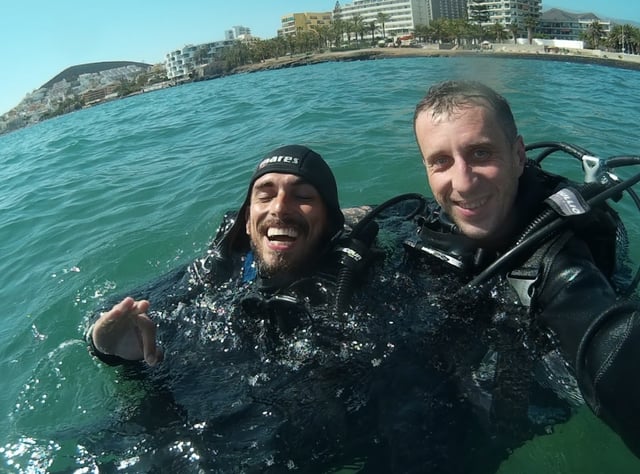
Develop advanced safety and rescue skills in Tenerife with the PADI Rescue Diver course. Includes eLearning, practical training and rescue scenarios.
From € 356
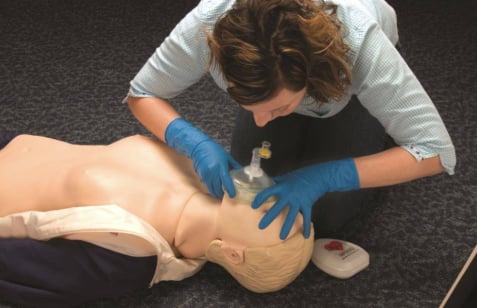
Become an Emergency First Response Instructor with expert training
From £ 299